Plate Material and Heat Settings: Ceramic, Tourmaline, Titanium and Temperature Control
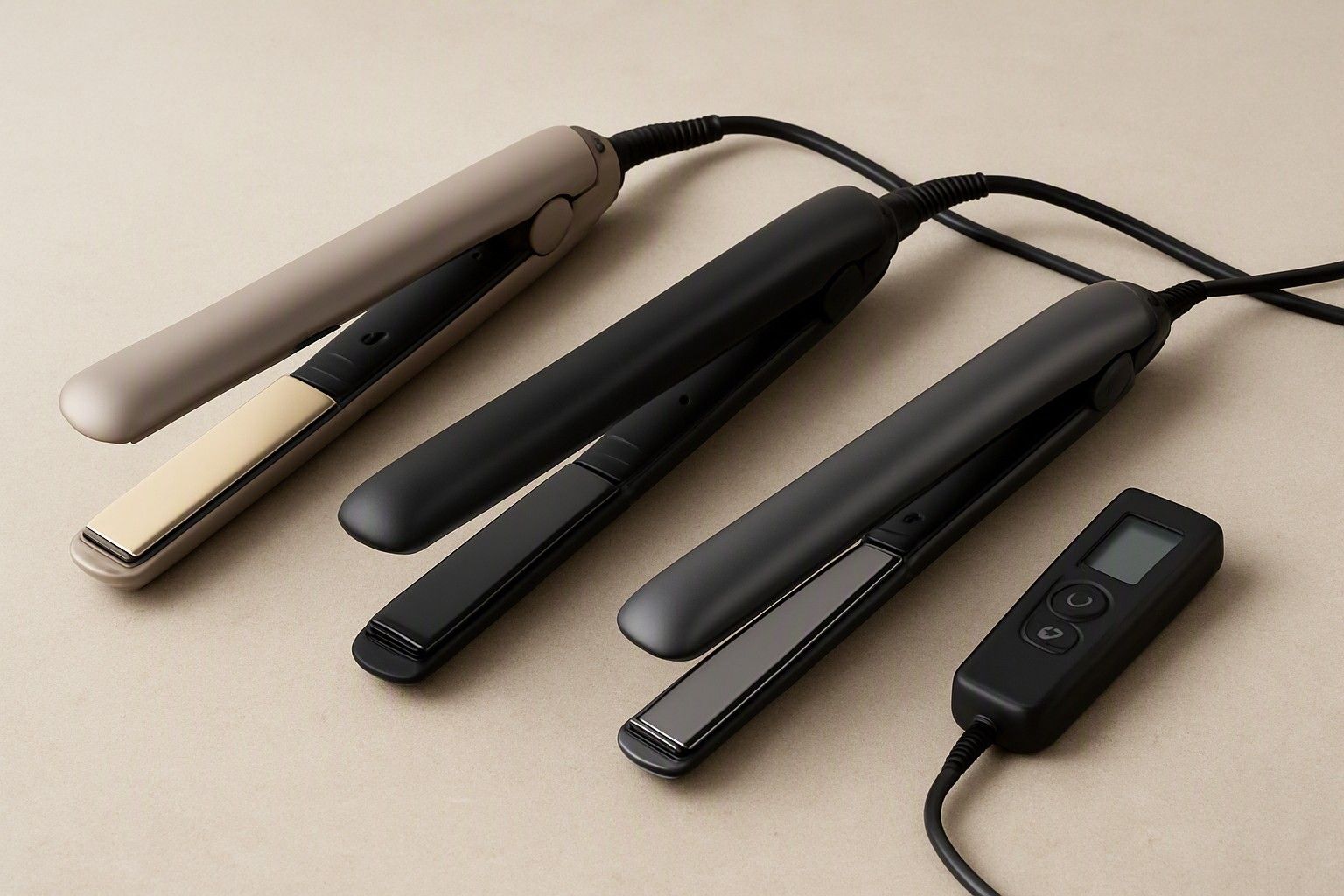
If you're staring at a spec sheet trying to figure out whether ceramic, tourmaline or titanium plates actually matter, or whether adjustable heat is worth paying extra for, this is the comparison that settles it. Plate material and temperature control are the two specs that decide whether a styler smooths your hair or slowly fries it, so getting this right matters more than any other feature on the box.
Ceramic vs Tourmaline vs Titanium Plates
Plate material decides two things: how evenly heat spreads across the hair, and how much friction the styler creates while gliding. Pure ceramic plates heat evenly and hold temperature steadily, which makes them forgiving for everyday use and a common choice in stylers priced around ₹700 and ₹2,500. Their main limitation is durability — cheaper ceramic-coated plates can chip or wear down over repeated use, exposing the metal base underneath and creating hot spots that snag or damage hair.
Tourmaline is usually a coating applied over ceramic, not a separate plate type on its own. It's ground into a fine powder and baked into the surface, which gives the plate a smoother glide and is marketed for reducing frizz by generating negative ions that help hair cuticles lie flat. In practice, tourmaline-coated ceramic plates are a genuine upgrade for frizzy or dry hair, and you'll typically find them in the ₹2,500 to ₹8,000 range.
Titanium plates heat up faster and reach higher maximum temperatures than ceramic, and they stay lightweight even in larger plate sizes. This makes titanium a reasonable pick for thick, coarse or curly hair that needs sustained high heat to hold a style. The trade-off is that titanium retains heat aggressively and offers less margin for error — on fine or already-damaged hair, it's easier to overheat with a titanium plate than a ceramic one. There's no single "correct" material here; the right choice depends on your hair type and how carefully you manage temperature, which is exactly what the next section covers.
Why Adjustable Temperature Beats a Single Fixed Heat
A styler with only one fixed heat setting is built for one type of hair, and that's rarely a good match for most households where hair thickness and condition vary between people, or even change with weather and hair treatments. Fixed-heat stylers, common at the lower end near ₹400, force everyone in the house to use the same temperature regardless of whether their hair is fine, colour-treated, or thick and untreated.
Adjustable temperature control solves this by letting you dial down heat for finer or damaged hair and dial up for thicker, more resistant strands. This isn't a luxury feature confined to expensive stylers — models in the ₹2,500 range increasingly offer at least 3-5 heat presets, and it's one of the most worthwhile specs to prioritise over cosmetic extras. Without this control, you're stuck either under-styling (too little heat to hold a shape) or over-styling (too much heat, causing dryness and split ends over time).
The practical benefit shows up in everyday use: you can run a lower setting for quick touch-ups and reserve higher heat only for days you need the style to last longer, rather than blasting every strand at maximum temperature by default. Given that stylers on this platform range all the way up to ₹45,000, adjustable heat is one of the clearest ways to tell a genuinely versatile styler from one that's cutting corners on internal components to hit a lower price point.
Ideal Heat Range for Different Hair Types
Temperature needs aren't guesswork — they follow directly from hair thickness, texture and how much prior heat or chemical damage the hair has absorbed. Fine or chemically treated hair generally styles well at lower settings, since it accepts heat quickly and doesn't need aggressive temperatures to change shape. Thick, coarse or tightly curled hair needs more sustained heat to hold a straightened or curled result, but that also means more risk of damage if the temperature isn't matched carefully to the strand's actual thickness.
This is exactly why a styler's advertised maximum temperature matters less than whether it lets you sit comfortably within your hair's ideal range for regular use, rather than always maxing out. Indian hair, in particular, varies enormously across regions and treatments — what works for someone with thin, straight hair can genuinely damage someone with thick, curly, or previously coloured hair. Rather than guessing a number in isolation, it's worth taking the time to match the heat to your specific hair texture, since that's the only way a temperature setting translates into real styling results instead of just heat exposure. A styler that can't be adjusted to your specific range is a mismatch regardless of how good its plate material is, no matter where it sits between ₹400 and ₹45,000.
Fast Heat-Up and Auto Shut-Off Features
Heat-up time affects daily usability more than most buyers expect — a styler that takes several minutes to reach working temperature makes quick morning routines frustrating and tempts users to start styling before the plates are evenly heated, which leads to uneven results and repeated passes over the same section of hair. Faster heat-up, generally under a minute in better-built stylers, means more consistent temperature at the plate surface from the first stroke, which directly reduces the number of times you need to re-run hot plates over the same strands.
Auto shut-off is a safety feature worth treating as a baseline requirement rather than a bonus. It switches the styler off automatically after a period of inactivity, cutting the risk of a forgotten, still-hot device left on a bathroom counter or heat-damaging a surface. This feature is increasingly standard even in stylers priced near ₹700, so its absence in a product is a reasonable reason to look elsewhere rather than a limitation you need to accept for a lower price. Together, fast heat-up and auto shut-off don't change your styling results the way plate material or temperature range do, but they remove friction and risk from daily use, which matters over months and years of regular styling.
How Plate Quality Affects Long-Term Hair Health
The cumulative effect of plate quality shows up slowly, not on day one. A poorly bonded ceramic coating or an uneven titanium surface creates micro hot spots that repeatedly stress the same sections of hair, and over months this shows up as dryness, split ends and breakage that seem unrelated to any single styling session. Smoother, better-finished plates glide with less pulling and distribute heat more evenly, which means less repeated passing over the same strands to get an even result — and fewer passes is directly correlated with less cumulative heat damage.
This is also where the temperature settings discussed earlier compound with plate quality: a good plate material used at the wrong heat setting still damages hair, just more slowly than a poor plate material would. The two specs aren't independent decisions — they work together, and skimping on either one shows up as hair health issues later even if the styling results look fine in the short term. If you want a fuller picture of how specific habits, not just hardware, contribute to this damage, it's worth reading how heat mistakes cause avoidable hair damage, since plate quality only protects hair as much as usage habits allow it to. Buying a better plate material is a one-time decision within a price bracket you choose, but protecting hair long-term also depends on using the correct heat setting every single time, not just owning a device capable of offering one.
Between plate material and heat settings, the real answer to whether you need ceramic, tourmaline or titanium comes down to your hair type and how disciplined you'll be about using adjustable temperature rather than defaulting to maximum heat. A well-built styler anywhere from ₹400 to ₹45,000 can serve you well if the plate quality and temperature range genuinely match your hair, and that match matters far more than chasing a specific brand-name material.

Comments 1 comment
is toumaline the best option for hair styler?