Hair Styler Safety and Mistakes: Heat Damage, Voltage and Everyday Care
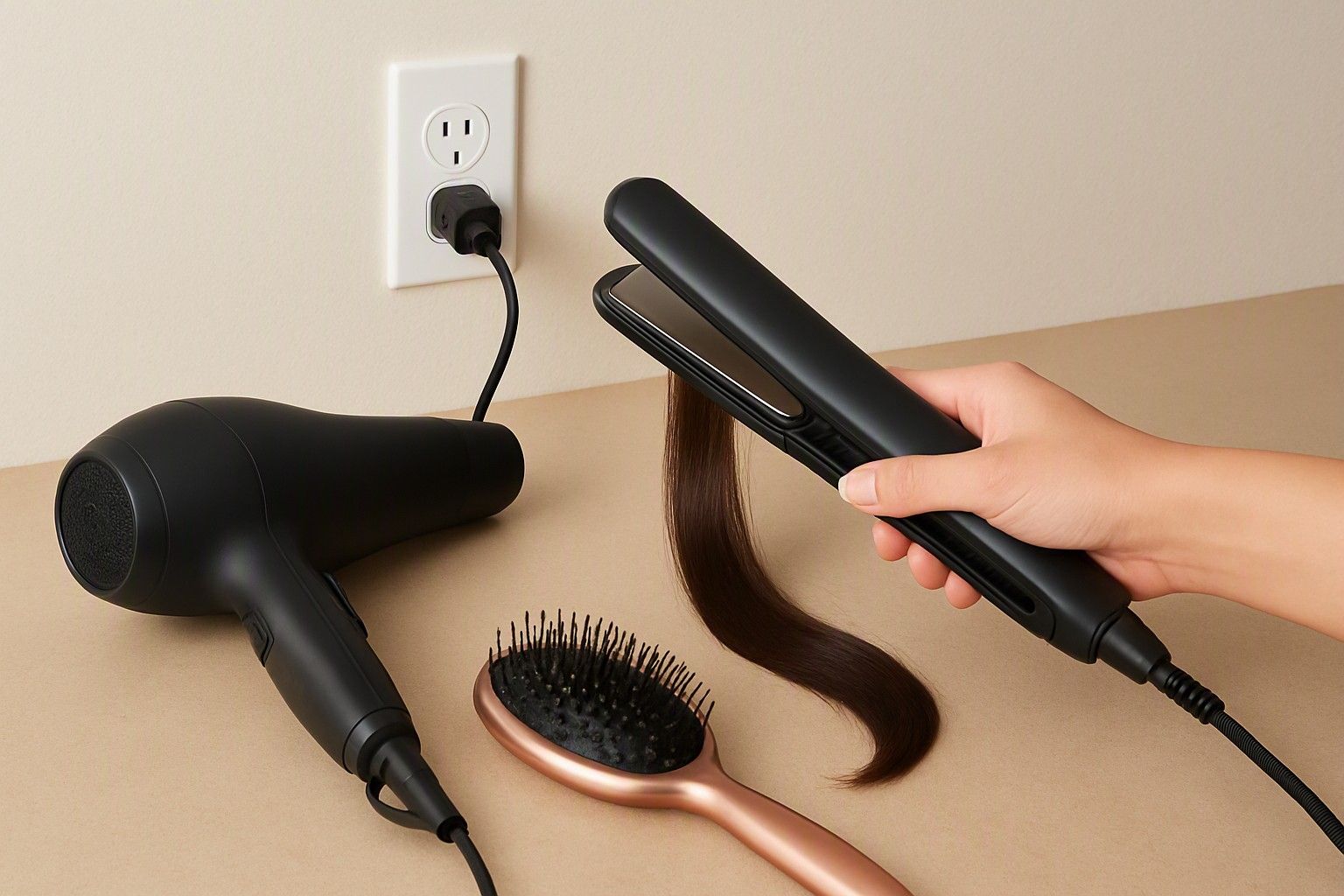
If you already own a hair styler, or you're about to buy one, the real question isn't which model looks nice on a shelf — it's whether you're using it in a way that damages your hair or trips your home's wiring. Most of the harm from straighteners and curlers comes from a handful of repeated habits: wrong heat, no protectant, dodgy sockets, and plates left dirty for months. This guide walks through what actually causes damage, what Indian electrical conditions demand, and how to keep the device working well past its warranty.
Common Heat Mistakes That Damage Hair
The single biggest cause of hair damage isn't the styler itself — it's using the same high heat setting on every hair type, every single time. Fine, chemically treated or bleached hair scorches at temperatures that thick, coarse, unprocessed hair barely notices. Running a styler at its maximum setting because "it works faster" is the fastest way to create split ends, dullness and breakage that shows up weeks later, not immediately, which is why so many people don't connect the two.
A second common mistake is passing the plates over the same section of hair repeatedly, trying to get it perfectly straight or perfectly curled in one go. Each additional pass at high heat compounds the damage. It's better to take smaller sections and do one clean pass than five rushed ones. Styling hair that's still damp is another frequent error — damp hair effectively boils under heat, and the result is frizz and weakened strands rather than a smooth finish, regardless of how good the device is.
Finally, using a styler daily without ever varying the setting or giving hair a break adds up. If you're not sure what temperature actually suits your strand type — fine, medium or coarse, natural or coloured — it's worth taking the time to pick the right heat setting for your hair type before you fall into a routine that quietly damages hair over months.
Heat Protectant and Prepping Your Hair
A heat protectant spray or serum isn't an optional extra — it's the single cheapest safeguard against the damage described above. It works by forming a thin barrier that reduces direct heat transfer to the hair shaft and helps retain some moisture, which is what actually gets fried at high temperatures. Applying it to towel-dried or fully dry hair, evenly through the lengths, takes under a minute and meaningfully cuts down on frizz, breakage and colour fade over time.
Prepping properly also means hair should be completely dry before any heat tool touches it. Even slightly damp roots or ends will react badly under a plate or barrel, producing a hissing sound that's a clear sign moisture is being forced out too fast. If you're always in a rush in the morning, it's worth blow-drying fully first rather than trying to save time by styling semi-wet hair — the shortcut costs more in damage than the few minutes it saves.
Detangling before styling matters too. Running a straightener through knotted hair puts uneven tension on strands already under heat stress, increasing breakage. A wide-tooth comb through dry, protectant-coated hair, section by section, sets up a much safer pass than trying to smooth out tangles and style in the same motion.
Voltage, Auto Shut-Off and Electrical Safety in Indian Homes
Indian household wiring runs on 220-240V, and most hair stylers sold here are built for this range, but voltage fluctuation is still common enough in many areas that it's worth checking the device's rated input before assuming it'll cope with an unstable supply. Sudden voltage spikes, especially in older buildings or during storms, can shorten the life of the heating element or trip the device unexpectedly. Using a stabiliser isn't standard practice for stylers the way it is for larger appliances, but plugging into a socket that's shared with heavy load devices like geysers or irons on the same circuit is worth avoiding.
Auto shut-off is one of the more underrated safety features on a hair styler, and it matters more in Indian bathrooms and dressing areas than people realise. Many users get pulled away mid-styling — a call, a knock at the door, a child needing attention — and a device left on and unattended on a wooden dresser or near curtains is a real fire risk. Auto shut-off after a period of inactivity, usually anywhere from a few minutes onward depending on the device, removes that risk without you having to remember to switch off manually every time.
A few basic habits matter regardless of the device: never operate a styler with wet hands, avoid using it near a running tap or bucket of water, and don't wrap the cord tightly around the barrel or plates while it's still warm, since this stresses the internal wiring at the point where it enters the handle — a common failure point that isn't always covered under warranty if it's due to physical damage.
Cleaning Plates and Extending Device Life
Styling products build up on plates and barrels over time — serums, heat protectants, dry shampoo residue — and this layer doesn't just look unhygienic, it actively reduces how evenly heat transfers to your hair. A styler with grimy plates has to work harder and often ends up running hotter or requiring more passes to get the same result, which brings back the heat-damage problem from a different angle.
Cleaning is simple and doesn't need special products. Once the device has fully cooled, wipe the plates or barrel with a soft cloth slightly dampened with water, or a cloth with a small amount of rubbing alcohol for tougher residue. Avoid anything abrasive — scouring pads or rough cloths can scratch ceramic or tourmaline coatings, and a scratched plate snags hair and heats unevenly from that point on. Never clean while the device is plugged in or still warm.
Beyond the plates, a few habits extend the life of the whole unit. Let the styler cool fully before storing it, ideally in a heat-resistant pouch if one came with it, rather than tossing it straight into a drawer where the cord can get pinched. Avoid wrapping the cord tightly around the body — a loose fold stored separately is gentler on the internal wiring. Keeping the device somewhere dry, rather than in a humid bathroom cabinet, also helps prevent corrosion around the plug and heating element over months of daily use.
Warranty and What to Check Before You Buy
Warranty length is one of the more telling signs of build quality on a hair styler, and it's worth checking before purchase rather than after something goes wrong. Coverage varies noticeably across the price range — devices near ₹400 often come with minimal or no warranty, while models in the ₹2,500 and ₹8,000 range typically include coverage of a year or more on the heating element and motor, which matters given the average selling price sits around ₹2,500.
Before buying, it helps to check what the warranty actually covers — heating element failure and manufacturing defects are usually included, but physical damage, cord fraying from misuse, or plate scratches from cleaning with the wrong material typically aren't. Keeping the original invoice and box is worth the small effort, since many service centres in India ask for both to process a claim.
If you haven't finalised what to buy yet and want to work through voltage compatibility, plate material, temperature range and price tier together rather than piecemeal, it's worth taking a step back and going through the full hair styler buying checklist in one place before deciding. That covers the selection side; this article covers what happens after you bring it home — the two are meant to be read together rather than as substitutes for each other.
Used with the right heat setting, a protectant, a sensible socket, and a wipe-down every so often, a hair styler priced anywhere from ₹400 to ₹45,000 should hold up well past its warranty period. The damage people blame on the device is, more often than not, a habit that's easy to fix once you know what to look for — which is really the answer to how you use one safely and keep it running.
Comments
Be the first to comment.