Air Conditioner Electricity + Servicing Cost Calculator
See what your AC really costs to run — units per hour, month and season from the ISEER on the BEE label — plus 5★ and inverter payback, the right tonnage for your room and the yearly servicing reserve. India-first, instant and editable.
~₹12,244/yr
avg yearly AC cost (electricity + servicing), Indian home
1. Your AC
Pick split or window, the tonnage and compressor type, then enter the ISEER from the BEE label. All four are on the label or the product page.
Capacity (tonnage)
Tonnage is cooling capacity, not power draw — 1 ton ≈ 3.5 kW of cooling. Room size decides the right number, and the sizing check below verifies your pick.
Compressor type
BEE star rating
Star presets use the 2026 BEE split bands — 3★ 4.3–4.99 · 4★ 5.0–5.59 · 5★ 5.6+. Type the exact number printed on your label.
At 1.5 ton: 3★ ≈ 1653 kWh/season · 5★ ≈ 1311 kWh/season
Stars compare models of similar tonnage and compressor type — the ISEER and annual kWh printed on the label are the exact numbers for a specific model. BEE revised its bands in January 2026, so an older 5★ sticker may read 4★ today.
2. Your usage & room
How long your summer runs, how many hours a night the AC works, the thermostat setting and your room's heat load.
A bedroom usually runs 6–8 hours a night; a home office or shop runs 10–12. Hours matter more than any feature when comparing inverter payback.
Most Indian homes cool for 5–8 months. 180 days ≈ a six-month summer; in coastal and southern cities the AC often runs year-round — set 300+.
BEE recommends 24°C as the default for room ACs. Every degree lower adds roughly 6% to consumption — 18°C against 24°C is about a third more per season.
Measure the room the AC actually cools, and add any open dining area or kitchen it flows into. Sizing only — it doesn't change the energy estimate.
Room heat factors
Size up one band when two or more apply — the sizing check below applies them for you.
Recommended for your room: 1.5 ton · yours: 1.5 ton
3. Your running costs
India-first defaults: ₹6.5 per kWh and a ₹1500/yr servicing reserve. Edit both to match your bill and service history.
Typical: ₹6.5/kWh — use your top slab rate in summer
Wet service ₹500–₹1,200/visit · gas only for a proven leak · verified Oct 2026
One wet service before summer (a second after the season if the AC runs year-round), plus gas refills and minor parts amortised.
Why your AC's running cost matters
An air conditioner is the single largest addition to a summer electricity bill. A 1.5 ton unit run eight hours a night can add more than ₹1,800 a month on its own, and it does that for months — which is why the efficiency number on the BEE label matters more than almost anything else on the box. Two 1.5 ton ACs can differ by a third in running cost, purely on ISEER.
Three things decide the bill: right-sized tonnage (an undersized unit runs flat out and still misses the setpoint, while an oversized one costs more upfront and cycles or throttles), efficiency (the ISEER on the label sets the draw — BEE revised the star bands in January 2026, so an older 5★ sticker can read 4★ today and ISEER is the number to compare), and how you run it — hours, season length, the thermostat setting and how well the room is sealed.
Then there is upkeep. A wet service before summer costs ₹500–₹1,200, and a gas refill is only justified after a pressure check proves a leak — refrigerant is not an annual consumable. This calculator adds electricity, the servicing reserve and both payback checks: 3★ vs 5★, and inverter vs fixed speed. Defaults are India-first: ₹6.5 per kWh and a ₹1,500/yr servicing reserve. Edit both to match your bill and service history, and use the sizing check to see whether your tonnage matches your room.
How your estimate is worked out
We turn your tonnage and the ISEER from the BEE label into an average power draw, then into seasonal units at your hours: seasonUnits = (cooling capacity kW ÷ ISEER) × compressor factor × unit factor × thermostat factor × hours/day × days. Cost is units × your ₹/kWh plus the servicing reserve. The sizing check starts from the room's area and moves you up one band when two or more heat factors apply.
| Assumption | Value |
|---|---|
| Cooling capacity | 0.8 ton ≈ 2.8 kW · 1 ton ≈ 3.5 kW · 1.5 ton ≈ 5.3 kW · 2 ton ≈ 7.0 kW (1 ton ≈ 3.517 kW of cooling) |
| Efficiency (ISEER) | From the BEE label; presets 3★ 4.6 · 4★ 5.3 · 5★ 5.8 (2026 BEE split bands) |
| Compressor | Inverter ×1.00 · fixed-speed ×1.20 (on–off cycling) |
| Unit type | Split ×1.00 · window ×1.08 |
| Thermostat | 1 + (24 − setpoint) × 0.06 — about 6% per degree (BEE recommends 24°C) |
| Seasonal units | draw (kW) × hours/day × days/year |
| Worked example | 1.5 ton 3★ inverter split, 8 h/day × 180 days, 24°C → ≈1,653 kWh/season |
| Servicing reserve | ₹1,500/yr default — wet service ₹500–₹1,200 plus gas and minor parts amortised |
| Sizing rule | 1 ton to ~110 sq ft · 1.5 ton to ~180 · 2 ton to ~250; one band up when 2+ heat factors apply |
| Default tariff | ₹6.5/kWh |
| Formula | Total = units × rate + servicing reserve |
Estimates only — the ISEER and annual kWh printed on your label beat any estimate. Real draw rises with 40°C+ afternoons, room heat load and poor sealing. BEE revised its star bands in January 2026, so an older 5★ label may read 4★ today — compare ISEER values, not star counts. Servicing and installation figures last verified Oct 2026.
What each star rating costs you
At your current 1.5 ton split ac, 8 h/day × 180 days, 24°C, ₹6.5/kWh and the ₹1500/yr servicing reserve. Ratings use the 2026 BEE band ISEER values — only efficiency changes.
| Rating | Season units | Monthly elec. | Season elec. | Year total | vs 5★ |
|---|---|---|---|---|---|
| 1★ · 3.6 ISEER | 2112 kWh | ₹2,322 | ₹13,728 | ₹15,228 | +₹5,207 |
| 2★ · 4 ISEER | 1901 kWh | ₹2,089 | ₹12,355 | ₹13,855 | +₹3,834 |
| 3★ · 4.6 ISEER · selected | 1653 kWh | ₹1,817 | ₹10,744 | ₹12,244 | +₹2,223 |
| 4★ · 5.3 ISEER | 1435 kWh | ₹1,577 | ₹9,325 | ₹10,825 | +₹804 |
| 5★ · 5.8 ISEER | 1311 kWh | ₹1,441 | ₹8,521 | ₹10,021 | — |
A higher rating usually costs more upfront. The payback check in the results estimates the 5★ premium at your usage — compare the actual ISEER and kWh/year figures on the two labels you're considering.
Cut the cost of running your AC
Default to 24°C
BEE's recommended room-AC setting. Every degree lower adds roughly 6% to consumption, so 18°C can cost about a third more than 24°C for the same comfort once a fan is moving air.
Use sleep mode and the timer
Sleep mode raises the setpoint gradually overnight; a timer switches the AC off an hour after you fall asleep. Both avoid hours of cooling a room nobody is using.
Pair it with a ceiling fan
A fan at low speed keeps you comfortable at a higher setpoint — the cheapest way to cut compressor run time. At 26°C with a fan you can save 10–12% against 24°C without one.
Rinse the filters every few weeks
A clogged mesh filter chokes airflow, so the compressor runs longer and harder. Pull it out, rinse it, dry it in shade — five minutes and zero rupees.
Seal the room and shade the sun
Curtains or sun film on west-facing windows, doors closed and gaps sealed cut the heat load before it reaches the coil. A room that stays sealed holds the setpoint with less compressor time.
Service before summer, skip gas top-ups
Book one wet service before the hot months. Refrigerant is not a consumable — a top-up without a located leak is an upsell. Reserve about ₹1,500/yr for service and minor parts.
Frequently asked questions
How many units does a 1.5 ton AC use per hour in India?
At the 2026 BEE bands, a 1.5 ton 3★ inverter at ISEER 4.6 draws about 1.15 kWh an hour while running, and a 5★ at ISEER 5.8 about 0.91 kWh. That is the seasonal average: a fixed-speed unit cycles around its rated draw, and real consumption rises on the hottest afternoons. Use your own label ISEER in the calculator for the exact figure.
How much does it cost to run a 1.5 ton AC per month in India?
At our defaults — 8 hours a day, 24°C and ₹6.5/kWh — a 1.5 ton 3★ inverter uses about 280 kWh in a full-use month: roughly ₹1,817 of electricity plus a ₹125 servicing share. Across a 180-day season that is about ₹10,744 of electricity, and ₹12,244 a year including the ₹1,500 servicing reserve. Heavier use (12 h/day) or a higher slab rate pushes it past ₹20,000 a year.
Is a 5-star AC worth the extra price?
At our defaults, moving from 3★ (ISEER 4.6) to 5★ (ISEER 5.8) saves about 342 units a season — roughly ₹2,223 a year at ₹6.5/kWh. At a typical ₹5,000 premium that pays back in about 2.2 years, and an AC is an 8–12 year purchase. If you run it only a couple of hours on the hottest weeks, the saving shrinks and a 3★ run at 24°C is the better budget call.
Is an inverter AC worth the extra cost over a fixed-speed one?
It depends on hours. At 8 h/day × 180 days, a fixed-speed unit of the same rating uses about 20% more — roughly ₹2,150 a season at ₹6.5/kWh — so a typical ₹4,000 inverter premium pays back in about 1.9 years. At 2–3 hours a night for a few weeks, the saving is a few hundred rupees a year and the gap takes many seasons to close.
What tonnage do I need for a 120–150 sq ft room?
A 120 sq ft room that is shaded and mid-floor can work with 1 ton, but 1.5 ton is the safer pick if it takes sun, sits on the top floor or holds more than two people. A 150 sq ft room is 1.5 ton in nearly every case; step up to 2 ton only for a top-floor, west-facing or crowded room. The sizing check above applies your heat factors.
Does setting the AC to 24°C really save electricity?
Yes. Each degree you raise the setpoint cuts consumption by roughly 6%, so 24°C against 18°C is around a third less — often a bigger swing than the star gap. A ceiling fan lets you hold 26°C comfortably, and sleep mode raises the setpoint automatically overnight.
Is a window AC costlier to run than a split?
For the same tonnage and star rating, a window unit typically draws 8–10% more because it sits in a leakier opening, and its inverter choices are limited. But the ISEER on the specific model matters more than the format — compare the label numbers, not the type.
How much should I budget for AC servicing per year?
A wet service costs about ₹500–₹1,200 a visit; most homes book one before summer, and a second after the season if the AC runs year-round. AMC plans (₹2,500–₹4,500/yr) make sense once the comprehensive warranty ends. Gas refills (₹2,000–₹3,800) are only justified after a pressure check proves a leak. Our ₹1,500/yr default covers a service plus an amortised share of gas and minor repairs.
Do I need a voltage stabiliser for an inverter AC?
Many modern inverter ACs work across a wide voltage band and don't need an external stabiliser — check your manual and your area. If your supply sees frequent sharp dips or surges, some protection is cheap insurance: the outdoor control board is one of the costliest repairs, and voltage damage is commonly excluded from warranty.
Why is my AC bill higher than this estimate?
Usually one of five things: your tariff slab (AC units often land in the top slab rate — use that rate, not the average), ambient heat over 40°C, an unsealed room or unshaded windows, dirty filters, or a wrong-sized unit. The estimate also assumes 24°C; every degree lower adds about 6%.
More AC buying guides
Tonnage, star rating, inverter payback, installation and servicing guides to help you pick the right AC — with India-first prices and checks.
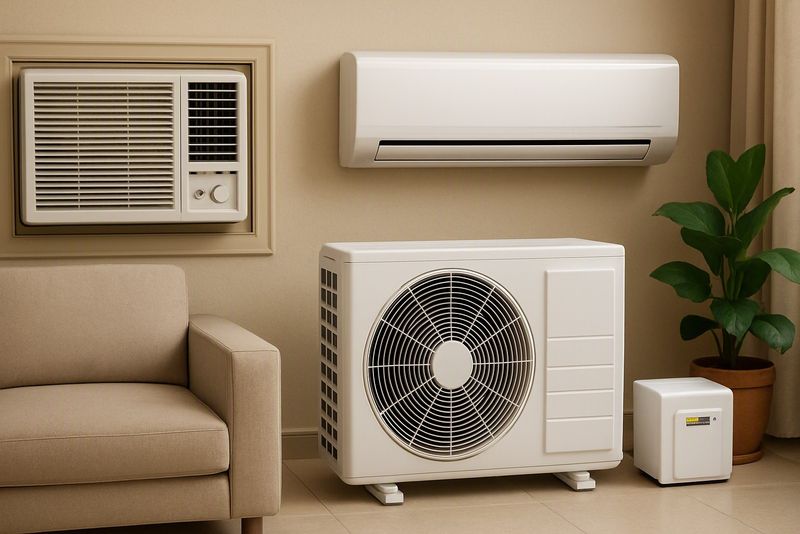
How to Pick an AC for Indian Summers: Tonnage, Star Rating and Installation Checks
Decide between cooler and AC, split or window, tonnage, inverter, star rating and coil type, then check price, installation and servicing costs in India.
Inverter vs Non-Inverter AC: Does Variable Speed Pay Off for Your Usage Hours?
Is an inverter AC worth the extra cost? See how usage hours, voltage, repair costs and convertible modes decide the payback against a non-inverter AC.
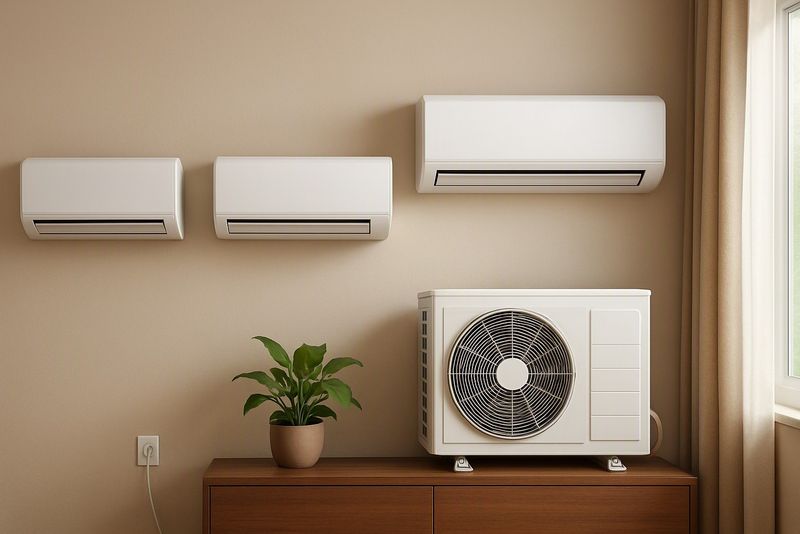
1 Ton, 1.5 Ton or 2 Ton: Sizing an AC to Your Room in Square Feet
Find the right AC tonnage for a 120 or 150 sq ft room. See a size chart for Indian rooms, when to size up for heat, and how tonnage affects your bill.