Member 1 · You
1×
1×/day5×/day
How they bathe
≈5 L hot water per bath, mixed with cold in the bucket.
See what your geyser really costs — per bucket, per shower, per month and per year. Set tank size, star rating, how much hot water your home uses and how long it stays switched on.
~₹2,200/yr
avg yearly geyser electricity cost, Indian home
Pick the class closest to your unit. Check the nameplate for tank capacity and element watts.
BEE star rating
Better insulation holds heat longer, so the element cycles less. Check the label on your unit.
Star rating changes standby use only — not the energy needed to heat water.
Add each person and how they bathe. Bucket vs shower changes the hot water drawn more than anything else.
How they bathe
≈5 L hot water per bath, mixed with cold in the bucket.
Inlet water is colder in winter, so the geyser works harder. Standby only costs money while the unit is switched on.
How much the geyser heats your tap water — roughly 20–25 °C in summer and 35–45 °C in winter for a ~55 °C setpoint.
A storage geyser left on keeps reheating to replace standing heat loss. Set 0 if you switch it off after use.
Typical: ₹6.5/kWh
The wattage on the nameplate is the peak draw while the element is heating — not what the geyser uses all day. The number that actually hits your bill is the energy needed to heat the water you use, plus whatever the unit burns keeping a tank warm between baths.
Three things decide the real monthly figure: how much hot water your home draws (a bucket bath uses ~5 L of hot water, a 10-minute shower ~25 L), the temperature rise the geyser has to deliver (inlet water is much colder in winter), and standby — a storage geyser left switched on reheats to replace standing heat loss, while an instant unit has no tank to keep hot.
Defaults are India-first: ₹6.5 per kWh, a 15 L storage geyser on 8 hours a day and one bucket bath per person. Add each person in your home to see the household figure.
Heating energy follows the physics of raising water temperature: kWh = litres × temperature rise (°C) × 0.001163. One litre raised by one degree takes 4.186 kJ, which is 0.001163 kWh.
Standby is the heat a storage tank loses while switched on: tank litres × star factor × hours on ÷ 24. Both are priced at your electricity rate and summed for the monthly total.
| Assumption | Value |
|---|---|
| Heating energy | 1 L × 1 °C = 0.001163 kWh (4.186 kJ ÷ 3600) |
| Bucket bath | ≈ 5 L hot water per use |
| Shower | ≈ 25 L hot water per use |
| Standby loss · 15 L reference | 5★ ~0.40 · 3★ ~0.70 · 1★ ~1.00 kWh/day |
| Standby energy | tank L × star factor × hours on ÷ 24 |
| Full-tank heat-up | litres × rise × 0.001163 ÷ element kW |
| Weeks per month | 4.33 |
| Default tariff | ₹6.5/kWh electricity |
Estimates only — real use varies with inlet water temperature, insulation, how much of the tank you draw and thermostat settings. See your electricity bill for your exact tariff.
Monthly cost below assumes a family of four, one bucket bath each per day (20 L hot water), a 30 °C rise, 3★ rating, geyser on 8 h/day, at ₹6.5/kWh.
| Type | Tank | Element | Full-tank heat-up | Monthly cost |
|---|---|---|---|---|
| Storage 10 L | 10 L | 2000 W | ~10 min | ₹168 |
| Storage 15 L · selected | 15 L | 2000 W | ~16 min | ₹184 |
| Storage 25 L | 25 L | 2000 W | ~26 min | ₹215 |
| Instant 3 L | 3 L | 3000 W | On demand | ₹137 |
Switch off after use
Standby is the easiest cost to delete. A 15 L tank left on all day can reheat 0.4–1.0 kWh just to replace standing heat loss — put it on a timer if mornings are rushed.
Right-size the tank
A 25 L geyser serving a two-person bucket routine pays to keep roughly 10 extra litres hot, every single day. Match litres to the bathroom, not to 'just in case'.
Batch baths while it's hot
Run back-to-back baths in one window instead of reheating the tank three separate times a day. The stored heat does the work; the element stays off.
Lower the setpoint
55 °C is plenty for bathing. Every degree lower cuts the energy per litre — and the colder your inlet water, the more that saving matters.
Descale every 6–12 months
Scale on the element makes the geyser heat longer for the same water, quietly raising every bill. Hard-water homes should service closer to six-monthly.
Bucket beats a long shower
A bucket bath draws ~5 L of hot water; a 10-minute shower ~25 L. Same comfort, a fraction of the heating energy.
A 2,000 W geyser draws 2 kWh (2 units) for every hour the element runs at full power — about ₹13 at ₹6.5/unit. In real use the element runs only while heating, then the thermostat switches it on and off. A full 15 L tank at a 30 °C rise takes roughly 16 minutes, about 0.52 kWh.
A family of four taking one bucket bath each — about 20 L of hot water — uses roughly 0.7 kWh a day for heating, plus 0.1–0.5 kWh of standby if the unit is left switched on. Showers, colder winter inlet water and larger tanks push the number up.
At ₹6.5 per unit, a family of four on bucket baths typically spends about ₹140–₹220 a month including standby. All-shower households can cross ₹600 a month, and winter raises the bill because inlet water is colder.
Yes. A storage geyser loses heat through its insulation, and the thermostat switches the element back on to replace it. A 15 L tank can use roughly 0.4–1.0 kWh a day just holding temperature, depending on its star rating. Set the hours-on slider to 0 if you switch it off between baths.
It saves on standby, not on heating water — star ratings mainly reflect insulation and standing loss, while heating a litre takes the same energy on any unit. A 15 L geyser left on 8 hours a day can save roughly ₹300–₹500 a year going from 1★ to 5★, and over ₹1,400 if it stays on all day.
Both use the same energy to heat the same litres, so with the storage unit switched off after use the difference is small — instant simply has no standby loss. But instant units draw 3,000–4,500 W at the point of use and can't serve two taps or long showers as comfortably.
No — wattage changes how fast the water heats, not how much energy it takes. Heating 15 L by 30 °C needs about 0.52 kWh whether the element is 1.5 kW (about 21 minutes) or 3 kW (about 10 minutes). Higher wattage does mean a bigger instantaneous load on your wiring.
A 15 L tank with a 2,000 W element and a 30 °C rise takes about 16 minutes; 10 L takes about 11 minutes and 25 L about 26 minutes. Colder inlet water in winter extends this — the calculator shows the heat-up time for your selected unit.
Per litre heated they cost the same — both are electric elements with near-100% efficiency. An immersion rod has no standby loss and no tank to keep hot, but also no stored reserve and no built-in thermostat, and it carries more safety risk. For daily family bathing, a correctly sized geyser is usually the more practical choice.
Switch it off after use or put it on a timer, size the tank to your bathroom instead of buying 'just in case', keep the setpoint around 55 °C, take bucket baths over long showers, and descale the tank every 6–12 months in hard water. The tips above explain each one.
Type comparisons, capacity sizing, hard-water advice and running-cost explainers to help you pick the right geyser — with real prices.
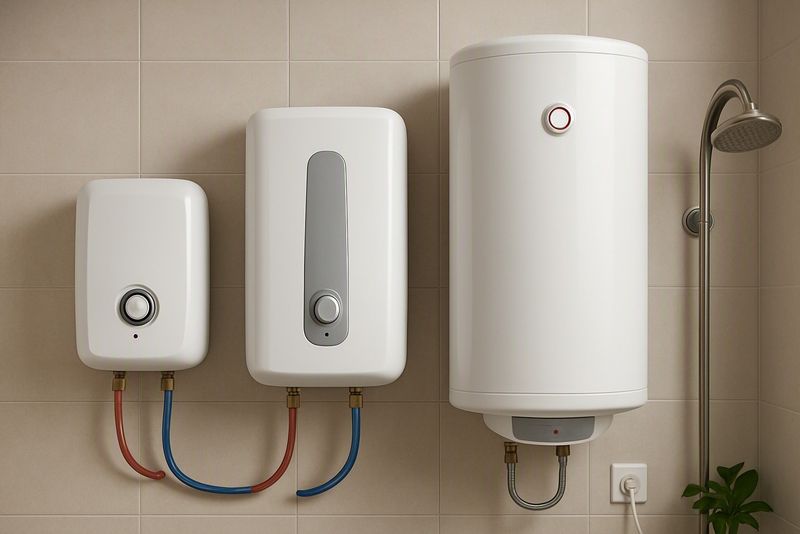
A complete geyser buying guide for Indian homes — type, capacity, hard water, running cost, safety, price and upkeep, so you can decide with confidence today.
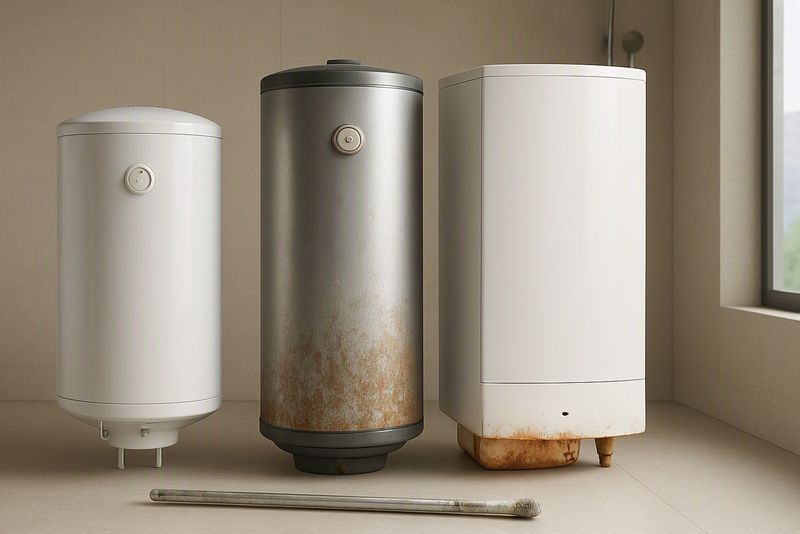
Hard water eats through cheap geysers fast. See which tank materials, linings and anode rods actually hold up in India's toughest water regions.
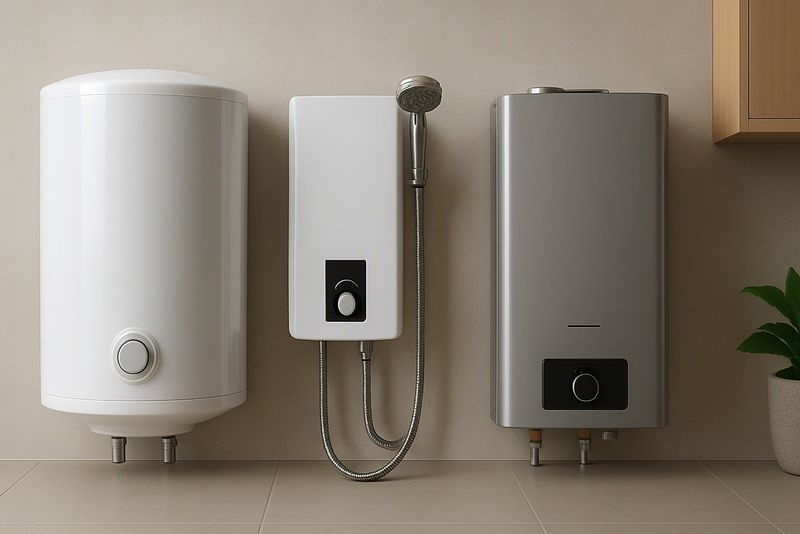
Confused between a storage, instant or gas geyser? Compare running cost, bathroom fit and household needs to pick the right type, priced from ₹1,500 to ₹25,000.