Storage vs Instant vs Gas Geyser: Which One Should You Buy
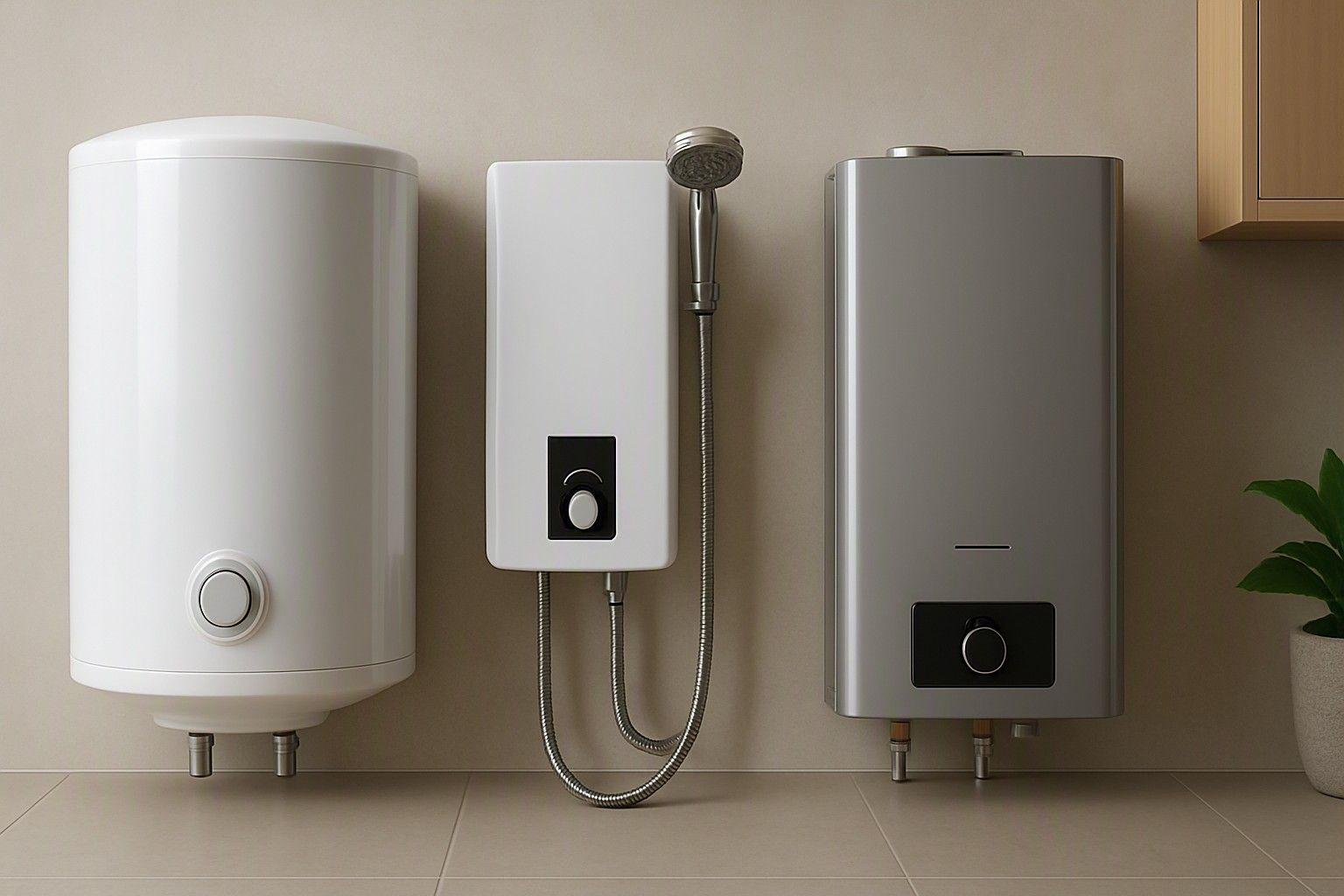
If you're standing in a shop or scrolling listings unsure whether you need a storage tank, an instant unit, or a gas-fired geyser, the answer depends less on brand and more on how your household actually uses hot water. This article walks through how each type works, where it genuinely fits, and what it costs to run, so you can decide with confidence rather than guesswork.
How Storage, Instant and Gas Geysers Work
A storage geyser heats a fixed quantity of water in an insulated tank and keeps it hot until you draw it out, much like a thermos with a heating element. Tank sizes commonly run from small 6-10 litre units to larger 25-35 litre ones, and the water stays warm for hours because of the insulation, so you're not heating on demand every single time.
An instant geyser skips the tank almost entirely. Water passes through a compact heating chamber and comes out hot within seconds, which means there's very little standing water and very little wait, but also very little reserve if two people want hot water back to back.
A gas geyser uses a small LPG-fed burner to heat water as it flows through a copper coil, similar in spirit to an instant electric unit but powered by cooking gas instead of electricity. It needs a gas connection and proper ventilation, which is why it's less plug-and-play than the other two.
All three solve the same basic problem, hot water for bathing or washing, but they differ in how much water they hold ready, how fast they deliver it, and what utility they draw on. That difference is the real basis for choosing between them, not the price tag alone, though geysers across all three types in the Indian market span ₹1,500 to ₹25,000, averaging around ₹6,500.
Instant Geysers for Quick, Single-Point Use
An instant geyser is built for one tap at a time. It's the natural choice for a small bathroom, a kitchen sink, or a studio flat where you need hot water at a single point and don't want a tank taking up wall space. Because there's no large reservoir to bring up to temperature, it heats water almost the moment you turn the tap on, which suits people who want quick showers without waiting.
The trade-off is capacity. Instant units are rated for a lower flow rate, so if two taps are drawing hot water simultaneously, such as a shower and a wash basin, or if someone is filling a bucket while another person showers, the output can feel stretched or noticeably cooler. They also tend to draw a higher instantaneous electrical load for the short time they're running, which matters if your home's wiring or MCB rating is on the older, lower-capacity side.
Instant geysers are usually the more affordable entry point too, often sitting in the lower end of the market, which makes them a sensible pick for a single bathroom household, a rented flat, or a secondary bathroom in a larger home where full-bath comfort isn't the priority. If your actual need is one tap, quick hot water, and minimal installation fuss, this is the type built for exactly that.
Storage Geysers for Full-Bath and Multiple Taps
A storage geyser is the better fit when hot water needs to serve more than a quick tap-on-tap-off use, such as filling a bucket for a full bath, running a shower for a longer stretch, or supplying two bathrooms that might be used around the same time in a family home. Because the tank holds a reserve of already-heated water, you're not limited by how fast the unit can heat water in real time, you're limited only by how much the tank holds.
This is exactly why tank size matters more here than with instant units. A single-person household with a quick-shower habit can get by on a smaller tank, while a family of four to five sharing one or two bathrooms during a narrow morning window needs meaningfully more capacity, or hot water simply runs out mid-routine. Rather than guessing, it helps to match the tank size to how many people bathe and when, since undersizing a storage geyser defeats the point of buying one.
The trade-off with storage geysers is standby loss, some heat leaks out even with good insulation, and a full tank left unused overnight wastes a bit of that heating investment. They also need more wall or ceiling space than an instant unit and take longer to heat from cold on the first fill. But for most Indian households with a full bathing routine rather than a quick wash, the comfort of an always-ready reserve outweighs that standby cost, which is why storage geysers remain the default choice for main bathrooms.
Gas Geysers and Why Some Indian Homes Prefer Them
Gas geysers exist for a specific reason: they heat water fast without pulling from your electrical circuit, which matters in homes with frequent power cuts, weak wiring, or a kitchen already running on an LPG cylinder that can double up as fuel. Because the heating happens through a gas flame rather than an electric element, gas geysers can deliver hot water almost as quickly as an instant electric unit, sometimes with a shorter warm-up lag, and they don't add meaningful load to your electricity meter.
The catch is installation and safety. A gas geyser needs a stable LPG or piped gas supply, a flue or proper ventilation to vent combustion by-products safely, and ideally professional fitting rather than a DIY job. Many housing societies and rental agreements are cautious about gas geysers indoors for exactly this reason, and they're rarely the right pick for a small, poorly ventilated bathroom.
Where they do make sense is in homes that already have a reliable gas connection, in regions with frequent electricity outages, or for households that specifically want to keep electric load down during peak hours. They're a smaller share of the Indian geyser market than electric storage or instant units, but for the right home, a gas geyser solves a real problem that electric types can't, uninterrupted hot water regardless of what the power supply is doing.
Running Cost Differences Between the Three Types
Running cost is where the three types genuinely diverge, and it's worth thinking about before price alone decides your pick. A storage geyser draws power intermittently to maintain temperature even when you're not using water, which adds a small but steady standby cost over a day. An instant geyser draws a sharp burst of power only while it's actively heating, so if your usage is brief and occasional, the total electricity draw can actually be lower over a month, even though the per-minute draw feels higher. A gas geyser shifts the cost away from your electricity bill entirely and onto your LPG consumption, which can work out cheaper or costlier depending on current cylinder prices in your area versus your local electricity tariff.
Household size and habit affect this as much as the geyser type itself. A family running a storage geyser for two full baths a day pays a different running cost than a single person using an instant geyser for five minutes each morning, even if both units are similarly priced upfront. Rather than guessing at monthly numbers, it's worth taking a closer look at how each type affects your electricity or gas cost based on your actual usage pattern, tank size, and local utility rates, since the cheaper unit to buy isn't always the cheaper one to run over a year.
Which Type Fits Your Bathroom and Household
Bring the decision back to your actual bathroom and household rather than treating this as a generic upgrade choice. A single bathroom, one or two people, and a quick-shower habit points toward an instant geyser, budget-friendly and adequate for that pattern, typically found in the ₹2,000 to ₹6,000 range. A family sharing one or two bathrooms with overlapping morning routines and a preference for full baths points toward a storage geyser, usually costing more upfront in the ₹6,000 to ₹15,000 range but delivering the reserve capacity that a family actually needs. A home with an existing gas connection, frequent power cuts, or a strong reason to keep electric load down is the specific case where a gas geyser earns its place, regardless of household size.
None of these is a universally better choice, they answer different questions, and that's exactly why the type decision comes before you look at capacity, brand, or features. If you haven't yet walked through the full decision from scratch, it's worth starting with the full home buying guide to see how type, capacity and running cost fit together for your specific bathroom setup.
Once you've matched the geyser type to how your bathroom is actually used, whether that's a quick single tap, a full-bath household, or a home with reliable gas but patchy power, the rest of the buying decision (capacity, wattage, tank material) becomes much easier to narrow down. That first fork, storage, instant or gas, is the one that determines whether you'll be happy with the unit six months in, not just on install day.

Comments
Be the first to comment.