What Kind of Geyser Can You Get From ₹2,000 to ₹15,000
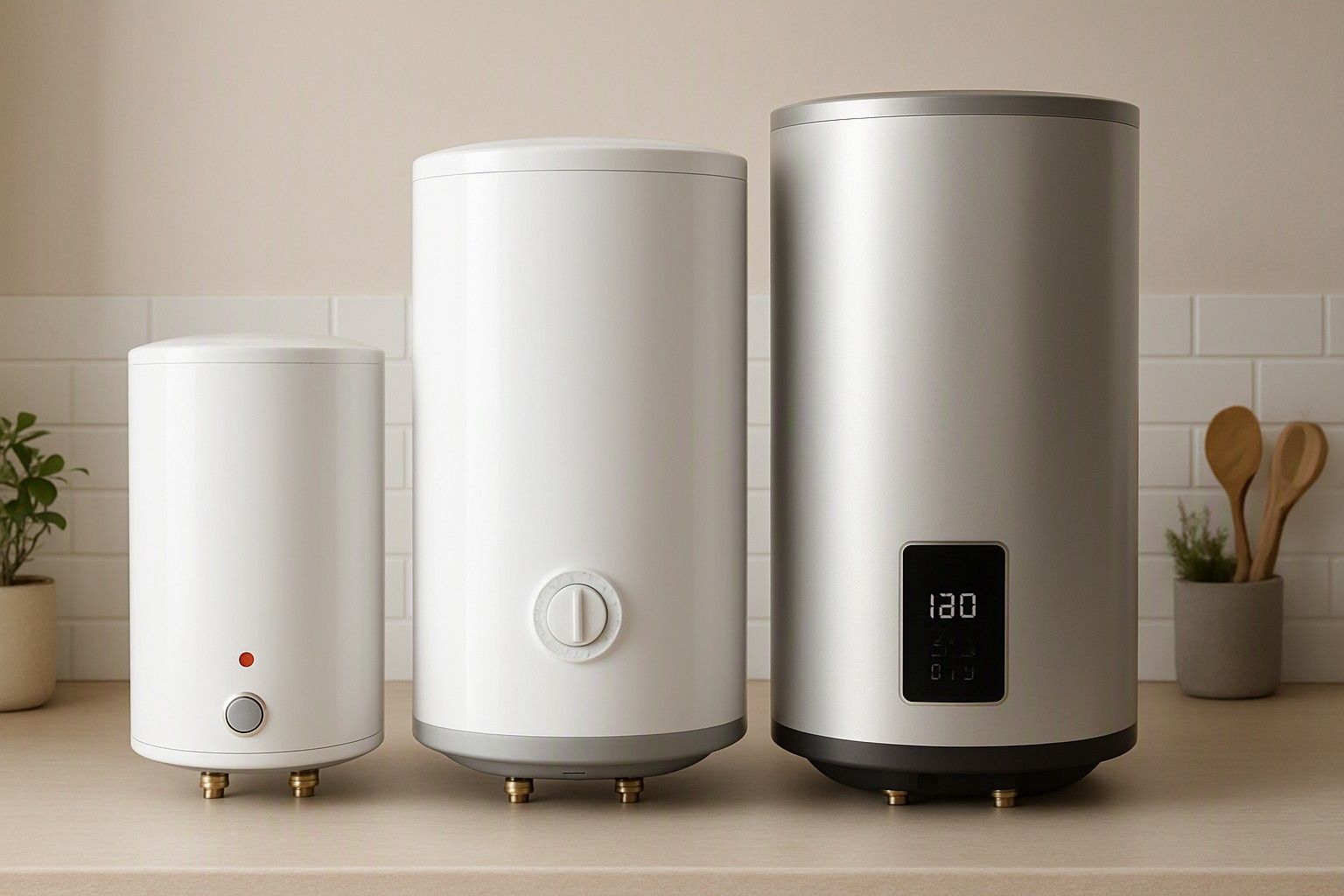
If you're staring at geyser listings wondering why one costs a fraction of another, the answer usually comes down to capacity, heating element quality, and safety features rather than brand markup alone. This guide maps out exactly what your money buys at each price point in India, so you can decide today whether a listed price is reasonable or inflated, without waiting around for a hypothetical discount.
Geyser Price Range in India: ₹1,500 to ₹25,000
Geysers sold in India span a wide spread, from ₹1,500 at the entry level to ₹25,000 for high-capacity or feature-loaded models, with the market average sitting around ₹6,500. That gap isn't arbitrary — it reflects real differences in tank capacity, the grade of heating element used, the quality of the outer body and insulation, and the number of safety cut-offs built in. A geyser at the bottom of the range is usually a small-capacity unit meant for a single point of use, while one near the top is typically a larger storage unit or a instant/tankless model built for higher pressure and continuous hot water demand.
Understanding this full spread matters before you even start comparing individual listings, because a price that looks high in isolation might be completely normal once you know it sits mid-range for the category, and a price that looks like a bargain might actually be near the floor for a reason. Knowing where ₹1,500, ₹6,500, and ₹25,000 fall gives you a mental ruler to hold any specific listing against, rather than judging it against vague expectations or a single competing tab you happened to open. The rest of this guide breaks that range into usable tiers so you can match your actual bathroom setup and hot water needs to a realistic budget.
What ₹2,000 Geysers Offer
At ₹2,000, you're looking at the most basic tier of the category — small storage capacity, a simple heating element, and minimal insulation. These units are built for light, occasional use: a single bathroom in a small household, a kitchen point for washing dishes, or a backup unit for guest use. Don't expect fast heating or the ability to run two outlets simultaneously; the heating element at this price is sized to warm a small volume slowly, and the tank body is usually a lighter-gauge material that holds heat less efficiently over time.
Safety features are typically limited to a basic thermostat and a single cut-off, without the layered protection you'd find further up the range. This isn't necessarily a dealbreaker for low-usage scenarios, but it does mean less margin for error if the unit is used harder than it's designed for, such as running continuously in a large household. The body finish and fittings are also simpler, so expect a shorter realistic service life compared to higher tiers.
What you're really paying for at ₹2,000 is coverage of the basic function — hot water, eventually, for occasional use — rather than speed, capacity, or long-term durability. It's a reasonable choice if your usage is genuinely light and infrequent, but a poor fit if you're trying to stretch it to serve a full family's daily bathing needs.
The ₹6,000 Sweet Spot Around ₹6,500
The ₹6,000 band, anchored around the category average of ₹6,500, is where most households actually end up buying, and for good reason. At this level, manufacturers typically step up the tank capacity enough to serve a small to medium family, use a better-quality heating element that recovers heat faster between uses, and add meaningfully thicker insulation that keeps water warm longer without the element cycling constantly. That last point matters more than it sounds — better insulation directly reduces the running electricity cost over the geyser's life, which is a bigger factor in total cost than the sticker price alone.
Safety features also improve noticeably in this tier. You'll commonly find multiple cut-offs, better pressure handling, and more reliable thermostats, which reduces the risk profile compared to the entry tier without pushing you into premium territory. The outer body tends to be a sturdier build too, which affects both longevity and how well the unit resists corrosion in humid bathroom environments over years of use.
This is the price band where the feature-to-cost ratio is most favourable for typical Indian household usage — daily bathing for two to four people, moderate kitchen use, and a bathroom that isn't unusually large or cold. If your household fits that profile, spending near ₹6,500 rather than chasing the absolute lowest price in the ₹2,000 range usually pays for itself in fewer replacements and lower running costs.
What Changes in the ₹15,000 Range
Moving into ₹15,000, the improvements shift from basic function to convenience and capacity for heavier demand. Tank sizes here are built for larger families or homes with multiple bathrooms drawing hot water close together, and the heating elements are typically rated to recover faster so back-to-back showers don't run cold. You'll also start seeing features aimed at reducing standby power loss, such as improved insulation layers and smarter thermostatic control that holds temperature more precisely instead of overshooting and wasting electricity.
Build quality and finish are also a real differentiator at this level. Outer bodies tend to use more corrosion-resistant materials, which matters for longevity in bathrooms with high humidity or harder water. Some models in this range also add digital temperature displays, adjustable heating modes, or additional layered safety cut-offs that reduce risk further, though the core function — heating and storing or passing through water — remains the same as cheaper tiers.
What you're paying the extra premium for isn't a fundamentally different product, but a meaningfully longer service life, lower running cost from better insulation, and more comfortable day-to-day usage for a busier household. If your usage pattern is genuinely heavy — a large family, multiple bathrooms, or a colder climate needing hotter water more often — this tier's price is justified by reduced replacement frequency and lower electricity bills, not just by having more features on paper.
Using Price History to Judge Today's Deal
Once you know the overall spread from ₹1,500 to ₹25,000 and where your target tier sits, the next question is whether a specific listing you're looking at right now is priced fairly. The way to answer that isn't by waiting to see if the number drops, but by checking where the current price sits relative to that model's own historical range. A geyser currently priced near the lower end of its typical range, or in line with where it has spent most of its selling history, is a reasonable buy today regardless of whether a lower price might theoretically appear later.
What you want to avoid is judging a price in isolation, based only on how it feels compared to a different model or a vague sense of "expensive" versus "cheap." A unit at ₹6,000 pricing that has consistently sold in that band for months is a fair deal even if a flash discount elsewhere briefly touches ₹2,000 territory for a lesser-featured unit — you're not comparing like with like. Price history data exists precisely to give you this context: it tells you whether today's number is typical, unusually high, or genuinely low for that specific product, which is far more useful than guessing based on gut feel or a single competing listing.
The practical takeaway is simple: if the price you're seeing sits within or below the normal historical range for that model and tier, that's confirmation to buy now with confidence, not a signal to keep waiting.
Matching Budget to Type and Capacity
Budget alone doesn't tell the full story — the same rupee amount can buy very different things depending on whether you need a small instant unit for one bathroom or a larger storage geyser feeding a whole household. A ₹6,000 spend on a small-capacity unit for a single low-usage bathroom will feel generous, while the same amount stretched across a large family's multiple-bathroom needs will feel tight and may push you toward compromising on insulation or safety features you'd rather keep. Before locking in a number, it helps to line your budget up with the right capacity so you're not overpaying for size you don't need or underpaying for capacity your household actually requires.
The practical approach is to start from your household's real hot water usage — how many people, how many bathrooms drawing simultaneously, and how cold your local water tends to run — and then find the tier that covers that usage comfortably rather than picking a price point first and hoping the specs fit. A family of four sharing one bathroom has very different needs from the same family across two bathrooms, even though both might be tempted by the same ₹6,000 listing. Getting this match right upfront saves you from the common mistake of buying on price alone and then finding the unit undersized or oversized for actual daily use.
You now have a clear map of what ₹1,500 to ₹25,000 actually buys in a geyser, and where your own usage fits within ₹2,000, ₹6,000, or ₹15,000. Check the listing you're considering against its own historical price pattern rather than against unrelated deals elsewhere, and you'll know whether today's number is a fair one to act on.
Comments
Be the first to comment.