Geyser Capacity Guide: How Many Litres Do You Actually Need
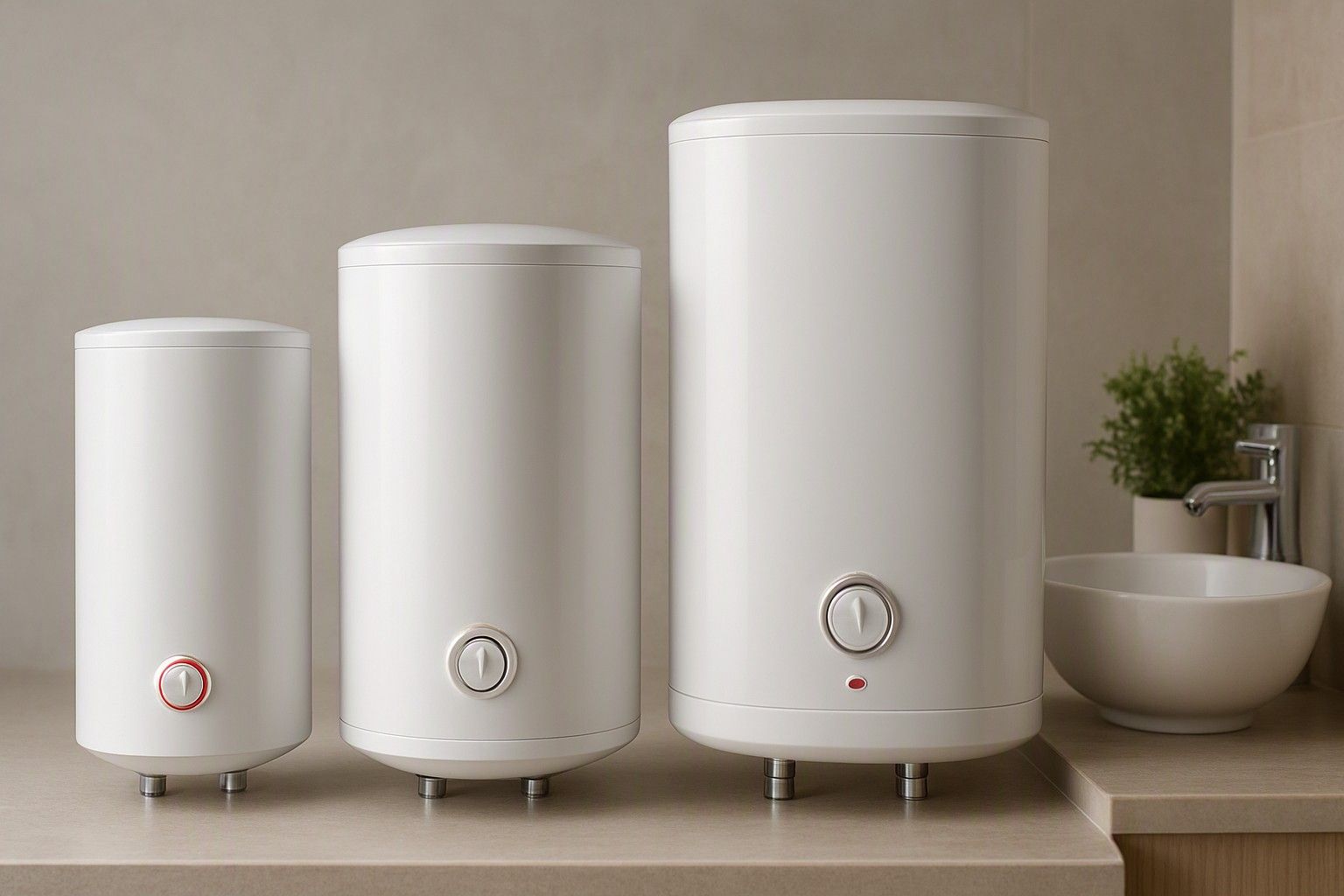
If you've ever run out of hot water halfway through a bath, or paid to heat a tank you never fully use, the problem usually isn't the geyser brand — it's the litre capacity. Getting this right depends on how many people use one bathroom, whether you bucket-bathe or shower, and how many points in the house need hot water. This guide walks through exactly how to size that number for your home, so you stop guessing at 6L, 10L, 15L or 25L and pick what your household actually needs.
What Litre Capacity Really Means for Hot Water
The litre rating on a geyser tells you how much water it can heat and hold at one time, not how much hot water you'll get in total during a bath. This distinction trips up a lot of first-time buyers. A geyser doesn't just fill once and sit idle — most storage units reheat continuously, so a 10L tank used for a 15-minute shower is effectively supplying more than 10 litres of hot water over that time, because cold water keeps entering and getting heated as you draw from the tap.
What actually matters for sizing is peak simultaneous demand: how much hot water you need available at the exact moment you're using it, mixed with cold water to reach a comfortable temperature. A single person doing a quick bucket bath needs far less standing capacity than a family where two bathrooms might be in use back-to-back on a winter morning. This is also why comparing two geysers purely on litres, without checking how fast each one heats and recovers, gives an incomplete picture — a smaller tank with quick reheating can sometimes outperform a larger, slower one for daily use.
In practical terms, think of litre capacity as the buffer size for your hot water, not the total supply. Everything else in this guide is about matching that buffer to how your household actually uses water.
Capacity for Bucket Bath vs Shower vs Geyser Taps
How you use hot water changes the litre number more than almost anything else. Someone who bathes with a bucket typically needs less hot water per session because they're mixing it with cold water in the bucket itself — a 6 to 10 litre geyser is usually enough for one adult's bucket bath, since you're only drawing 3 to 5 litres of hot water and topping up with cold.
Showers change the math considerably. A shower draws hot water continuously rather than in one mixed batch, so even though the flow rate is lower per minute, the total draw over a 10-15 minute shower can exceed what a small tank holds before it fully reheats. For a single shower point used by one or two people, a 15 to 25 litre geyser is the more comfortable range, especially in colder months when you're mixing in less cold water to keep the temperature high.
If you're running multiple taps off one geyser — say a shower and a wash basin in the same bathroom, or piping to an adjoining kitchen — you're drawing from the same stored volume from more than one point, so undersizing shows up quickly as lukewarm water at the second tap. Matching the tank to your actual fixture, not just your family size, is the more reliable way to size this: a bucket-only bathroom and a shower-only bathroom in the same house can genuinely need different capacities.
Sizing for Nuclear vs Joint Family Households
Family size is the second major variable, and it interacts with how many bathrooms are actually drawing from a given geyser. A single person or couple in a one-bathroom home is usually well served by a 10 to 15 litre unit, since hot water use is staggered through the day rather than happening all at once. This is also the segment where a compact tank in the ₹2,000 to ₹6,000 range tends to be genuinely sufficient rather than a compromise.
A nuclear family of three to four people sharing one or two bathrooms usually needs to move up to 15 to 25 litres per bathroom, particularly if mornings involve back-to-back use before school and office hours. Trying to stretch a smaller tank across four people's morning routine is one of the most common sizing mistakes — the geyser reheats fine in isolation, but can't keep pace when demand is stacked within a 60 to 90 minute window.
Joint families with multiple bathrooms and overlapping schedules are better served by installing an adequately sized geyser per bathroom rather than one large central tank feeding the whole house. A single oversized unit trying to serve three bathrooms means long pipe runs, heat loss in transit, and everyone waiting on the same reheat cycle. Per-bathroom sizing, even if it means two or three separate 15L units instead of one large tank, usually delivers more reliable hot water across a bigger household.
Kitchen and Washbasin Point-of-Use Sizing
Kitchen and washbasin taps have a completely different usage pattern from a bathroom, and sizing them like a bathroom geyser almost always means paying for capacity you'll never draw. These points are used in short, low-volume bursts — rinsing dishes, washing hands, filling a small vessel — rather than a sustained 10-15 minute draw. Installing a full 15 or 25 litre storage geyser at a kitchen sink means you're keeping a large tank hot around the clock for a need that might use two litres at a time.
For this kind of point-of-use demand, an instant unit may suit small point-of-use needs better than a storage tank, since it heats water on demand in seconds rather than maintaining standby heat. Small storage geysers in the 1 to 3 litre range also exist specifically for this use case and can work well if your household prefers a fixed small buffer over instant heating.
The practical test is simple: if a tap is used for short, infrequent bursts throughout the day, size it small and let it heat on demand rather than sizing it like a shower point. Treating every hot water point in the house identically is one of the quieter ways households end up with an oversized, overpriced setup that doesn't match how any individual tap is actually used.
Why Oversizing Costs You More Every Month
Buying a bigger tank than you need feels like a safety margin, but it's a decision that shows up on every single electricity bill afterward, not just once at purchase. A larger storage geyser holds more water on standby, and keeping that water hot around the clock — even with good insulation — means more standing heat loss and more frequent reheating cycles than a correctly sized tank would need. Over months and years, a bigger tank quietly raises your running cost in a way that's easy to overlook because it's spread thin across many small bills rather than one visible expense.
This matters more in the Indian context because most geysers here run on manual or thermostat-controlled heating rather than being switched on only exactly when needed — many households leave the unit on for convenience, especially in shared bathrooms. A 25 litre tank bought "to be safe" for a two-person household, when 15 litres would have comfortably covered actual use, means paying to heat roughly 10 extra litres every cycle indefinitely.
The upfront price difference between tiers can also be misleading on its own. A unit at the top of the ₹6,000 range and one just into ₹15,000 might differ by a few thousand rupees in capacity you don't use, but the real cost compounds through the running bill, not the sticker price. Sizing correctly at the point of purchase, based on the actual usage patterns covered above, is what keeps the ongoing cost proportional to what you actually need.
Quick Capacity Recommendations by Home Type
Pulling the sizing logic together: a single occupant or couple with a bucket-bath routine is comfortably served by 6 to 10 litres, and can often find suitable options within ₹2,000 to ₹6,000. The same household with a shower instead of bucket use should look closer to 15 litres to avoid running short mid-shower.
A nuclear family of three to four sharing one or two bathrooms generally needs 15 to 25 litres per bathroom, especially where mornings are rushed and multiple people bathe within a short window; this range typically sits within ₹6,000 to ₹15,000. Joint families with multiple bathrooms are better served by sizing each bathroom independently at 15 to 25 litres rather than centralising into one large tank.
Kitchen and washbasin points should be sized separately and smaller — either a compact 1 to 3 litre storage unit or an instant heater — regardless of how large the bathroom geysers are, since the usage pattern doesn't call for standing capacity. Across the market, prices span ₹1,500 to ₹25,000 with an average around ₹6,500, and capacity is a bigger driver of that spread than brand or finish. If you haven't yet worked through the other sizing factors like heating type and installation space, it's worth stepping back to return to the complete buying guide before finalising a litre size.
With capacity tied to how you actually bathe, how many people share a bathroom, and how each tap in the house is used, you now have a concrete litre number to work with instead of a guess based on tank size alone. Buy for the household you have today — a correctly sized geyser costs less to run every month than an oversized one bought "just in case."

Comments
Be the first to comment.