Mistakes to Avoid When Buying a Geyser
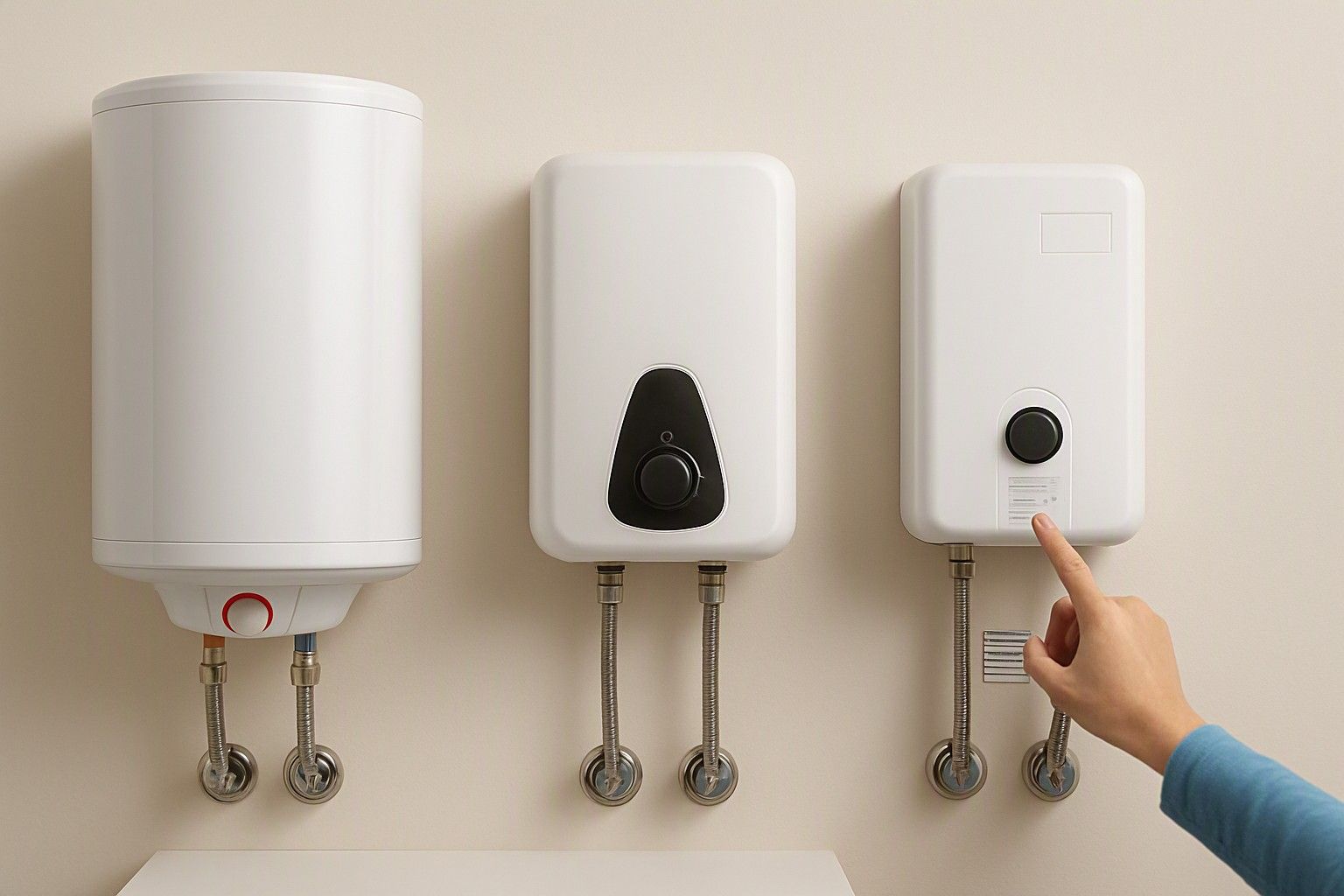
If you're about to buy a geyser and just want to make sure you're not about to make a costly error, this is the checklist for you. Most geyser complaints — leaks, weak heating, early breakdowns, surprise costs — trace back to a handful of avoidable mistakes made at the point of purchase, not bad luck or bad brands. Go through these six before you pay, and you'll buy with the same confidence whether you're spending ₹1,500 or ₹25,000.
Buying the Wrong Capacity for Your Household
This is the single most common mistake, and it happens in both directions. Buyers with a family of four or five sometimes pick a small storage geyser to save money upfront, then spend months running out of hot water mid-shower or waiting for a second heating cycle. Others buy a large-capacity tank for a one- or two-person household and end up heating (and paying to heat) far more water than they ever use, day after day. Neither mistake shows up on the price tag — it shows up on the electricity bill or in daily frustration, which is worse because it's harder to trace back to the original decision.
The right capacity depends on household size, number of bathrooms, whether the geyser needs to serve a kitchen point too, and how hot water is actually used in your home — quick washes versus long showers versus bucket-filling. It's also tied to whether a storage or instant geyser suits your usage pattern better in the first place. Rather than guessing or matching what a neighbour bought, it's worth taking the time to get the litre sizing right first before you even start comparing models or prices. Capacity is the one variable that's expensive to get wrong and free to get right if you check it early.
Ignoring Water Quality Before Choosing a Model
A geyser that performs perfectly in one home can fail early in another, and the difference is usually water quality, not build quality. Buyers rarely think about their local water hardness when they're standing in a showroom or browsing online, but the heating element and tank lining inside a geyser react very differently to hard water than to soft water. Scale buildup on the heating rod is one of the most common reasons geysers lose efficiency, take longer to heat water, and need repairs well before their expected lifespan — and it's almost entirely preventable by choosing the right tank material and element type upfront.
This mistake is easy to make because it's invisible at the time of purchase. The geyser works fine on day one regardless of your water source. The problem shows up six months to a couple of years in, as reduced output, unusual noises, or a technician visit that could have been avoided. Since hard water can quietly kill the wrong geyser, it's worth checking your local water hardness before finalising a model, not after installation. This is especially relevant if you're buying for a home on groundwater or borewell supply, where hardness tends to be higher than municipal-treated water.
Overlooking Safety Features to Save Money
It's tempting to treat safety features as optional extras when comparing prices, especially since the cheapest models in the ₹2,000 range often strip these down to hit a lower number. But a geyser is a pressurised, electrically heated appliance installed in a wet area of your home — this is exactly the category where cutting corners on safety has the highest real-world consequence, not just a shorter product life.
Buyers sometimes assume that any unit sold in India automatically meets the same safety bar, so they don't check further and simply pick whatever costs less. In reality, features like thermal cutoffs, pressure relief valves, and proper earthing provisions vary meaningfully between models, and their absence isn't something you'll notice until something goes wrong. The money saved by skipping these features is small relative to the total purchase price, and it's the wrong place to economise given what's at stake. Before comparing prices further, it's worth making sure you never skip the essential safety features on your shortlist, regardless of which budget tier you're shopping in. Treat this as a filter you apply before price, not after.
Forgetting Installation and Maintenance Costs
The price on the box or listing is not the full cost of owning a geyser, and buyers who forget this often end up spending more than they budgeted for within the first month. Installation typically involves plumbing work, electrical connection, and sometimes wall mounting hardware that isn't included with the unit — costs that vary depending on your home's existing setup and whether you're replacing an old geyser or installing a fresh point. Skipping professional installation to save money is a false economy, since incorrect installation is a common cause of leaks, pressure issues, and voided warranties.
Maintenance is the second overlooked cost. Depending on your water quality and usage, a geyser may need periodic servicing — cleaning the tank, checking the heating element, or replacing a valve — over its working life. Buyers who compare only the sticker price across models in the ₹6,000 range without factoring in these recurring costs sometimes find that a slightly pricier model with easier serviceability or a longer warranty period actually works out cheaper over a few years. Ask about installation charges and expected maintenance needs before you finalise a purchase, not after the unit is already on your wall.
Chasing the Lowest Price Over Long-Term Value
With geyser prices ranging from ₹1,500 to ₹25,000 and averaging around ₹6,500, it's natural to gravitate toward whatever sits at the bottom of that range. But the lowest price in a listing isn't automatically the best value — it's simply the lowest price, and those are two different things. A unit priced well below the average may be cutting into insulation quality, heating element life, or the safety features covered earlier, all of which affect what you actually pay over the geyser's working life through electricity bills and repairs.
This doesn't mean you need to spend at the top of the range either. Models in the ₹15,000 band often represent a genuine middle ground — better insulation and componentry than entry-level units, without paying for capacity or features you won't use. The point isn't to spend more for its own sake; it's to weigh price against expected lifespan, warranty coverage, and running cost rather than optimising for the smallest number on the page. A geyser bought purely on lowest price today often ends up costing more within a year or two than one bought with total ownership cost in mind.
A Final Checklist Before You Pay
Before you complete the purchase, run through this quickly: Is the capacity matched to your household size and usage pattern, not just your budget? Have you checked your water hardness against the tank material and element type of the model you've chosen? Are essential safety features — thermal cutoff, pressure relief valve, proper earthing — confirmed present, not assumed? Have you accounted for installation and any likely maintenance cost on top of the sticker price? And finally, are you choosing this model because it offers genuine value at its price point, not simply because it's the cheapest option in front of you?
If you can answer all five confidently, you're not making a snap decision — you're making an informed one, which is the entire point of this checklist. For a broader view that ties all of these factors together in one place, it's worth taking a moment to run through the complete buying guide one last time before you check out. It won't change your decision if you've already covered the ground above, but it's a useful last confirmation that nothing's been missed.
That covers the mistakes that actually cost buyers money or comfort after purchase — not hypothetical ones, but the ones that show up repeatedly in geyser complaints across price points. Get capacity, water quality, safety, and total cost right before you pay, and the price you settle on — anywhere between ₹1,500 and ₹25,000 — will reflect a decision you made, not one you fell into.
Comments
Be the first to comment.