Geyser Safety Features and Certifications You Should Check
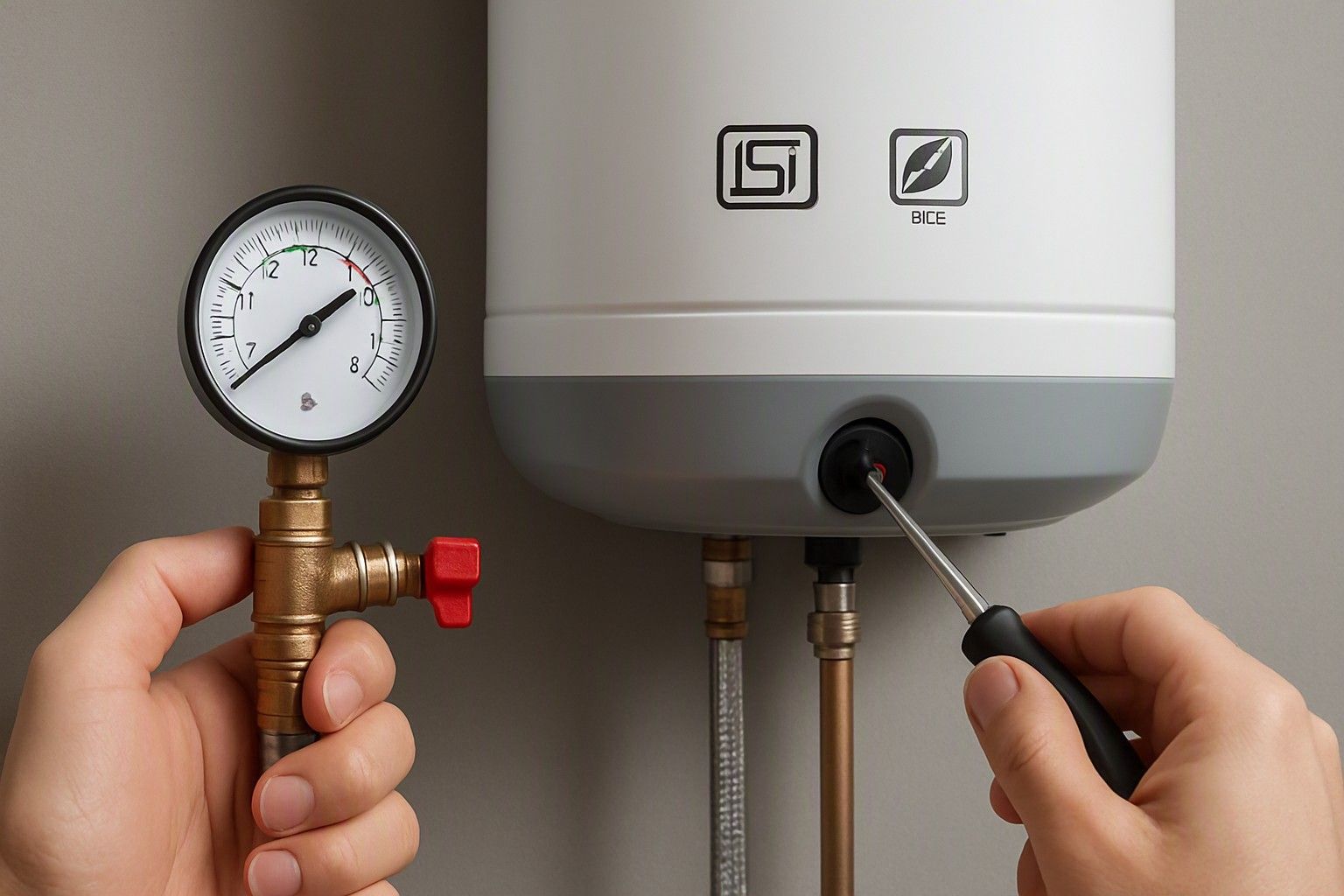
A geyser sits in your bathroom holding hot water under pressure, wired to live electricity, often in a space with poor ventilation — so asking which safety features and certifications it should carry isn't a formality, it's the right question. This article walks through exactly what to check before you buy, so you're not relying on a salesperson's word or a shiny sticker on the box.
Why Geyser Safety Cannot Be Ignored
A geyser is one of the few appliances in an Indian home that combines high voltage, standing water, and confined bathroom spaces — a combination that has caused real electrocution and, in rare cases, tank-burst incidents when pressure isn't controlled. This isn't a reason to panic, but it is a reason to treat the safety checklist as seriously as the capacity or wattage numbers you'd normally focus on.
The risk isn't evenly spread across the market. Cutting corners on safety hardware is how some manufacturers hit the lowest price points, so a unit priced well under ₹1,500 plus wouldn't exist without skipping something — and that something is usually a safety component rather than a cosmetic feature. This doesn't mean every affordable geyser is unsafe; it means the burden is on you to verify safety features exist rather than assume they're standard.
At the other end, paying closer to ₹25,000 doesn't automatically buy you better protection either — it often buys you extra convenience features, finish, or capacity. The safety fundamentals covered in this article should be present at every price point from ₹2,000 upward, and checking for them takes a few minutes at the point of purchase. That's a small effort against a genuinely serious risk, which is exactly why this deserves its own careful look before you commit.
Pressure Relief Valve, Thermostat and Thermal Cutout
Three components do most of the safety work inside a geyser, and each protects against a different failure mode. The pressure relief valve (PRV) releases water automatically if internal pressure builds beyond a safe limit, which matters because a sealed tank heating water without an escape route is what leads to tank deformation or, in worst cases, rupture. Never buy a geyser without a visible, functioning PRV, and check that it isn't painted over or jammed at the showroom.
The thermostat is what stops the heating element once water reaches the set temperature. Without a working thermostat, the element keeps heating indefinitely, wasting electricity and pushing the tank toward dangerous pressure and temperature levels. A geyser with a wide, clearly marked temperature dial and a thermostat that audibly or visibly clicks off is doing its job correctly.
The thermal cutout (sometimes called a thermal fuse or ECO — energy cut-off) is the backup for when the thermostat itself fails. It cuts power to the heating element entirely if temperature crosses a fixed upper threshold, independent of the thermostat setting. This is the component that prevents a stuck thermostat from turning into a scalding or bursting hazard. Ask specifically whether a model has a thermal cutout separate from its thermostat — many budget units in the ₹2,000 range rely on the thermostat alone, which is a meaningfully weaker safety setup even if the price looks attractive.
ISI Mark, BEE Rating and Other Certifications to Verify
The ISI mark from the Bureau of Indian Standards is the baseline certification for electrical safety in geysers sold in India, and it isn't optional or decorative — it confirms the product has been tested against defined safety standards for insulation, earthing, and construction. If a geyser doesn't carry a visible ISI mark on the body or nameplate, treat that as a firm reason to walk away, regardless of how good the price looks.
The BEE star rating label is a separate certification that speaks to energy efficiency rather than electrical safety, but it's worth checking alongside ISI because it tells you how much the unit will cost to run over its lifetime, which matters when you're comparing a ₹6,000 model against a ₹15,000 one. A higher star rating generally means better insulation and heating efficiency, which also indirectly reduces strain on the heating element and thermostat.
Beyond these two, look for an IP (Ingress Protection) rating on the nameplate, particularly IPX4 or higher, which indicates the unit is built to resist water splashes reaching internal electrical parts — relevant given where geysers are installed. None of these certifications are a guarantee of a flawless product, but their absence is a reliable signal that corners were cut somewhere in manufacturing, and that's not a trade-off worth making on an appliance wired directly into your bathroom's electrics.
Rust-Proof Body and Shock-Proof Protection
A geyser's outer body isn't just cosmetic — it's the barrier between you and live electrical components inside a room that's routinely wet and humid. Look for a body described as shock-proof or with a fully insulated outer casing, since this is what prevents stray current from reaching the surface you or a family member might touch while showering. Plastic outer bodies with insulated internal wiring are common in this regard and aren't a sign of a cheaper or lesser build; the insulation quality matters more than the material itself.
Rust is a slower-moving but equally real problem, particularly for storage geysers where the inner tank holds water constantly. Tanks described as glass-lined or with enamel coating resist corrosion far better than plain mild steel, and this matters directly for safety because a corroded tank is more prone to leaks and, over time, weakened structural integrity that can affect how safely it holds pressure. Check the tank material specification rather than assuming a shinier outer body means better internal protection — they're often unrelated.
For the outer casing, ask whether the model is rated for indoor bathroom use specifically, since some units marketed for utility or outdoor mounting skip the extra sealing needed against splashes. This is a five-minute check at purchase that protects against a risk you won't notice until something goes wrong months into ownership.
Voltage Fluctuation and Earthing Safeguards
Indian household voltage isn't always steady, and a geyser without protection against fluctuation is exposed every time the supply spikes or dips unexpectedly. A built-in voltage stabiliser or surge protection feature absorbs these swings before they reach the heating element and thermostat, and its absence means those components take the full hit repeatedly, shortening their working life and increasing the odds of failure at the worst possible moment — mid-shower, with the unit live.
Earthing is the other half of this safeguard, and it's not something the geyser itself can fully compensate for. Even a geyser built with every safety certification going will not protect you if the point it's plugged into isn't properly earthed, because earthing is what gives fault current somewhere safe to go instead of through a person touching the unit or the water. This is precisely why correct installation is half of geyser safety — a well-built geyser installed on a poorly earthed circuit is still a real electrocution risk, and no certification on the product itself changes that.
Before installation, have an electrician confirm the earthing at your specific point, not just somewhere in the house, and ask whether the model you're buying has fluctuation protection built in or needs a separate stabiliser, particularly if you're in an area with known voltage instability. This is a detail worth confirming regardless of whether you're spending near ₹1,500 or ₹25,000.
Red Flags That Signal an Unsafe Geyser
Some warning signs are visible before you even plug the unit in. A missing or unclear ISI mark, a PRV that looks painted over or doesn't move freely, a nameplate with no IP rating printed, or a price that sits noticeably below the ₹2,000 range for a stated capacity and wattage combination that should cost more — each of these is a reason to pause and ask direct questions rather than proceed on trust.
After installation, different red flags matter. A geyser that produces a burning smell, buzzing or crackling sounds from the switch, a body that feels warm or gives a mild tingling sensation to the touch, or water that comes out visibly discoloured are all signs that something inside has already gone wrong and the unit needs to be switched off and inspected, not monitored and hoped to improve. Frequent tripping of the circuit breaker when the geyser is running is another sign worth taking seriously rather than resetting and ignoring.
These red flags apply regardless of how much you paid, since even a unit near ₹6,500 can develop faults over time through wear, poor installation, or manufacturing defects that only show up under use. For a broader picture of what else trips up buyers at the purchase stage, from wrong sizing to ignoring warranty terms, see the full list of buying mistakes to avoid — safety is one part of a purchase decision that has several other places to go wrong too.
Buying a geyser safely doesn't require becoming an electrician — it requires checking for a handful of specific things every time: a visible ISI mark, a working PRV, a thermostat backed by a thermal cutout, a properly rated body, and earthing confirmed at the point of installation. Get those right and the price you pay, whether near ₹1,500 or closer to ₹6,500, buys you an appliance you don't need to think twice about every time you turn it on.

Comments
Be the first to comment.