Hard Water and Climate: Choosing a Geyser That Survives Indian Water
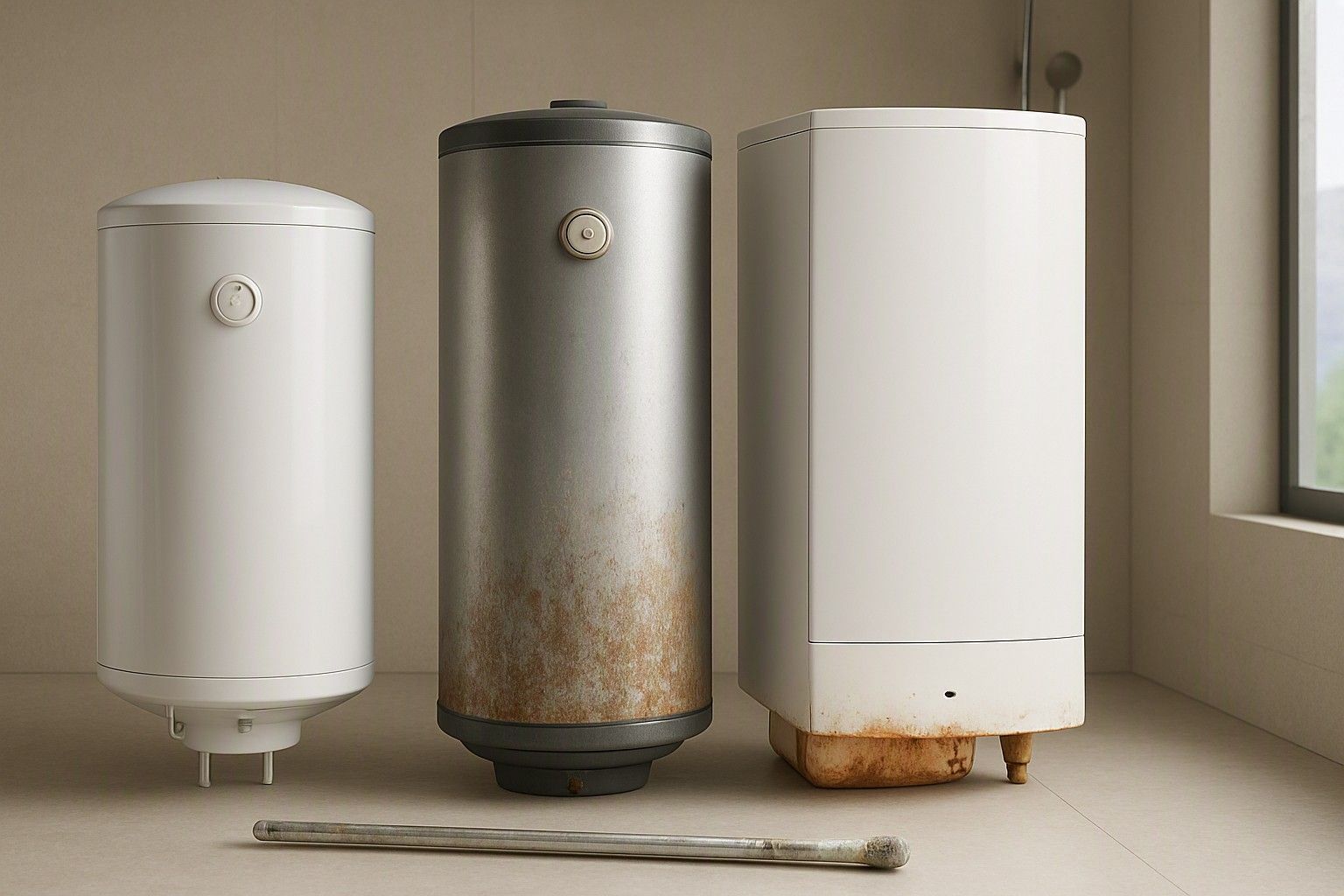
If your tap water leaves a white crust on your bathroom fittings or your old geyser died well before it should have, water quality is probably the real culprit — not bad luck. Which geyser survives depends heavily on where you live and what's in your water, and this guide walks through exactly what to check before you buy again.
How Hard Water Damages a Geyser From Inside
Hard water carries dissolved calcium and magnesium salts, and every time a geyser heats that water, some of those minerals drop out as scale. This scale doesn't just coat the heating element — it builds up along the inner tank wall, around threaded joints, and inside the inlet and outlet pipes. Over months, a layer of scale on the heating element forces the geyser to run longer to reach the same temperature, which pushes up your electricity bill quietly, without any obvious sign until the bill arrives.
The bigger problem is what scale does to the tank itself. As mineral deposits build up unevenly, they create pockets where the metal underneath is no longer protected by whatever lining or coating the tank originally had. Water sits against bare metal in these pockets, and corrosion starts from that single weak point rather than spreading evenly. This is why geysers in hard water regions often fail with a sudden leak rather than a gradual decline — the tank looks fine from outside right up until it isn't. In areas with genuinely hard water, this process can cut years off a geyser's working life compared to the same unit running on softer water, which is exactly why the primary buyer question — which geyser survives Indian water — doesn't have one universal answer. It depends on how aggressive your local water actually is.
Tank Materials and Linings: Glass-Lined, Copper, Stainless Steel
The tank's inner surface is what actually meets hard water day after day, so this is where the real decision sits. Glass-lined tanks are steel tanks coated on the inside with a layer of vitreous enamel, fused on under heat. That glass layer is chemically inert, so it doesn't react with dissolved minerals the way bare metal does, and it's the option most commonly recommended for hard water because scale forms on top of the glass rather than eating into the tank wall beneath it. The trade-off is that the lining can develop micro-cracks over years of thermal expansion and contraction, especially if the geyser is switched on and off aggressively, and once a crack exposes the steel underneath, corrosion can start from that exact point.
Copper tanks conduct heat well and resist corrosion better than plain steel, but copper reacts more visibly with certain water chemistries, particularly water with a very low or very high mineral balance, and can develop pinhole leaks over long-term use in some conditions. They're less common in mainstream geysers sold in India today but still show up in higher-end units. Stainless steel tanks resist rust in the conventional sense, but scale still deposits on the surface, and welded joints in stainless tanks can become weak points if the grade of steel used isn't suited to hard water. For most Indian homes with genuinely hard water, a glass-lined tank paired with a proper anode rod remains the more dependable, lower-maintenance choice over copper or basic stainless builds.
Anode Rods and Why They Matter in Indian Water
An anode rod is a sacrificial metal rod, usually magnesium, installed inside the tank specifically so that corrosion attacks the rod first instead of the tank wall. This works through a basic electrochemical principle — the anode rod is more reactive than the tank's inner surface, so it corrodes away gradually while the tank stays protected, as long as the rod hasn't been fully consumed. In hard water areas, this process happens faster because there's more dissolved mineral content driving the reaction, which means the anode rod wears down quicker than it would in soft water regions.
This is the part many buyers miss: an anode rod that isn't checked or replaced stops protecting the tank once it's used up, and the tank starts corroding as if it had no protection at all. Some geysers make the rod easy to inspect and swap, others bury it in a way that makes replacement impractical without professional help. If you live in a hard water area, ask specifically about anode rod access and expected replacement intervals before buying, rather than assuming every geyser handles this the same way. This single component is often the real difference between a geyser that lasts its full expected life in hard water and one that develops a tank leak well ahead of schedule.
Coastal, Cold and Hard-Water Regions of India
India's geyser-buying decision isn't uniform because the water and climate stress on a unit varies sharply by region. Coastal areas — parts of Gujarat, Maharashtra's coastline, Tamil Nadu, Kerala, and Odisha — combine salt-laden humid air with, in many pockets, moderately hard groundwater. Here the concern is twofold: internal scale buildup and external corrosion of the outer casing and fittings from salty air, so a unit with a well-sealed outer body matters almost as much as the tank lining.
North Indian states — much of Rajasthan, Haryana, parts of Delhi-NCR, and western Uttar Pradesh — often have genuinely hard groundwater with high calcium and magnesium content, making tank lining and anode rod quality the priority over any other feature. Cold climate regions, including the hill states and parts of the north during winter, put different stress on a geyser: the unit works harder and longer to heat colder input water, which means more heating cycles, more scale-forming events, and faster wear on the element in hard water zones that also happen to be cold, such as parts of the Delhi-NCR belt and interior Rajasthan through winter. If you know your region falls into more than one of these categories, treat tank protection as the non-negotiable spec, not an upgrade you can skip to save money.
How Water Quality Affects Warranty Claims
Manufacturer warranties on the tank are usually the longest-covered part of a geyser, sometimes running well beyond the warranty on the heating element or the body, but that tank warranty typically comes with conditions tied to water quality and maintenance that many buyers never read closely. A tank that fails because of scale-driven corrosion in an area with known hard water can sometimes be flagged during inspection as a maintenance issue rather than a manufacturing defect, especially if there's no record of anode rod checks or periodic servicing.
This doesn't mean hard water voids your warranty outright, but it does mean the burden shifts slightly onto the buyer to show the unit was reasonably maintained. Descaling schedules, anode rod inspection, and even the water pressure the geyser was run at can all factor into how a warranty claim gets assessed. Given that a geyser bought anywhere from ₹1,500 to ₹25,000 represents a real investment, it's worth understanding these terms before you need them rather than after a tank starts leaking — you can check how water quality changes warranty coverage to see exactly what maintenance steps keep a claim valid in hard water conditions.
Choosing the Right Build for Your Area
Once you know what your local water is doing to a tank, the actual buying decision gets simpler. In areas with confirmed hard water, prioritise a glass-lined tank with an accessible, replaceable anode rod over other features, even if that means spending slightly more within the ₹6,000 or ₹15,000 range rather than settling for the cheapest option in ₹2,000. In coastal zones, add outer-body corrosion resistance to that checklist. In regions that are both cold and hard-water, expect to service the unit more frequently regardless of which model you buy, since higher heating cycles accelerate scale formation no matter how good the lining is.
Across the market, prices span ₹1,500 to ₹25,000 with an average around ₹6,500, and that spread exists partly because tank protection technology genuinely costs more to build well — it isn't only brand markup. A unit priced near the average that's specifically built for hard water will usually outlast a cheaper unit without proper lining, even if the sticker price looks like a better deal today. This regional water-quality factor is one piece of a larger set of decisions — you can see how this fits the overall buying decision to weigh it alongside capacity, wattage, and installation type for your specific home.
Hard water doesn't make every geyser a bad buy — it just narrows down which builds are worth paying for. Match the tank lining and anode rod setup to what your regional water and climate actually demand, and the geyser you choose today will hold up the way the one before it probably didn't.

Comments
Be the first to comment.