Exercise Bike Workout & Electricity Calculator
Compare upright, recumbent, spin and air bikes for your workout goal. Estimate calories from your weight and routine, then see how much electricity your bike may use based on its power draw and household use.
~221 kcal
estimated gross energy, 70 kg rider · moderate 30-minute ride
1. Bike type and goal
Pick a bike and the outcome you care about. Type affects riding position, comfort and training style; your effort and time drive the calorie estimate.
Bike type
Your main goal
Upright · A practical general-cardio fit
An upright bike is a familiar, space-conscious option for regular steady riding. Adjust the saddle so the leg remains slightly bent at the bottom of the pedal stroke.
2. Rider and workout
Use average rider weight if several people share the bike. Calories are a broad activity estimate, not a measured workout result.
Ride effort
Effort bands use representative stationary-cycling MET values; choose by how hard the ride feels, not by bike style.
3. Bike electricity
Bike type does not determine electricity use. Check the bike label or measure wall draw if it uses mains power. Manual/self-powered bikes use no mains electricity while pedalling. The powered-bike default is a 150 W reference estimate; replace it with your bike’s measured or rated electrical input when available.
How is your bike powered?
150 W reference only. Replace it with measured electrical input, not rider output watts.
Default ₹6.5/kWh. Change it to match your bill.
Bike type shapes the ride; effort shapes the estimate
Upright bikes are a familiar compact choice for general cardio. Recumbent bikes place the rider in a reclined position with back support. Spin bikes suit riders looking for harder, cycling-style sessions, while air bikes add moving handles so the arms work along with the legs. Those are differences in setup and workout style—not a ranking where one type is universally “more effective.”
The calorie estimate uses your weight, ride duration and selected effort band. It does not increase just because you selected a spin or air bike. Real energy use varies with resistance, cadence, fitness, fit and how closely the effort matches the chosen band. Use the estimate to compare similar planned rides, not as a promise of weight loss or a medical measurement.
Electricity is a separate calculation. Many manual magnetic bikes need no mains power for resistance; some consoles use batteries, while powered resistance or displays may draw from a wall adapter. Enter the bike’s electrical input watts and your household routine for a useful estimate. Rider weight affects the activity estimate, but electricity is calculated from wall power and time—not from body weight.
How it’s calculated
The activity estimate uses the standard MET energy equation and representative stationary-cycling effort values from the 2024 Adult Compendium of Physical Activities. The electrical estimate uses your entered power draw and total active ride time.
kcal per ride ≈ MET × 3.5 × weight (kg) ÷ 200 × minutes
monthly kWh = watts ÷ 1,000 × minutes ÷ 60 × rides/week × riders × 4.33
monthly cost = monthly kWh × electricity rate (₹/kWh)
| Input / assumption | Used for | Notes |
|---|---|---|
| Light effort | 4.0 MET | Representative stationary cycling around 50 W in the 2024 Adult Compendium. |
| Moderate effort | 6.0 MET | Representative stationary cycling around 90–100 W in the 2024 Adult Compendium. |
| Vigorous effort | 8.0 MET | Representative stationary cycling around 126–150 W in the 2024 Adult Compendium. |
| Month length | 4.33 weeks | Average calendar month for converting your weekly routine. |
| Electricity draw | User-entered watts | Enter electrical input at the wall, not mechanical output or resistance level. |
Calories are population-level estimates, not precise measurements. Electrical estimates exclude standby power, battery charging and any losses not captured by the entered wall-power figure. Actual usage depends on the bike and its operating mode.
Which exercise bike suits your workout?
Compare the practical differences. At the same body weight, duration and effort band, this tool shows the same calorie estimate for each type—the result changes when your actual effort or time changes.
| Bike type | Often suits | Workout character | Trade-off to consider |
|---|---|---|---|
| Upright· selected | General cardio and a smaller floor footprint. | Seated pedalling at a steady or varied effort. | Saddle comfort and forward posture may matter on longer rides. |
| Recumbent | Riders prioritising supported seating and easy access. | Supported, seated pedalling for steady sessions. | Usually longer and bulkier; check floor space and pedal reach. |
| Spin | Structured sessions, varied resistance and cycling-style effort. | Can include seated and standing efforts, depending on the bike. | Fit, saddle comfort and setup deserve attention; some models are noisy. |
| Air bike | Full-body efforts and short, high-effort intervals. | Resistance rises as you pedal harder; handles move with the ride. | Fan noise and a demanding workout style may not suit every home. |
Get a more useful estimate
Match bike to the ride you’ll do
Choose a frame and riding position you find comfortable. A bike you use regularly is more useful than a feature-heavy bike that does not suit your routine.
Treat calories as a broad estimate
The effort band is a population-level approximation. Fitness, cadence, resistance, bike calibration and rest breaks change real energy use.
Use electrical input watts
Check the adapter or specification label, or use a plug-in power meter. Human output watts and the bike’s wall draw are different quantities.
Consider neighbours and room
Fan and friction systems can be audible, while floor vibration depends on the bike, surface and riding style. A mat may help protect floors and reduce vibration.
Frequently asked questions
Which exercise bike type is most effective?
There is no universally most effective type. Upright bikes are a compact general-cardio choice, recumbent bikes provide a reclined supported position, spin bikes suit cycling-style structured efforts, and air bikes add moving handles for upper-body work. Consistency, effort and fit matter more than the label.
Does a spin bike burn more calories than an upright bike?
Not automatically. At the same rider weight, duration and effort, this estimate is the same for both. A bike may make a particular effort easier or harder to sustain, but actual calorie use depends on the workout rather than frame name alone.
How does this tool estimate calories?
It uses the standard MET equation: MET × 3.5 × body weight in kg ÷ 200 × minutes. The selected effort maps to a representative stationary-cycling MET value from the 2024 Adult Compendium. It is an estimate, not a direct measurement.
How much electricity does an exercise bike use?
Many manual bikes need no mains electricity for pedalling, although a console may use batteries or an adapter. Powered bikes vary. Enter the electrical input watts and your ride schedule to estimate kWh and cost.
Does my weight affect the bike’s electricity cost?
This calculator estimates electricity from entered wall power, ride duration, weekly frequency and number of riders. It does not multiply electrical draw by body weight; actual draw can vary with load and operating mode, so measured wall power is best.
Can I use the bike’s displayed watts for electricity?
Only if the manufacturer identifies that figure as electrical input power. Many displays show rider output or resistance-related workout data, which is not the same as electricity drawn from the wall.
What is a MET?
A MET is a standardised estimate of activity intensity compared with resting. It helps produce broad energy-use estimates, but people can expend different amounts at the same nominal activity level.
Are the calorie results suitable for weight-loss planning?
Use them as approximate activity context, not as a promise of fat loss or as a precise food allowance. Weight change depends on many factors beyond one workout. Consult a qualified clinician for individual health advice.
Which bike may suit a gentle seated workout?
An upright bike can provide straightforward seated pedalling; a recumbent bike offers a reclined seat and back support. The right choice depends on fit, access, stability and personal comfort. For a health condition or rehabilitation, ask a clinician.
Does the electricity estimate include standby use?
No. It estimates active workout electricity from the wattage you enter. Standby draw, battery charging and other always-on use are excluded.
Exercise bike guides and comparisons
Explore our guides to bike styles, workout fit, resistance, rider capacity and choosing an exercise bike for your home.
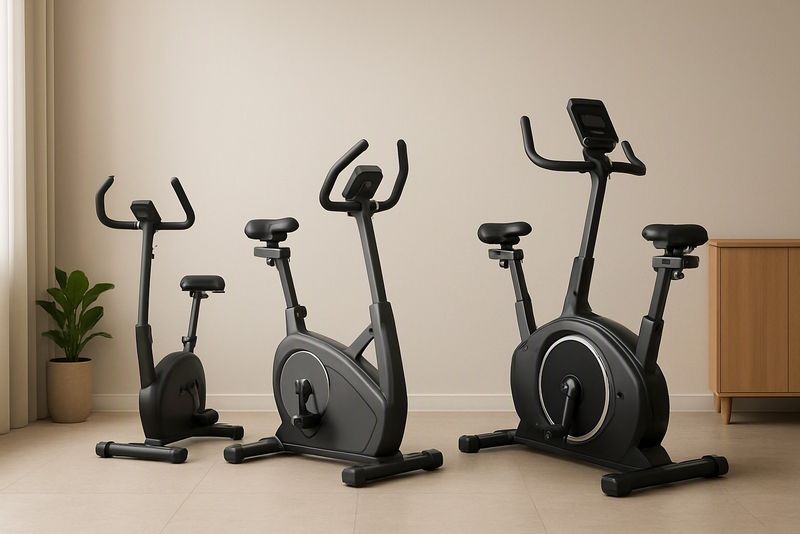
How to Choose an Exercise Bike: Resistance, Flywheel and Space Checks for Indian Homes
Choose an exercise bike for an Indian home: frame style, magnetic vs friction drive, flywheel and capacity, flat space, budget tiers and listing red flags.
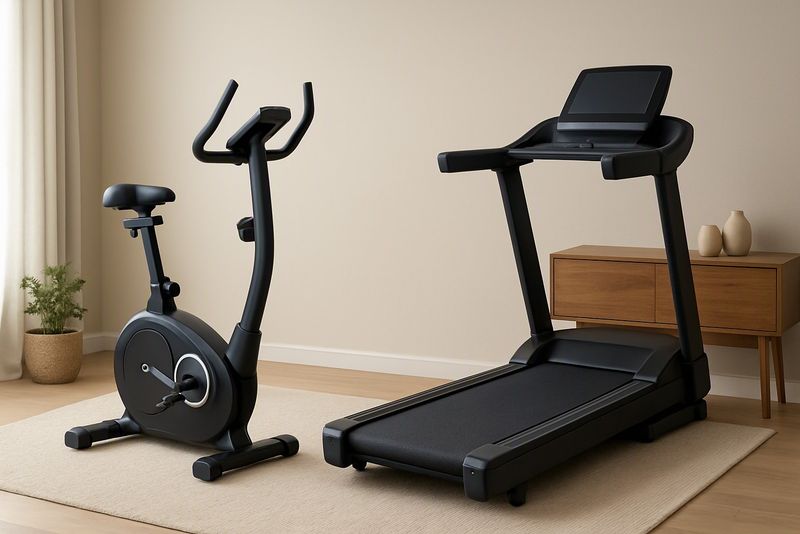
Exercise Bike or Treadmill: Which Suits Your Knees, Space and Fitness Goals?
Exercise bike or treadmill for home? Compare calorie burn, knee impact, flat space, noise and upkeep costs to decide which fits your Indian home.
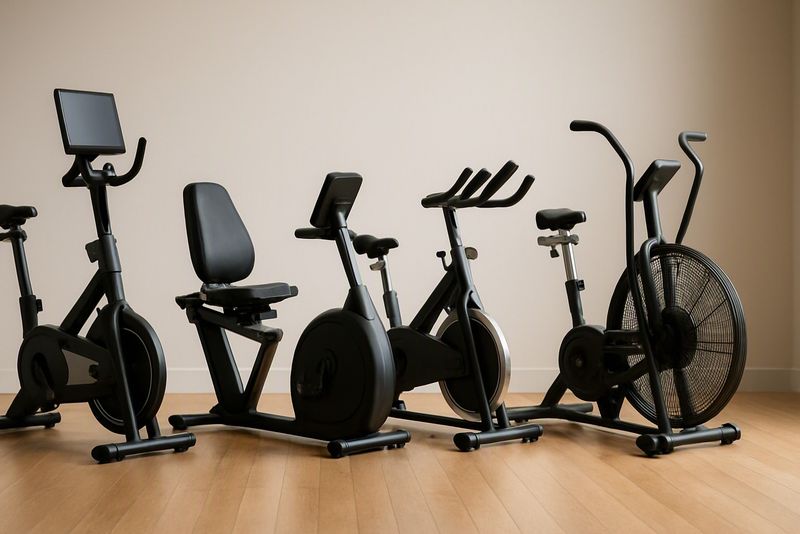
Upright, Recumbent, Spin Bike or Air Bike: Which Frame Style Fits Your Workout?
Compare upright, recumbent, spin and air bikes on posture, space, noise and workout intensity to pick the frame that suits your home and fitness goal.