Exercise Bike or Treadmill: Which Suits Your Knees, Space and Fitness Goals?
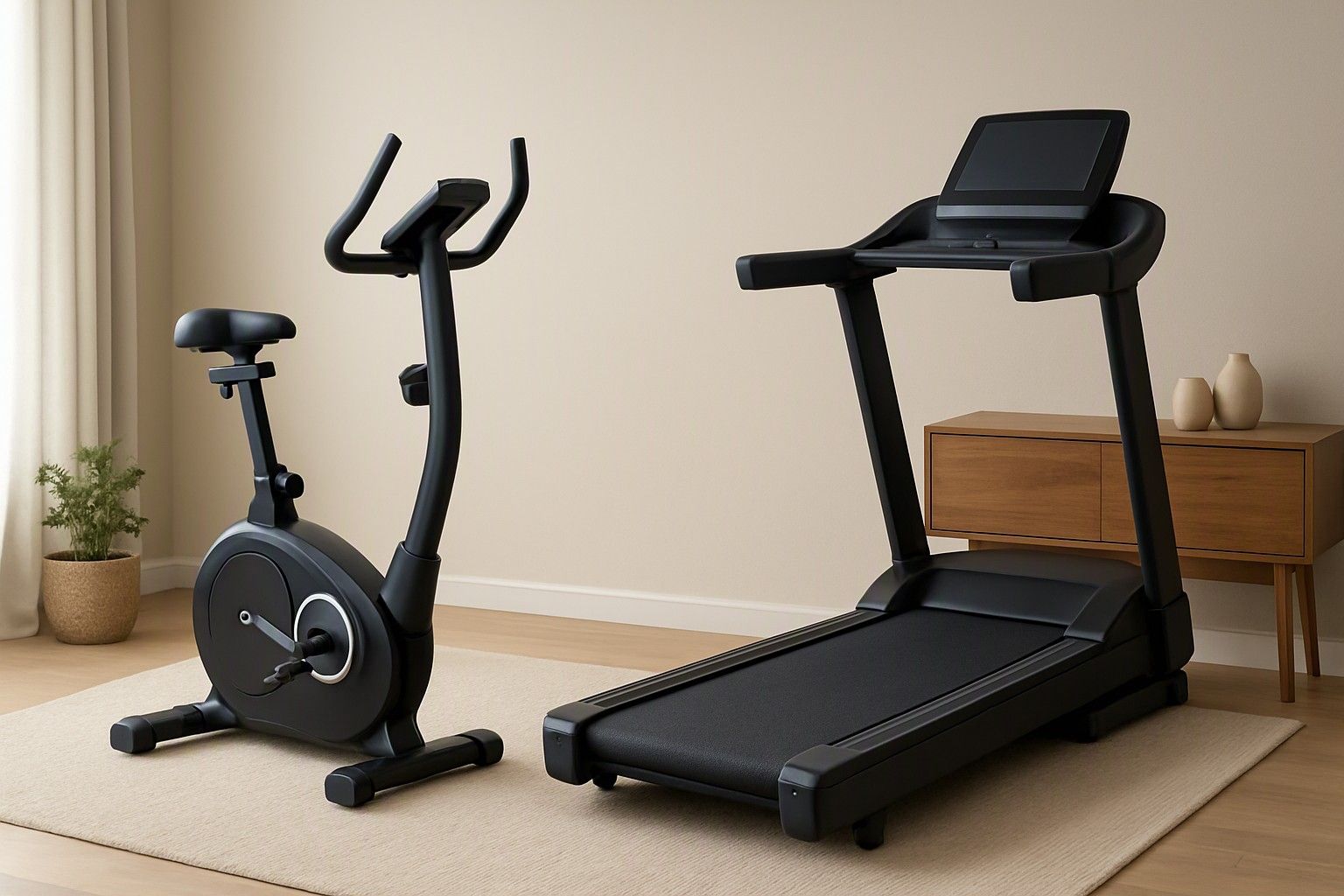
If you have room and budget for only one machine at home, this article helps you choose between an exercise bike and a treadmill. It is written for Indian buyers weighing sensitive knees, a compact flat and a weight-loss or general fitness goal. By the end you will know which machine to shortlist and what to read next.
Calorie Burn and Weight Loss: How the Two Really Compare
A treadmill usually burns more calories per minute at a comparable effort. Walking briskly or jogging means carrying your whole body weight forward, and that recruits more muscle than sitting on a saddle. Adding an incline raises the demand further without making you run faster.
A bike's advantage is that it is easier to keep up. Because your weight is supported, many people can ride for longer and more often, and they recover faster between sessions. Interval riding, where you alternate hard and easy resistance, closes much of the per-minute gap. A 40-minute ride you finish four times a week will do more for you than a 20-minute treadmill session you dread and skip.
Two practical points apply to both machines:
- Console calorie counts are estimates. They rarely know your weight, age or fitness level accurately. Use them to compare one session with the next, not as an exact figure.
- Diet decides most of the outcome. Regular exercise helps, but large portions of rice, rotis or fried snacks after a workout can cancel a session's burn quickly.
If your only goal is the highest calorie burn per minute and your joints are healthy, the treadmill has the edge. If you want a steady routine you can sustain for months, the bike is competitive.
Impact on Knees, Back and Ankles
Every step on a treadmill sends a jolt through your ankles, knees and hips. Walking keeps that jolt modest, but running multiplies it, and belt cushioning only softens it somewhat. If you have arthritis, a past ligament injury or are carrying significant extra weight, regular treadmill running is where trouble usually starts. Ankles also face a small risk of a stumble if you lose rhythm at speed.
A bike removes the landing impact because your weight rests on the saddle. The knee still bends under load with every pedal stroke, so setup matters. A saddle set too low forces the knee to over-flex and commonly causes pain. Set it so your leg is nearly, but not fully, straight at the bottom of the stroke.
Back comfort differs by bike type. An upright bike can leave you leaning forward, which tires the lower back over a long session. A recumbent design supports your back, and that is why recumbent bikes often suit parents with knee trouble and anyone who struggles with balance.
One caution: cycling is not weight-bearing, so it does little for bone density. If you have a diagnosed joint or spine condition, check with a physiotherapist or doctor before choosing either machine.
Floor Space, Motor Noise and Power Needs in a Flat
Flats force the hardest trade-offs. A treadmill needs a long stretch of floor for the belt plus clearance behind it for safety. Folding models reclaim some of that floor, but they remain tall and heavy when upright and are awkward to shift every day. A bike takes up only a small patch of floor, and compact designs tuck beside a wardrobe or behind a door.
Noise is the second issue. A treadmill produces motor hum and belt noise, and footfalls carry through the slab into the flat below. That is a real concern in apartment buildings where neighbours are close and early-morning or late-evening workouts are the only option. Bikes with magnetic resistance run almost silently, and the sound is mostly a faint whirr from the flywheel.
Power is the third. A treadmill motor needs a working socket, and it is sensitive to voltage fluctuation. You will want a good surge-protected supply, and a power cut ends your workout. Many bikes need no mains power for the ride itself, and the console typically runs on batteries or a small adapter.
If space and neighbours are your main constraints, read about fitting a bike into a compact flat without bothering the floor below.
Running Costs: Treadmill Motor Servicing vs Near-Zero Bike Upkeep
A treadmill has more parts that wear out. The belt needs periodic lubrication and alignment, the belt and deck wear with use, and the motor draws electricity every session. When something fails, you may need a technician. In smaller cities, service availability and spare-part waits can be a long-term nuisance, even when the purchase itself was smooth.
A bike with magnetic resistance has very little to maintain. Typical upkeep is tightening bolts, checking the pedals and straps, cleaning sweat off the frame and replacing console batteries now and then. There is no motor to service and almost no running electricity cost.
On upfront price, bikes in this category run from ₹3,500 to ₹50,000, with an average of ₹12,000. The three budget bands are ₹4,000, ₹12,000 and ₹30,000. A treadmill with a capable motor generally costs more than a bike of similar build quality, and that gap widens once you add servicing and electricity over several years.
The practical way to compare is total cost of ownership over three to five years, not the price tag alone. On that measure the bike is the cheaper machine to live with.
Where a Cross Trainer Fits Between the Two
A cross trainer, also called an elliptical, sits between the other two machines. You stand and move in a gliding stride with your feet never leaving the pedals, so there is no landing impact like a treadmill's. The moving handles work your arms and upper body, which raises calorie burn compared with a seated bike. For many people it is the gentlest way to get a standing, full-body workout.
The drawbacks are practical. A cross trainer usually takes more floor space than a bike and is harder to tuck away. The stride takes a few sessions to feel natural, and the linked moving parts can develop squeaks with time. Your knees still do work in a standing stride, so a poorly matched stride length can cause discomfort.
Choose a cross trainer if you want a low-impact workout that uses your whole body, you have a permanent spot for it and the budget allows. Choose a bike if floor space, quiet operation or the simplest upkeep matter more. For a first purchase in a typical Indian flat, the bike is usually the easier fit.
If the Bike Wins, What to Shortlist First
Once you have settled on cycling, narrow the choice in this order.
- Decide the bike type. Upright bikes are compact and closest to riding a regular bicycle. Recumbent bikes add back support and an easier seat, and they suit anyone with back, balance or knee concerns.
- Check the resistance system. Magnetic resistance keeps noise and upkeep low, which is the reason many people chose a bike over a treadmill in the first place.
- Confirm fit and weight capacity. Look for a saddle that adjusts in height and distance, and make sure the stated user weight limit comfortably covers the heaviest person who will ride it.
- Match the budget band. Prices run from ₹3,500 to ₹50,000, and the average is ₹12,000. The three bands are ₹4,000, ₹12,000 and ₹30,000. Pick the band that covers your build quality and fit needs, then buy and start riding rather than waiting for a perfect moment.
The full checklist is in the guide on how to narrow down an exercise bike once cycling wins.
The choice comes down to this. Pick a treadmill if you want the highest calorie burn per minute, your joints are healthy, and you have the floor space and neighbours who can tolerate the noise. Pick an exercise bike if sensitive knees, a compact flat, quiet operation or low upkeep matter to you, and that describes most Indian homes. A cross trainer is the middle path when you have the room for it.

Comments
Be the first to comment.