Exercise Bike for a Small Flat: Footprint, Floor Vibration and Storage
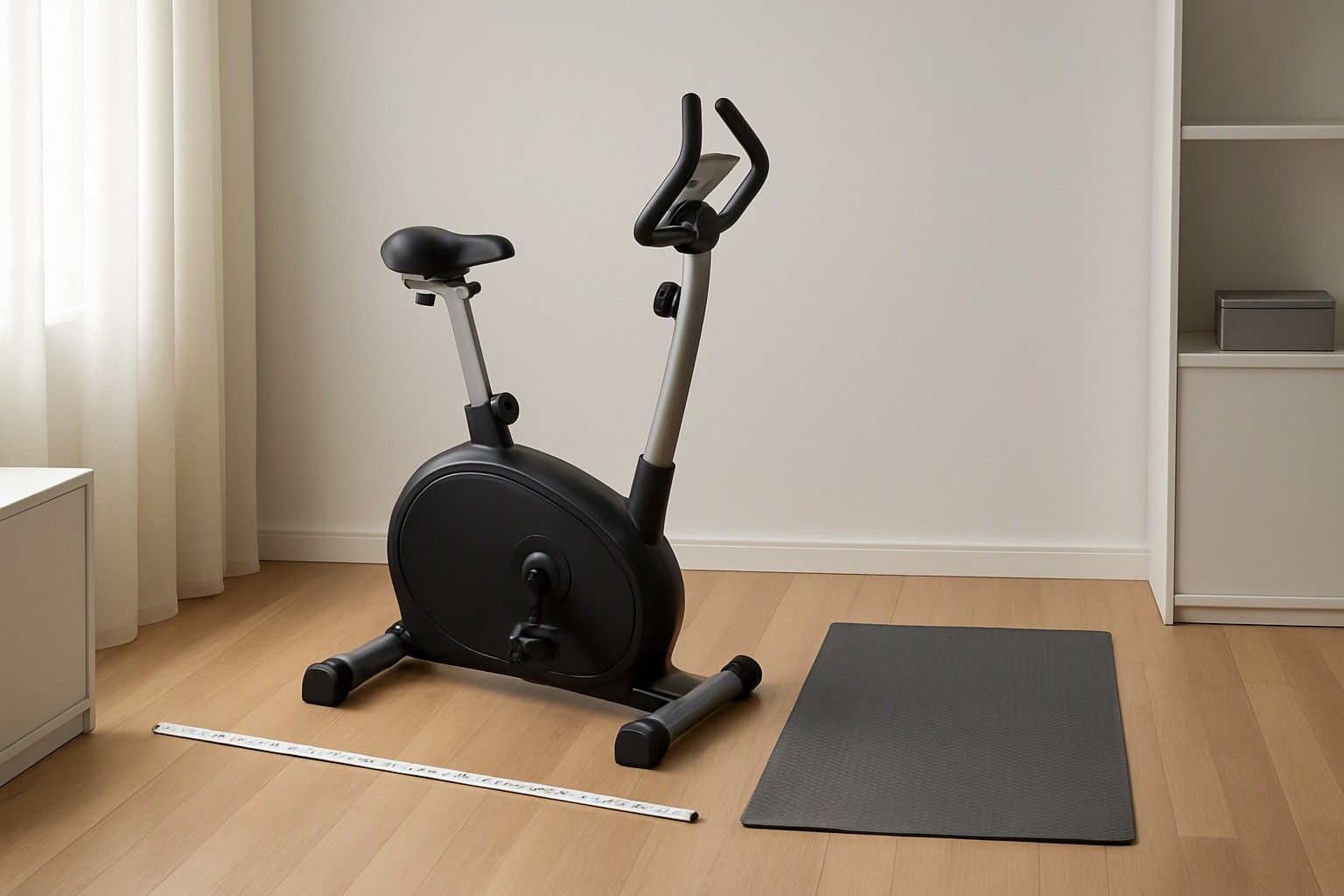
If you live in a compact flat with an RCC floor and neighbours directly below, the bike you buy needs to pass two tests before it passes any fitness test: it must fit the room, and it must not be heard downstairs. This article walks through footprint, frame type, floor vibration, drive noise, placement and storage so you can shortlist the right kind of bike today. It is written for apartment buyers, not for anyone with a spare room or a dedicated home gym.
Measuring the Footprint Plus Riding Clearance
A bike's listed length and width describe the frame only. You also need room to climb on, pedal, and climb off without hitting a wall, a bed or a cupboard door.
Start with the floor space the bike will occupy, then add clearance. Leave enough on each side for your knees and elbows to move freely, and enough at the front and back for the handlebar and the seat to sit without touching anything. Measure height too. Seated, your head sits well above the saddle, and a low ceiling fan, a loft cabinet or an AC unit can get in the way on an upright bike.
A simple trick is to mark the bike's footprint on the floor with masking tape, then stand in the taped area and mimic a pedalling posture. If you feel hemmed in, the bike is too big for that spot.
Also check the path to the spot. Narrow flat doors, tight turns in a passage and lift sizes all decide whether the bike gets to the room in one piece, and whether you can move it later. Do this measuring before you compare models, because it eliminates options faster than any feature list.
Foldable X-Frame Bikes: What You Give Up for Saved Space
Foldable X-frame bikes are the obvious answer for a small flat. They collapse to a slim shape, slide behind a door or under a bed, and many sit in the ₹4,000 and ₹12,000 brackets, which suits first-time buyers. Across the category, prices run from ₹3,500 to ₹50,000, with the average near ₹12,000, so a foldable is usually the lower-commitment way in.
The cost of that convenience is rigidity. The crossed frame and its hinge points flex more than a fixed upright frame, especially when you pedal hard or stand. A wobbly frame is more annoying than it sounds: it creaks, it shifts on the floor, and it transmits more vibration. Lighter frames also tend to carry lower rider-weight limits and smaller flywheels, which makes the pedalling feel less smooth. If you want to see the stability and capacity limits of lighter frames in detail, that article covers them properly.
A fair rule: if you are riding gently for fitness, a foldable is a sensible choice in a tight home. If you are heavier, taller, or plan to ride hard every day, a fixed frame that stays in one corner usually serves you better than one that folds away.
Vibration Through RCC Floors and the Role of Mats
RCC slabs carry sound very well. The noise your neighbour hears is rarely the whirr of the bike through the air. It is structure-borne: pedal thump, frame shake and the bike's feet tapping the floor, travelling through the concrete into the flat below.
A mat is the cheapest fix. A dense rubber or high-density foam mat under the bike spreads its weight and absorbs the small impacts at the feet. Thin, light yoga-style mats do very little here. Choose something firm and thick enough that the feet do not sink through to the floor, and large enough that every contact point sits on it.
A few other habits help as much as the mat:
- Level the bike using its adjustable feet so it does not rock.
- Tighten pedals, crank bolts and seat posts occasionally, since loose parts knock and rattle.
- Place the bike away from a shared wall or the room directly above a neighbour's bedroom if you have a choice.
- A bike with a smoother, heavier-feeling spin tends to transmit less jerk than one that surges with each pedal stroke.
A mat reduces vibration but does not remove it. Treat it as part of the setup, not a cure for a noisy bike.
Choosing a Quiet Drive for Early-Morning and Late-Night Rides
If your only free slot is 5:30 am or after 10 pm, drive noise matters more than almost any other spec. The resistance mechanism and the transmission together decide how loud the bike is in a silent flat.
Friction-resistance bikes press a felt or similar pad against the flywheel. That creates a steady rubbing sound, and the noise tends to grow as the pad wears. Magnetic resistance has no contact at all: magnets sit near the flywheel and change resistance without touching it, so the bike stays close to silent. The article on why magnetic drives run quieter than felt-pad ones explains the mechanics and the wear difference.
Transmission matters as well. Belt drives generally run more quietly than chain drives, which can click and whine, especially if left unlubricated.
When you shop, check three things: the resistance type, the type of belt or chain, and whether the pedals feel stiff or noisy in reviews from people in similar flats. In a compact home, paying a little more for a magnetic, belt-driven bike is usually a better use of money than adding extra display features you will not miss.
Balcony vs Bedroom Placement: Heat, Humidity and Dust
The balcony looks like free space, but it is a hard place to keep an exercise bike. Dust settles on it daily, monsoon humidity encourages rust on bolts and metal parts, and afternoon sun makes the console and seat unpleasant. Rain blowing in can wet the electronics. If the balcony is open, you will probably end up wheeling the bike in and out, which defeats the point.
A balcony that is enclosed, shaded and covered can work in mild months. Even then, riding in peak summer heat is hard, and sweat plus humidity speeds up corrosion on exposed metal.
The bedroom keeps the bike clean and dry, and an AC or fan makes sessions far more tolerable. The downsides are floor space and sound. A bike next to the bed may wake a sleeping partner, and sweat and moisture in a closed room need airing out afterwards. Wipe the frame down after each ride either way.
A living room corner or a spare gap near a window often works better than either extreme: dry, ventilated and away from the neighbours' bedroom wall. Pick the spot first, then buy the bike that suits it.
Moving and Storing the Bike Between Sessions
In a small flat, the bike often has to disappear between rides. How easily it does depends on weight, transport wheels and folding design, not on the footprint number alone.
Look for small front wheels or rollers that let you tilt and roll the bike with one hand. Check how heavy it feels when tilted, since a bike that is easy to ride but awkward to shift will end up stuck in the middle of the room. A foldable frame is simple to tuck behind a door, but check how many steps the folding takes. If it needs tools or a stiff latch, you will stop doing it within weeks.
A fixed upright bike is better left in a permanent corner with a mat, and a light cover keeps dust off. If you must move it, lift the mat first so you do not drag the feet across the floor and scratch tiles.
Before you commit to a model, picture the daily routine: roll out, ride, wipe down, roll away. For a wider look at every factor that decides which bike suits a compact home, the buying guide ties together frame, drive, resistance and budget.
The right exercise bike for a small flat is one that fits the measured spot with riding clearance, uses a stable-enough frame for your weight, runs on a magnetic, belt-driven system, and sits on a dense mat away from a neighbour's bedroom. Start with your floor measurement and your ride timing, and the shortlist narrows quickly. At that point you can buy with confidence, at today's price, rather than guessing.
Comments
Be the first to comment.