Magnetic vs Friction Resistance: Which Exercise Bike Drive Is Worth Paying For?
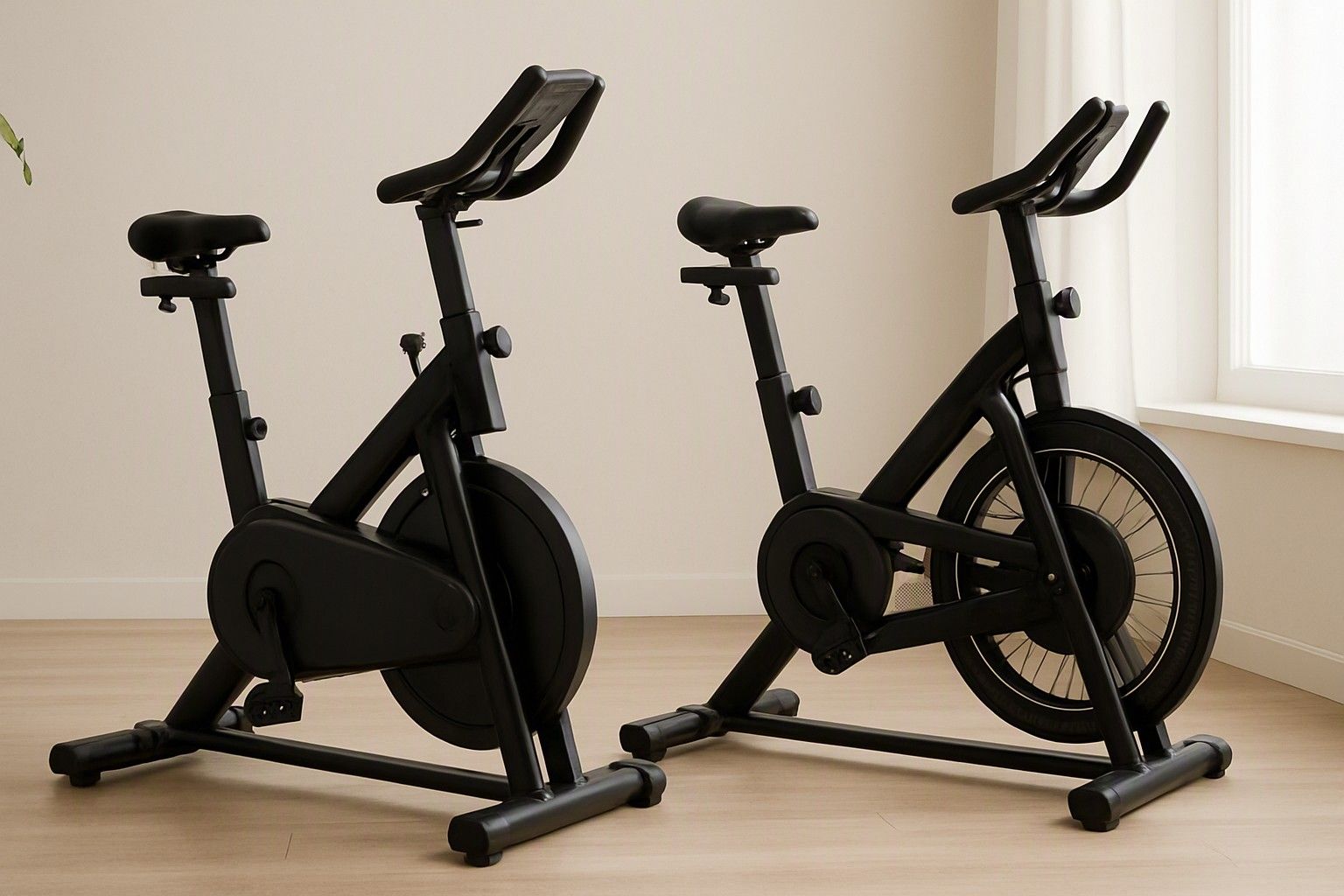
If you share walls with neighbours, ride early or late, or simply don't want to keep adjusting parts, a magnetic resistance bike is usually worth paying extra for. Friction resistance still makes sense when the budget is tight and you can live with some noise and upkeep. The rest of this article explains why, and where electromagnetic, app-controlled and air-resistance bikes fit in.
How Felt Pads and Magnets Create Resistance
Almost every exercise bike has a flywheel that spins as you pedal. The drive type is simply how the bike makes that flywheel harder to turn.
A friction bike presses a felt or similar pad against the flywheel rim. You turn a knob to push the pad harder and raise the resistance. Because the pad physically rubs the wheel, the resistance is easy to understand and cheap to build, and that is why friction drives are most common on bikes priced ₹4,000.
A magnetic bike never touches the flywheel. Magnets sit close to it and are moved nearer or further away, either by a manual knob or by a small motor controlled from the console. The closer the magnets, the harder the wheel is to turn. Magnetic drives usually start showing up in the ₹12,000 range and become standard in the ₹30,000 range, though individual bikes vary.
That one difference, contact versus no contact, explains almost everything else in this comparison: the noise, the smoothness, the parts that wear out, and a good share of the price gap.
Noise and Smoothness in Shared Homes
Noise is where most buyers feel the difference first. A friction pad rubbing on a spinning wheel can produce a low rasp, and it can squeal when the pad gets dry or collects dust. At higher resistance levels the pedal stroke can also feel slightly grabby rather than even.
A magnetic drive produces no rubbing sound at all. Whatever you hear comes from the chain or belt, the pedals and the frame, so a magnetic bike with a well-built frame is close to silent. The resistance also builds evenly as you turn the knob, with no pad to stick or slip.
This matters in flats where the floor is also a neighbour's ceiling, or where someone is asleep while you ride at 6 a.m. or 10 p.m. A friction bike isn't unusable in a shared home, but you will hear it, and so might others. For placement, mats and other ways of keeping workout noise down in apartment buildings, see our notes on keeping workout noise down in apartment buildings. The drive type is only one part of the noise picture, but it is the part you cannot fix after buying.
Wear Parts: Felt Pads vs Near-Zero Maintenance Magnets
Contact means wear. A friction pad gets thinner and glazed with use, and Indian conditions speed that up: dust from open windows and humidity in monsoon months both change how the pad grips and sounds. Expect to adjust it, clean around it and eventually replace it. The pad itself is a small part, but you need to know it exists, check that the seller can supply a matching one, and be willing to do the swap or pay someone to.
Magnetic drives have no pad touching the wheel, so there is nothing in the resistance system that rubs away. Maintenance is close to zero for that part of the bike. You still need to tighten bolts, check the pedals and keep the chain or belt in good condition, as with any bike, but you aren't replacing a consumable on a schedule.
Over several years of regular use, that small recurring effort is part of what you pay for with a friction bike. If you want to see what that upkeep involves in practice, our guide to replacing worn felt pads and other routine upkeep walks through it.
Electromagnetic and App-Controlled Bikes During Power Cuts
A manual magnetic bike, where you turn a knob to move the magnets, needs no electricity to work. Electromagnetic and app-controlled bikes are different: the resistance is set by a motor or coil, so the console has to be powered.
That raises a question worth asking in a country where outages happen. Depending on the design, a bike that loses power mid-ride may hold the last resistance level, drop to a very light setting, or stop responding to console controls until power returns. If outages are frequent where you live, running the bike on a home inverter is usually simpler than relying on the bike’s own fallback behavior. Some designs generate their own power from pedalling and some run on batteries, but this varies by bike, so check the manual or ask the seller rather than assuming.
App control adds a second dependency. Your phone needs a charge, and if the app relies on Wi-Fi, the router often goes down in the same outage.
None of this makes these bikes a poor choice. Programmes and automatic resistance changes are useful if you will really use them. But if outages are common where you live, favour a bike that keeps working at a fixed or manually set resistance without power, or plan on an inverter for the console and router.
Air Resistance for Interval Training
Air-resistance bikes work on a different principle. A fan-style wheel pushes against the air, and the harder you pedal, the harder it becomes. There is no knob: your effort sets the resistance, which makes these bikes natural for intervals, where you sprint hard, ease off and repeat.
The trade-offs are practical. The fan creates a steady whooshing sound that rises with effort, and it moves air toward you, which some riders enjoy in an Indian summer and others find annoying in a small room. It is not the bike for early-morning rides beside a sleeping family. It also doesn't offer the gentle, fixed, quiet resistance that a beginner doing 30 minutes of steady cycling might want.
If your plan is short, hard interval sessions and you have a room where noise isn't a concern, air resistance suits that goal well. If your plan is steady, regular riding in a shared flat, a magnetic bike will fit your routine better, and it is the easier default.
Weighing the Drive Type Against Everything Else
Drive type should shape your shortlist, not make the decision alone. A rough way to apply it by budget:
- Priced ₹4,000: Friction is the realistic option. Accept the noise, keep the pad clean and plan on a replacement later.
- In the ₹12,000 range: This is where a magnetic drive becomes a reasonable expectation. If you have the budget, it is usually the better use of money than extra console features.
- In the ₹30,000 range: Electromagnetic resistance with preset programmes becomes common. Check how the bike behaves in a power cut before you commit.
A bike priced at or below the category average of ₹12,000 can offer a good magnetic drive, but the drive is only one part of the bike. A great magnetic system on a wobbly frame, an uncomfortable seat or a thin warranty is a poor purchase. Flywheel weight, frame stability, the user weight limit and how the seller handles service all matter just as much. Our how resistance fits alongside frame, seat and warranty checks section in the main buying guide covers those, so you can judge the whole bike, not just the drive.
So, magnetic or friction? If quiet, smooth riding and little upkeep matter to you and your budget reaches the ₹12,000 range, choose magnetic. If your budget sits ₹4,000, friction will do the job, as long as you accept the noise and the pad upkeep. Choose electromagnetic or air resistance only when programmes or interval training are what you will actually use.

Comments
Be the first to comment.