Choosing an Exercise Bike for Elderly Parents and Knee Pain
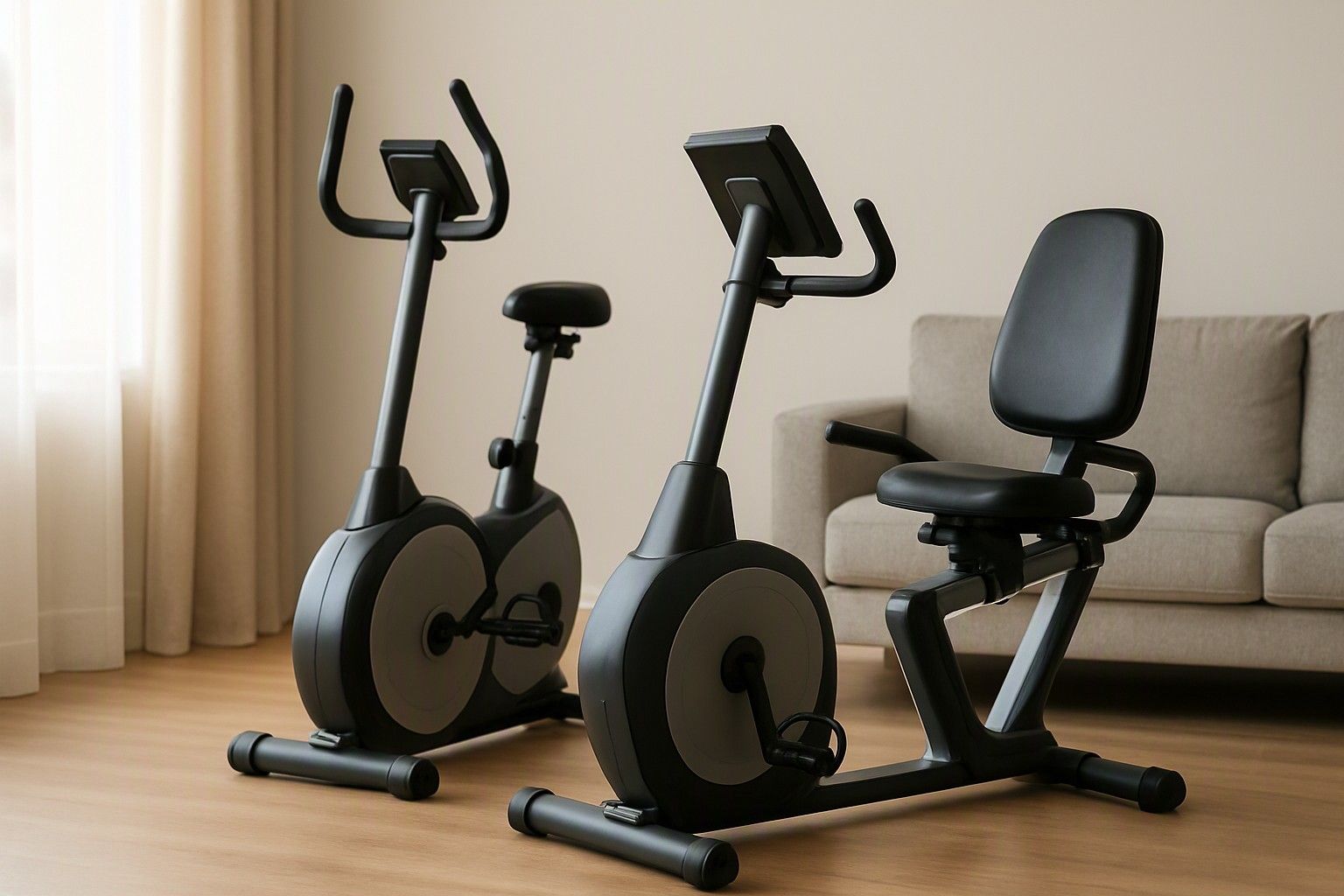
If you are buying an exercise bike for a parent in their sixties or seventies, or for anyone whose knees complain on stairs and walks, this article is for you. The right bike for them is not the one with the most programmes. It is the one that is easy to get on, adjusts to their leg length, starts at a very light load and stays steady under them. Below, we go through each of those points so you can shortlist with confidence.
Why Low-Impact Cycling Helps Stiff Knees
On a stationary bike, the saddle carries most of your body weight, and your feet move in a smooth circle without ever striking the ground. That is why cycling is called low-impact. A walk or jog sends a jolt through the knee with every step. Pedalling does not.
For stiff knees, the useful part is the repeated, controlled bending and straightening. Moving the joint through its range keeps it from locking up, and the muscles around it (the front and back of the thigh in particular) get stronger. Stronger thigh muscles take some of the load off the knee during everyday movement, such as getting up from a low sofa or climbing a flight of stairs.
There is also a practical Indian angle. Many parents avoid the morning walk because of uneven footpaths, monsoon rain, summer heat, stray dogs or poor air. A bike in the living room removes those excuses.
One caution: cycling relieves stiffness and builds strength, but it does not treat a damaged joint. A dull, warming-up ache is one thing. Sharp or worsening pain is a signal to stop and get advice, which we cover later in this article.
Recumbent vs Upright for Older Riders
The first decision is the frame. On an upright bike, you sit like you would on a regular bicycle, leaning slightly forward with your hands on the handlebar. A recumbent bike has a reclined, chair-like seat with a backrest, and the pedals sit out in front of you. If you want a fuller look at how recumbent and upright frames differ in posture, that guide goes deeper. Here is how the difference plays out for older riders.
Recumbent: The backrest supports the lower back, and the wide seat is easier on the hips. Getting on is simpler, and you do not need to balance or lift a leg over a bar. This suits riders with back pain, weak balance, or hip and knee stiffness. The trade-offs are a longer footprint, more weight to move around the house, and usually a higher price.
Upright: It takes less floor space and is generally easier on the wallet. It works well for a parent who is steady on their feet, has no significant back trouble and can swing a leg over the frame. The narrower saddle and forward lean can tire an older rider faster, and there is more reliance on the hands and arms.
As a rule of thumb, if there is any doubt about balance or back comfort, lean towards recumbent. If space or budget is tight and your parent is mobile, a well-adjusted upright with a good saddle can do the job.
Step-Through Frames, Seat Height and Backrests
Many falls happen while getting on or off, not while pedalling. A step-through frame, with a low or open entry point instead of a high top bar, lets an older rider walk in and sit down without lifting a leg high. On a recumbent bike, a low seat with a side entry serves the same purpose.
Seat height is the setting that matters most for knees. With the pedal at its lowest point, the knee should have a slight bend, close to straight but not locked. A saddle set too low forces the knee to fold sharply on every stroke, which is exactly what sore knees dislike. So check that the seat adjusts across a range that fits your parent's leg length, and that the adjustment knob or lever is easy to turn with stiff or arthritic fingers.
Backrest and saddle comfort come next. A supportive backrest, or a wide, padded saddle on an upright, matters because an older rider will often sit for 15 to 20 minutes at a time. Finally, look at the pedals. Wide pedals with adjustable straps keep feet from slipping. Anything that locks the shoe in place is unnecessary here and can make an unexpected stop harder.
Gentle Resistance Steps and a Low Starting Load
Resistance is how hard the pedals push back. For an older rider, the starting point should be close to zero, and the increases should be small. A bike whose first level already feels heavy, or one that jumps sharply between levels, puts strain on the knee exactly when it should be easing in.
This is where finely graded magnetic resistance levels help. Magnetic systems tend to feel smooth and quiet, and many offer a good number of steps, so your parent can go up one notch at a time. Friction-based systems, where a pad presses on the flywheel, often use a single knob without clear levels. They can feel uneven, which makes it harder to repeat a comfortable setting day after day.
When you test or compare, check three things: the lowest setting should feel truly easy, each step up should feel small, and the pedalling should stay smooth with no jerking at the top and bottom of the stroke.
For the first week or two, a gentle pace at the lowest comfortable load for a few minutes is enough. Duration and resistance can come up gradually, ideally following whatever the doctor or physiotherapist suggests.
Safety Features: Grips, Pulse Sensors and a Stable Base
Start with the grips. Sturdy, fixed handles (on a recumbent, usually at the sides of the seat) give your parent something to hold while getting on, getting off or feeling slightly unsteady. They should feel solid, not wobbly, and sit within easy reach.
Pulse sensors on the handles are a useful extra, since they give a rough idea of heart rate during a session. Treat the reading as an approximation, not a medical measurement. If your parent has a heart condition or takes medication that affects heart rate, follow the doctor's guidance rather than the display. Also check that the screen is large and easy to read without glasses.
The base matters more than most buyers expect. Look for a wide, firm frame and stabilisers that stay planted, along with adjustable feet to level the bike on uneven floors. Many Indian homes have smooth tiles or marble, so a rubber mat underneath helps the bike stay put and protects the floor. Check the stated maximum user weight and choose a bike with comfortable headroom. Finally, place the bike near a wall or sturdy furniture, with clear space around it, and keep a chair within reach.
Doctor and Physiotherapist Guidance Before Starting
A bike is a good tool, but it is not a substitute for a medical opinion. Before the first ride, it is worth a short conversation with your parent's doctor, especially if they have heart disease, high blood pressure, diabetes, osteoporosis, dizziness, or have had knee surgery or a joint replacement.
It helps to go in with specific questions:
- How many minutes per session, and how many days a week, should they begin with?
- Is any resistance appropriate at the start, or should they pedal freely at first?
- Are there any warning signs that should end a session?
- Are there other exercises, such as gentle stretches, to do alongside the bike?
A physiotherapist can add practical value. They can check the seat height against your parent's knee, watch the pedalling action and recommend the right frame style based on their balance and back strength. If possible, ask for this once the bike is installed.
As a general rule, your parent should stop and seek advice for sharp knee pain, swelling that appears afterwards, chest discomfort, breathlessness that does not settle or light-headedness. Mild muscle tiredness is normal. Pain that gets worse is not.
Finalising a Bike for an Older Rider
By now your shortlist should be defined by fit, not features: an easy entry, a seat that adjusts to your parent's leg length, a gentle and finely graded resistance range, solid grips, a wide stable base and a weight limit with margin.
Price helps you sort what you will realistically find. Exercise bikes in this category run from ₹3,500 to ₹50,000, with an average of ₹12,000. In the ₹4,000 range, expect basic builds, so check frame steadiness and resistance control very carefully. The ₹12,000 range is where sturdier frames and smoother resistance are more commonly found. In the ₹30,000 range, you will more often see comfort-oriented designs such as recumbent frames with backrests. These are tendencies, not guarantees, so check each bike against the list above rather than trusting the price alone.
If your parent has back pain or balance concerns, spending towards a recumbent frame is usually justified. If they are mobile and you are short on space, a well-adjusted upright in the middle tier can work. For a wider checklist, see what else matters when buying for older riders, including space, delivery and after-sales support. Once the bike fits your parent and your budget, buying now means they can start sooner.
The bike that is safe for an elderly parent or someone with knee pain is one they can step onto easily, adjust to their own legs and start at a very light load. It should also hold steady beneath them. Pick a frame for their balance and back, check the resistance and base against the points above, get a doctor's go-ahead, and you have what you need to choose.
Comments
Be the first to comment.