Flywheel Weight, User Capacity and Seat Adjustment: Specs That Decide Ride Quality
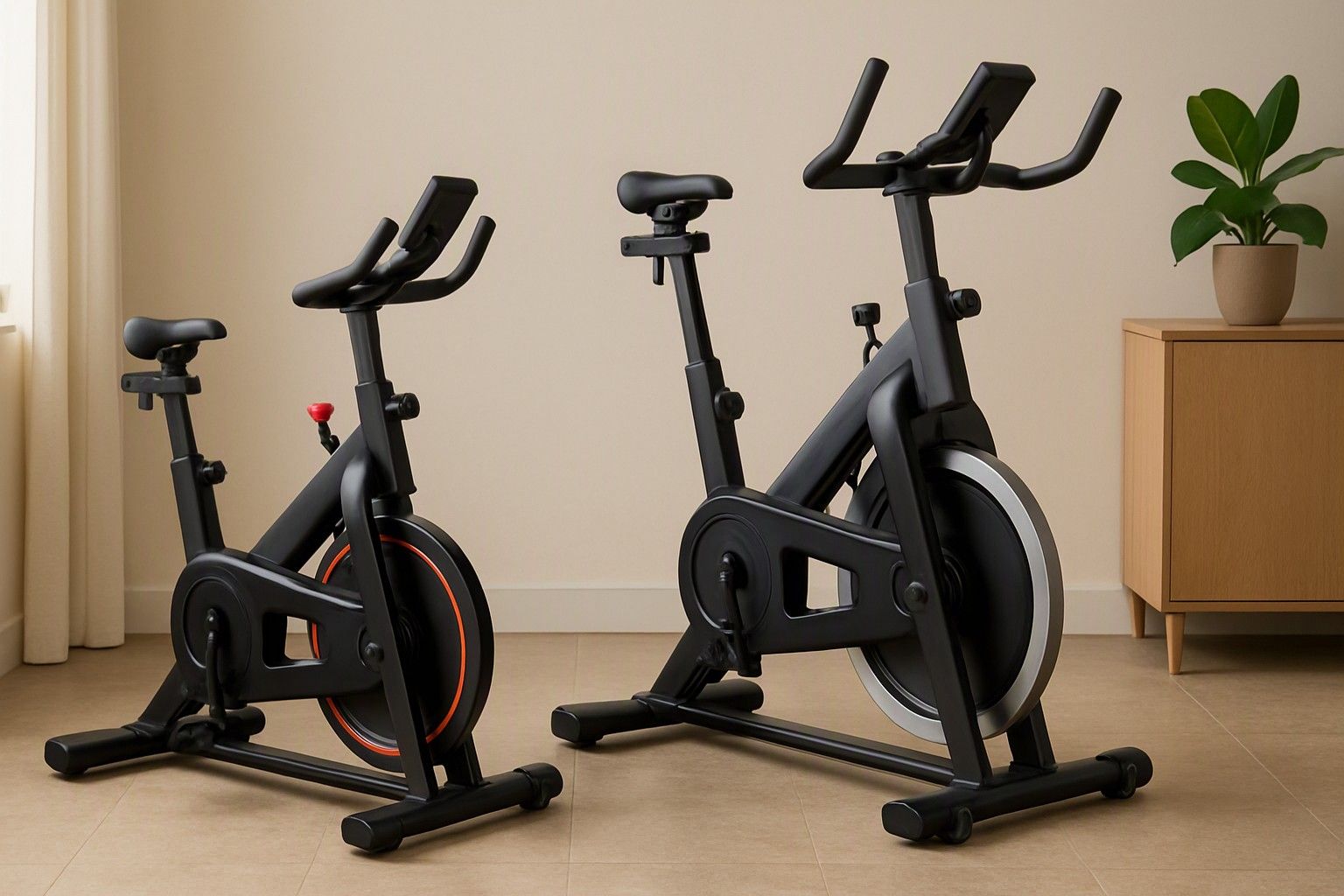
If you are comparing exercise bikes and the spec sheets all quote a flywheel weight and a maximum user weight, this article tells you how to read those two numbers. A heavier flywheel generally gives a smoother ride, but only up to a point. The user limit needs a safety margin above the heaviest person who will ride. Both matter more than most extras on the listing, especially if the bike is shared by several people at home.
What Flywheel Weight Actually Changes in a Ride
The flywheel is the weighted wheel that keeps spinning between pedal strokes. A heavier one stores more momentum, so the pedal motion feels even and continuous. A light one feels choppy, with a noticeable drag at the bottom of the stroke and a jerk as you push through the top. This is most obvious at low resistance and at a steady, slower pace, which is how most people ride at home.
In practice, lighter flywheels, common in the ₹4,000 bracket and in compact or foldable bikes, are fine for gentle, short sessions and rehabilitation-style pedalling. If you plan daily rides of 30 minutes or more, or you want a road-like feel, a heavier flywheel makes a real difference to comfort and to how stable your cadence stays.
Two cautions apply. First, weight is not the whole story: how the mass is distributed and how the bike is built also shape the feel. Second, brands quote flywheel weight inconsistently. Some state the wheel alone, others the whole assembly. Treat the figure as a rough guide, and look for reviews that mention the ride feel rather than relying on one number. Beyond a certain weight, extra kilograms add cost and bulk without much you can feel.
Front vs Rear Flywheel and Belt vs Chain Drive
Flywheel position changes the bike's footprint and how it feels to ride. A front-mounted flywheel is typical of spin-style bikes, where the wheel sits ahead of the rider, usually exposed or only partly covered. A rear-mounted flywheel is common on upright and compact home bikes, usually enclosed behind a cover. Enclosed designs tend to look tidier and keep fingers and clothing away from moving parts, which matters in homes with children. Spin-style layouts tend to suit riders who want to stand and pedal harder.
The drive is the bigger practical difference. A belt drive is quiet, smooth and needs little upkeep, which suits an apartment where the bike shares space with a sleeping household. Over time a belt can wear or lose tension and will need replacing.
A chain drive feels closer to a real bicycle and is sturdy, but it is noisier and needs regular lubrication. Dust and monsoon humidity in much of India can encourage rust and stiffness if the chain is neglected. If you will ride early in the morning or late at night, favour the belt. If you are comfortable with occasional maintenance and want a rugged feel, a chain is acceptable.
Maximum User Weight: Why You Should Leave Headroom
The stated maximum user weight is a rated limit, not a comfortable working figure. Pedalling, standing up and getting on and off put more force through the frame, seat post and pedals than your body weight alone. A bike used right at its stated limit will tend to flex, creak and wear sooner.
A sensible rule is to choose a bike whose limit is at least 20 to 30 kg above the heaviest regular rider. If the heaviest rider weighs 85 kg, treat a 100 kg rating as the floor, and prefer more. If several family members will use the bike, size it for the heaviest one, not the average.
Also check what the limit is attached to. A frame that is rated high but has a thin seat post, a weak pedal attachment or a narrow base can still feel unsteady. Wide, solid stabiliser feet and a sturdy seat post clamp are better signs than a bold number on the listing.
If you are close to a limit with the bikes you are considering, move up to the next rating rather than hoping it will hold. The cost of a higher-rated bike is usually small next to replacing a bike that wobbles within a year.
Seat and Handlebar Adjustment When Tall and Short Family Members Share One Bike
In a shared household, adjustment range matters as much as flywheel weight. A bike that fits one person perfectly and strains everyone else will end up unused.
Start with the seat. You need vertical adjustment with enough range for both the tallest and shortest riders, and ideally fore-aft adjustment too, so legs and reach can be tuned separately. A correct seat height leaves a slight bend in the knee at the bottom of the pedal stroke. Too low strains the knees and too high rocks the hips.
Then the handlebars. Height-adjustable bars let a shorter rider avoid overreaching and a taller rider avoid hunching. Fixed bars narrow the range of people who can ride comfortably.
Check how adjustments are made. Quick pop-pin or lever mechanisms take seconds, while screw knobs are slower and tend to get skipped when several people share the bike. Marking each rider's settings on the seat post with tape saves time.
For older relatives, a low step-through frame or a bike with a back support can matter more than a heavy flywheel. Pedal straps or cages that tighten for different shoe sizes are also worth having.
Frame Weight and Stability on Tiled Floors
Most Indian homes have vitrified tiles or polished stone, which are smooth and can be slippery. A light or narrow-based bike can creep or rock during hard pedalling, even when the flywheel is decent.
Look for a wide, solid base and adjustable levelling feet, which let you fix a wobble caused by uneven tile joints. Rubber feet grip better than hard plastic. A mat under the bike protects the tiles, grips better and absorbs vibration, which helps if neighbours live below.
A heavier frame generally steadies the bike, but it also makes it harder to move. Small transport wheels at the front help if you will shift the bike between rooms or store it behind a door.
Be wary of the numbers on listings. A bike that claims a heavy flywheel but weighs little overall deserves a second look, because the two figures should be consistent with each other. For a closer look at spotting inflated flywheel and capacity claims on listings, compare the stated total weight against the flywheel and user limit, and check that the photos show a sturdy base and seat post.
Displays, Pulse Sensors and Bluetooth: Which Extras Earn Their Cost
Most bikes come with a basic display showing time, speed, distance, calories and often cadence. That is enough for tracking a routine, and it costs little. Treat the calorie figure as a rough estimate, since the bike does not know your body or effort precisely.
Handlebar pulse sensors read your heart rate through your palms. They give a general idea of effort but can be erratic, especially with sweaty or dry hands or a loose grip. If heart rate matters to you, for example for a doctor's advice or for steady-state training, a chest strap or wearable is more reliable, so check that the bike can pair with one.
Bluetooth is useful if you plan to follow workouts in an app or sync your data. If you only want to ride while watching television, you will not use it. A sturdy tablet or phone holder is often more useful than built-in connectivity, because it lets you use any app or video.
Spend on stability, adjustment and a smooth flywheel first, then on extras. To see which features appear at each budget level, check what is standard before paying extra for a feature you may not use.
Putting the Specs Together
Start with the people, not the bike. List the heaviest rider, the tallest and shortest riders, how often you will ride, and how long each session will be. Then match the specs.
For short, easy sessions or a first bike, a lighter flywheel is acceptable, as long as the user limit leaves a clear margin and the frame is stable. For regular rides of half an hour or more, favour a heavier flywheel and a belt drive for smoothness and quiet. For shared use, prioritise adjustment range and a rated capacity well above the heaviest rider.
On cost, prices in this category run from ₹3,500 to ₹50,000, with an average around ₹12,000. Rather than chasing the cheapest or most expensive bike, spend where the ride is affected: flywheel, frame, drive and adjustment. Extras such as Bluetooth come last. A bike chosen this way is worth buying now, since it will serve the household for years.
For the other factors to weigh beyond flywheel and capacity, such as bike type, space and upkeep, the main buying guide covers the full decision.
For most homes, the answer comes down to a flywheel heavy enough to keep your pedalling smooth for the sessions you actually plan, and a user limit at least 20 to 30 kg above your heaviest rider. Add seat and handlebar adjustment that fits everyone sharing the bike, and a base steady enough for your floor. With those four checked, you can shortlist and decide with confidence.

Comments
Be the first to comment.