Inverter Backup Time & Running Cost Calculator
How long will your home inverter actually run — and what does it truly cost per month? Build your backup load, set your battery, and see backup hours plus the charging bill and the battery replacement cost most calculators ignore. India-first, instant and editable.
~₹6,632/yr
true yearly cost of a typical home inverter — charging + battery replacement
1. What runs on backup
Add the appliances you'd actually run together during a cut. Wattage defaults are typical Indian ratings — check the label if you want to be exact. Skip ACs, geysers and microwaves: a standard home inverter can't carry them.
Ceiling fan
75 W
LED light
12 W
TV
100 W
Wi-Fi router
15 W
Laptop
65 W
Refrigerator
180 W · startup ×3
Air cooler
200 W
Mixer grinder
500 W · startup ×3
Water pump (0.5 HP)
750 W · startup ×3
Backup load: 558 W ≈ 698 VA · 10 item(s)
2. Your battery & inverter
Chemistry sets how deeply the battery can discharge, how long it lasts and what it costs. Check your battery's label for Ah and voltage.
150 Ah tubular is India's standard home battery. Lithium needs fewer Ah for the same usable backup because it discharges deeper.
System voltage
24 V = two 12 V batteries in series — recommended once you move to 1,100 VA+.
Inverter size (VA)
Your list needs ≈ 850 VA. Slabs follow the standard 600 / 850 / 1,100 / 1,600 / 2,000 VA range.
3. Outages & running costs
Charging energy is what the grid puts back after every cut — more outage hours means more units to pay for. Defaults are India-first: ₹6.5/kWh.
60 hr ≈ two hours a day — typical urban home. Tier-2/3 towns and rural pockets often run 120+ hr, which is also when a bigger battery pays off.
Typical: ₹6.5/kWh
Typical ₹9,750 flat / ₹12,750 tubular / ₹18,000 LFP · verified Sep 2026
Lead-acid batteries also need distilled water top-ups (≈₹600/yr) — included automatically.
Why your inverter's true cost matters
An inverter's sticker price hides the two costs that actually decide what you pay: the electricity to recharge the battery after every power cut, and the battery replacement every few years. On a typical 150 Ah tubular setup, the battery works out to ₹2,550 a year and the charging to ₹3,480 — together, a real yearly cost of roughly ₹6,600 that never appears on the price tag.
Three things set your numbers: the battery (Ah × volts, derated for conversion losses and safe depth of discharge), the load you actually run together — two fans, four LEDs, a TV, a router, a laptop and a fridge add up to about 558 W — and how many hours of outage you get a month. A bigger load means shorter backup and more units to put back after each cut.
Defaults are India-first: 150 Ah tubular battery at 12 V, 850 VA, 60 outage hours a month and ₹6.5/kWh. The sizing check tells you whether your inverter VA matches your real load, and everything is editable to match your setup.
How your estimate is worked out
We add the watts of the appliances you keep on backup, convert to VA at a 0.8 power factor and round up to the next standard inverter slab (600 / 850 / 1,100 / 1,600 / 2,000 VA). Backup hours come from the battery: Ah × volts × derate ÷ load watts, where the derate (0.60 flat plate, 0.65 tubular, 0.75 LFP) covers inverter conversion losses and a safe depth of discharge. Charging energy is the load's kWh ÷ round-trip efficiency (0.75 lead-acid, 0.88 LFP), priced at your ₹/kWh. Battery replacement is price ÷ expected life, plus ₹600/year of lead-acid upkeep. The monthly and annual totals add all three lines.
| Assumption | Value |
|---|---|
| Backup formula | Ah × volts × derate ÷ load watts |
| Usable derate | 0.60 flat plate · 0.65 tubular · 0.75 LFP |
| VA sizing | Load W ÷ 0.8 power factor → next slab of 600/850/1,100/1,600/2,000 VA |
| Appliance watts | Fan 75 · LED 12 · TV 100 · router 15 · laptop 65 · fridge 180 (startup ×3) · cooler 200 · mixer 500 · pump 750 |
| Charging energy | Load kWh ÷ round trip (0.75 lead-acid · 0.88 LFP) |
| Battery life | 3.5 / 5 / 9 years (flat / tubular / LFP) |
| Battery replacement | ₹65 / ₹85 / ₹180 per Ah → 150 Ah tubular ≈ ₹12,750 |
| Upkeep | ₹600/yr lead-acid (distilled water, terminals) · ₹0 LFP |
| Ageing | −22% backup after 3 years (15–25% typical) |
| Default tariff | ₹6.5/kWh (editable) |
| Formula | Total = charging kWh × rate + battery ÷ life + upkeep |
Estimates only — real backup varies with battery age, temperature, discharge depth and wiring, and a real load is often higher than the nameplate list. Battery prices, lives and maintenance costs are indicative market figures, last verified Sep 2026. Check your battery's label and current listings before buying.
How do common setups compare?
Reference: 60 outage hours a month and ₹6.5/kWh, 12 V. Electricity and battery replacement are shown separately — on lead-acid, replacement is often nearly as large as the charging line.
| Setup | Backup load | Backup time | Elec / mo | Battery / mo | Monthly total |
|---|---|---|---|---|---|
| 600 VA + 100 Ah flat plate | 250 W | ≈2.9 hr | ₹130 | ₹155 | ₹335 |
| 850 VA + 150 Ah tubular · your setup | 558 W | ≈2.1 hr | ₹290 | ₹213 | ₹553 |
| 1,100 VA + 150 Ah tubular | 750 W | ≈1.6 hr | ₹390 | ₹213 | ₹653 |
| 1,100 VA + 200 Ah tubular | 558 W | ≈2.8 hr | ₹290 | ₹283 | ₹623 |
| 12 V 100 Ah lithium (LFP) | 558 W | ≈1.6 hr | ₹247 | ₹167 | ₹414 |
Cut the cost of owning an inverter
BLDC fans and LEDs cut the load
A standard fan draws ~75 W; a BLDC fan ~30 W, and an LED bulb ~9 W against ~40 W for older lights. A lighter load means longer backup and fewer units to recharge after every cut.
Sequence heavy appliances
Run the mixer, pump or iron one at a time, not alongside everything else. Simultaneous draws are what trip inverters and drain batteries fastest.
Right-size the VA, don't oversize
A bigger inverter than your load needs wastes money upfront and charges a small battery less efficiently at light load. Match the VA to your real appliance list.
Top up with distilled water, keep it ventilated
Flooded lead-acid batteries need water checks every few weeks and a dry, airy spot. Neglect is the single most common reason a 5-year battery dies in 3.
LFP pays off if you cycle daily
Lithium discharges deeper, loses less in recharge (0.88 vs 0.75 round trip), needs no upkeep and lasts ~9 years. In long-outage areas that can beat tubular on cost per year.
Don't chase AC backup
An AC needs 3.5-5 kVA and drains a battery in minutes. If AC backup matters, you're in a different budget class — not a standard 12 V home inverter.
Frequently asked questions
How long will a 150 Ah inverter battery last?
At the default 558 W load (2 fans, 4 LEDs, TV, router, laptop, fridge) a 150 Ah tubular battery gives about 2.1 hours of backup. Run a lighter 200 W load and the same battery stretches to about 5.9 hours. The formula: Ah × volts × 0.6-0.7 ÷ load watts. After 2-3 years, expect 15-25% less.
What size inverter do I need for a 2BHK home?
A typical essentials list — fans, LEDs, TV, router, laptop and a fridge — adds up to 550-600 W, which is about 700-750 VA. Round up to the next standard slab: 850 VA, or 1,100 VA if you want headroom for a fridge start or extra rooms. Running an air conditioner needs 3.5-5 kVA with a 24/48 V battery bank.
Does an inverter increase my electricity bill?
Yes — the recharge energy. At the defaults (558 W load, 60 outage hours a month), that's 44.6 kWh a month, about ₹290 or ₹3,480 a year at ₹6.5/kWh. It's a small, predictable line for the backup it buys, and this tool adds it to the battery cost so you see the real total.
How much does an inverter battery replacement cost per year in India?
A 150 Ah tubular battery costs roughly ₹12,000-₹18,000 and lasts about 5 years with water top-ups — so about ₹2,500-₹3,500 a year. Flat plate is cheaper upfront but shorter-lived. LFP costs more initially (~₹18,000 for 100 Ah) but runs ~9 years with zero maintenance, which is why replacement is the cost most people forget.
Is a lithium battery cheaper than tubular over its life?
If you cycle it regularly, usually yes. LFP lets you discharge to 75% usable (vs 0.65 derate for tubular), loses less energy in the charge-discharge round trip (0.88 vs 0.75), needs no water and lasts ~9 years vs 5. On the same 558 W load that's roughly ₹414 a month vs ₹553 — despite the higher sticker price. Upfront cost is around 1.4x.
Can I run a refrigerator on a home inverter?
Yes, if you size for it. A fridge draws 150-200 W running but 2-3x that for a moment when the compressor starts, which is why a fridge on the list usually means picking the next VA slab up. ACs, geysers and microwaves are not practical on a standard home inverter — they need 3.5 kVA+ systems.
Why is my actual backup lower than the calculated time?
Battery ageing (15-25% by year 2-3), summer heat, deep discharges, wiring losses and a real load higher than you think. This calculator already derates for conversion losses and safe discharge, but treat the result as a realistic best case — and add appliances only after measuring what actually runs together.
Does an inverter consume electricity when there's no power cut?
Very little. Standby draw is typically under 2 W (display, sensors, BMS) — under ₹115 a year at ₹6.5/kWh. The real consumption is the recharge after each cut plus small charger and self-discharge losses, which this tool models as round-trip efficiency.
How do I calculate inverter backup time?
Backup hours = battery Ah × system volts × derate ÷ load watts. The derate (0.60 flat plate, 0.65 tubular, 0.75 LFP) accounts for inverter conversion losses and how deeply the battery can safely discharge. Example: 150 Ah × 12 V × 0.65 = 1,170 Wh usable; at 558 W that's about 2.1 hours.
Inverter vs generator — which is cheaper to run?
For typical 1-3 hour cuts an inverter is far cheaper: charging electricity plus a battery every few years, no fuel, near-silent. A generator earns its cost only when outages run 6+ hours or you need heavy loads — fuel and maintenance make its cost per unit much higher than grid power. The TOQ buying guides compare the two in detail.
More inverter buying guides
Backup time, VA sizing, battery types and true running-cost guides to help you pick the right inverter — with real prices.
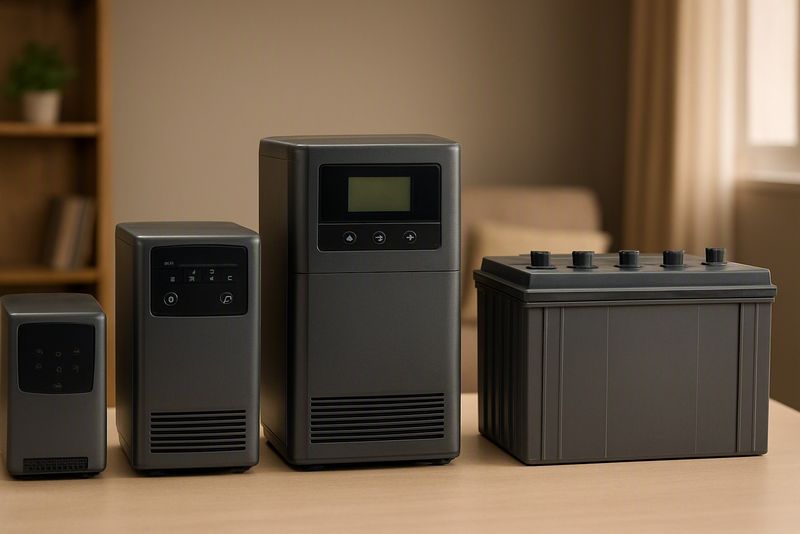
How to Choose the Right Inverter for Your Home in India
A plain-English guide to choosing a home inverter in India: sizing, batteries, backup time, prices from ₹3,500 to ₹85,000, and upkeep.
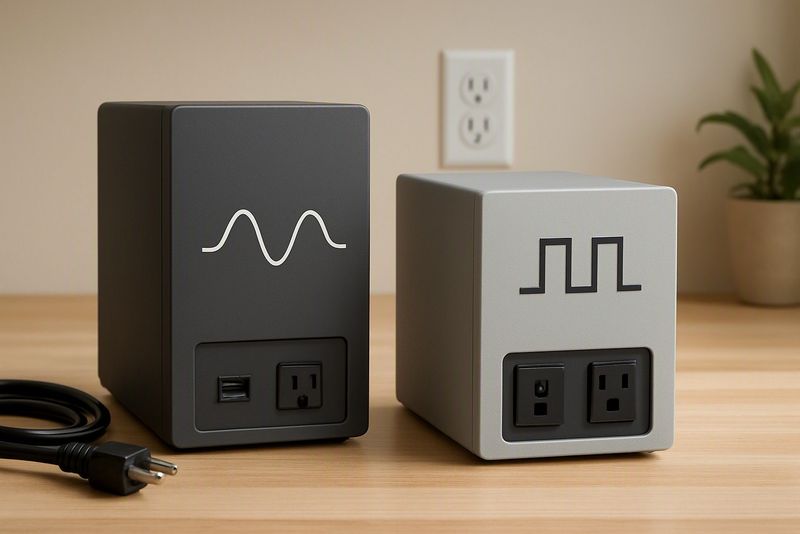
Sine Wave vs Square Wave Inverters: Which One Your Home Needs
Confused between sine wave and square wave inverters? See which appliances need pure sine output and where a square wave unit still works, priced from ₹3,500 to ₹85,000.
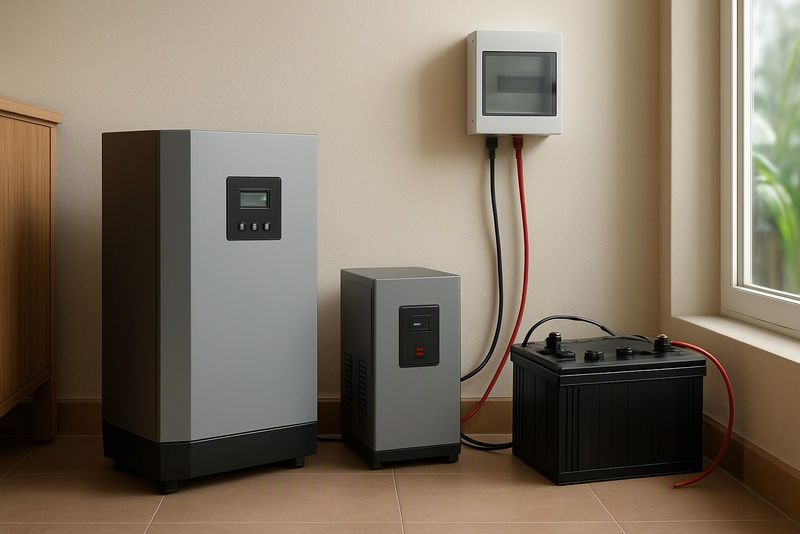
Do You Need a Home Inverter? Understanding How They Work
A plain-language look at how home inverters actually work, what they can power in an Indian home, and how to know if backup power is worth it for you.