Sine Wave vs Square Wave Inverters: Which One Your Home Needs
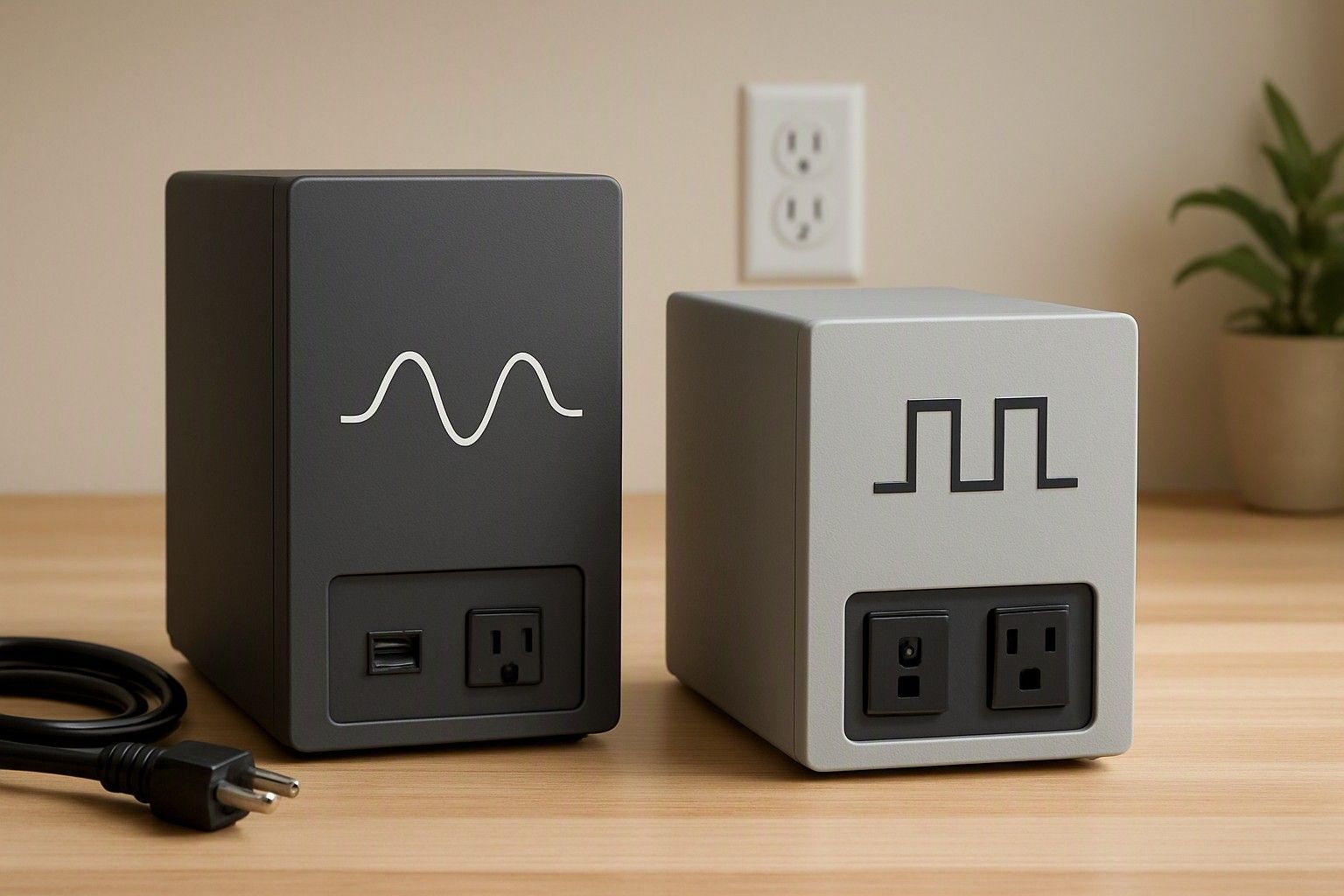
If you've been comparing inverters and keep seeing "pure sine wave" or "square wave" mentioned without a clear explanation, this is the page that settles it. The waveform an inverter produces decides whether your appliances run smoothly or hum, heat up, and wear out faster during power cuts. By the end of this article you'll know exactly which output type your home actually needs, and where you can save money without risking your gadgets.
The Real Difference Between Sine Wave and Square Wave Output
Every inverter's job is to convert battery DC power into the AC power your appliances expect from a wall socket. The difference between sine wave and square wave inverters is in how closely that converted power mimics the smooth, rounded electricity supplied by your local grid. A pure sine wave inverter produces a clean, gradually rising and falling waveform almost identical to what the discom sends into your home. Motors, compressors, and sensitive electronics read this as 'real' power and behave exactly as they would on grid supply.
A square wave inverter, on the other hand, switches the current abruptly between positive and negative, producing a blocky waveform with none of that smoothness. It's a cruder, older method of generating AC, and it costs less to build because the internal circuitry is simpler. Some inverters sit in between and are labelled 'modified sine wave' — a stepped approximation that's closer to sine than pure square wave, but still not a true match for grid power.
This distinction matters because appliances aren't equally forgiving. A simple incandescent bulb or a basic heating coil doesn't care what shape the current takes. But anything with a motor, a microprocessor, or a transformer notices the difference immediately, and that's where the real buying decision starts.
Which Appliances Get Damaged or Noisy on Square Wave
This is the section that should decide your purchase, because the risk isn't theoretical. Ceiling fans on square wave power often run noticeably hotter and noisier, and over months of regular power cuts, that extra heat stresses the motor windings and shortens the fan's life. Refrigerator and AC compressors are built around sine wave assumptions; feed them a square wave and they can draw more current than rated, run less efficiently, and in some cases trip or overheat repeatedly.
Microwave ovens, mixer-grinders, and washing machines with motors behave similarly — you may notice a distinct buzzing sound, reduced torque, or the appliance simply refusing to start correctly. Anything with a switch-mode power supply, which includes most laptop chargers, LED TVs, set-top boxes, and modern LED bulb drivers, is especially sensitive. These devices expect a clean sine input, and a square wave can cause flickering, audible whining from the transformer, or in worse cases, gradual damage to the internal power circuitry.
CFL and older tube lights, basic table fans, and simple resistive loads like immersion rods or heaters are largely unaffected, since they don't rely on precise waveform shape to function. The practical takeaway: if your home runs a fridge, AC, washing machine, or any laptop and phone chargers off the inverter during outages — which is true for most Indian households — square wave output puts that equipment under stress every single time the power goes.
When a Cheaper Square Wave Inverter Is Still Fine
There are genuine cases where paying extra for pure sine wave output doesn't make sense. If the inverter's only job is to keep a few tube lights, ceiling fans without variable-speed controls, and basic bulbs running during short outages, a square wave unit does that job without complaint and at a noticeably lower price. This is common in smaller homes, single rooms, shops, or backup setups for spaces that don't run a fridge, AC, or computer off the inverter circuit.
The price gap between the two types is real and it shows up clearly across the market, where units range from ₹3,500 to ₹85,000 with an average around ₹14,000. Square wave and basic modified sine wave models tend to sit in the ₹5,500 band, while pure sine wave inverters with better build quality and higher capacity typically start around ₹12,000 and move into ₹25,000 as capacity and features increase. Choosing square wave here isn't a compromise — it's matching the spend to a load that genuinely doesn't need more. You can see how this choice changes the price you pay across the full range of models before deciding which tier fits your situation.
What you shouldn't do is buy square wave to save money and then plug in a fridge or laptop charger anyway, because that's the exact combination that leads to premature appliance wear and voided warranties.
Matching Waveform to Your Fans, Fridge and Electronics
The right way to decide isn't to pick a waveform first and work backward — it's to list what you actually need to run during a power cut and let that list dictate the output type. Start with the non-negotiables: if a refrigerator, an air conditioner, a washing machine, or any device with a compressor or heavy motor is on your backup list, pure sine wave isn't optional, it's the baseline. These loads are also usually the ones with the highest surge requirements, so the waveform decision and the capacity decision end up connected.
Next, look at your electronics. Laptops, phone chargers, routers, LED TVs, and set-top boxes all use switch-mode power supplies that are sensitive to poor waveform quality, so a home with even a modest amount of always-on electronics benefits from pure sine wave regardless of whether a fridge is involved. Only if your list is genuinely limited to lights and basic fans does square wave stay a sensible option.
This is also where sizing and waveform overlap in a way many buyers miss — an undersized pure sine wave inverter struggling under a mismatched load can perform worse than expected, and an oversized square wave unit doesn't fix the waveform problem regardless of capacity. It helps to tie the waveform choice to your household load list so you're not just picking output type in isolation but sizing the whole system around what your home actually draws.
Fitting the Waveform Choice Into Your Overall Purchase
Waveform is one of the most consequential decisions you'll make on an inverter, but it's not the only one — battery type, VA capacity, charging speed, and build quality all interact with it to determine whether the unit you buy actually serves your home well for years. A pure sine wave inverter paired with an undersized battery or the wrong capacity rating can still leave you disappointed, even though you got the waveform decision right.
Treat this page as one piece of a larger decision rather than the whole answer. Once you're clear on whether your home needs pure sine wave or can manage with square wave, it's worth stepping back to see how output type sits alongside every other inverter choice, including how capacity, battery chemistry, and price bracket should all be weighed together before you finalize a model. Getting the waveform right and then getting the rest of the specification wrong is a common way buyers end up needing a second inverter sooner than they expected.
The waveform question that brought you here has a straightforward answer once you map it against your actual appliances: pure sine wave for anything with a fridge, AC, washing machine, or electronics, square wave only if your backup needs are limited to basic lights and fans. Price alone shouldn't drive this decision, since the range from ₹3,500 to ₹85,000 reflects genuine differences in what each type can safely run, not just brand markup. Match the output type to your load, and the rest of the inverter purchase gets a lot easier to reason through.

Comments
Be the first to comment.