Inverter Backup Time: How Long Will It Really Last?
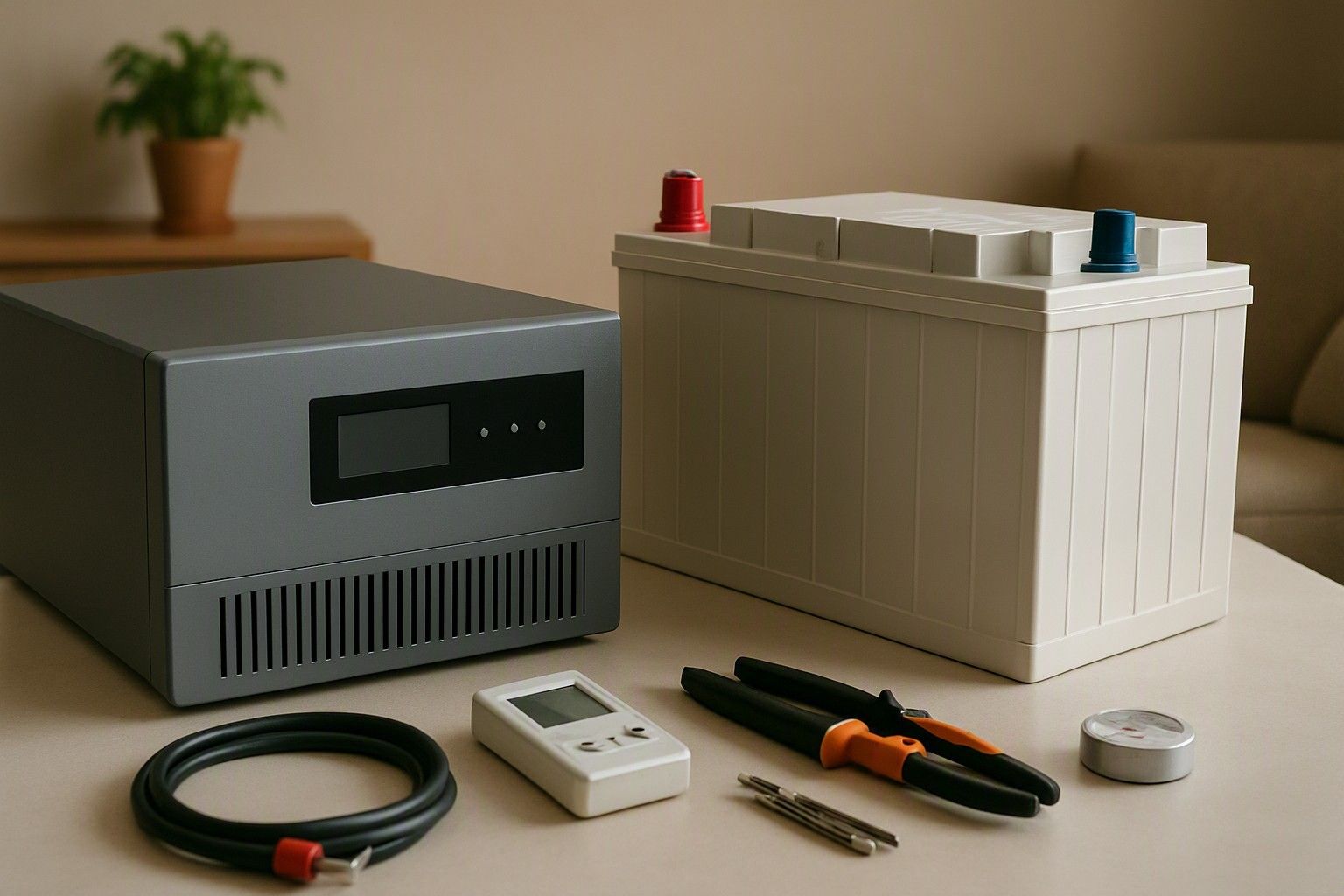
If you've ever had your inverter die out in half the time you expected, you're not alone — the number on the box and the number in your living room are rarely the same thing. Real backup time depends on your battery's actual capacity, what you're running on it, and how old or hot that battery is. This article walks through the maths and the real-world factors so you can put a realistic number on your own setup instead of guessing.
What Decides Your Real Backup Hours
Backup time isn't one fixed number — it's the outcome of three things working together: how much energy your battery actually holds, how much power your connected load draws, and how efficiently your inverter converts that stored energy into usable AC power. A battery rated for a certain capacity on paper will give a different real-world runtime depending on whether you're running a couple of fans and a light, or a fan, a TV, a router and a fridge compressor cycling on and off.
Inverter efficiency also eats into the number quietly. No inverter converts DC battery power to AC power at 100% efficiency — some energy is always lost as heat during conversion, typically in the range of 10-20% depending on the build quality and load level. A cheaper unit at the ₹3,500 end of the market and a better-built one closer to ₹14,000 can both be rated for the same VA, yet deliver noticeably different backup because one wastes more energy in conversion.
The third factor is how the battery is allowed to discharge. Batteries are rated assuming a specific discharge rate and depth, and pulling more current than that rating (by running heavier loads) or draining deeper than recommended shortens the usable backup you get out of each cycle. This is why two households with identical inverter and battery specs can report very different backup experiences — their load patterns aren't the same.
Working Out Backup Time From Battery Ah and Load
The standard back-of-envelope formula is: Backup hours = (Battery voltage × Battery Ah × 0.6 to 0.7) ÷ Load in watts. The 0.6-0.7 multiplier accounts for inverter conversion losses and the fact that batteries shouldn't be discharged all the way to zero — treat this as a realistic derating factor, not a pessimistic one.
So for a 12V battery rated at 100Ah, the usable energy works out to roughly 12 × 100 × 0.65 ≈ 780 watt-hours. If your connected load is 300 watts — a few fans, some lights, a TV — you'd get roughly 780 ÷ 300, or about 2.6 hours of backup. Double the battery Ah to 200Ah with the same load and you're looking at closer to 5.2 hours, which is why battery bank size, not just inverter VA, is often the bigger lever for backup duration.
The part buyers most often get wrong is the load figure itself — they either underestimate what's actually connected or forget appliances with high startup draw, like a fridge compressor or a mixer, which spike well above their running wattage for a few seconds. Getting this number right matters more than any other input in the formula, which is why it's worth going back to start from an accurate load calculation for the maths to work before you trust any backup-hours estimate you're given, whether it's from a dealer or a spec sheet. Skipping this step is the single most common reason people feel misled by advertised backup figures.
Why Running More Appliances Shrinks Your Backup Fast
Backup time doesn't fall in a straight line as you add appliances — it drops faster than intuition suggests, because you're dividing the same fixed pool of stored energy across a bigger draw. Going from a 300-watt load to a 600-watt load doesn't just halve your backup, it can push it down further once you factor in that inverters run less efficiently near their upper load limits, generating more heat and losing more energy to conversion.
In a typical Indian home, the appliances that quietly wreck backup estimates are the ones people don't think of as "load" — a router left on all night, a couple of LED bulbs across different rooms, a ceiling fan on medium speed in two rooms simultaneously, and a refrigerator compressor cycling in the background. None of these look big individually, but stacked together they can easily double the load a household assumed it was running, which is exactly what turns a confidently-quoted 6-hour backup into a 3-hour reality.
The practical fix isn't necessarily a bigger inverter or battery — it's being honest about simultaneous usage. If your household genuinely needs a fridge, two fans, a TV and lighting to run together through an outage, size your expectations and your battery bank around that combined figure, not around the single heaviest appliance alone. Sequencing usage — running the mixer only briefly rather than alongside everything else — also stretches backup meaningfully without spending a rupee more.
How Ageing and Heat Reduce Backup Over Time
A battery's backup capability is highest on day one and only goes downhill from there — this is normal chemistry, not a defect. As a battery goes through repeated charge-discharge cycles, its internal resistance rises and its usable capacity shrinks, so the same 100Ah battery that gave you 780 usable watt-hours when new might realistically give you 15-25% less after a couple of years of regular cycling, even with reasonable care.
Heat accelerates this ageing sharply. Batteries kept in poorly ventilated spots, direct sun, or enclosed cupboards in hot Indian climates degrade faster than the same battery kept in a cool, ventilated corner. High ambient temperature also temporarily inflates a battery's apparent capacity in testing, which is why a battery can seem fine on a hot afternoon and then underperform once temperatures drop — the reverse of what most people expect.
How much this ageing curve bites also depends heavily on which battery chemistry you're running, since flooded lead-acid, tubular, and lithium-based batteries age at very different rates and tolerate heat differently — the battery chemistry you chose changes this ageing curve in ways that are worth understanding before you assume your backup will stay flat over the battery's lifespan. Budgeting for a 20-30% backup drop by the second or third year is a more honest starting point than assuming day-one performance is permanent, and it should factor into whether you buy at the ₹5,500 end or invest higher up the range for a battery built to hold capacity longer.
Turning Backup Expectations Into a Buying Decision
Once you know roughly how many backup hours you need — say, enough to run a fan, lights and a router through a typical 2-3 hour outage, or enough to keep a fridge and a couple of rooms going through a longer one — you can work backward to the battery Ah and inverter combination that actually delivers it, rather than buying on VA rating alone and hoping the backup follows.
Across the market, prices for inverter setups run from ₹3,500 up to ₹85,000, with the average buyer spending around ₹14,000. Within that spread, the ₹5,500 tier tends to suit smaller loads and shorter backup needs, ₹12,000 covers the most common household combination of fans, lights, TV and a fridge, and ₹25,000 is where you start seeing setups built for longer outages or heavier simultaneous loads with better-built batteries that hold their capacity longer. None of these price points require waiting for a better deal — the range has held fairly steady, and the smarter move is matching your backup-hours target to the right tier now rather than timing a purchase around price movement.
The backup-hours number you calculated earlier should be the anchor for every other decision in the purchase — VA rating, battery Ah, and even which chemistry to pick. It's worth taking that figure and using it to fold your backup target into the wider purchase plan, since backup time isn't really a standalone spec — it's the output of every other choice you make in the buying process, not an input you can bolt on afterward.
The honest answer to "how long will my backup last" is: it depends on your load, your battery's real Ah, and how many charge cycles that battery has already been through — not the round number quoted at the point of sale. Run the maths on your own appliances, account for a couple of years of ageing, and you'll have a backup estimate that actually holds up during the next outage.
Comments
Be the first to comment.