Inverter Battery Types: Tubular, Flat Plate and Lithium Compared
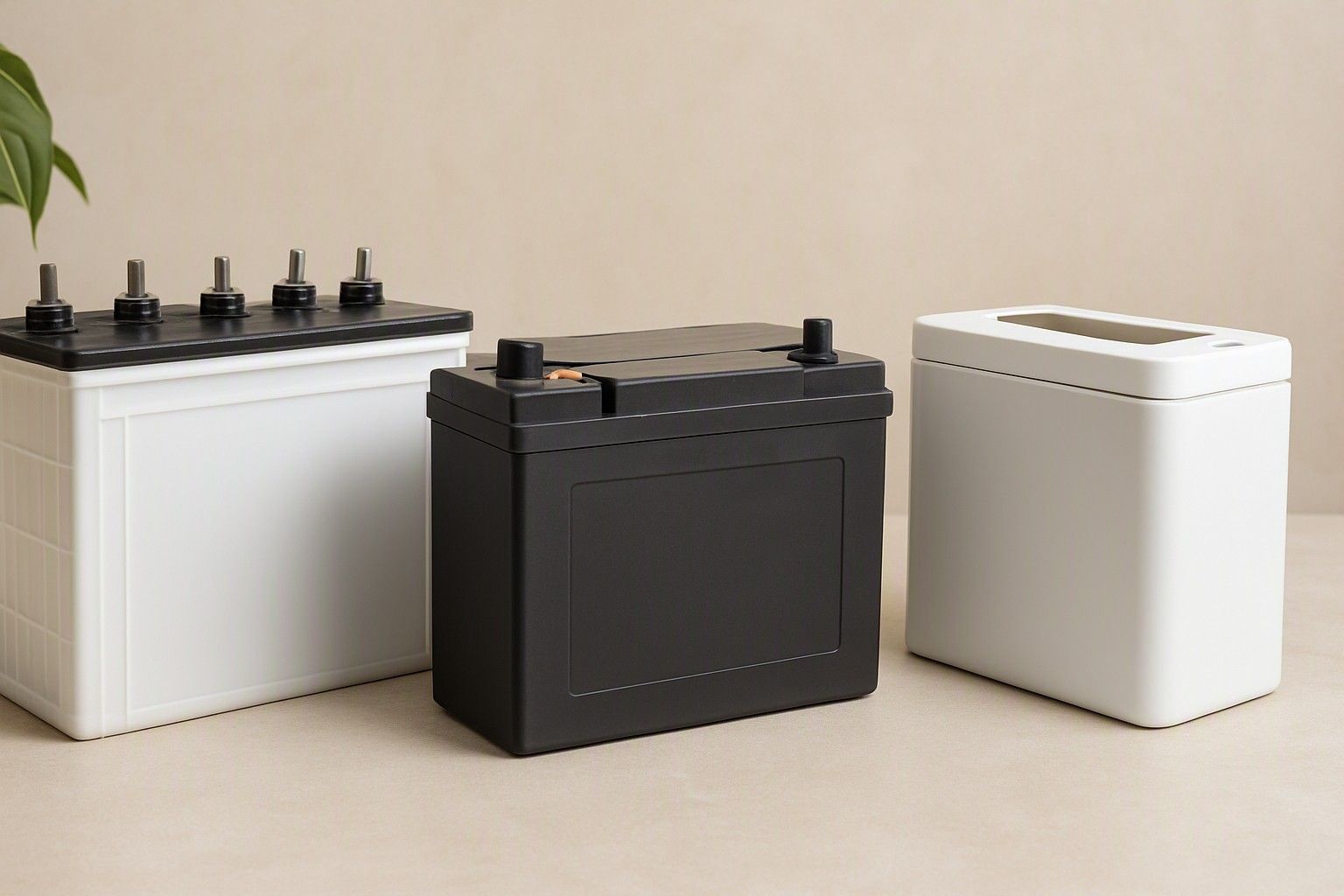
If you're trying to decide which inverter battery type should I choose — tubular, flat plate or lithium — the honest answer is that it depends on how much backup you need, how much upkeep you're willing to do, and what you can spend upfront. Each chemistry trades off differently on price, lifespan and maintenance, and getting this wrong is more costly than picking the wrong inverter, since the battery usually needs replacing well before the inverter does. This article walks through the real differences so you can match a battery type to how your home actually uses backup power.
Tubular vs Flat Plate vs Lithium: Core Differences
Flat plate batteries are the oldest and cheapest lead-acid design still sold for home inverters. They use flat lead plates stacked in an electrolyte bath, which makes them simple to manufacture and inexpensive to buy, but the plates degrade faster under repeated deep discharge because the active material sheds off with use. They suit homes with short, infrequent power cuts where the battery rarely gets drained close to empty.
Tubular batteries improved on this by wrapping the plates in a perforated tube that holds the active material in place, so they handle deep discharge cycles far better and last noticeably longer under the kind of daily partial-drain, partial-recharge pattern that Indian households actually put batteries through. This is why tubular has become the default recommendation for most flats and independent houses with regular multi-hour outages — it costs more than flat plate but pays that back in years of extra service.
Lithium (LiFePO4) batteries are a different chemistry altogether: no liquid electrolyte, no water top-ups, a much higher number of charge cycles, and roughly a third of the weight and size of an equivalent lead-acid unit. They cost significantly more upfront — often multiples of a comparable tubular battery — but need almost no maintenance and tolerate partial charging without the capacity loss that plagues lead-acid types. Across the ₹3,500 to ₹85,000 range you'll see in the market, flat plate sits at the bottom, tubular occupies the broad middle, and lithium anchors the top end. If your household backup needs are moderate and predictable, tubular remains the most balanced choice; lithium earns its price only if you value low maintenance and long life over lower purchase cost.
Battery Life, Charging Speed and Indian Heat Tolerance
Battery life in real households is less about the datasheet number and more about heat, discharge depth and how often the battery is asked to work. Flat plate batteries typically deliver the shortest usable life among the three because their plate structure wears down faster under repeated cycling, and Indian summer heat accelerates that wear by drying out electrolyte and warping plates over time. Tubular batteries last considerably longer under the same conditions since the tube design keeps the active material intact through hundreds of extra cycles, which is exactly why they dominate sales in regions with frequent, longer outages rather than occasional short ones.
Heat tolerance matters more in India than in most markets this technology was originally designed for. Lead-acid batteries of both types lose life faster above typical room temperatures, so a battery kept in a ventilated, shaded spot will consistently outlast one crammed into a closed, sun-heated utility cupboard — this is true for tubular and flat plate alike, just less punishing for tubular given its sturdier build. Lithium batteries handle heat noticeably better and don't suffer the same electrolyte-related degradation, which is part of why they're increasingly chosen in hotter states even at a higher price.
Charging speed also differs: lithium batteries accept charge faster and more efficiently, recovering to full sooner after an outage, while lead-acid batteries — tubular especially — charge more slowly and lose some efficiency as heat rises. If your outages are frequent and back-to-back, that faster lithium recharge can matter as much as the backup duration itself.
Matching Battery Ah to the Backup You Want
Battery type decides how long the battery survives and how much upkeep it needs, but the ampere-hour (Ah) rating decides how many hours of actual backup you get during a single power cut — and this is where a lot of buyers pick the wrong size regardless of chemistry. A higher Ah rating within the same battery type simply means more stored energy, and it applies whether you land on flat plate, tubular or lithium; a low-Ah flat plate battery and a low-Ah tubular battery will both fall short if your home runs fans, lights, a fridge and a TV together.
Because the math connecting Ah, load and hours isn't intuitive, it's worth reading how battery capacity translates into hours of backup before finalising a number rather than guessing based on price alone. What's useful to know here is that lithium batteries often deliver a similar effective backup at a lower rated Ah than lead-acid, because they can be discharged deeper without damage — a lead-acid battery is typically not run below 40-50% of its capacity to protect its lifespan, while a lithium battery can be taken much lower safely. That means comparing Ah ratings across chemistries directly can be misleading; the real comparison is usable backup hours for your specific load, not the number printed on the battery.
Across the ₹5,500, ₹12,000 and ₹25,000 price bands, Ah capacity and battery type move together — cheaper flat plate units tend to come in lower Ah tiers, while tubular and lithium options extend into higher capacities as price climbs toward the ₹14,000 mark and beyond.
Water Top-Ups, Ventilation and Battery Upkeep
Flat plate and tubular batteries are both flooded lead-acid designs, which means both need periodic distilled water top-ups to keep the electrolyte at the correct level — skip this and plate corrosion accelerates, cutting life short regardless of how well the battery was made. Tubular batteries generally need slightly less frequent topping up than flat plate because of their more efficient plate design, but neither is maintenance-free, and both release small amounts of hydrogen gas while charging, which means the battery must sit somewhere with airflow, not sealed inside a cabinet.
Lithium batteries remove this entire chore — there's no water to check, no electrolyte to manage, and no gassing to ventilate for, since the chemistry doesn't produce the same byproducts. This is the single biggest lived-experience difference between the two families, and for buyers who've dealt with a neglected lead-acid battery dying early from dried-out cells, it's often the deciding factor even at a higher purchase price.
For a full picture of what each type demands month to month — inspection intervals, terminal cleaning, ideal placement and the warning signs that a battery is heading toward failure — it's worth going through the ongoing maintenance each battery type demands before you commit, since the upkeep routine is really part of the total cost of owning a lead-acid battery, not an afterthought.
Slotting Your Battery Choice Into the Full Setup
None of this battery decision happens in isolation — the battery has to match the inverter's charging profile, the space you have for installation, and the budget you've split between the two components. A lithium battery paired with an inverter not designed to charge it efficiently won't deliver its full advantage, and an oversized tubular battery bought without checking the inverter's charging current can take far longer to reach full charge than expected.
Because the battery is frequently the costlier and more decision-critical half of the purchase, it makes sense to line up the battery decision with your inverter selection rather than choosing either component first and working backward. Think of the two as a matched pair: the inverter's capacity and charging capability set the ceiling on what the battery can deliver, while the battery's chemistry and Ah rating set how long and how reliably that backup actually lasts.
Given that battery prices span, there's a genuine choice at every budget tier — this isn't a case where you need to stretch to the top of the range to get a sound setup, but it is worth spending on the chemistry and capacity that actually fits your outage pattern rather than defaulting to whatever's cheapest on the shelf. In fact, pairing an inverter under ₹5000 with the right battery can get you a solid working unit for under ₹10,000 in total expenditure.
Whichever way you lean — the lower upfront cost and simplicity of flat plate, the durability that's made tubular the common household default, or the low-maintenance longevity of lithium — the choice now comes down to your specific outage pattern and how much upkeep you're willing to take on, not guesswork. With the price range and trade-offs laid out here, you're in a position to pick a battery type today rather than keep comparing specs on hope.

Comments
Be the first to comment.