Inverter vs Generator: Which Backup Is Right for Your Home
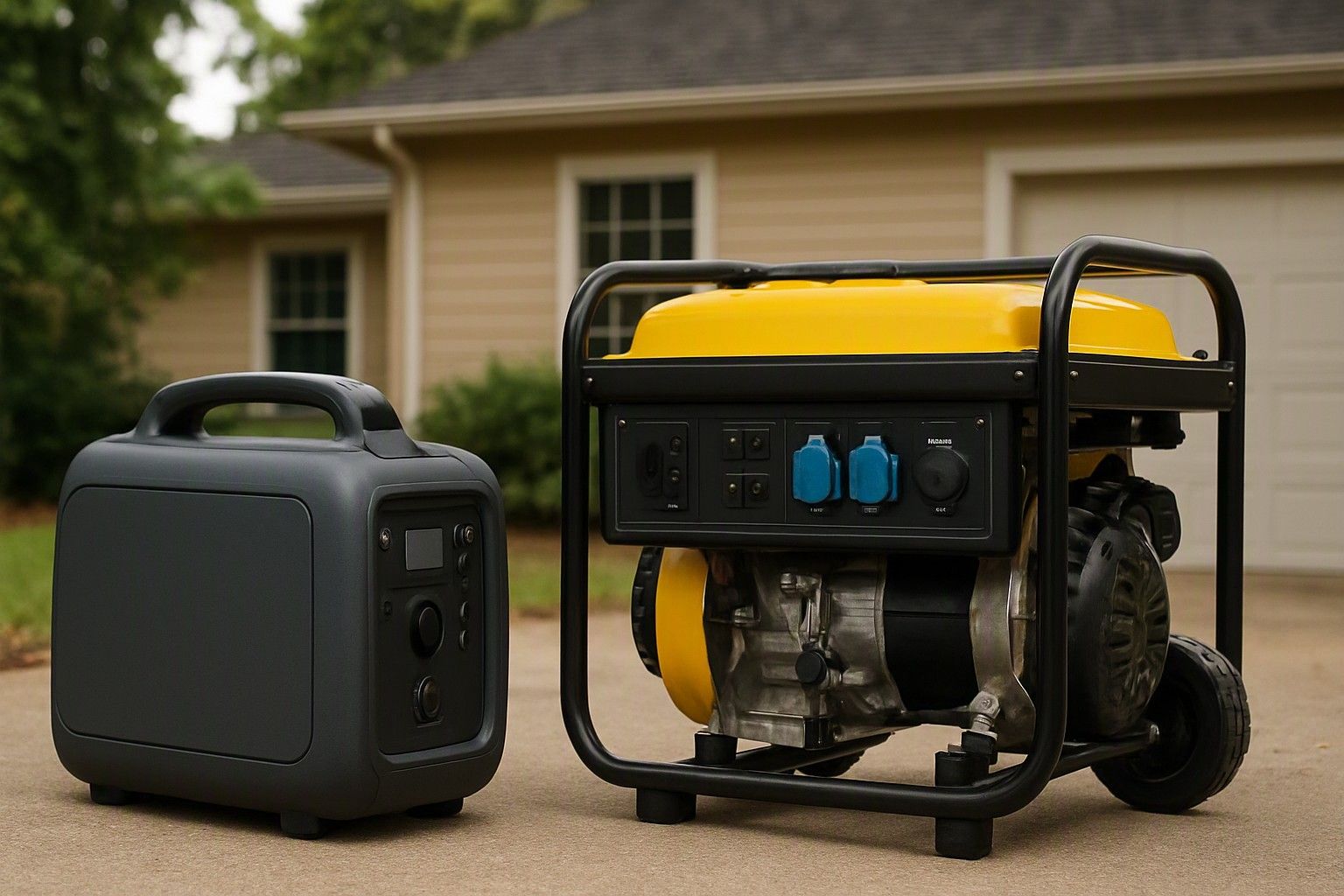
If you're stuck between a battery inverter and a fuel generator for home backup, the honest answer depends on how long your outages last and how much load you need to run. This isn't a case of one being universally better — inverters and generators solve different problems, and Indian households often end up choosing based on their specific outage pattern, not brand preference. Read through the practical differences below and you'll know which one fits your home before you spend a rupee.
How Inverters and Generators Differ in Practice
A home inverter is a battery-backed system: it stores grid electricity in a battery and switches over automatically the moment power fails, usually within a fraction of a second. There's no manual starting, no fumes, and no moving engine parts — just a silent switch that keeps your lights, fans and a few sockets running. The catch is capacity. An inverter's battery holds a fixed amount of energy, so it's built to run a defined set of loads for a defined number of hours, not to power heavy appliances indefinitely.
A generator works completely differently. It burns fuel — petrol, diesel or LPG depending on the model — to generate electricity on demand, for as long as fuel is available. That means it can run air conditioners, water pumps, or an entire house's load without draining out the way a battery does, but it needs manual starting (unless it has an auto-start feature), makes engine noise, and needs a stock of fuel kept at home.
In practice, most Indian households treat these as answering different questions. An inverter answers "how do I keep basic things running the instant power cuts", while a generator answers "how do I keep the house fully powered if the cut lasts for hours." Understanding this difference is the real starting point before comparing costs or specs.
Running Cost, Fuel, Noise and Emissions
Cost and comfort split sharply between the two once you look past the purchase price. An inverter's running cost is essentially the electricity used to recharge its battery — a small, predictable addition to your power bill, plus periodic battery replacement every few years. There's no fuel to buy, no exhaust, and the sound level is close to silent, which is why inverters sit comfortably inside living rooms or bedrooms without disturbing anyone.
A generator's running cost is a different equation entirely. Every hour it runs consumes fuel, and diesel or petrol prices mean the cost per unit of electricity produced is meaningfully higher than what you'd pay the grid or what an inverter's recharge cycle costs. Generators also run an engine, so they produce noise — enough that most housing societies and RWAs restrict where and when they can be used — and they emit exhaust fumes, which is why they need outdoor placement with proper ventilation, never indoors.
For a household that faces short, occasional outages, this makes an inverter the lower-friction choice: quiet, clean, and cheap to run for the load it's designed for. For a household that needs to power heavy equipment for extended hours — construction sites, large homes with ACs, or areas with genuinely long outages — the generator's higher running cost is often accepted as the price of continuous, high-capacity power. Neither is universally cheaper to run; it depends entirely on how many hours a day you actually need backup.
Which One Suits Long, Frequent Outages Better
This is where the choice usually gets decided in real Indian homes, because outage duration changes the maths more than any other factor. An inverter is designed around a battery's stored charge — once that charge is used up, the only way to get more backup is to wait for the grid to return and recharge it. For a home facing one or two short cuts a day, this is a non-issue since the battery easily covers the gap. For a home facing frequent, long stretches without grid power, the battery can run dry well before electricity returns, leaving the house without backup exactly when it's needed most.
A generator doesn't have this ceiling. As long as fuel is available, it keeps producing power, which makes it the more reliable option for genuinely long or unpredictable outages — the kind seen in parts of rural India or during heavy seasonal load-shedding. The trade-off is that someone has to manage fuel supply, starting, and monitoring, unless the generator has auto-start built in.
If your outages are occasional and short, an inverter alone is usually enough, and buying a bigger, costlier one to chase longer runtime rarely makes sense. If your area sees the opposite pattern, it's worth reading how to match the choice to homes with heavy load-shedding, since the right sizing and fuel logic there is quite different from a standard urban household's needs.
Upfront and Ongoing Cost Compared
Looking only at purchase price can be misleading, because the two products have very different cost curves after the sale. Inverters sold for home use span roughly ₹3,500 to ₹85,000, with most households settling around ₹14,000 depending on capacity and battery type. Budget-tier inverters under ₹5,500 typically cover basic lighting and fan loads, the ₹12,000 range adds capacity for a few more appliances, and the ₹25,000 band supports larger homes running televisions, routers and multiple fans together. Once bought, the main recurring cost is the electricity to recharge the battery and eventual battery replacement.
Generators, depending on fuel type and power output, often carry a higher upfront price than a comparably capable inverter setup, and that gap widens further once you factor in ongoing fuel expense, which accumulates every single hour the unit runs. A generator used sparingly for genuine emergencies can still work out cheaper over its life than one run daily for hours, so ongoing usage pattern matters as much as the sticker price.
Rather than comparing sticker prices side by side, it helps to work out your expected backup hours per month for each option and project the running cost forward. You can compare lifetime running costs of each option to see how battery replacement, fuel spend, and maintenance add up differently over a few years of ownership, rather than judging purely on what you'd pay on day one.
Deciding Between the Two Within Your Buying Journey
By now the decision usually narrows down to two questions: how long do your outages typically last, and how much load do you need to keep running through them. If your answer is short, frequent cuts covering lights, fans and basic electronics, an inverter within the ₹12,000 or ₹25,000 range comfortably handles that without fuel, noise or fumes to manage. If your answer involves running heavy appliances for hours during long outages, a generator's continuous fuel-based output is built for that job in a way no battery can match.
Some households end up owning both — an inverter for the everyday instant switch-over, and a generator kept in reserve for the rare extended outage — but that's a decision worth making deliberately rather than by default. If you're still working through sizing, budget tier, and installation questions before finalising either option, it's worth returning to settle the inverter-or-generator question and move ahead, which walks through the full buying process step by step rather than just this one comparison.
Whichever way you lean, the choice comes down to matching the backup type to your actual outage pattern and load, not to which product sounds more capable on paper. An inverter handles frequent short cuts quietly and cheaply; a generator carries you through long, heavy-load outages at a higher running cost. With that distinction clear, you're in a position to buy the right one now rather than second-guessing the decision later.
Comments
Be the first to comment.