Inverter Price Guide for India: What You Should Pay
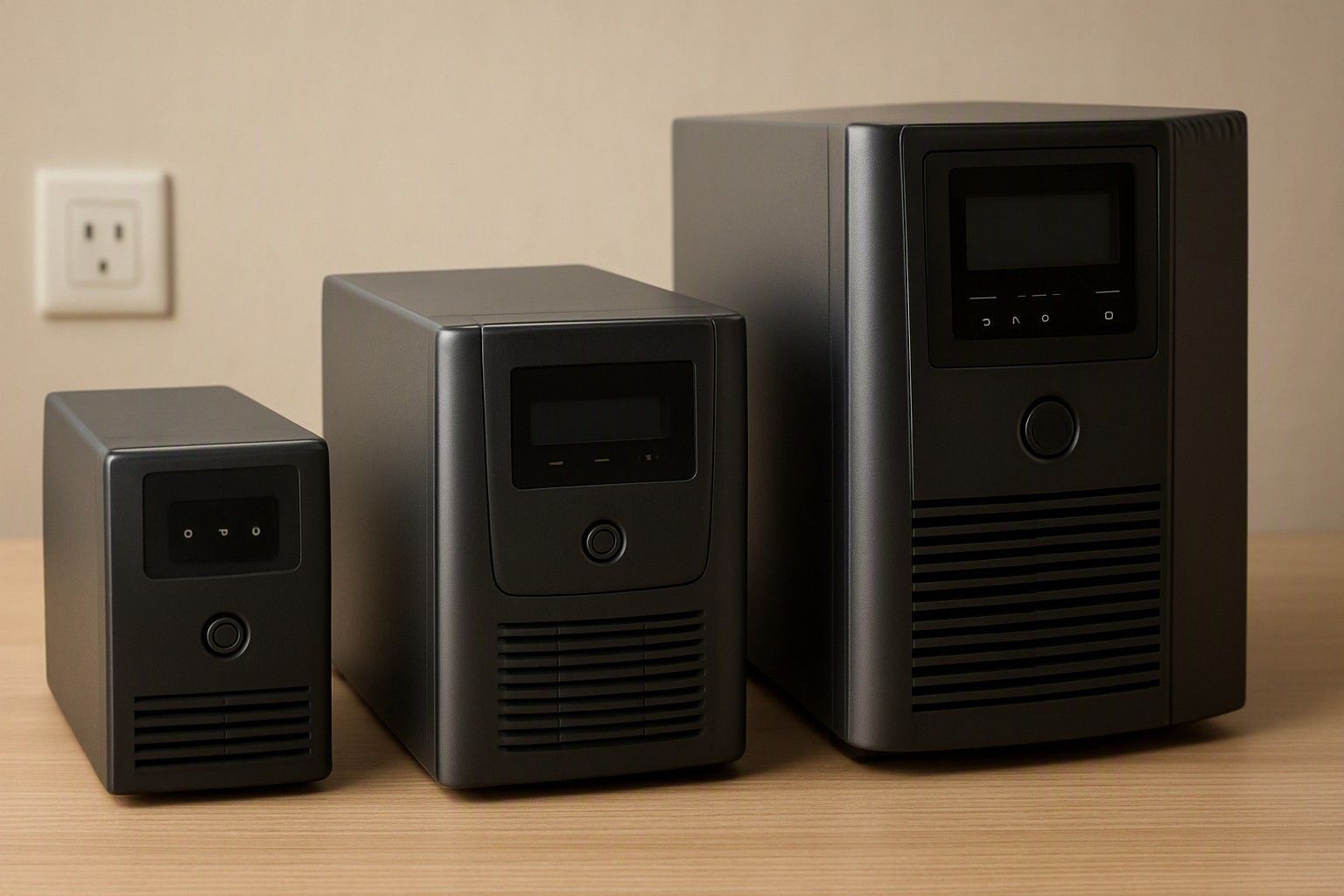
If you've got a price quote in hand and just want to know whether it's fair, this is the page for you. Inverter prices in India range from ₹3,500 to ₹85,000, and where a given model sits in that range tells you almost as much as its spec sheet does. Below is how to read that range, what each price band actually buys, and how to judge today's number against the historical spread instead of guessing.
Inverter Price Bands From ₹3,500 to ₹85,000
Inverters sold in India stretch from ₹3,500 at the bare-bones end to ₹85,000 for the largest home and small-business capacities, and that spread exists because "inverter" covers a huge range of jobs. At ₹3,500, you're typically looking at a small-capacity unit meant to run a handful of lights, fans, and a phone charger during short outages — no battery included, minimal wiring support, and a basic square-wave or low-grade sine-wave output. At ₹85,000, you're in territory built for whole-home backup with sizeable inverter capacity, pure sine-wave output, and hardware that can handle running refrigerators, ACs, or motors alongside the usual load. Everything else sits between these two ends, and the price climbs in a fairly predictable way as rated capacity (VA), waveform quality, and build materials improve. It's worth saying plainly: this is not a market where you should expect one number to be "the" price. A ₹6,000 difference between two units of similar VA rating is normal and usually reflects a real difference in waveform, transformer quality, or protection circuitry — not just margin. Knowing where ₹3,500 and ₹85,000 sit gives you the two ends of the ruler; the next section fills in what's actually between them.
What You Get in ₹5,500, ₹12,000 and ₹25,000
In the ₹5,500 band, you're buying a compact inverter meant for essential loads only — lights, fans, and small electronics during a power cut, usually with a basic waveform and limited overload protection. It's a reasonable choice if your household's backup needs are genuinely small, but it won't run heavier appliances without strain, and battery is almost never included at this price. Step up to ₹12,000 and you start seeing pure sine-wave output become standard, along with better build quality, clearer display panels, and enough capacity to comfortably cover a mid-size home's lighting, fans, and a TV or two. This is where most urban households actually land once they've worked out real usage rather than guessed at it. In ₹25,000, you're paying for meaningfully higher VA capacity, sturdier transformers, and often smarter features like better charging algorithms or app-based monitoring — the kind of unit that can support a small AC or a few heavier appliances during an outage. The jump between tiers isn't just about brand polish; it's driven by how much load you actually need to carry, and how capacity requirements push you into a higher band is worth understanding before you assume a lower tier will do. Buying below your real need to save money in one tier often means replacing the unit sooner than you'd like.
Why the Average Sits Around ₹14,000
The average price across the Indian inverter market lands around ₹14,000, and that number isn't arbitrary — it reflects where the bulk of household demand actually clusters. Most homes in India aren't buying the smallest possible unit or the largest; they're buying enough capacity to cover lights, fans, a fridge, and maybe a router or TV, which is exactly the load profile that ₹14,000 tends to serve well. Because demand concentrates here, this is also the price point with the most competition between sellers and the widest choice of models, which keeps the average from drifting much even as individual listings move up or down. If you're quoted a number close to ₹14,000, you're not being overcharged by market standards — you're paying what most buyers with similar needs are paying. That doesn't mean every unit at this price is equally good; capacity, waveform, and warranty terms still vary at the same price point, so the average tells you what's typical, not what's necessarily right for your specific load. Use it as a sanity check rather than a target: if a quote is far above ₹14,000 for modest capacity, ask what's driving the gap, and if it's far below for a large capacity claim, ask what's been cut to hit that number.
Reading Price History to Judge Today's Deal
The single most useful thing price history does for you is take the guesswork out of "is this a good time to buy." Instead of wondering whether a listed price is inflated or unusually low, you can look at where that model or comparable capacity has actually traded across the ₹3,500 to ₹85,000 range over time and see whether today's number sits near the low end, the middle, or the high end of its own history. A unit quoted near its historical low, or comfortably within the range it normally trades in, is a reasonable buy right now — there's no reliable pattern of prices dropping further on a fixed schedule in this category, so treating a fair current price as a reason to wait is more likely to cost you the outage protection you need than to save you money. What price history is good for is catching the outlier: a listing priced noticeably above where similar-capacity units have consistently sold is worth questioning, while one priced suspiciously below its own history is worth checking for a reason — clearance stock, an older model, or a missing accessory. Judge the number in front of you against its own track record, not against a hope that it'll fall further, and you'll buy with more confidence than most shoppers comparing listings blind.
Budgeting for the Battery on Top of the Inverter
The price bands above cover the inverter unit itself, and if your setup needs a separate battery — which most tubular or flat-plate configurations do — that's a real additional cost that can shift your total budget substantially. Battery pricing depends heavily on capacity (Ah rating) and chemistry, and the gap between a basic battery and a higher-capacity or longer-life one is large enough that it changes which overall price band you actually end up in once inverter and battery are added together. This matters because it's easy to budget for the inverter, feel good about landing in a comfortable tier, and then be caught off guard when the battery quote arrives separately. Understanding why battery choice can double your total spend before you finalize the inverter purchase means you're budgeting for the full system, not just half of it. If you're working with a fixed total budget, it often makes more sense to decide on inverter-plus-battery spend together from the start, then split it between the two components based on your actual backup needs, rather than maxing out the inverter budget first and hoping the battery fits whatever's left.
Setting a Realistic Budget Across the Whole Purchase
By this point you know the price range, where the tiers sit, why the average lands where it does, and that the battery adds its own separate cost — which means you're ready to set one realistic number for the whole purchase rather than negotiating each piece in isolation. Start with your actual load requirement, not your ideal budget, because sizing wrong is the most expensive mistake you can make in this category — an underpowered unit gets replaced, while an oversized one just wastes money upfront. From there, use the price bands and the ₹14,000 benchmark to sanity-check quotes as they come in, and treat battery cost as part of the same budget line rather than an afterthought. None of this needs to happen in isolation from the rest of the decision — capacity, waveform, battery type, and warranty terms all interact with price, so it helps to balance price against every spec that matters before you commit to a specific quote. A realistic budget in this category isn't the lowest number you can find; it's the number that covers your real load without leaving you exposed to a mid-outage failure.
You now have what you need to answer the question you came in with: a fair price sits within the ₹3,500 to ₹85,000 range at a level matched to your actual load, close to ₹14,000 for a typical home, and confirmed against price history rather than a hopeful guess. If today's quote checks out against that framework, there's no reason tied to pricing patterns to hold off — buy for the backup you need now.

Comments
Be the first to comment.