Best Inverter Setup for Areas With Long, Frequent Power Cuts
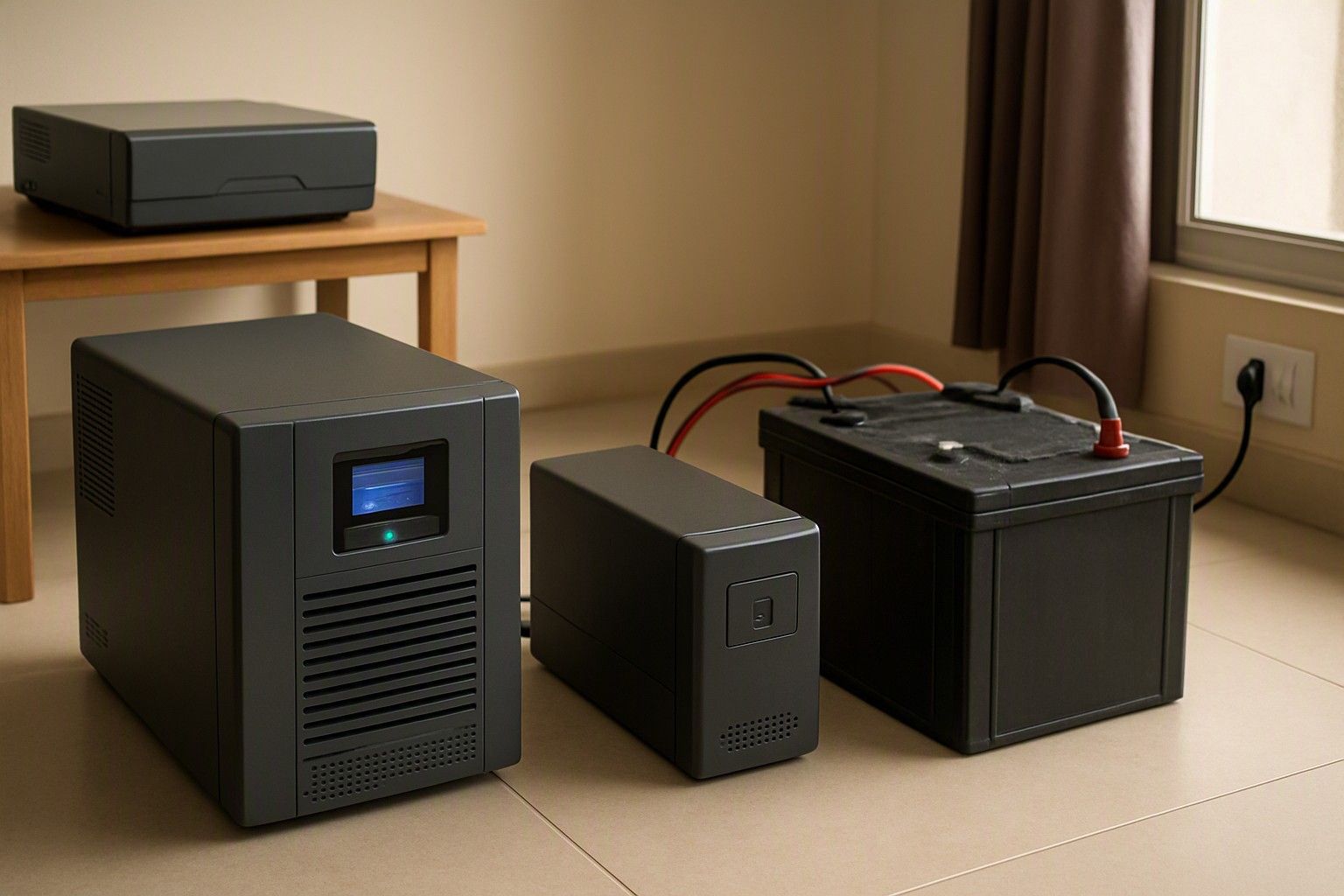
If your area sees power cuts running four, six, even ten hours at a stretch rather than the odd short trip, a standard inverter setup sized for occasional backup will leave you sitting in the dark by evening. This article is for households and shops in tier-2/3 towns and rural pockets where load-shedding is routine, not rare — and where the sizing math, battery choice and charging behaviour all need to change to match that reality. If your cuts are short and infrequent, this level of setup would be overkill; keep reading only if long outages are your actual problem.
Why Long Outages Change the Whole Equation
Most inverter buying advice assumes short, occasional cuts — an hour here, ninety minutes there — and sizes the battery just enough to ride that out comfortably. In genuinely high-outage areas, that assumption breaks down completely. A six-hour cut doesn't just need six times the backup of a one-hour cut; it also means the battery is discharging deeper and more often, the inverter is running continuously rather than in short bursts, and the charging window between cuts is often too short to fully top up before the next outage starts. This changes what you optimise for. Instead of asking "how much load can this run for a bit," you need to ask "how much load can this run for hours, day after day, while only getting partial charging in between." That single shift affects battery Ah rating, battery chemistry, inverter charging current, and even how you manage voltage fluctuation, because grid supply in heavy load-shedding areas is rarely clean when it does return. Buyers who ignore this and simply buy a bigger inverter without rethinking the battery end up with a system that looks powerful on paper but sags badly by the third or fourth hour of an outage, because the battery was never built for that depth and frequency of cycling in the first place.
Choosing Higher Ah Batteries for Extended Backup
Backup duration is a function of battery capacity (Ah) far more than inverter wattage, so this is where a long-outage setup diverges most sharply from a standard one. A battery sized for a household with brief, occasional cuts might comfortably run essentials for an hour or two on a mid-range Ah rating, but stretch that same battery across a six-hour outage and you're asking it to deliver a much deeper discharge than it was designed for repeatedly. Deep, frequent discharging is exactly what shortens battery life if the chemistry and Ah rating aren't matched to the load. For long-outage households, the practical fix is to move up to a higher Ah battery than you'd otherwise consider, even if it means paying more upfront, because the alternative is a battery that's constantly cycled near its lower limit and wears out within a couple of years instead of five or more. This is also where battery type stops being a minor detail and becomes central to the decision, since not every battery chemistry handles this kind of daily deep cycling equally well. It's worth reading through which battery type survives heavy daily cycling best before finalising Ah rating, because pairing the wrong chemistry with a high Ah number still leaves you with a battery that degrades fast under sustained, repeated discharge — the two decisions have to be made together, not separately.
Fast Charging Between Short Grid Windows
In areas with long outages, the grid often comes back for a window that's shorter than the cut itself — two hours of supply between two four-hour cuts is a common pattern in many tier-2 and rural areas. If your inverter's charger can't push enough current to substantially refill the battery in that window, you start every subsequent outage with less charge than the one before, and by evening the system is running on fumes. This is why charging current rating matters as much as backup capacity for this buyer profile. A higher-amperage charger brings the battery back up faster during short grid windows, which matters more here than in areas with brief, infrequent cuts where a slower charger has all day to catch up. When comparing units, look specifically at the charging current spec rather than assuming a bigger inverter automatically charges faster — the two aren't always linked. It's also worth noting that pushing very high charging current into a battery that isn't built to accept it quickly can generate excess heat and reduce battery life over time, so the inverter's charging capability and the battery's acceptance rate need to be reasonably matched. This is one more reason the inverter and battery in a long-outage setup should be chosen together rather than picking whichever inverter is on offer and pairing it with whatever battery is available.
Handling Low Voltage and Erratic Grid Supply
Heavy load-shedding areas frequently also have poor voltage stability when the grid is actually on — supply that sags well below the standard 230V, especially during peak demand hours right before or after a scheduled cut. An inverter that only charges properly within a narrow, near-ideal voltage band will struggle in this environment, either charging very slowly or not switching to charge mode at all during dips. For this buyer, a wide input voltage range on the charging circuit isn't a nice-to-have, it's essential, since it determines whether the battery actually gets topped up during the imperfect grid windows that are the norm rather than the exception in these areas. Erratic supply also tends to include voltage spikes when power is restored after a long cut, so built-in protection against both under-voltage and over-voltage swings matters more here than in areas with cleaner, more consistent grid supply. Skipping this check is a common mistake — a buyer sizes the Ah rating and charging current correctly but ends up with an inverter that simply refuses to charge efficiently on the low, unstable voltage their area actually delivers, which quietly undermines everything else about the setup. Checking the rated input voltage range before buying is a five-minute step that prevents months of underperformance. Once you've settled on the right voltage range, you can use our inverter backup time and running cost calculator to size the Ah rating and estimate the real monthly charging cost before you buy.
When Backup Needs Push You Toward a Generator
There's a point where even a well-built inverter and battery setup stops being the right tool, and it usually shows up in areas with the longest, most frequent outages — cuts stretching well past what any reasonably priced battery bank can sustain, day after day, without the battery degrading fast or the household running on a fraction of its normal load. If you're finding yourself needing to ration usage to just a fan and a couple of lights for most of every outage, or if outages regularly exceed six to eight hours with short recovery windows, that's a signal worth taking seriously. It doesn't mean the inverter route was wrong, but it does mean a generator, or a hybrid inverter-plus-generator setup, may serve the household better than continuing to chase backup duration with an ever-bigger battery bank. The trade-offs between the two aren't just about upfront cost — running costs, noise, fuel availability, and maintenance all factor in differently than they do for a battery-based system. Rather than guessing at this crossover point, it helps to work through the point where a generator starts making more sense before committing further budget to bigger and bigger battery banks that may still fall short of what an eight-hour daily cut demands.
Building the Right Long-Outage Setup Step by Step
Pulling this together, a long-outage setup is built in a specific order: start with your actual load list and required runtime hours, size the battery Ah to comfortably cover that runtime with margin for degradation over time, choose a battery chemistry suited to deep daily cycling, then pick an inverter with a charging current and input voltage range that can actually refill that battery during your real grid windows — not an idealised full-day charging window. Skipping steps or doing them out of order is the single most common reason long-outage households end up disappointed with a setup that looked adequate on paper. Budget matters here too: across the market, inverter-battery combinations span roughly ₹3,500 to ₹85,000, with an average around ₹14,000, and the segment most long-outage households end up in — once Ah and charging current are sized correctly — tends to sit in the ₹12,000 to ₹25,000 range rather than the ₹5,500 entry tier, which is usually built for lighter, occasional-cut use. That's not a reason to overspend, but it is a reason not to under-budget and then find the battery falling short by the third hour of every outage. For the full walkthrough that ties load calculation, Ah sizing, charging specs and voltage tolerance into one spec sheet, it's worth going through how to assemble the full spec for a high-outage household before you finalise a purchase.
A long-outage setup isn't a bigger version of a standard inverter purchase — it's a different set of priorities: higher Ah, cycling-tolerant battery chemistry, faster charging current, and wider voltage tolerance, in that order. Get those four right and the question this article opened with — which inverter and battery actually hold up against long, frequent power cuts — has a concrete answer rather than a guess.
Comments
Be the first to comment.