Room Heater Electricity Cost Calculator
See what your heater really adds to the winter bill — units per hour, night, month and season by wattage, type and thermostat use — plus a room-size wattage check, inverter reality check and AC heat-pump comparison. India-first, instant and editable.
~₹1,899/mo
typical in-season monthly cost · 2 kW · 6 h/night · 80% duty
1. Your heater
Pick the type you own or are considering, then the wattage printed on its rating plate. At the same wattage every electric heater uses the same units per hour.
Heater wattage
Wattage is the element's draw, not the warmth it delivers. A 2,000 W heater is 2 kW while the element is on — about 9 A at 230 V, which needs a 15 A socket.
2. Your usage
How long you heat, how many cold nights you expect and how often the thermostat actually keeps the element on.
A bedroom often runs 6–8 hours; a living room 3–4. Count the hours you actually need heat, not the hours you are at home.
Winter length varies by region: North India usually needs 90–120 nights (≈3–4 months), the West and South 30–60 (≈1–2 months), and hill stations 120+. The monthly cost stays the same — only the season total changes.
Once the room is warm, the thermostat cuts the element on and off. A sealed, right-sized room often settles near 60–80%; an undersized heater or a draughty room runs near 100%.
At these settings: 9.60 kWh/night · ₹62/night · ₹1,899/month in season
3. Your room
The sizing check starts at 10 W per square foot, then adds the heat loss factors that apply to your room.
A 10×12 bedroom is 120 sq ft. This only drives the wattage check — it doesn't change the running-cost estimate.
Room heat-loss factors
Tick everything that applies. We cap the combined uplift at +55% — fix draughts and insulation before adding more watts.
Recommended for your room: 1,500 W · yours: 2,000 W
4. Rates & comparison
India-first defaults: ₹6.5 per kWh. Heaters have no filters or consumables, so electricity is the whole running cost.
Typical: ₹6.5/kWh — use your top slab rate in winter
2.5 ≈ moderate Indian winter · falls as outdoor air gets colder
The COP block only applies if your AC has a heat mode. A cooling-only AC cannot heat at all.
Why your heater's running cost matters
A 2,000 W room heater draws two units of electricity every hour its element is on. Run it six hours a night for 90 winter nights and it adds 1,080 units — about ₹7,020 at ₹6.5/kWh before the thermostat starts cycling. At a realistic 80% duty cycle the figure is 864 units, or ₹5,616. Across a three-month winter that is about ₹1,899 a month — the figure to compare when your winter is shorter or longer. It is often more than the heater itself: the category average is around ₹2,499, with listings from ₹599 to ₹15,999.
Three things decide the bill: wattage (the rating plate, not the price tag), hours of use and thermostat behaviour — how much of each hour the element is actually on. Type matters for comfort and for how long you need to run it, but at the same wattage every resistance heater uses the same units per hour. Right-sizing matters too: start at 10 W per square foot, then add for a top floor, a high ceiling, big windows or draughts.
This calculator adds the checks the room-heater guides cover: a room-size wattage check, the thermostat saving, whether a home inverter can carry the load, and how a hot-and-cold AC's heat pump compares. Defaults are India-first — ₹6.5/kWh, 90 nights, 80% duty — and every input is editable. Use the winter-length presets for your region: the monthly bill stays the same, while the season total changes with the number of cold nights. Heaters have no filters, water or consumables, so electricity is the entire running cost.
How your estimate is worked out
We convert the rated wattage into an average draw using your thermostat duty cycle, then into units at your hours and nights: unitsPerHour = (watts ÷ 1,000) × duty · monthlyUnits = unitsPerHour × 30.44 · seasonUnits = unitsPerHour × hours/night × nights. Cost is units × your ₹/kWh. The sizing check starts at 10 W per square foot and adds the heat-loss factors you tick.
| Assumption | Value |
|---|---|
| Rated draw | 1,000 W · 1,500 W · 2,000 W · 2,400 W — the element's draw while it is on |
| Thermostat duty | 40–100% (default 80%) — the share of each hour the element is actually on |
| Units per hour | (watts ÷ 1,000) × duty |
| Monthly units | units/hour × 30.44 nights — a full-use in-season month |
| Winter units | units/hour × hours/night × nights/winter |
| Winter length | 30–150 nights; presets 45 (West/South), 90 (North), 120 (hills) |
| Sizing baseline | 10 W per sq ft — assumes an 8–9 ft ceiling and average insulation |
| Room uplift | Top floor +25% · ground floor +15% · corner +10% · high ceiling +15% · large window +10% · draughty door +10% (combined cap +55%) |
| Recommended wattage | Next step up of 1,000 / 1,500 / 2,000 / 2,400 W; above 2,400 W = two heaters |
| Inverter check | VA = watts ÷ 0.8 · 12 V 150 Ah battery · 80% usable · 90% inverter efficiency |
| AC comparison | Heat-pump COP 1.5–4.0 (default 2.5) at the same delivered heat |
| Defaults | 2,000 W · 6 h/night · 90 nights (≈3 months) · 80% duty · ₹6.5/kWh → 292 kWh/month ≈ ₹1,899/month · 864 kWh ≈ ₹5,616 |
| Formula | Cost = units × rate (monthly units for the monthly bill) |
Estimates only — thermostat duty, room sealing, outdoor temperature and your state's slab tariff move the real bill. Type does not change units at the same wattage; wattage, hours and thermostat behaviour do. Market prices in this page were last checked Nov 2026.
What each type costs at its typical wattage
At 6 h/night, 80% duty and ₹6.5/kWh. Monthly cost assumes 30.44 nights of use; season cost uses your 90 nights (≈3 months). Type alone doesn't change units at the same wattage — the typical wattage and how long you need it do.
| Type | Typical watts | Typical price | Best for | Overnight | Monthly cost | Season cost |
|---|---|---|---|---|---|---|
| Fan / PTC · selected | 2,000 W | ₹799 – ₹2,499 | Short sessions, small rooms, quick warm-up | Fan hum and moving air; light sleepers notice it | ₹1,899 | ₹5,616 |
| Oil-filled | 2,000 W | ₹2,499 – ₹6,999 | Closed bedrooms and long overnight use | Silent and gentle — the usual pick for a shared bedroom | ₹1,899 | ₹5,616 |
| Halogen / carbon | 1,200 W | ₹599 – ₹1,499 | One person in one spot, brief use | Bright glow and exposed hot element — not for kids' bedrooms | ₹1,140 | ₹3,370 |
A 2,000 W fan heater and a 2,000 W oil radiator draw the same while the element is on. Halogen units often cost less to run only because they are typically 1,000–1,200 W — and they heat one spot, not the room. A thermostat and a right-sized unit matter more than the type label.
Cut the cost of running your heater
Match the wattage to the room
Start at 10 W per square foot: a 120 sq ft bedroom needs about 1,200 W, so round up to 1,500 W. Add 25% for a top-floor concrete roof, 15% for a high ceiling and 10% for a large window or draughty door. Oversizing is fine only if the heater has a thermostat or lower heat settings.
Let the thermostat do the work
A heater without a thermostat draws full rated power until you switch it off. Set a comfortable temperature and let the element cycle; at our defaults, 80% duty saves about ₹475 a month — ₹1,404 over a 3-month winter — against running at 100% all night.
Pre-heat, then drop a step
Run the heater on high until the room is comfortable, then switch to a lower setting or a lower thermostat step. Oil radiators keep giving off heat after the element cuts; fan heaters lose it immediately, so use their thermostat rather than leaving them on full.
Seal the room before adding watts
Close the door, pull heavy curtains at dusk and roll a towel along the door base. A sealed 1,500 W heater beats a draughty 2,000 W one — the heat you keep is cheaper than the heat you make. Shut off rooms you are not using.
Warm the person, not the whole room
A blanket, warm clothing or a hot water bottle lets you accept a lower room temperature and fewer heater hours. For a desk or sofa, a 1,000–1,200 W radiant heater in front of one person uses less than heating the whole room.
Use a 15 A socket, never an extension
A 2,000 W heater pulls about 9 A. Plug it straight into a 15/16 A wall socket, not a 6 A lighting point or an extension board. Check the plug after the first half hour — noticeable heat means stop and investigate.
Frequently asked questions
How many units does a 2,000 W room heater use per hour?
Two units at full power — 2 kW × 1 hour. Once the room is warm, a thermostat cuts the element on and off; at our 80% default duty the average is 1.6 kWh an hour. Multiply by your tariff: at ₹6.5/kWh that is ₹10.40 an hour on average, or ₹13 at full power.
How much does it cost to run a room heater all night in India?
At ₹6.5/kWh, a 2,000 W heater run 6 hours at 80% duty uses 9.6 kWh — about ₹62 a night, or roughly ₹1,899 a month if you run it every night. Eight hours is 12.8 kWh, about ₹83 a night and ₹2,533 a month. Across a 3-month winter (90 nights) that is ₹5,616 at 6 hours, or ₹7,488 at 8 hours. A thermostat, a sealed room and a lower setting all bring it down.
How many watts do I need for a 10×12 bedroom?
A 10×12 room is 120 sq ft; at 10 W per sq ft the baseline is 1,200 W. Round up to 1,500 W for a comfortable margin. Add 25% for a top-floor concrete roof and 10% for a large window, and you land near 1,650 W — a 2,000 W heater with a thermostat. The sizing check above applies your own factors.
Is a 2,000 W heater expensive to run — and can it push me into a higher slab?
At our defaults it costs about ₹1,899 per in-season month and ₹5,616 per 90-night (≈3-month) winter — often more than the heater itself (category average around ₹2,499). It adds about 292 units a month, so if your usual consumption is near a slab threshold, use your top slab rate in the calculator. In the article's example, a household using 150 units a month plus 120 heater units lands at 270 units and may pay a higher rate on part of it.
Which room heater type is cheapest to run?
At the same wattage, every electric resistance heater uses the same units while the element is on — fan, oil-filled, halogen or carbon. Type changes comfort and how many hours you need, not the physics. Halogen units are often only 1,200 W, so the meter number looks lower, but they heat a spot rather than the room. A thermostat and a right-sized unit matter more than the type.
How many months is winter in India — how many nights should I enter?
It varies widely. Delhi, Punjab, Haryana, Uttar Pradesh and Rajasthan usually need about 3–4 months of nightly heating (90–120 nights); hill stations can need 4–5. Mumbai, Chennai, Hyderabad and Bengaluru have short, mild spells — often 1–2 months (30–60 nights). The monthly bill in this calculator stays the same; only the season total changes. Use the North, West/South and hill-station presets as starting points.
Can a home inverter run a room heater?
A 2,000 W heater needs about 2,500 VA of inverter capacity. Most Indian home inverters are 700–1,500 VA, so a standard unit will overload or shut down. Even a 12 V 150 Ah battery would last only about 39 minutes at full draw, and deep discharges shorten its life. For long outages, plan on blankets and warm clothing; use the heater on mains power.
Is a hot-and-cold AC cheaper than a room heater?
Per hour of heat, usually yes. A heat pump moves heat instead of making it, so one unit of electricity can deliver 2–3 units of warmth in moderate cold; a resistance heater gives about one. At COP 2.5 the same heat costs about ₹760 a month instead of ₹1,899 — ₹2,246 instead of ₹5,616 over a 3-month winter. But the AC costs far more upfront, heats only the room it is installed in, and loses efficiency on frosty mornings. If you already own one, use it first.
Does a thermostat really save money on a heater?
Yes. A heater without a thermostat keeps drawing full rated power until you switch it off. If a thermostat cuts the element to 80% of the time, you pay 80% of the units — at our defaults that is ₹475 less a month, or ₹1,404 over a 3-month winter, than running at 100%. Set a comfortable temperature rather than maximum, and use a timer only if it is rated for the heater's full load.
Do room heaters burn oxygen in a closed room?
No — an electric heater has no flame and does not consume oxygen. A closed room can still feel stuffy because people breathe out carbon dioxide and the heater dries the air, so leave a window open a finger's width or keep the ventilator clear. The real oxygen danger is a coal angithi, kerosene stove or gas heater indoors: those produce carbon monoxide and should never burn in a sleeping room.
More room heater buying guides
Type comparisons, wattage sizing, overnight safety, running cost and price guides for Indian winters.
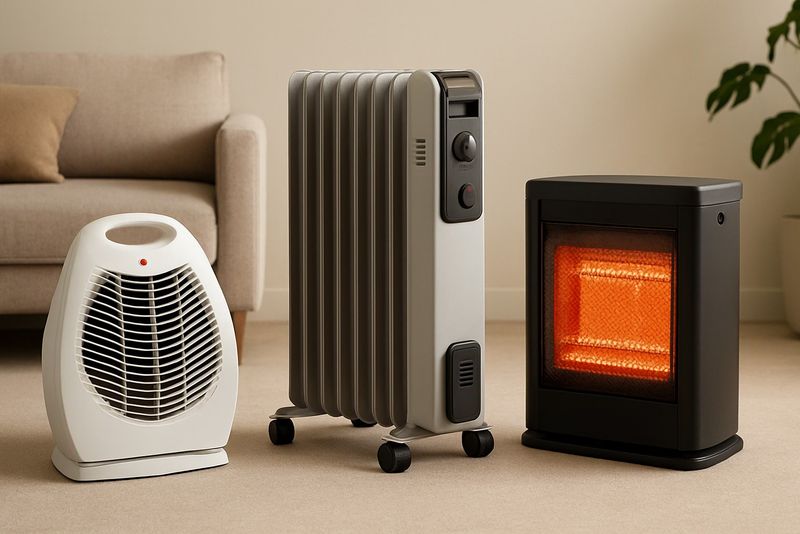
Choosing a Room Heater for Indian Winters: Type, Wattage, Running Cost and Safety
Pick the right room heater for Indian winters: compare types, size wattage to your room, estimate running cost, check overnight safety and judge a fair price.
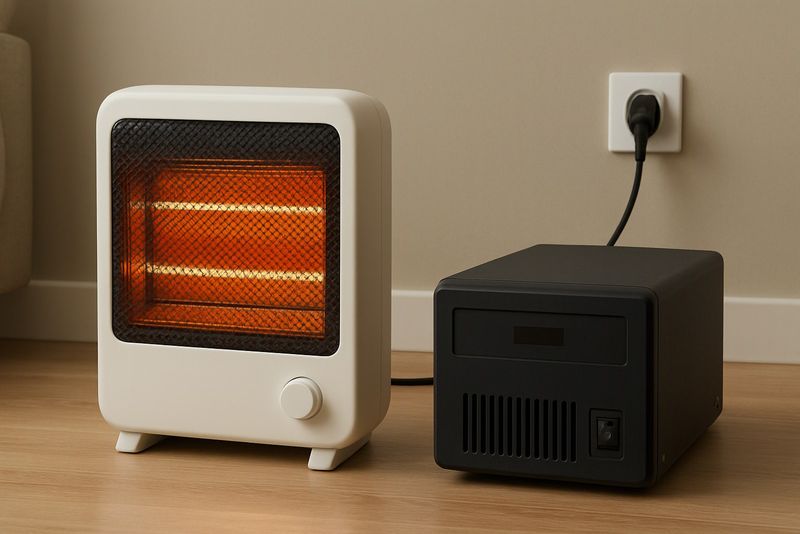
How Much Electricity Does a Room Heater Use? Units, Bills and Running One on an Inverter
A 2000 watt room heater uses 2 units an hour. See nightly bill maths, slab tariff impact, thermostat savings and whether your inverter can run one.
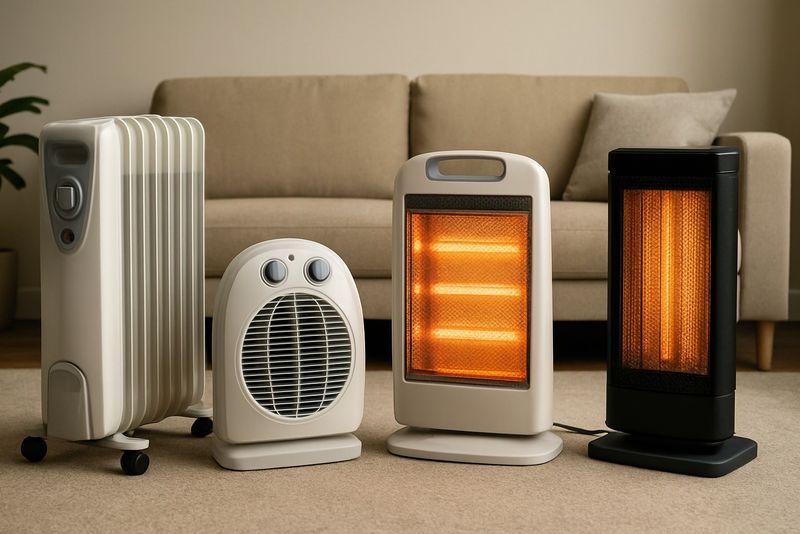
Oil-Filled Radiator vs Fan Heater vs Halogen vs Carbon: Which Type Fits Your Room?
Oil-filled, fan, halogen or carbon heater? See how each warms a room, how it handles Indian winters, noise and night use, and which type fits yours.