How Much Electricity Does a Room Heater Use? Units, Bills and Running One on an Inverter
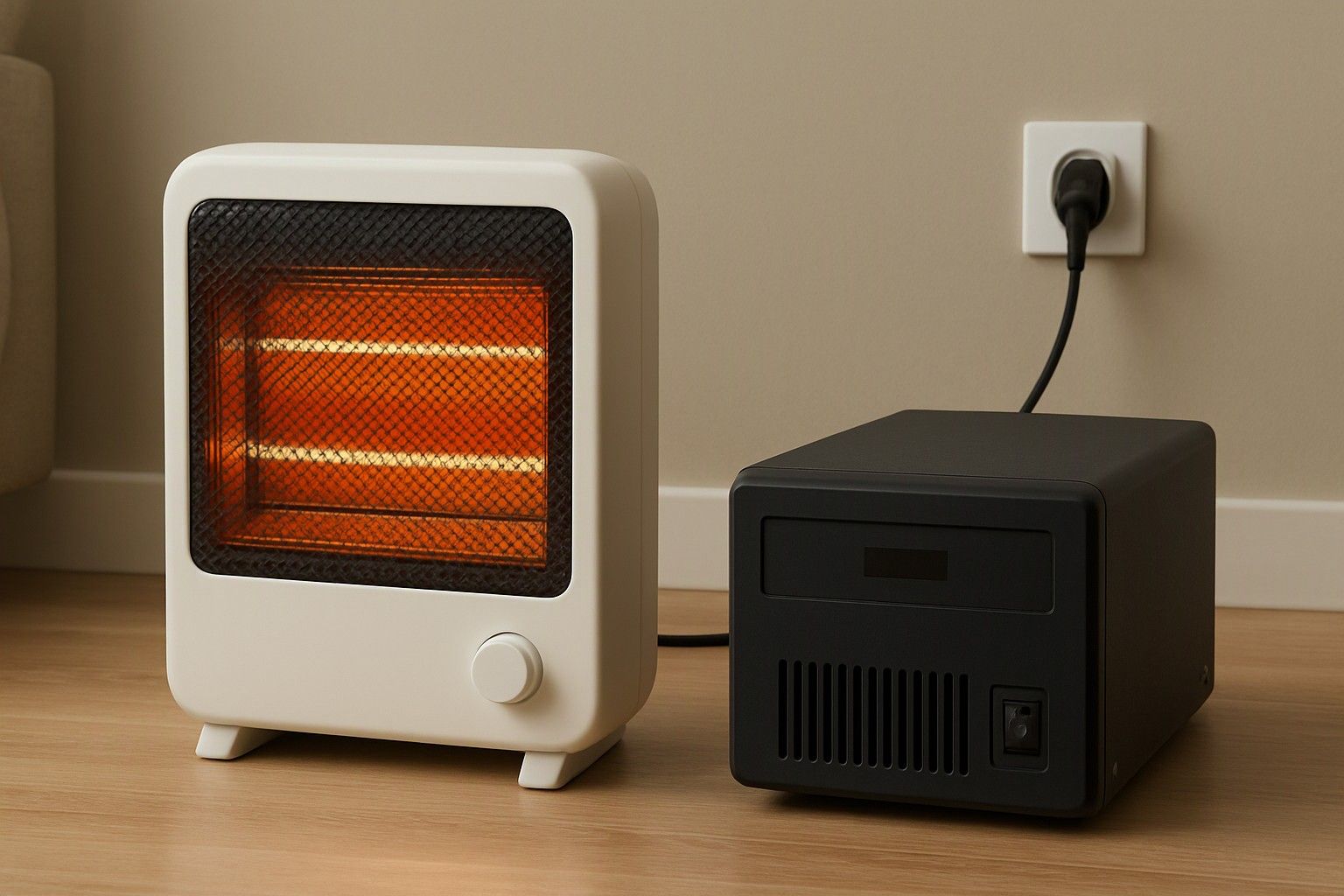
A 2000 watt room heater uses 2 units of electricity for every hour it runs at full power, and a normal home inverter cannot run it for any useful length of time. If you are comparing heaters before winter, or wondering whether a power cut will leave you cold, this article gives you the arithmetic for both questions.
Calculating Units: Wattage Multiplied by Hours of Use
Your electricity meter counts in units, and one unit is one kilowatt-hour. To find the units a heater uses, convert its wattage to kilowatts by dividing by 1000, then multiply by the hours it runs.
A 2000 watt heater is 2 kW. Run it for one hour and it uses 2 units. Run it for 4 hours and it uses 8 units. A full 8-hour night at constant full power comes to 16 units.
Smaller heaters follow the same formula. A 1000 watt heater is 1 kW, so it uses 1 unit per hour. A 1500 watt model uses 1.5 units per hour.
To turn units into rupees, multiply by the per-unit rate printed on your latest electricity bill. That rate differs by state, by distribution company and by consumption slab, so use your own bill rather than a figure from the internet.
The wattage is on the rating label or the box. Fan heaters, halogen heaters and oil-filled radiators in the same wattage class draw about the same power when the element is on. Wattage tells you the cost of every hour of heating. The type of heater changes how many of those hours you actually need.
What a Winter of Nightly Use Adds to Your Bill
Take a 2000 watt heater run for 4 hours every night across a 90-day winter. At continuous full power that is 2 units × 4 hours × 90 days, or 720 units. Stretch the nightly use to 8 hours and it doubles to 1440 units. These are worst-case numbers, because they assume the element never switches off.
Multiply either figure by your per-unit rate to see the season's cost. Spread across three months, 720 units adds 240 units to each monthly bill. For many households that is as much as the rest of the home uses in a month.
It also helps to compare with other ways of heating. If your home already has an inverter AC, ask whether an inverter AC's heat mode spends fewer units for the same room. The answer depends on room size and how long you need heat, but it is worth checking before you assume a resistance heater is the only option.
The real bill usually lands below the worst case, as the next section explains. Still, use the full-power figure to set a ceiling for your budget, then treat anything lower as a bonus.
Thermostat Cycling: Why Actual Consumption Is Often Below the Rated Wattage
The rated wattage is the power the heater draws while its element is on. Most heaters with a thermostat do not keep the element on all the time. Once the room reaches the temperature you set, the thermostat cuts power, and it switches back on when the room cools. Over an hour, the heater may draw full power for only part of that time.
So a 2000 watt heater in a small, closed room can use well under 2 units an hour once the room is warm. In a large, draughty room, or with a door left open, the element stays on much more and consumption moves closer to the rated figure. The meter only counts the time the element is actually drawing power.
Heater type matters here too. An oil-filled radiator takes longer to warm up, but its heated oil keeps giving off warmth while the element is off. A fan heater warms the air quickly but cools quickly as well, so its element tends to cycle more often. The trade-off between radiator warm-up time and fan heater speed affects how many units you end up using, not only how fast the room feels warm.
A heater without a working thermostat runs at full rated power for as long as it stays switched on, so check for a thermostat knob or setting before you buy.
Slab Tariffs and How Heater Use Can Push You Into a Costlier Slab
Most Indian states charge residential electricity in slabs. The per-unit rate rises as your monthly consumption crosses set thresholds, and the thresholds and rates are different in every state. A heater adds a large block of units to a month, so it can move you into a higher slab even if your usual bills are modest.
Here is an example. A household that normally uses 150 units a month runs a 2000 watt heater for 2 hours a night. That is 4 units a day, or about 120 extra units a month. The monthly total becomes about 270 units, and some of those units may now be charged at a higher slab rate.
How much the jump costs depends on your state. In some places the higher rate applies only to the units above the threshold. In others, crossing the threshold changes the rate on a wider portion of your consumption. Your bill or your distribution company's tariff page will say which system applies.
Two other charges are worth checking. A fixed charge may depend on your sanctioned load, and a 2 kW heater running alongside a geyser and kitchen appliances can trip the main breaker if your connection is small. Find your slab limits and sanctioned load first, then decide how many hours of heating you can afford.
Can a Home Inverter or UPS Run a Room Heater?
In practice, no. A 2000 watt heater is one of the hardest loads you can put on a home inverter, for two reasons.
Inverter capacity. Inverters are rated in VA, and usable watts are lower, often around 70 to 80 percent of the VA figure. Many home inverters are sized for fans, lights and a TV, and cannot supply 2000 watts of continuous heating. Pushing one that far triggers overload alarms or shutdowns.
Battery energy. Even if the inverter could cope, the battery would not last. A common 12 volt, 150 Ah battery stores roughly 1.8 kWh at full charge, and you should not drain it completely. A 2 kW heater would use that up in well under an hour. Repeated deep discharges also shorten battery life, and you would have no power left for fans or lights during the cut.
A UPS built for a computer is weaker still and should never be connected to a heater.
If you want some warmth during power cuts, a small low-wattage heater run for short periods is the most you can reasonably attempt, and only after checking the inverter's rated output and the manufacturer's guidance. For cuts that last hours, plan on blankets, warm clothing and a heater you use when mains power is on.
Habits That Cut Running Cost Without Losing Warmth
Most savings come from how you use the heater, not from the heater itself.
- Match the heater to the room. An undersized heater runs flat out and never reaches the set temperature. An oversized one wastes power heating space you are not using.
- Heat only the room you are in. Keep the door closed and shut off any other rooms.
- Close the gaps. Heavy curtains and a rolled towel at the door base keep the warm air in. In a draughty room the heater has to work much harder.
- Pre-heat, then turn down. Run the heater at high power until the room is comfortable, then move to a lower setting or a lower thermostat level.
- Use the thermostat and timer. Set the thermostat to a comfortable temperature, not the maximum. A timer stops the heater running after you are asleep.
- Warm the person, not just the room. A blanket, warm clothing or a hot water bottle lets you accept a lower room temperature.
- Keep the heater clean. Dust on the element or the air intake can reduce performance and add a burning smell.
These changes can bring your actual use well below the full-power figures in the earlier sections.
Setting Running Cost Alongside Every Other Buying Factor
Heaters are priced from ₹599 to ₹15,999, with an average of ₹2,499. Over a full winter, the electricity a heater uses can cost more than the heater itself. A lower sticker price does not make the heater cheaper to run, since two heaters of equal wattage use the same power while the element is on. The differences that matter are thermostat quality, how well the type suits your room, and how many hours you need it.
That is why running cost should not decide the purchase alone. A cheap heater without a reliable thermostat or tip-over protection may cost more in electricity and carry more risk. A heater of the wrong size or type for your room will either run constantly or fail to warm it.
If you want to view electricity cost next to type, sizing and safety in one place, the buying guide brings those factors together so you can compare heaters on the whole picture. With your wattage, daily hours and local tariff in hand, you have what you need to choose with confidence today.
A 2000 watt heater uses 2 units for every hour its element is on, and a thermostat usually brings the real figure lower. Multiply by your own tariff and check your slab limits to see the cost. For power cuts, a standard home inverter will not run a heater of this size for any useful time, so plan warmth that does not depend on it.

Comments
Be the first to comment.