Oil-Filled Radiator vs Fan Heater vs Halogen vs Carbon: Which Type Fits Your Room?
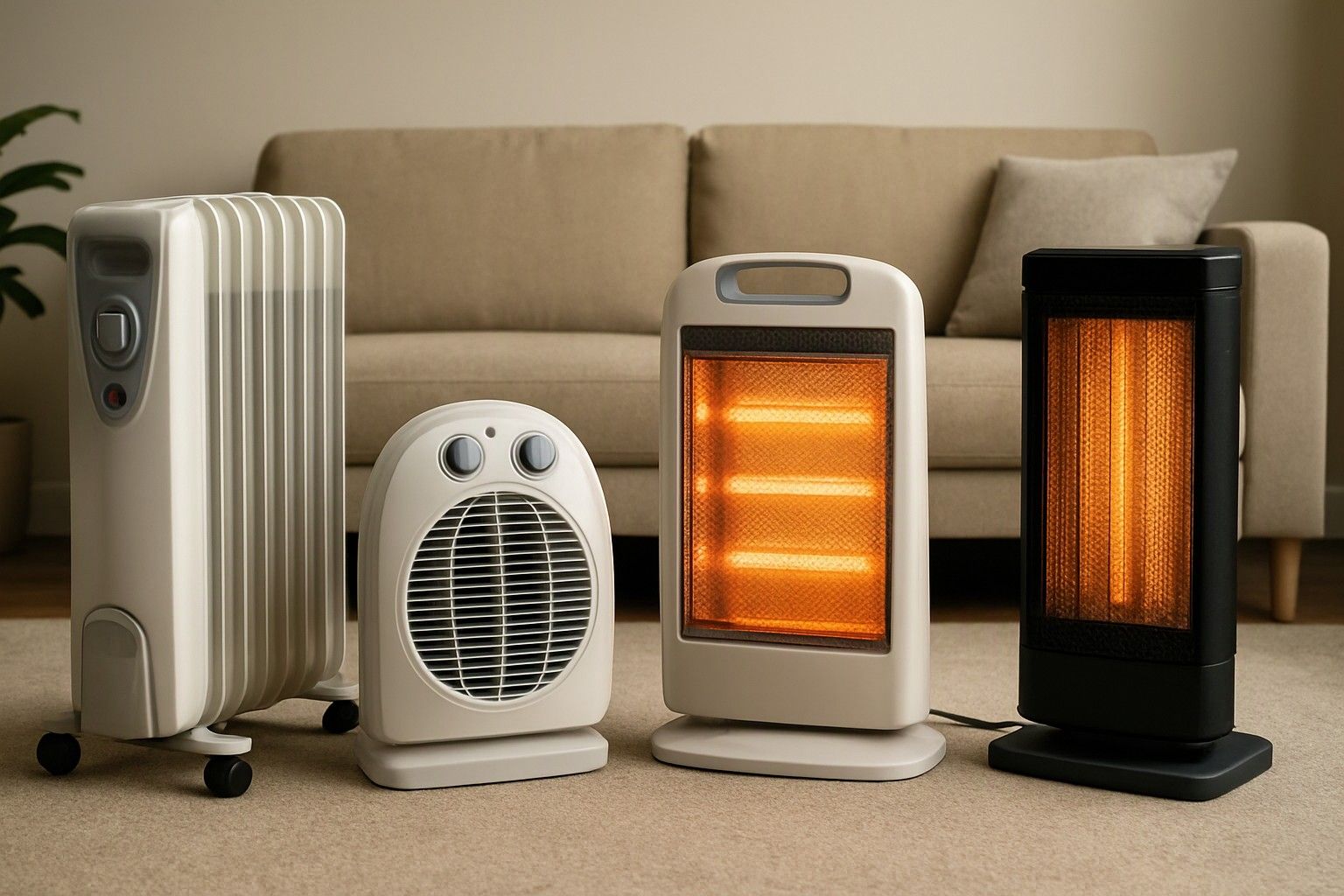
If you are choosing between an oil-filled radiator, a fan heater and a halogen heater for one room in your home, this article is for you. The right type depends on how long you sit in the room, how well sealed it is, and whether it is a bedroom you sleep in or a space you pass through. By the end you will know which type fits your situation, so you can shortlist with confidence.
How Each Heater Type Actually Warms a Room
Heaters warm you in two different ways, and the whole comparison follows from that.
Oil-filled radiators heat a sealed reservoir of oil. The oil warms the metal fins, and the fins warm the air around them, which then rises and circulates by natural convection. Nothing blows and nothing glows. The room warms slowly, and the fins stay warm for a while even after the heater cuts off.
Fan heaters and PTC ceramic heaters pass air over a hot element or ceramic plate and push it into the room. This is forced convection. You feel warm air within a minute or two, but the warmth lasts only as long as the heater runs.
Halogen, quartz and carbon heaters work by radiation. A glowing element gives off infrared heat that warms you and the objects in its path, not the air between you and the heater. Step out of the beam and the warmth drops sharply.
So the choice is between warming the whole room slowly, warming the air quickly for a short while, or warming only the person in front of the heater. Which of these you need decides the type.
Oil-Filled Radiators: Slow, Silent, Steady Heat for Closed Bedrooms
An oil-filled radiator suits a room where you stay for hours and want the temperature to hold. It is slow to start and may take the better part of half an hour to make a noticeable difference. Once the room is warm, the thermostat switches the element on and off, and the heated oil keeps giving off warmth in between. The result is an even, gentle temperature with no draught and no hot blast of air.
That is why it works well in a closed bedroom overnight. There is no fan hum and no glowing element, and the air does not feel as parched as it does with a radiant or fan heater. If you are weighing it for a child or an older family member, read why sealed bedrooms with infants often end up with a radiator before you decide.
The trade-offs are real. These units are heavy and take up floor space. They are poor for a quick ten-minute top-up, because you will have switched it off before it has done much. In a large room with an open door or a leaky window, the slow warming never catches up. In general they also sit toward the higher end of the price range, because you are paying for steadiness and quiet.
Fan and PTC Ceramic Heaters: Fast Warmth for Short Sessions
Fan heaters earn their place where speed matters more than staying power. Switch one on while you get ready in the morning, at a work desk, or in a small room you use for an hour or two, and the air around you warms almost immediately. They are light, compact and easy to move from room to room, which is why they are the usual choice for a second heater in the house.
PTC ceramic models use a ceramic heating plate that limits its own temperature as it warms. Buyers often pick them for that reason, and for steadier output than a bare coil. The fan still does most of the work, so the character of the heat is the same: quick, directional and noisy.
The weaknesses follow from the design. Heat disappears the moment you switch off, because nothing stores it. The moving air can dry your skin and throat in a closed room. The fan is audible, which matters at night. In a big room, a fan heater tends to warm the patch near it while the far corners stay cold. For short, repeated sessions in small rooms, it is the practical option.
Halogen, Quartz and Carbon Heaters: Spot Warmth and Drier Air
Radiant heaters give the quickest sense of warmth of all three types, because the heat reaches your skin directly. Switch one on and you feel it in seconds. That makes them useful when one person sits in one place: at a desk, on a sofa, or in a corner of a living room where the rest of the room does not matter.
Halogen and quartz heaters glow brightly and warm whatever stands in front of them. Carbon heaters work on the same radiant principle, and their glow is generally softer and more reddish. All of them are usually the cheapest priced heaters, often in the ₹799 bracket, which makes them an easy first purchase.
The limits are clear. They do not raise the temperature of the room in any meaningful way, so anyone outside the beam gets little benefit. The warmth feels dry on the skin and eyes, and the glow is a problem in a bedroom. The glowing element is also a hazard around curtains, bedding and children, so these heaters need clear space in front of them and a firm position. Use them for spot warmth and short sessions, not as the main heating for a bedroom.
Harsh North Indian Winters vs Milder Cold in the West and South
Where you live changes how much heater you need and how long you will run it. In Delhi, Punjab, Haryana, Uttar Pradesh, Rajasthan and the hill states, the cold lasts for weeks and nights are properly cold. In a closed room there, an oil-filled radiator is the more sensible main heater. It holds a comfortable temperature through the night at a steady draw, while a fan or radiant heater would have to run constantly and leave the room cold whenever it is off.
In Mumbai, Chennai, Hyderabad, Bengaluru and much of central and southern India, the cold is milder and comes in short spells, often only early mornings and late evenings. A fan heater or a small radiant unit is usually enough there. It makes little sense to buy a heavy radiator for a few chilly weeks, unless you have an infant or an elderly person who needs steady overnight warmth.
Whatever your region, size matters as much as type. A heater too small for the room will run flat out and still disappoint. Before you shortlist, check how many watts a given floor area actually demands, then match that figure to the type that suits your climate and daily routine.
Noise, Glow and Light: What Bothers People at Night
Night use is where the three types differ most, and it is the reason many buyers end up regretting a purchase.
Oil-filled radiators are the quietest. You may hear an occasional tick as the metal expands, or a soft click when the thermostat switches, and there may be a small indicator light. There is no fan and no glow, so most people can sleep beside one.
Fan and PTC ceramic heaters produce a constant hum from the fan and a stream of moving air. Some people stop noticing it after a while, but light sleepers, and anyone with a baby who wakes easily, usually do not. The airflow also dries the throat and nose overnight.
Halogen and quartz heaters are silent in many designs but throw a bright orange glow that fills a dark room. Carbon heaters glow more softly, though the light is still visible, and the radiant heat is uncomfortable if it points at your bed.
If you sleep with the heater running, quiet and dark point to an oil-filled radiator. If you mainly use the heater while awake, noise and glow matter far less and speed becomes the better guide.
Narrowing Your Shortlist Once the Type Is Settled
Once the type is clear, the rest is a matter of fit. Use these rules as a start:
- Bedroom used overnight, closed room, long winters: oil-filled radiator.
- Small room, short daily sessions, mild winters: fan or PTC ceramic heater.
- One person in one spot, low budget, brief use: halogen, quartz or carbon heater.
- Two needs in one home: a radiator for the bedroom and a fan heater for quick use elsewhere is a common and sensible pairing.
On price, the category runs from ₹599 to ₹15,999, with an average of ₹2,499. Simple radiant units tend to sit at the lower end, and the ₹799 and ₹2,499 tiers cover most fan and radiant options. The ₹6,999 tier is where you will find most of the larger, steadier heaters. Those figures show what a working heater of each kind costs now, so you can buy for this winter's room and routine without stretching your budget.
When you are ready to compare specific features, weigh your chosen heater type against wattage, safety and budget in the full buying guide.
If you are choosing between an oil-filled radiator, a fan heater and a halogen heater, the choice now comes down to how you use the room. A radiator suits closed rooms and long nights, a fan heater suits small rooms and short sessions, and a radiant heater suits one person sitting in one spot. Match the type to your room and your region, and you have made the biggest decision.

Comments
Be the first to comment.