How Many Watts Does Your Room Need? Sizing a Heater by Floor Area and Insulation
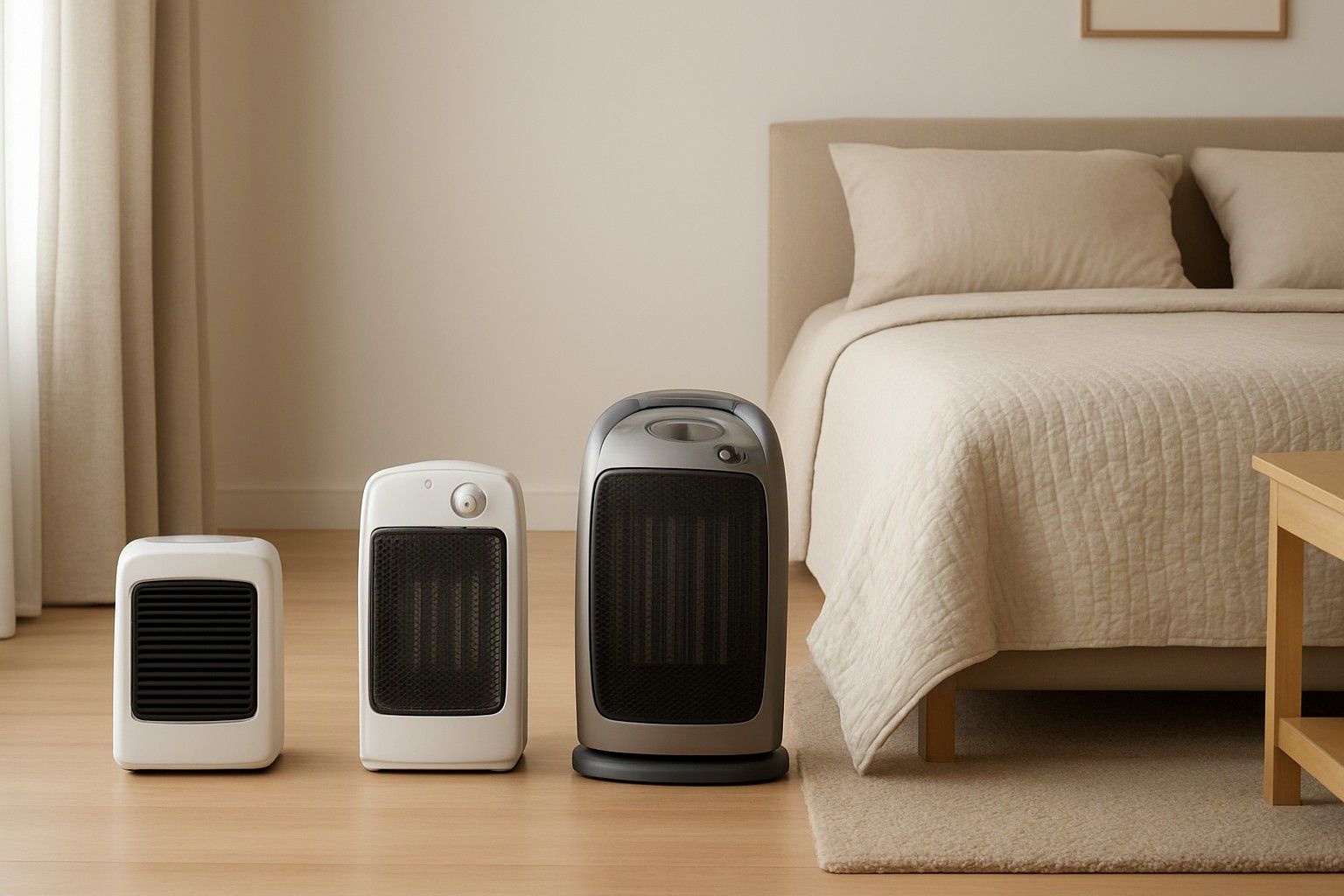
A 10x12 bedroom is 120 square feet, and for an average Indian flat that usually means a heater of roughly 1200 to 1500 watts, going higher if the room is cold, high-ceilinged or leaky. This article is for anyone who wants to size a heater by floor area and insulation before choosing a type or a brand. If you only know your room dimensions, you can work out your number here in a few minutes.
Why Wattage, Not Price, Decides Whether a Room Warms Up
A room heater turns almost all the electricity it draws into heat, so its wattage is a direct measure of how much heat it can put into the room every hour. A 1000-watt heater delivers half the heat of a 2000-watt one, whatever the price tag says. Two heaters at the same wattage give about the same total heat, even when one costs far more than the other.
That is why undersizing is such a common source of buyer regret. A heater that is too small runs flat out, never lifts the room to a comfortable temperature, and ends up blamed as a weak product when the real problem was the number on the box.
Price still matters, but it tells you something different. Heaters in this category run from ₹599 to ₹15,999, with an average of ₹2,499. The spread mostly reflects heater type, build quality, safety features, settings and convenience, not extra warmth. Decide your wattage first, then look for the best build you can afford at that wattage, rather than stretching your budget for features on a heater that is too small for the room.
Wattage Bands for Small, Medium and Large Indian Bedrooms
The usual starting point is about 10 watts per square foot of floor area. That assumes a ceiling of 8 to 9 feet, average insulation, and a winter night that gets properly cold without being hill-station cold. Multiply length by width, then by 10.
- Small rooms, up to about 100 sq ft (8x10, 10x10): 800 to 1000 watts.
- Medium rooms, about 100 to 150 sq ft (10x12, 10x14, 12x12): 1200 to 1500 watts.
- Large rooms, about 150 to 250 sq ft (12x15, 14x16): 1800 to 2400 watts.
So for the 10x12 bedroom in the question, 120 square feet gives a baseline of 1200 watts. Treat that as the floor. In practice 1500 watts gives a more comfortable margin, because heaters rarely warm a room evenly and you will want the room to reach the temperature you like fairly quickly.
Heaters come in fixed steps, not exact numbers, so round up to the next available wattage. Rounding down is how most undersized purchases happen. Rooms above about 250 square feet, such as a big living-dining area, are better handled with the two-heater approach covered later.
Ground-Floor Flats, Top Floors and Concrete Roofs: Insulation Adjustments
Where your room sits in the building changes how fast it loses the heat you put in. Treat the adjustments below as rules of thumb on top of your baseline number, not exact figures.
Top-floor rooms under a concrete roof are the hardest to heat. An exposed RCC slab chills quickly at night and pulls warmth out of the room, so add roughly 20 to 30 percent to your baseline. A 120 sq ft top-floor bedroom is better planned around 1500 to 1600 watts than 1200.
Ground-floor flats lose heat through cold floors, especially tiles or marble, and can feel damp-cold in winter. Add about 10 to 20 percent, more if the floor is bare stone or tile with no rug.
Middle-floor rooms have heated flats above and below, which makes them the easiest to warm. Your baseline is usually enough, and you can sometimes drop one step.
Corner rooms with two outside walls behave like a mild version of the top-floor problem, so add around 10 percent. If your room has several of these factors, such as a top-floor corner room, apply the larger adjustment and then go up one heater step rather than stacking every percentage.
High Ceilings, Glass Windows and Drafty Doors
Older Indian homes often have ceilings of 10 to 12 feet, and the baseline assumes 8 to 9. A taller ceiling means more air to heat, so scale your number by height. A room with a 10-foot ceiling needs roughly 15 to 20 percent more wattage than the baseline.
Windows are the next big leak. Large single-pane glass, or aluminium sliding windows that never quite seal, lose heat quickly and make the area near them feel cold even when the room reading looks fine. Add about 10 percent for a large window wall. Thick curtains pulled at dusk reduce the loss noticeably and cost far less than extra watts.
Drafty doors are the cheapest problem to fix and the most overlooked. A gap under the bedroom door or an open balcony door lets warm air out and cold air in all night. A door that is properly closed or sealed can be worth more than a whole heater step.
If you can feel a draft with your hand near the window frame or door edge, fix it first or add 10 to 15 percent to your wattage. Otherwise you are paying to heat the corridor.
Multi-Setting Heaters and Thermostats: Buying Headroom Without Waste
Buying a slightly larger heater of best brand does not mean paying for full power all night. Many models offer two or three power settings, for example a lower and a higher step, so you can run the full wattage to warm the room quickly and then drop to a lower setting to hold the temperature. A thermostat goes further by cutting the heating element off when the room reaches your set temperature and switching it back on when it cools.
That is how you buy headroom without waste. Size the heater for your coldest night, including any top-floor or draft adjustments, then use the lower settings on ordinary evenings. A 1500-watt heater running on its low step or cycling under a thermostat can use well under its full rated power over a night.
A heater that is exactly sized has no margin, so it runs flat out on every cold night. One with settings and a thermostat is sized for the worst night and costs less on the rest. If you want to see how lower settings and thermostats trim the monthly bill, that article breaks down the running cost, including what it means for inverter backup. When choosing between two similar heaters, prefer the one with adjustable power steps and a thermostat.
Can Your Home Wiring Handle a High-Wattage Heater?
Wattage is also an electrical load, and Indian homes vary a lot in what their wiring can carry. As a rough guide, current in amps is wattage divided by 230. A 1000-watt heater draws about 4.3 amps, a 1500-watt heater about 6.5 amps, and a 2000-watt heater about 8.7 amps.
This matters because many bedrooms have small 5A or 6A sockets meant for lights, chargers and fans. Plugging a 1500 or 2000-watt heater into one of these can overheat the socket and plug, and in older wiring that is a real fire risk. Heaters above roughly 1000 watts are better connected to a 15A or 16A power socket, the type commonly used for ACs and geysers, with a matching plug.
Also check three things in your home:
- The circuit's MCB rating and whether other heavy appliances share it.
- The condition of the socket. Discoloured, loose or warm sockets should be repaired before you add a heater.
- The cord itself. Never run a high-wattage heater through a thin extension board.
If you are unsure about your wiring, have an electrician check it before you buy. The socket and cord checks that matter for high-wattage models are covered in the safety article. If your room can only safely support a smaller heater, size down to that limit and fix the room's heat loss instead of forcing a bigger load onto weak wiring.
When Two Smaller Heaters Beat One Large Heater
One large heater is not always the right answer, and past a certain size two smaller ones are often the more practical choice.
Very large or open-plan rooms. Above about 250 square feet, a single 2400-watt unit leaves some areas cold. Two 1000 to 1500-watt heaters at different points warm the space more evenly.
Wiring limits. If your socket or circuit comfortably handles only about 1500 watts, two heaters on separate circuits can deliver more total heat than one big heater could safely draw. Do not run both from the same extension board.
Flexibility. In a house where different people use different rooms, two smaller heaters can be moved around and used only where needed. On mild nights you can run just one and save electricity.
Redundancy. If one fails in the middle of winter, you still have the other.
One large heater is the better choice for a single bedroom of 120 to 180 square feet. It costs less than two units, takes up one socket and is simpler to run. The two-heater approach pays off mainly when the room is big, the wiring is limited, or the people using it have different needs.
Turning Your Wattage Number Into a Final Pick
Put the steps together using the 10x12 bedroom as the worked example.
- Baseline: 120 sq ft x 10 watts = 1200 watts.
- Insulation: a top-floor room under a concrete roof adds about 25 percent, bringing it to roughly 1500 watts.
- Ceiling, windows and doors: a large window wall adds about 10 percent, or around 1650 watts.
- Round up to the next available step: that points to a 2000-watt heater with adjustable settings, which you will often run on a lower step.
An average-insulated middle-floor bedroom of the same size would stop at step 1, and a 1500-watt heater would give a comfortable margin.
Once you have your number, check it against your wiring, then look at price. Heaters here run from ₹599 to ₹15,999, with an average of ₹2,499, and the main brackets are ₹799, ₹2,499 and ₹6,999. Lower-priced models tend to be lower-wattage or simpler in build, so confirm the wattage on the box before assuming a heater will cover your room. To line up your wattage figure against heater type and price bands, the main buying guide compares the types side by side.
For a 10x12 bedroom, plan on 1200 watts as the minimum and 1500 watts as the comfortable choice, then go up a step for a top floor, high ceiling, big window or drafty door. Check that your socket and circuit can carry the load, and choose a heater with adjustable settings so the extra capacity is there on the coldest night without costing you on every other night.

Comments
Be the first to comment.