Hot-and-Cold Inverter AC or Room Heater: Which Is Cheaper to Run Through Winter?
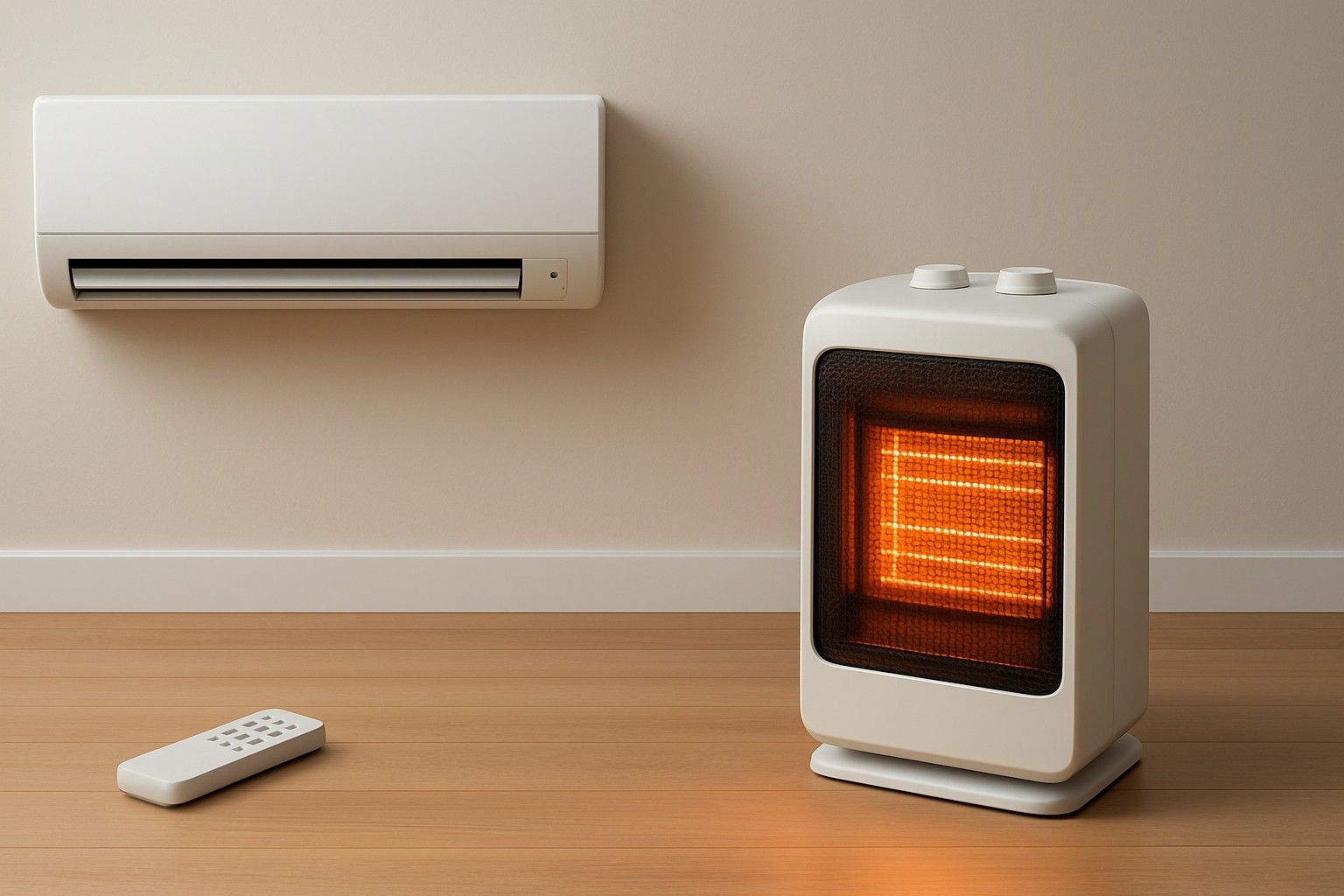
If your AC has a heat mode, or you are considering a hot-and-cold model, it will almost always cost less per hour of heating than a room heater. The catch is that this only holds when the AC is a true heat-pump model and the winter mornings in your city are not extreme. This article helps you decide whether AC heating can replace a heater in your home, or whether a standalone heater still earns its place.
How Heat-Pump AC Heating Differs From a Heater's Resistive Element
A room heater, whether it is a fan heater, oil-filled radiator, quartz or halogen unit, turns electricity into heat directly through a resistive element. Every unit of electricity you pay for becomes roughly one unit of heat. That is simple and reliable, but there is a hard ceiling on efficiency.
A hot-and-cold AC works as a heat pump. It does not make heat from scratch. It moves heat from the outdoor air into your room by running the cooling cycle in reverse. Because it transports heat rather than generating it, one unit of electricity can deliver several units of warmth when conditions are favourable. That multiplier is the whole reason AC heating can be cheaper.
Two practical points follow. First, a cooling-only AC cannot heat at all. Check the remote for a heat symbol and the unit's label for a reverse-cycle or hot-and-cold description before assuming your existing AC can do the job. Second, the multiplier shrinks as outdoor air gets colder, because there is less heat to pull in. A heater's output does not change with the weather, but an AC's efficiency does.
Running Cost Over a Typical North Indian Winter
Start with a simple calculation. A 2000 W heater running for eight hours overnight draws 16 units. A heat-pump AC delivering the same warmth might draw a third to half of that electricity in moderate cold, because it is moving heat rather than making it. So for the same comfort, the AC's electricity bill is usually noticeably lower. The per-unit math behind a heater's winter consumption shows how to apply your own tariff slab to either figure.
In plains cities such as Delhi, Lucknow, Chandigarh or Jaipur, winter nights are cold but outdoor temperatures usually stay well above freezing. This is where an inverter AC in heat mode does best. Once the room reaches the set temperature, the compressor slows down and power draw falls well below its peak. A heater with a thermostat also cycles off, but it still draws its full rated load whenever it is on.
The saving shrinks in the coldest weeks. When outdoor temperatures drop sharply, the AC spends more time in defrost cycles and works harder for each unit of heat. Even then, it generally holds an efficiency edge over a resistive heater, just a smaller one. Over a full December to February stretch, the difference in running cost is real, but it depends on how many hours you actually heat and how cold your locality gets.
Upfront Spend: Standalone Heater vs the Hot-and-Cold AC Premium
The AC's lower running cost has to be set against what you pay at the start. A hot-and-cold AC costs more than a cooling-only AC of the same capacity, because it needs a reversing valve and a heating-capable design. That premium is a substantial sum compared with any room heater.
Heaters cost far less. Across the category, prices run from ₹599 to ₹15,999, with an average of ₹2,499. For a closer view of what a standalone heater typically costs at each tier, the pattern is this:
- ₹799: basic fan or small-room units for short, occasional use.
- ₹2,499: the mainstream range, with better thermostats, safety cut-offs and sturdier build.
- ₹6,999: larger or more comfort-focused heaters meant for regular, longer use.
The decision comes down to what you are buying anyway. If you need a new AC for summer cooling and live somewhere with cold winters, paying the hot-and-cold premium means you also get heating, and the saving on winter bills starts offsetting that premium. If your existing AC is cooling-only and works fine, replacing it just for heat rarely makes financial sense. A heater at the prices above is the cheaper way to get warm.
Where AC Heat Mode Struggles: Frosty Mornings and Outdoor Unit Placement
Heat mode is weakest exactly when you want it most, on the coldest pre-dawn hours. As outdoor air approaches single digits, the unit extracts less heat and the outdoor coil can ice up. The AC then pauses to defrost, and during that pause your room cools slightly. In very cold spots, particularly hill towns and parts of Punjab, Haryana and Himachal on frosty days, heating can feel slow and uneven.
Warm-up time also differs. Any popular branded heater, especially a fan type, makes the air near you feel warmer within minutes. An AC raises the whole room's temperature gradually, so it is better to start it earlier or leave it on at a modest setpoint than to expect an instant blast.
Outdoor unit placement matters more than most buyers realise. A condenser exposed to cold wind, fog or shade, or one installed where water from defrosting can drip and freeze, will perform worse. Sheltered, sunlit mounting with clear airflow helps. If your outdoor unit sits in a damp, shaded shaft or a north-facing wall, expect weaker winter heating than the specs suggest.
Portability and Heating More Than One Room
An AC is fixed. A split unit heats only the room it is installed in, and heat leaks out quickly if doors are open. If your family spends the evening in the living room and sleeps in a bedroom with its own AC, that is fine. But heating the kitchen corner, a study table, a bathroom or a guest room means either another AC or a separate heater.
A room heater goes where you go. You can carry it from the living room to the bedroom, point it at your feet while working, or take it to a relative's home. This flexibility counts in homes where winter activity shifts through the day, and for rooms with no AC at all.
Heating several rooms with ACs gets expensive in both upfront cost and running hours, since each room needs its own hot-and-cold unit. For multi-room needs, the practical pattern in many Indian homes is one capable AC for the main bedroom or living area, and one or two portable heaters for everything else. That mix keeps the long, overnight hours efficient and the short, targeted use flexible.
Dryness and Comfort: Which Feels Better Overnight
Most heaters make the air feel dry, since they warm it without adding moisture. Fan heaters and halogen or quartz units are the usual culprits, and some people wake with a dry throat or itchy skin. Oil-filled radiators are gentler because they radiate steady, lower-surface heat, but they take longer to warm a room.
AC heat mode also reduces humidity. Warm air holds more moisture, so relative humidity drops as the room heats, and the dryness is similar to what you get from a heater. The AC does at least heat evenly and quietly, with no glowing element, no hot surface to touch and no smell from burning dust.
For sleeping, the AC has the edge in consistency. It holds a set temperature with an inverter compressor, so you are not woken by a thermostat clicking on and off or by a fan blowing straight at you. Airflow can still be an issue, so keep the vents from pointing at the bed. If dryness bothers you under either option, a bowl of water or a small humidifier in the room helps.
If a Room Heater Still Makes Sense for Your Home
A heater is the better choice in several common situations:
- Your existing AC is cooling-only, and you only need heat for a few weeks a year.
- You live somewhere with severe cold, where AC heating weakens just when it matters.
- You want to heat a small area, such as a study corner or a bathroom, quickly and only for short stretches.
- You need to warm several rooms at different times of the day.
- A hot-and-cold AC's premium is not justified by how few hours you would run it.
In those cases, the lower purchase price and portability outweigh the higher running cost per hour. You can also combine both approaches. Use the AC for the main room overnight and a heater for the rooms it does not reach. If that is your plan, it helps to narrow down a standalone heater for the rooms your AC doesn't reach based on room size, safety features and how many hours you will run it each day.
So, is AC heat mode cheaper than a room heater? On running cost, yes, in most of the plains and in moderate cold, provided your AC is a genuine hot-and-cold model. A heater is cheaper to buy, easier to move and more reliable on the coldest mornings. If you already have a heat-capable AC, use it as your main winter source and add a heater only where it falls short. If you do not, a heater at the prices above is the sensible, low-commitment way to stay warm this winter.
Comments
Be the first to comment.