Sleeping With a Heater On: Choosing a Safe Type for Rooms With Infants and Elderly Parents
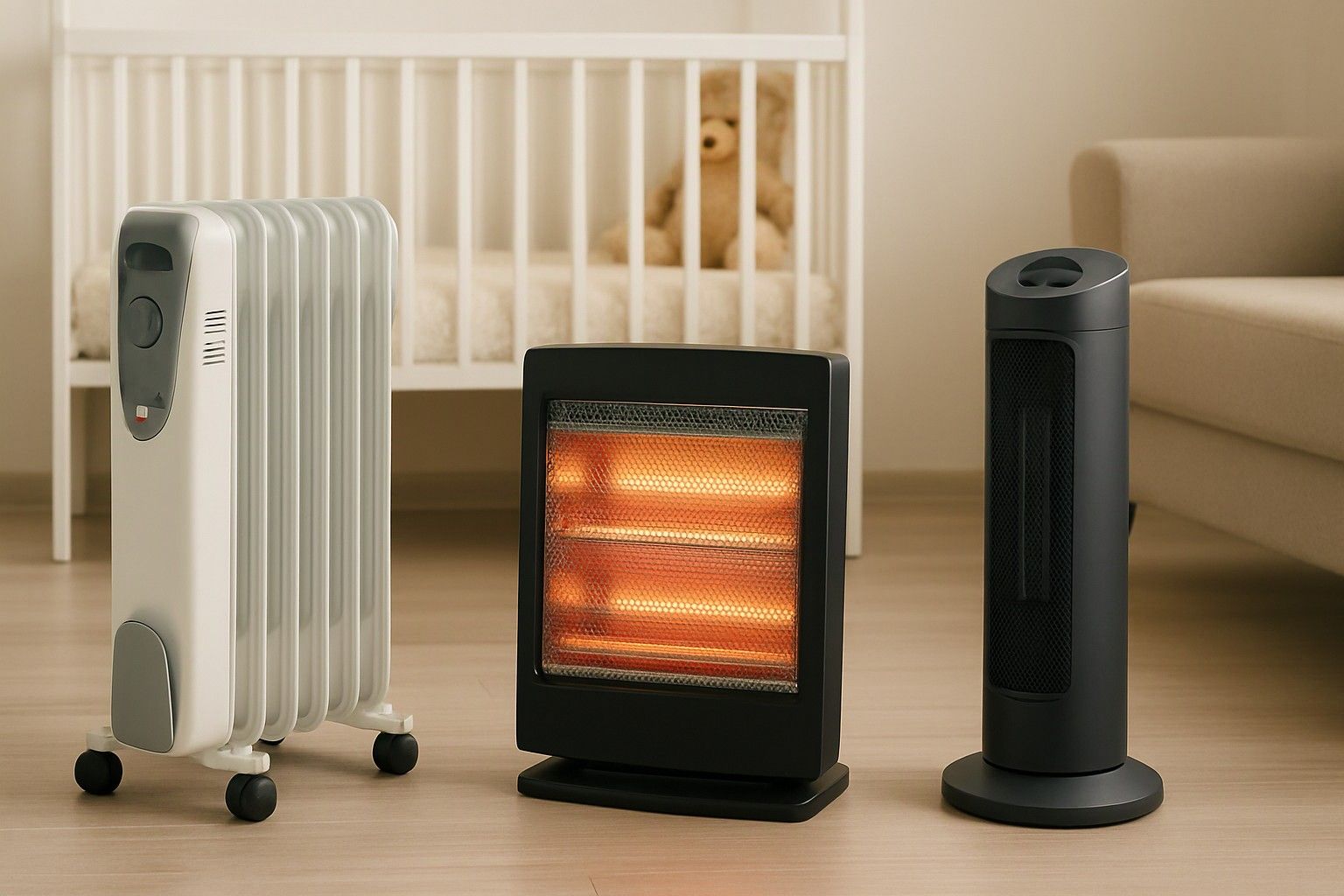
If a baby and a grandparent sleep in the same closed room this winter, you need a heater that can stay on overnight without drying out their airways, burning small hands or filling the room with fumes. This article answers that: which type of heater suits an overnight room, what actually worries doctors and fire officers, and which habits matter more than the heater itself. It is written for joint-family homes where one bedroom does a lot of work.
Do Heaters Really Burn Oxygen in a Closed Room?
No, an electric room heater does not burn oxygen. Oil-filled, fan, halogen and quartz models all work by passing current through a resistive element. There is no flame and no combustion, so nothing consumes the air in the room. The belief comes from a real feeling: a closed, heated room often feels stuffy and makes people drowsy or headachy.
That stuffiness has other causes. Two or three sleeping people breathe out carbon dioxide and moisture, and a room sealed with a towel under the door and a shut window never gets fresh air. The heater also dries the air, which makes breathing feel heavier. A fan heater can add to this by blowing dust and loose fibres from blankets and carpets around the room.
The oxygen worry does apply to anything with a flame or glowing fuel, such as a gas heater, a kerosene stove or a coal angithi. Those use up oxygen and release carbon monoxide. For a baby or an elderly person with weak lungs, that is the real danger. The safe answer is an electric heater plus a little fresh air, which the ventilation section below covers.
Dry Air, Nosebleeds and Itchy Skin: Which Heater Types Cause It Most
Every electric heater warms the air without adding moisture, so relative humidity falls as the room gets warmer. How fast it falls and how harshly it feels depends on the type. Why halogen and fan models dry the air faster than radiators comes down to how they deliver heat. A fan heater pushes very hot air past a high-temperature element and blows it across your face and skin. A halogen heater beams intense radiant heat at whatever is in front of it, so exposed skin and eyes feel parched quickly.
An oil-filled radiator heats slowly and gently. Its surface stays at a moderate temperature and warms the room by convection, so the air changes less sharply and there is no blast of hot air. It is usually the gentlest option for dry throats, cracked lips and winter nosebleeds, which babies and older people are prone to.
If your room already feels dry, avoid pointing any fan or halogen unit at a bed. For overnight use, a radiator-style heater or a low-wattage unit on a thermostat causes the least irritation. Dryness can still build up with any heater in a sealed room, so plan for some moisture as well.
Burn and Touch Risks for Crawling Babies and Unsteady Elders
Burn risk is a combination of surface temperature, where the heater stands and who can reach it. A halogen or quartz heater has an exposed glowing element, which is the most dangerous for a curious crawler. Even a guard does not make it a good choice for a floor-level room. A fan heater usually has a cooler outer body, but the outlet grille can get very hot, and small fingers fit through some grilles.
Oil-filled radiators have no exposed element, but the metal fins get hot enough to burn a baby who presses against them for a while. Some models run cooler than others, so check the product description for surface-temperature or cool-touch claims rather than assuming.
For elders, the problem is stumbling rather than curiosity. Someone getting up at night in the dark, perhaps a little drowsy, can trip on the power cord or lean on the heater to steady themselves. A heater that is stable and low, with a short cord that does not cross the walking path, matters more than any feature.
Place the heater against a wall, well away from the cot, mattress, curtains and mosquito nets. Keep a clear gap on all sides, and where possible put a sturdy barrier or a child gate around it. A heater on a bed or a stool is never a good idea.
Ventilation, Water Bowls and Humidifiers in Indian Bedrooms
A heated room needs a small, steady exchange of air even in peak winter. Leave a window open a finger's width, or keep the ventilator above the door unblocked. If an open window lets in too much cold air, open the door slightly to an inner passage instead. This takes the edge off carbon dioxide build-up and stuffiness and costs very little warmth.
The traditional answer to dry air is a bowl or bucket of water in the room. It helps a little, but not much. A wide shallow bowl evaporates slowly, and it becomes a trip or spill hazard for elders at night. If you use one, keep it away from sockets, extension boards and the heater's cord, and out of the walking path. Wet floors around electrical points are a bigger concern than a dry room.
A small humidifier works better. Cool-mist types are safer around babies than warm-mist ones because there is no hot water to spill. They need daily emptying and regular cleaning, since stale water in the tank lets mould and bacteria grow, and that mist ends up in the lungs of the people you are trying to protect. If you cannot commit to cleaning it, skip the humidifier and use ventilation and a gentle heater instead.
Why an Electric Heater Is Safer Than an Indoor Angithi or Coal Sigri
Many families, especially where there are older relatives, still reach for an angithi or sigri because it feels familiar and costs little. Indoors, in a closed room at night, it is the most dangerous way to stay warm. Burning coal, charcoal or wood gives off carbon monoxide, which is colourless and odourless. It builds up while people sleep, and the first symptoms, headache, drowsiness and nausea, are easy to mistake for tiredness. Infants, older adults and anyone with heart or breathing problems are affected sooner and more seriously.
A glowing sigri also drops sparks, and it sits on the floor within reach of a child, with bedding, rugs and clothes close by. Lighting it in a room and leaving it to burn down is how many winter accidents start.
An electric heater has no fumes, no sparks and no ash. The remaining risks are manageable ones: placement, wiring and misuse. If an angithi is part of your routine, use it only in a well-ventilated open space, bring it in only after it has stopped smoking and glowing, and never leave it burning in a sleeping room. For the bedroom, use an electric heater.
Timers and Auto-Off for Unattended Overnight Use
Once everyone is asleep, nobody is watching the heater, so the heater has to watch itself. There are two kinds of protection. The first is a thermostat that switches the element off when the room reaches the temperature you set, then back on as it cools. This stops the room overheating, which also matters for babies, who should be kept warm but not hot. Keep the room at a comfortable level, not tropical.
The second is a set of safety cut-offs. These are the tip-over and overheat cut-offs worth insisting on: a tip-over switch that cuts power if the heater is knocked or kicked, and an overheat cut-off that trips if vents are blocked or a blanket falls over it. Look for both, and for an ISI mark on the product.
A timer is useful for cutting the heater after a few hours, when the room has warmed and the bedding has trapped heat. Not every heater has one built in. If yours does not, a plug-in timer socket can work, but only if it is rated for the heater's full load. A heater drawing a high current through an underrated timer or a thin extension cord is a fire hazard. Plug heaters directly into a wall socket where possible, and have old wiring checked if the plug or socket gets warm.
Picking the Overnight Heater for a Joint-Family Home
For a room with an infant and elderly parents, the safest order of preference is straightforward. An oil-filled radiator with a thermostat, tip-over protection and overheat cut-off comes first. It heats gently, keeps the air less dry and has no glowing element. A fan heater with a cool-touch body and the same cut-offs is a workable second choice, especially for quick warming before bedtime, though it should be switched to a low setting or off once the room is warm. A halogen or quartz heater is poorly suited to a room where a baby sleeps or crawls.
Price will not decide this for you, but features will. Heaters across this category run from ₹599 to ₹15,999, with a typical one costing around ₹2,499. The ₹799 range mostly covers basic fan and radiant models, where the safety cut-offs you want are often missing or limited, so check the specification before buying. The ₹2,499 range is where thermostat-equipped fan heaters and many oil-filled models start to appear. The ₹6,999 range adds larger radiators with better controls and more even heat.
Buying a lower-priced model without the cut-offs saves little and removes the very protection an unattended room needs. To match a family-safe heater with the right size and budget, start with your room's area, then choose within the tier that includes the safety features above.
For a room with a baby and elderly parents, the answer is an electric heater that does not need to be watched: an oil-filled radiator with a thermostat, tip-over and overheat cut-offs, placed on the floor against a wall with clear space around it. Electric heaters do not burn oxygen, but a little fresh air and some moisture keep the room comfortable. Leave the angithi outside the bedroom. With these in place, you can keep the room warm all night with confidence.
Comments
Be the first to comment.