Member 1 · You
3 L
1 L10 L
≈ 12 glasses / day
Find out what every litre of purified water really costs — electricity, filters & AMC, and wasted water — personalised for your family's daily drinking need and your local rates.
~₹4,200/yr
avg yearly RO water cost, Indian family of 4 (12 L/day)
Pick the class closest to your machine. RO wastes more water on high TDS; UV/UF wastes almost none but needs low TDS.
Add each person who drinks purified water. Most adults need 2–3 L of drinking water per day; families often count cooking too.
≈ 12 glasses / day
≈ 12 glasses / day
≈ 12 glasses / day
≈ 12 glasses / day
India-first defaults: ₹6.5/kWh electricity, ₹0.02/L water (raise to ₹0.35 for tankers, or 0 if you reuse waste), and ₹4,200/year for filters & AMC — all editable.
Typical: ₹3,000–₹6,000/yr · RO+UV ~₹4,500
Typical: ₹6.5/kWh
Typical: ₹0.02/L · Tanker ~₹0.35/L · 0 if reused
For mopping, flushing or gardening — sets waste cost to ₹0 (water is still wasted, just not paid for twice).
The sticker price of a water purifier is only half the story. The real cost is per litre you drink — and it depends on three things that never appear on the box: the purifier's recovery ratio (how much input water becomes drinking water), the electricity its pump and UV lamp draw, and the annual filter + AMC you pay to keep it safe.
An RO machine with 25% recovery wastes 3 L for every 1 L it gives you. On borewell or high-TDS water that waste has a real rupee value — especially if you buy tanker water. A UV or UF purifier, by contrast, wastes almost nothing and sips power (30 W or even gravity), but cannot remove dissolved salts. This calculator adds electricity, filters and waste together for every person in your home, so you see the true ₹/L — not just the machine's MRP.
Defaults are India-first: ₹6.5 per kWh and ₹0.02 per litre for water. Raise the water rate to ~₹0.35 if you pay for tankers, or tick We reuse waste water if you recycle it for mopping and flushing — the litres are still wasted, but you don't pay for them twice.
For your household we sum daily drinking litres, look up the purifier's recovery to find waste water, estimate pump hours from flow rate, then price electricity, waste and filters at your editable rates. Both waste and energy are tiny per day — filters dominate.
| Assumption | Value |
|---|---|
| RO · recovery | 25% (75% waste) · 40 W · ~12 L/hr flow |
| UV · recovery | 97% (~3% waste) · 30 W · ~20 L/hr flow |
| UF / Gravity · recovery | 90% · ~0–5 W · gravity (no pump) |
| RO+UV · recovery | 40% (60% waste) · 45 W · ~14 L/hr flow |
| High-recovery RO variant | Up to 60% with pressure pump & restrictor |
| Daily → monthly / annual | Monthly ×30.44 · Annual ×365 |
| Default tariffs | ₹6.5/kWh · ₹0.02/L water · ₹4,200/yr filters |
| Formula | ₹/L = (elec cost + filter cost + waste cost) ÷ litres |
Estimates only — real flow, recovery and filter life vary with TDS, pressure and maintenance. See your AMC card and electricity bill for your exact rates.
Monthly cost below assumes a family of 4 drinking 12 L/day (3 L each), ₹6.5/kWh, ₹0.02/L waste and typical filter costs — filters dominate.
| Type | Power | Recovery | Best for TDS | Waste / month | Cost / L | Monthly cost |
|---|---|---|---|---|---|---|
| RO | 40 W | 25% | High (>500 ppm) | 1.1k L | ₹1.04 | ₹380 |
| UV | 30 W | 97% | Low (<200 ppm) | 11 L | ₹0.65 | ₹237 |
| UF | 5 W | 90% | Low (<200 ppm) | 41 L | ₹0.42 | ₹152 |
| RO+UV · selected | 45 W | 40% | Medium–High | 548 L | ₹1.08 | ₹394 |
Reuse waste water
RO waste is just concentrated tap water — collect it for mopping, flushing or gardening. That alone can save ₹150–₹400 a year if you pay for tankers.
Service on time
Clogged sediment or expired carbon makes the pump run longer and wastes more water. Replace filters every 6–12 months or as per TDS.
Pick recovery that matches TDS
Don't use RO if TDS is already low — UV or UF wastes ~5–10× less water and costs ~40% less per litre on municipal supply.
Use storage wisely
Don't overfill and discard stale stored water. Fill only the overhead tank or bottles you will use the same day.
Switch off when full
After the tank is full some purifiers keep the UV lamp warm. Use the power switch — standby can draw 2–5 W continuously.
For a family of 4 drinking ~12 L/day, RO at 25% recovery costs roughly ₹0.90–₹1.40 per litre at default rates (₹6.5/kWh, ₹0.02/L waste, ₹4,200/yr filters). About 80% of that is filters/AMC, not electricity.
Very little. A 40 W RO pump running ~1 hour a day for 12 L uses about 0.04 kWh/day — roughly 14 kWh a year, or under ₹100. Electricity is the smallest share of per-litre cost.
RO forces water through a membrane that rejects salts — recovery is typically 25–40% (modern high-recovery up to 60% with good pressure and a permeate pump). The rest is concentrated brine. UV and UF waste almost nothing because they don't remove salts.
Yes, if you pay per litre (tankers ~₹0.35/L, municipal ~₹0.02/L). At 12 L/day RO with 25% recovery you discard ~36 L/day — ~1,100 L a month. At tanker rates that is ~₹380/month. Tick 'We reuse waste water' to set waste cost to zero if you recycle it.
Slightly — the UV lamp adds ~5 W and its own replacement, but recovery is often better (40% vs 25% on good pumps) so waste falls. For mixed or uncertain sources RO+UV is the safer all-rounder, typically ₹0.05–₹0.15 more per litre than RO alone.
If your TDS is low (<200 ppm on municipal supply), UV or UF is cheaper: almost zero waste and no RO membrane to replace. They reduce cost per litre by ~30–50% versus RO. If TDS is high (>500 ppm borewell), RO is required.
Sediment + carbon every 6–12 months, RO membrane every 12–24 months, UV lamp every 12 months. Bundled AMC in India is typically ₹3,000–₹6,000 per year — that is the biggest driver of ₹/L.
Yes: service on time, reuse waste water, match purifier to TDS, don't discard stored water, and switch the machine off when the tank is full to avoid standby UV draw.
Yes. Very high TDS (>1,000 ppm) lowers recovery and makes the pump run longer per litre, increasing both waste and kWh a little. The calculator uses average recovery; actuals vary with pressure and membrane age.
Use a ₹200–₹400 handheld TDS meter, or check your municipal/borewell test report. Under 200 ppm — UV/UF is fine. 200–500 ppm — consider RO+UV. Above 500 ppm — RO needed.
Comparisons, TDS guides and checklists to help you pick the right water purifier — with specs and real prices.
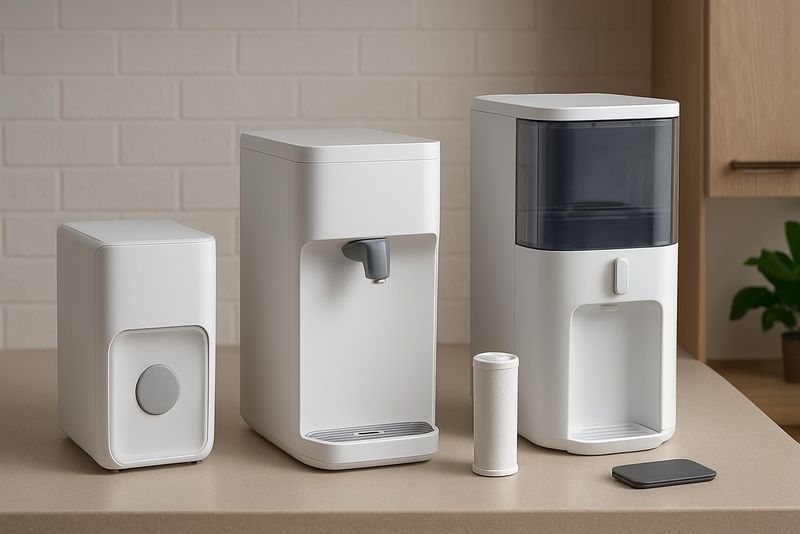
A complete water purifier buying guide for Indian homes — match your water source, technology, capacity, budget and running costs before you decide.
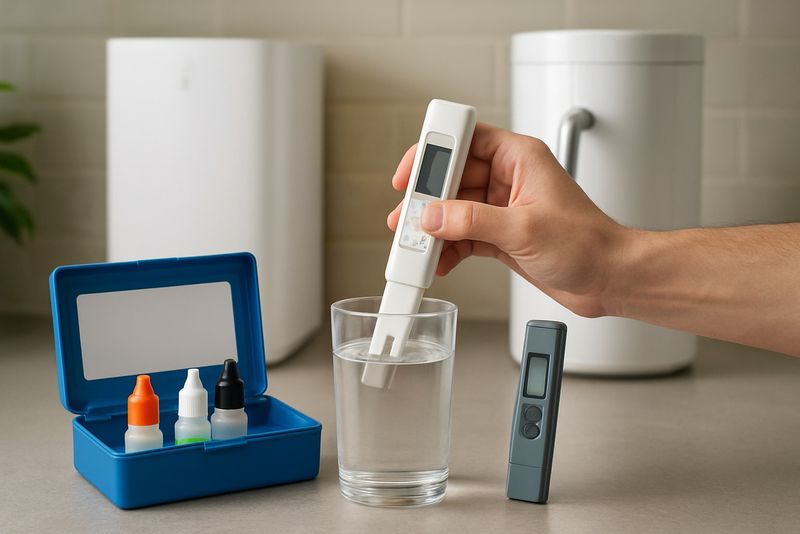
Learn how to test your water's TDS and hardness at home or via a lab, so you buy a purifier matched to your actual municipal, borewell or tanker supply.
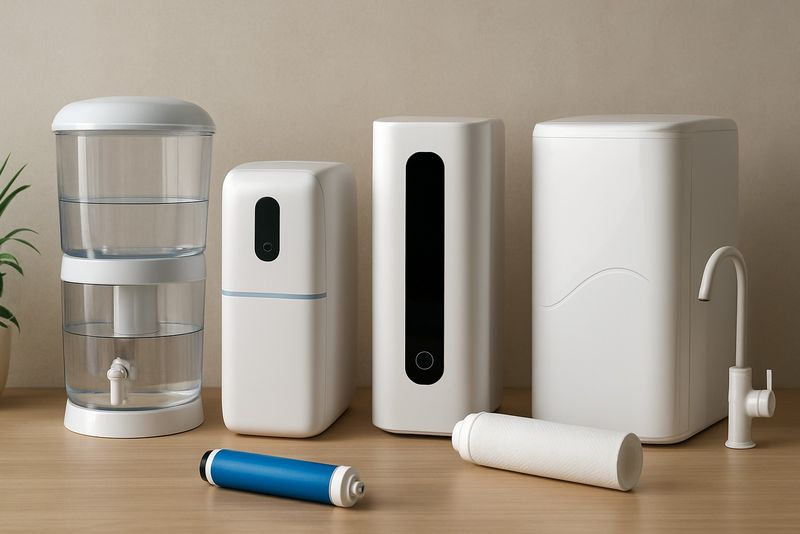
Confused between RO, UV, UF and gravity purifiers? Understand what each technology actually removes and which one matches your home's water and budget.