How to Check Your Water Quality and TDS Before Buying a Purifier
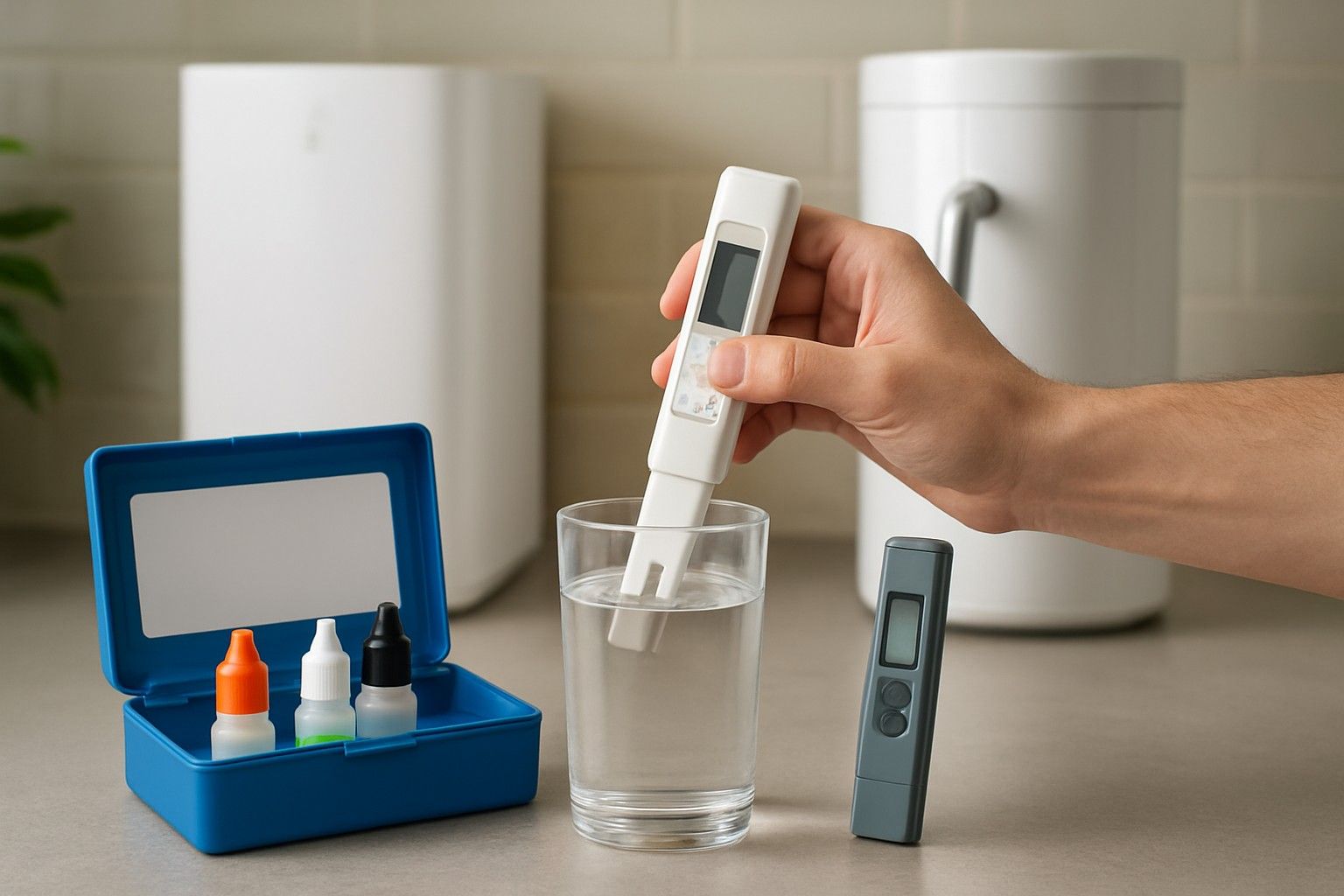
Before you compare a single purifier model, you need one number and a few observations: your water's TDS, its hardness, and where it comes from. Buyers who skip this step often end up with an RO unit fighting water that never needed one, or worse, a basic filter that can't handle what's actually coming out of their tap. This article walks through how to find out exactly what you're dealing with, so the purifier you eventually pick actually matches your supply.
Municipal, Borewell and Tanker Water: How They Differ in India
The source of your water tells you more than any spec sheet before you've even tested it. Municipal or corporation-supplied water, common in most Indian cities, is treated at a central plant and usually has moderate TDS, but it travels through ageing pipelines and overhead tanks, which means it can pick up sediment, rust, and occasionally microbial contamination even though the dissolved salt content stays reasonable. This is why municipal water often needs strong filtration for taste, odour and biological safety, but not necessarily heavy RO purification for TDS reduction.
Borewell water is a different problem entirely. It comes from underground aquifers and, depending on your region's geology, can carry very high TDS, excess hardness from dissolved calcium and magnesium, and in some belts, fluoride or nitrate contamination. This is the water type most likely to need genuine RO treatment, since no amount of physical filtration removes dissolved salts.
Tanker water is the least predictable of the three, because its quality depends entirely on the source the tanker operator draws from that week. It could be treated municipal water, an untreated borewell, or a blend. If your building relies on tankers, you can't assume consistency, and testing becomes more important, not less, because the same purifier setting may work brilliantly one month and poorly the next. Knowing which of these three describes your supply is the first real decision point in this whole buying process.
What TDS Means and What Level Is Safe to Drink
TDS, or Total Dissolved Solids, is a measurement of everything dissolved in your water that isn't actually water: minerals like calcium and magnesium, salts, and trace metals, measured in milligrams per litre (mg/L or ppm). It does not tell you whether water is biologically safe, only how much dissolved material it's carrying. A TDS reading and a contamination check are two separate questions, and buyers often confuse them.
As a general reference, water below roughly 150 mg/L is considered low-TDS and can taste flat or bland to some households, while water in the 150 to 300 mg/L range is widely regarded as good for drinking, with decent mineral content and pleasant taste. Once TDS climbs past 500 mg/L, water starts to taste noticeably salty or metallic, and above 900 to 1000 mg/L, most health bodies consider it unfit for regular consumption without treatment. Indian borewell water in hard-water regions can easily cross 1500 to 2000 mg/L, which is well outside safe drinking range.
The number itself decides your purification path. Low to moderate TDS water often doesn't need RO at all, since RO strips out minerals along with contaminants, sometimes making already-soft water taste worse. High TDS water genuinely needs an RO membrane, because that's the only common home technology that removes dissolved salts at the molecular level. This single reading is the most important input to the rest of your purifier decision.
How to Test Your Water at Home or Through a Lab
You have three practical ways to check your water, ranging from instant and free to slower and more thorough. The quickest is a handheld TDS meter, a small pen-like device widely available online and in hardware stores, which gives you a TDS reading in seconds when dipped into a glass of water. These meters are inexpensive, reusable, and accurate enough for buying decisions, though they won't tell you about bacteria, heavy metals, or specific contaminants like fluoride or arsenic.
Many purifier brands and retailers also offer free water testing at home, where a representative visits with a meter and sometimes a basic contamination kit. This is convenient and costs nothing, but keep in mind the person testing may be incentivised to recommend their own RO models regardless of what your water actually needs, so treat the recommendation with some scepticism even if you trust the reading.
For a genuinely thorough picture, especially if you're on borewell or tanker water, a certified water testing lab is worth the trip or the courier sample. These labs test for TDS, hardness, pH, and specific contaminants such as fluoride, nitrate, arsenic and bacterial presence, usually for a modest fee, with results in a few days. This route matters most if you've noticed a health complaint, unusual taste, or discolouration in your water, since a TDS meter alone won't catch what a lab test will.
Hardness, Salinity and Contaminants That Affect Purifier Choice
TDS is the headline number, but a few other readings shape which purification technology actually suits your water. Hardness, caused mainly by dissolved calcium and magnesium, is what leaves white scale on kettles and soap that won't lather properly. Very hard water doesn't just affect taste, it also shortens the life of any purifier's filters and can clog RO membranes faster, so knowing your hardness level helps you judge how often you'll be replacing cartridges regardless of which purifier you choose.
Salinity, often reflected in the TDS number itself but sometimes reported separately by labs, matters most in coastal areas and regions with saline groundwater, where sodium chloride content can be high even if overall mineral content isn't extreme. Standard carbon or UF filters do little against salinity, and only an RO membrane meaningfully reduces it.
Beyond hardness and salinity, specific contaminants change the calculus further. Fluoride and arsenic, found in groundwater in several Indian states, require RO or specialised adsorption filters rather than basic filtration. Bacterial or viral contamination, more common in municipal water with pipeline leakage or tanker water of uncertain origin, calls for UV treatment rather than RO, since UV neutralises microbes but does nothing for dissolved salts. Once you have your TDS, hardness and any contaminant readings in hand, you can match your water reading to the right purification technology instead of guessing based on price or brand reputation alone.
When Your Water Reading Means You Can Avoid RO
It's worth saying plainly: if your water tests below roughly 200 to 300 mg/L TDS and comes from a treated municipal source with no known contaminant issues, you very likely don't need RO at all. RO systems reject a portion of input water as waste and strip out beneficial minerals, and running one on already-low-TDS water is both wasteful and can make your drinking water taste flatter than the tap water you started with.
In this situation, a UV or UF-based purifier, or even a UF unit paired with basic carbon filtration, handles the realistic risks in your water, which are typically sediment, chlorine taste, and occasional microbial presence rather than dissolved salts. These non-RO options also tend to sit at the lower end of the price spectrum, and across the ₹2,999 and lower ₹9,999 range you'll find capable UV and UF purifiers built for exactly this kind of moderate-TDS municipal supply.
The reverse is just as important to accept: if your reading comes back high, don't try to save money by avoiding RO anyway, since no amount of UV or UF filtration will bring down dissolved salt content. Your TDS number, not your budget preference, should be the deciding factor here. If your reading falls in that lower range, it's worth taking the time to see whether a non-RO purifier is enough for your supply before you narrow your shortlist to RO-only models.
Reading Your Water Before You Start Shopping
Once you know your source, your TDS number, your hardness level, and whether any specific contaminants apply to your area, you're no longer shopping blind. Purifiers in the market span from ₹1,799 to ₹38,990, with an average around ₹9,499, and that spread exists precisely because different water conditions call for genuinely different technology, not just different price points or brand tiers. A unit priced within ₹21,999 isn't automatically better for your home than one in ₹9,999 if your water doesn't need the extra capability that higher price is paying for.
With your water reading in hand, the smartest next step is to return to the full water purifier buying checklist, where you can work through capacity, technology and budget decisions in the right order, starting from what your water actually needs rather than what a salesperson recommends first.
You started this article not knowing what was actually in your water, and that's the gap that leads most buyers to either overpay for RO capability they don't need or underbuy protection their supply demands. With a TDS reading, a sense of your water's hardness, and clarity on whether your source is municipal, borewell or tanker, you now have the one piece of information every other purifier decision should be built on.

Comments
Be the first to comment.