Water Purifier Maintenance and Filter Replacement Costs Per Year
The price tag on a water purifier is only half the story — what you pay every year after that in filters, membranes and servicing often decides whether the purchase feels worth it. If you're trying to figure out what ownership will really cost before you buy, this covers it in rupee terms.
Which Parts Need Replacing and How Often
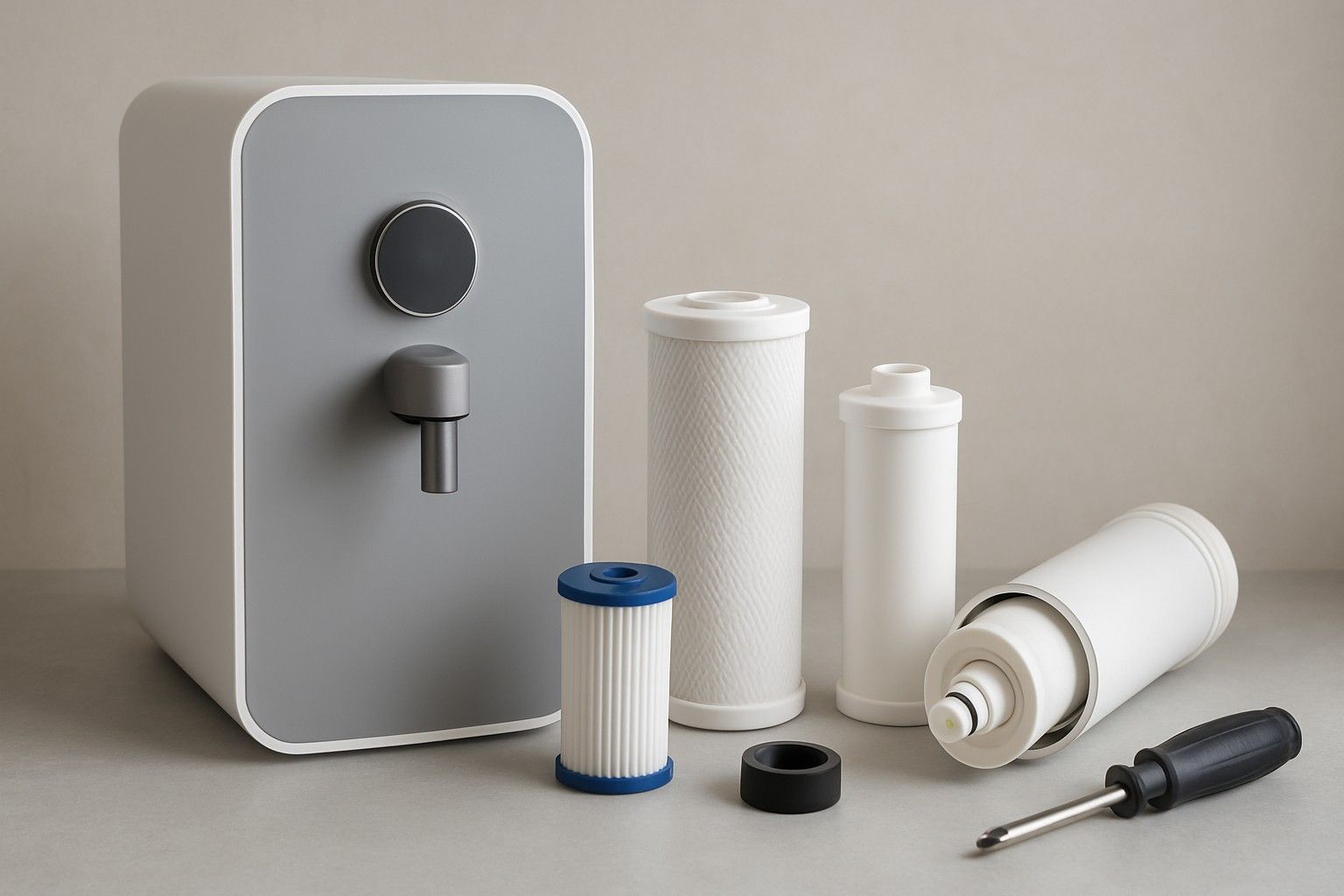
A water purifier isn't one part that wears out — it's a stack of them, each on its own clock. The pre-filter or sediment filter, which catches visible dirt and rust, usually needs replacing every three to four months in most Indian households, faster if your source water is heavily silted or you're on a borewell. The carbon filter, which handles chlorine, odour and some organic contaminants, typically lasts six to nine months. The RO membrane, the most expensive single part, is rated for anywhere from six months to two years depending on input water quality and how many litres pass through it. Hard, high-TDS water shortens membrane life noticeably. Beyond these, most purifiers also have a post-carbon or polishing filter for taste, changed roughly once a year, and some models add a UV lamp that needs swapping annually regardless of usage, since UV output degrades with time even if the purifier is barely used. None of these run on a fixed calendar — they run on litres treated and input water quality, which is why two households with the same purifier can have very different replacement schedules. Knowing this list matters because it's the actual basis for every annual cost estimate that follows, not a guess.
Typical Yearly Filter and Membrane Costs
Once you total up sediment filters, carbon filters, membrane share, and any UV lamp, the yearly consumable spend on a typical RO-based purifier lands somewhere between one-fifth and one-third of what the unit itself cost — sometimes more in the first year if the membrane needs an early change. For a purifier bought at the lower end, around ₹1,799, expect the annual filter and membrane bill to still run into a meaningful sum relative to that price, since basic units often use smaller, shorter-life cartridges that need swapping more often. A mid-range purifier priced near the category average of ₹9,499 usually has longer-life filters and a membrane rated for more litres, so the yearly cost per rupee of purchase price tends to even out. At the premium end, close to ₹38,990, individual filters can cost more per piece, but they're usually engineered to last longer and treat more water, which offsets some of the per-unit price. The honest takeaway: don't judge running cost by the sticker price alone. A purifier in the ₹2,999 band and one in the ₹21,999 band can end up with similar annual filter bills if the cheaper one needs replacements twice as often. Ask specifically about filter life in litres and months before you commit, not just the machine's price.
AMC Plans vs Paying Per Service
Most brands and service networks offer an Annual Maintenance Contract that bundles a fixed number of visits, filter changes, and sometimes labour into one upfront payment. The appeal is predictability — you know the number at the start of the year and aren't caught out by a sudden membrane failure. The trade-off is that you're paying for convenience and averaged-out risk, so an AMC can work out costlier than pay-per-service if your purifier turns out to be a low-maintenance year, or if you're comfortable sourcing filters independently and calling a technician only when needed. Paying per service, by contrast, means you only spend when something actually needs attention, which suits owners with steady, low-TDS water sources who go longer between filter changes. It's less convenient because you have to notice the need yourself and arrange a visit, and pricing per call can vary since it's not locked in. For a purifier at the higher end of the price range, where filters and membranes cost more individually, an AMC often makes more financial sense because it caps your exposure to an expensive membrane replacement. For a simpler, lower-cost unit with cheaper consumables, paying as you go is frequently the more economical route — and running both scenarios through an water filter cost per liter calculator is the quickest way to confirm which side of that line your unit actually falls on. Neither option is universally better — it depends on your water source, how often you'd actually service the unit anyway, and whether you value budget certainty over minimum spend.
Signs Your Filter Needs Changing
Waiting for a fixed number of months is a rough guide at best — your water usage and source quality decide the real timeline, so it helps to know the practical signs. A noticeable drop in flow rate, where water takes longer to fill the same container, usually means the sediment or pre-filter is clogged and restricting flow. A return of chlorine smell or an odd taste in the output water points to an exhausted carbon filter, since that's the component responsible for removing both. If the purified water starts tasting flat, metallic, or simply different from what you're used to, the membrane or post-carbon filter may be past its effective life even if it hasn't hit the stated replacement date. Most purifiers with a display also show a filter-life indicator or countdown, but these are estimates based on typical usage, not a direct reading of your specific water, so they can be early or late depending on your household's actual consumption and source TDS. A rising TDS reading at the output, if your purifier has a meter, is one of the more reliable signals that the membrane specifically needs attention rather than the pre-filters. Treating these signs as more trustworthy than a calendar date avoids both wasted money on premature changes and the health risk of running an exhausted filter too long.
How Running Cost Should Shape Your Purchase
It's tempting to shop purely on the upfront number, but a purifier that's cheaper to buy isn't automatically cheaper to own — and this is exactly where a lot of buyers get surprised a year in. A unit priced near ₹1,799 might use smaller, shorter-life filters that need changing more frequently, quietly adding up to a running cost that rivals or exceeds a pricier machine over two or three years. Conversely, a purifier closer to ₹38,990 may justify its higher upfront cost with longer filter life and a membrane built for more litres, spreading the consumable spend thinner over time. Before deciding purely on the tag, it's worth taking a moment to weigh running cost against the upfront price band, since a purifier in the ₹9,999 range with modest consumable costs can end up more affordable over three years than one in ₹2,999 with frequent, expensive replacements. The right way to compare two purifiers isn't just their shelf price — it's shelf price plus a realistic estimate of what you'll spend on filters and membranes annually, multiplied over the years you expect to keep the unit. That combined figure is the number that actually reflects what the purifier costs you.
Keeping Total Ownership Cost Sensible
The way to keep this cost from creeping up on you is simple: know your water source's TDS and hardness before you buy, ask for filter life in litres rather than vague month estimates, and factor the annual consumable spend into your budget from day one rather than treating it as a surprise later. A purifier that fits your actual water quality — not just your kitchen's aesthetic or a brand's reputation — will consistently need fewer premature filter changes, which is the single biggest lever on yearly cost. If you're still weighing which purifier type and price band suits your household, it helps to return to the full guide to balance cost and features rather than deciding on running cost or purchase price alone.
With the parts list, the typical yearly spend, the AMC trade-off, and the real signs of a spent filter all laid out, you now have what you need to answer the question that actually matters after purchase — not what the purifier costs on day one, but what it will cost you, year after year, to keep it running properly.
Comments
Be the first to comment.