Water Purifier Price Guide: What You Get from ₹1,799 to ₹38,990
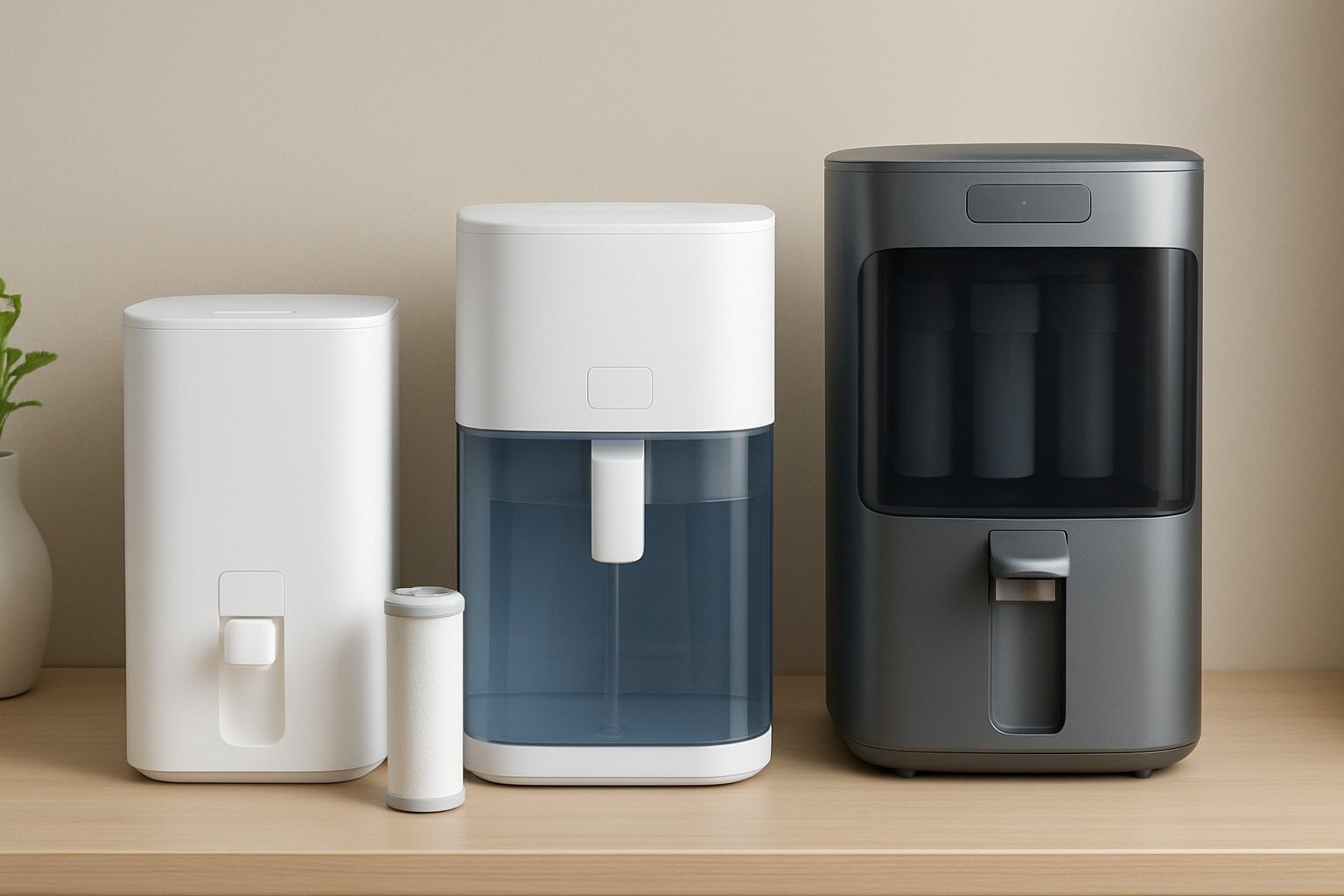
Water purifier prices in India span a wide range, and the number on the tag doesn't always tell you what you're buying. This guide breaks down what changes as you move up in budget, why the average sits where it does, and how to tell if a listed price is genuinely reasonable or just priced to look that way.
Entry-Level Purifiers Under ₹2,999
Purifiers priced under ₹2,999 are almost always basic gravity-based or UF (ultrafiltration) units, sometimes with an activated carbon stage but no electricity requirement. These are built for households on municipal or tanker water supply that's already reasonably low in dissolved salts, since none of them include RO membranes. You won't find electronic filtration stages, digital purity indicators, or automatic shut-off at this level — the mechanisms are entirely manual, which also means no ongoing electricity cost.
What you're really paying for at this tier is basic sediment and biological filtration, not comprehensive purification. If your water source has visible turbidity or a slightly off taste but isn't high in TDS (total dissolved solids), this band can genuinely cover your needs without overspending. The trade-off is that these units won't touch dissolved chemical contaminants or heavy metals, and storage capacity tends to be modest, meaning more frequent refilling in larger households.
Buyers in this tier are usually people who've already checked their water source and know it doesn't need RO-level treatment, or who need a stopgap purifier for a small space like a hostel room or a compact kitchen. If you're unsure what your water actually needs, it's worth pausing before committing to this band purely on price, because undertreating hard or contaminated water defeats the purpose of buying a purifier at all.
Mid-Range Options in ₹9,999
The ₹9,999 band is where most Indian households actually end up buying, and it's also where the feature set starts to genuinely diverge. At the lower end of this range you'll find single-stage RO or RO+UV combinations suited to moderate TDS water, while the upper end brings in multi-stage RO+UV+UF systems, larger storage tanks, and features like TDS control knobs that let you adjust mineral retention.
This is also where build quality differences start to matter more. Cheaper units in this band may use thinner tank plastic or simpler membrane housings that need more frequent servicing, while purifiers toward the top of the range tend to have sturdier construction and slightly longer membrane life. Some models here introduce mineral cartridges that add back calcium and magnesium after RO filtration, addressing the common complaint that RO water tastes flat.
For most urban and semi-urban buyers with borewell or tanker-supplied water of unpredictable quality, this tier offers the best practical balance: real RO filtration for dissolved solids, UV backup for biological safety, and storage large enough for a family of four to six. It's a wide band, though, so two purifiers at opposite ends of it can differ meaningfully in filtration stages and tank capacity — checking the specific configuration matters more here than at the entry level, where options are fairly uniform.
Premium Purifiers in ₹21,999
Once you move into the ₹21,999 range, you're generally paying for smarter monitoring and convenience features rather than dramatically better core filtration. Expect digital displays showing real-time TDS levels and filter life, larger storage tanks suited to bigger families, and in some cases hot-and-cold dispensing built into the same unit. Multi-stage filtration with six or more stages is common, often layering RO, UV, UF, and additional mineral or alkaline cartridges.
Some premium models also add features like auto-flush to extend membrane life, app-based filter change alerts, or copper-infusion cartridges for buyers who prefer that taste profile. These additions genuinely improve day-to-day convenience and can reduce long-term membrane replacement frequency, but they don't necessarily mean the water itself is safer than a well-configured mid-range unit treating the same source water.
This tier makes sense if you want the monitoring and dispensing convenience, have a larger household to serve, or are dealing with source water that benefits from extra filtration stages, such as very high TDS borewell water. If your water quality is moderate and your household is small, spending up toward ₹38,990 often buys features you won't use rather than purification you actually need — it's worth matching the tier to your actual water report rather than assuming higher price always means better filtration.
Why the Average Sits Around ₹9,499
The market average of ₹9,499 lands squarely inside the mid-range band, and that's not a coincidence — it reflects where the bulk of purchase volume actually happens in India. Most buyers aren't choosing between the cheapest gravity unit and the most loaded premium model; they're comparing RO+UV combinations with moderate storage, which is exactly the configuration that clusters around this price point.
This average is pulled up from the ₹1,799 floor by the sheer number of households needing RO treatment for borewell or hard water, and it's kept well below ₹38,990 because most families don't need the display panels, app connectivity, or hot-and-cold dispensing that push premium units higher. In other words, ₹9,499 isn't an arbitrary midpoint — it's roughly where core filtration needs meet reasonable build quality without paying for extras.
Knowing this average gives you a practical anchor when comparing listings. A purifier priced noticeably below ₹9,499 while claiming full RO+UV+UF filtration is worth scrutinising closely, since it's competing against a large cluster of similarly-equipped units at a higher price for a reason. Equally, a price well above the average should be justified by something concrete, like a larger tank, extra filtration stage, or dispensing feature, not just brand positioning.
Judging Whether Today's Price Is Actually Good
A price is only meaningful next to a range, and here the range is ₹1,799 to ₹38,990 with an average around ₹9,499. If a purifier you're considering is priced close to or below the average for its tier's typical feature set, that's a reasonable signal you're not overpaying, regardless of what the price looked like last month or might look like next month.
The more useful question isn't whether the price could theoretically go lower later, but whether it's fair for the filtration stages, tank size, and build quality you're getting right now. A unit at ₹9,999 pricing with genuine multi-stage RO+UV+UF and a decent tank is a fair deal today, independent of any future price movement. Trying to time a purchase around an anticipated drop usually means living without safe filtered water longer than necessary, which isn't a trade-off worth making for a household essential.
A quicker sanity check: compare the asking price against the feature set described for its tier in this guide. If a listing near ₹2,999 claims RO filtration, or one near ₹21,999 pricing offers only basic UF, something doesn't add up and deserves a second look at the actual specification sheet rather than the price tag alone. Judged this way, against real tier expectations rather than speculation about future discounts, most fairly-specified purifiers within this range represent a sound decision at the time you need one.
Don't Forget the Yearly Running Cost
The purchase price is only part of what a water purifier costs you over its life. RO membranes, sediment filters, and carbon cartridges all need periodic replacement, and that recurring cost varies significantly by technology and usage, sometimes rivaling a meaningful fraction of the purifier's original price within a couple of years. A cheaper upfront purifier with expensive or frequently-replaced filters can end up costing more over three years than a pricier one with a longer filter life.
Before finalising a purchase at any tier, it's worth taking the time to add the annual filter replacement cost to your budget, since this is where the real cost difference between two similarly-priced units often shows up. A unit priced attractively in the ₹9,999 band might have a filter replacement schedule that erodes its price advantage within the first year, while a slightly costlier alternative could work out cheaper overall.
This matters more as filtration complexity increases — a six-stage premium purifier in the ₹21,999 range naturally has more cartridges to replace than a basic UF unit under ₹2,999, so the running cost gap between tiers is usually wider than the purchase price gap suggests. Factoring this in before you buy, not after, is what actually determines whether a purifier was a good long-term deal.
Matching Budget to the Technology You Need
The single biggest reason people end up unhappy with a water purifier purchase isn't price — it's mismatched technology for their actual water source. Buying an RO-equipped unit in the ₹9,999 or ₹21,999 range when your municipal water already has low TDS wastes money and unnecessarily strips beneficial minerals, while buying a UF-only unit under ₹2,999 for genuinely hard borewell water leaves dissolved salts and heavy metals untreated.
Before anchoring on a price band, it's worth taking the time to make sure the price band covers the technology your water needs, since the right technology for your specific water source should decide your budget floor, not the other way around. A household on treated municipal supply might comfortably stay under ₹2,999 with a good UF unit, while one on borewell water with high TDS has little choice but to look toward ₹9,999 or higher for genuine RO filtration.
Once you know the technology your water demands, the price question becomes far simpler: you're no longer choosing between tiers in the abstract, you're choosing between specific configurations within the tier that actually applies to your source water, which is a much shorter and more confident decision.
Between the technology your water source demands and the price data across ₹1,799 to ₹38,990, you now have what's needed to place a fair number on a water purifier rather than guessing at one — knowing not just what you'll pay, but what that number should actually be buying you.

Comments
Be the first to comment.