Do You Actually Need an RO Purifier? When to Skip It
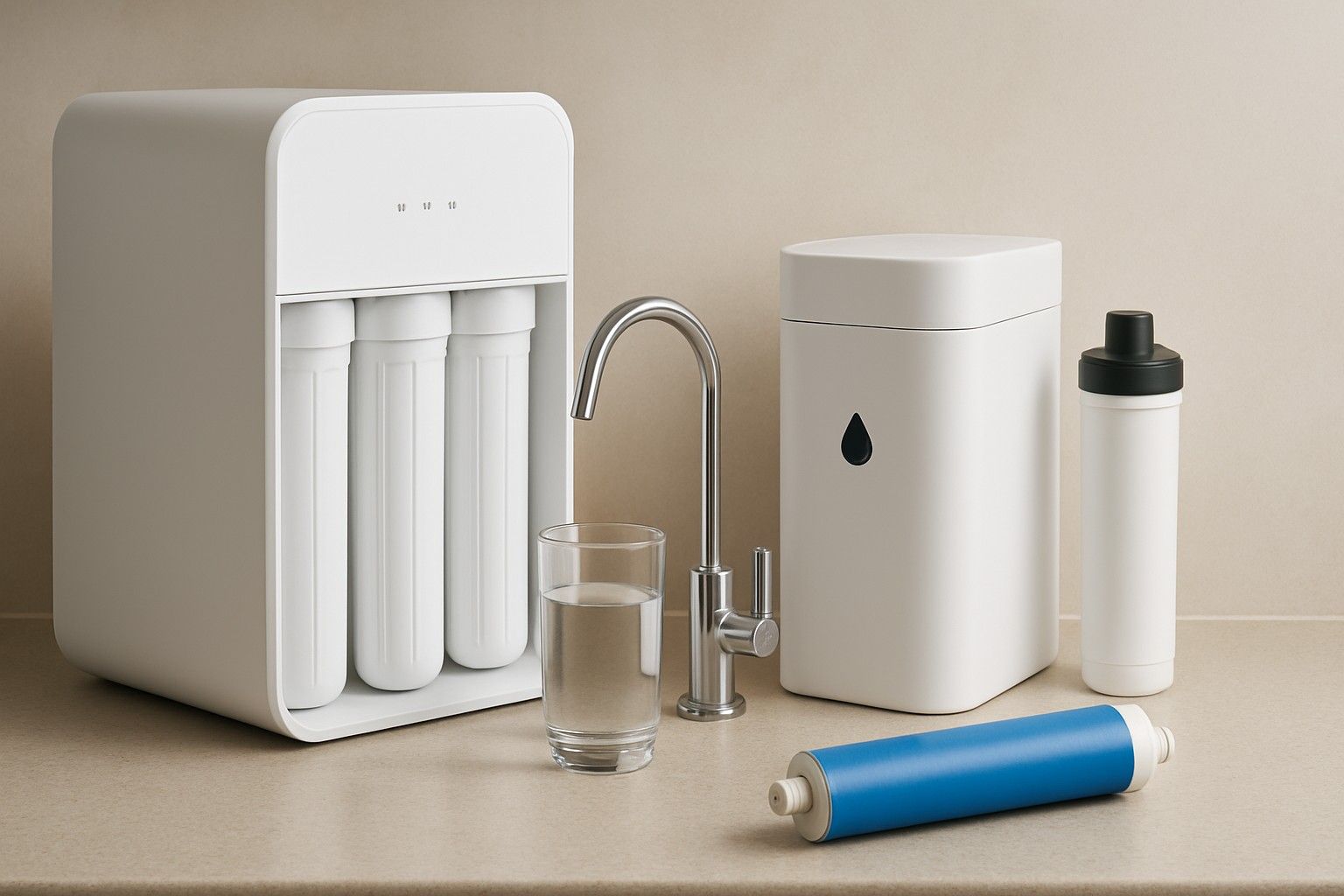
If your municipal or borewell water tastes fine and isn't loaded with dissolved salts, an RO purifier might be solving a problem you don't have — while wasting water and stripping minerals you actually need. This isn't a question of which RO to buy, but whether you need one at all. By the end, you'll know exactly which camp your water falls into.
When RO Is Essential and When It Is Overkill
The single factor that decides this is your water's TDS (total dissolved solids), measured in parts per million. If you're on a borewell or tanker supply in a hard-water region — much of Rajasthan, Gujarat, parts of Delhi-NCR, and large stretches of the Deccan plateau — TDS can easily cross 500-1000 ppm, sometimes higher. At these levels, RO isn't optional; it's the only technology in this category that removes dissolved salts, heavy metals, fluoride, and nitrates effectively. Skipping RO here means living with water that can taste brackish, scale up your kettles and pipes, and in the case of fluoride or nitrate contamination, pose genuine long-term health risks.
But if you're on treated municipal supply (Cauchy this is common across much of urban Maharashtra, Karnataka, and parts of the Gangetic plains) with TDS under roughly 200-300 ppm, RO is doing very little useful work. Municipal water at this level is already low in dissolved salts; passing it through a membrane just removes more minerals and produces a lot of reject water for a marginal purity gain. Before you spend anywhere from ₹1,799 to ₹38,990 on a purifier, it's worth taking five minutes to check your TDS level before deciding on RO — a cheap digital TDS meter costs a few hundred rupees and settles the question definitively rather than going on assumption or what a salesperson tells you.
The Downsides: Water Wastage and Removed Minerals
RO membranes work by pushing water through a semi-permeable filter under pressure, and for every litre of purified water produced, a typical RO unit rejects anywhere from two to four litres as wastewater. In a country where water stress is a real civic issue in many cities, that's not a trivial side effect — over a year, a single household RO can send thousands of litres down the drain. Some newer units recover part of this reject water for uses like mopping or utensil washing, but plenty of models sold at the lower end of the price range still don't bother.
The second downside is mineral loss. RO membranes don't distinguish between harmful dissolved solids and beneficial minerals like calcium and magnesium — everything gets stripped out. Water that's already low in TDS becomes even more mineral-depleted after RO treatment, which some studies suggest may affect taste and, over long-term consistent consumption, mineral intake if your diet doesn't otherwise compensate. Neither of these downsides makes RO the wrong choice for genuinely contaminated water — the health risk of untreated hard or contaminated water outweighs both concerns easily. But if your source water was already safe and low-TDS to begin with, you're taking on both the wastage and the mineral loss for no real purification benefit, which is exactly the scenario this article is meant to help you catch before you buy.
Mineral Retention and TDS Controllers Explained
If you've decided RO is genuinely necessary for your water but you're worried about over-purification, most mid-range and above units now include a mineral retention cartridge or a TDS controller (sometimes called a TDS adjuster) as standard. A mineral cartridge sits after the RO membrane and reintroduces a controlled dose of calcium and magnesium back into the purified water, addressing the taste-flatness and mineral-depletion concern directly. A TDS controller works differently — it's a bypass valve that blends a small, adjustable proportion of the original input water back into the RO output, raising the final TDS to a healthier range (commonly targeted around 80-150 ppm) instead of the near-zero TDS a pure RO membrane produces.
These features aren't universal at the very bottom of the price range, so if you're buying in the ₹2,999 tier, check specifically whether mineral retention is included rather than assuming it. Once you move into the ₹9,999 and ₹21,999 tiers, it's far more commonly built in. If your input water genuinely needs RO treatment, don't skip this feature to save money — it's the difference between water that's merely safe and water that's also palatable and mineral-balanced for daily drinking.
Cheaper Alternatives If You Don't Need RO
If your TDS reading comes back low and your main concern is biological contamination — bacteria, viruses, or cysts, rather than dissolved salts — you don't need an RO system at all, and you can save a meaningful chunk of the ₹1,799 to ₹38,990 range this category spans. UV purifiers neutralise microbiological contaminants using ultraviolet light without removing any minerals and without generating any reject water, and they typically sit at the lower end of the pricing spectrum, often within the ₹2,999 tier. UF (ultrafiltration) purifiers go a step further using a fine membrane that filters out bacteria and larger particles without electricity, making them a solid no-frills option, especially in areas with a stable, low-TDS supply. Gravity-based purifiers, often UF-equipped, are even simpler — no power point required, no wastewater, near-zero running cost beyond periodic filter changes.
The honest way to think about this is a straight trade-off between water quality risk and running cost: RO buys you protection against dissolved chemical contaminants at the cost of wasted water and stripped minerals, while UV and UF buy you protection against biological contaminants at essentially no water waste and lower upfront cost. If your municipal supplier already treats for biological safety and your only remaining concern is taste or occasional turbidity, gravity or UF alone may be all you need. It's worth taking the time to compare RO against UV and gravity options side by side against your actual water report rather than defaulting to RO because it's the most heavily marketed technology in this category.
Making the Right Call for Your Household
Boil the decision down to two numbers: your input TDS and your household's water usage pattern. High TDS or a known contamination issue (fluoride, nitrate, arsenic in some regions) means RO is worth the wastage and the mineral stripping — there's no real substitute for what it removes. Low TDS with a concern limited to bacteria or general hygiene means a UV or UF unit, or even a good gravity purifier, will do the job for considerably less money and zero water waste, and there's no reason to pay for RO capability you won't use.
A large family drawing a lot of drinking water daily will also feel the wastage ratio more acutely than a couple living alone, which is worth weighing against your local water tariff and availability. None of this needs to be a rushed decision made in a showroom — current prices across the ₹2,999, ₹9,999, and ₹21,999 tiers reflect a stable, well-established market, so there's no pressure to decide based on a sale or a discount window. If you want to see exactly where this TDS-and-technology decision fits into the rest of the purchase — capacity, installation, maintenance costs — it helps to fit this decision into the full buying process before you finalise anything.
The question this article opened with — whether you actually need RO — really only has one honest answer: it depends entirely on what's in your water, not on what's heavily advertised in the category. Test your TDS, match the technology to what your water actually needs, and you'll end up with a purifier that solves a real problem instead of one you paid to create.
Comments
Be the first to comment.