What Storage Capacity Do You Need for Your Family Size
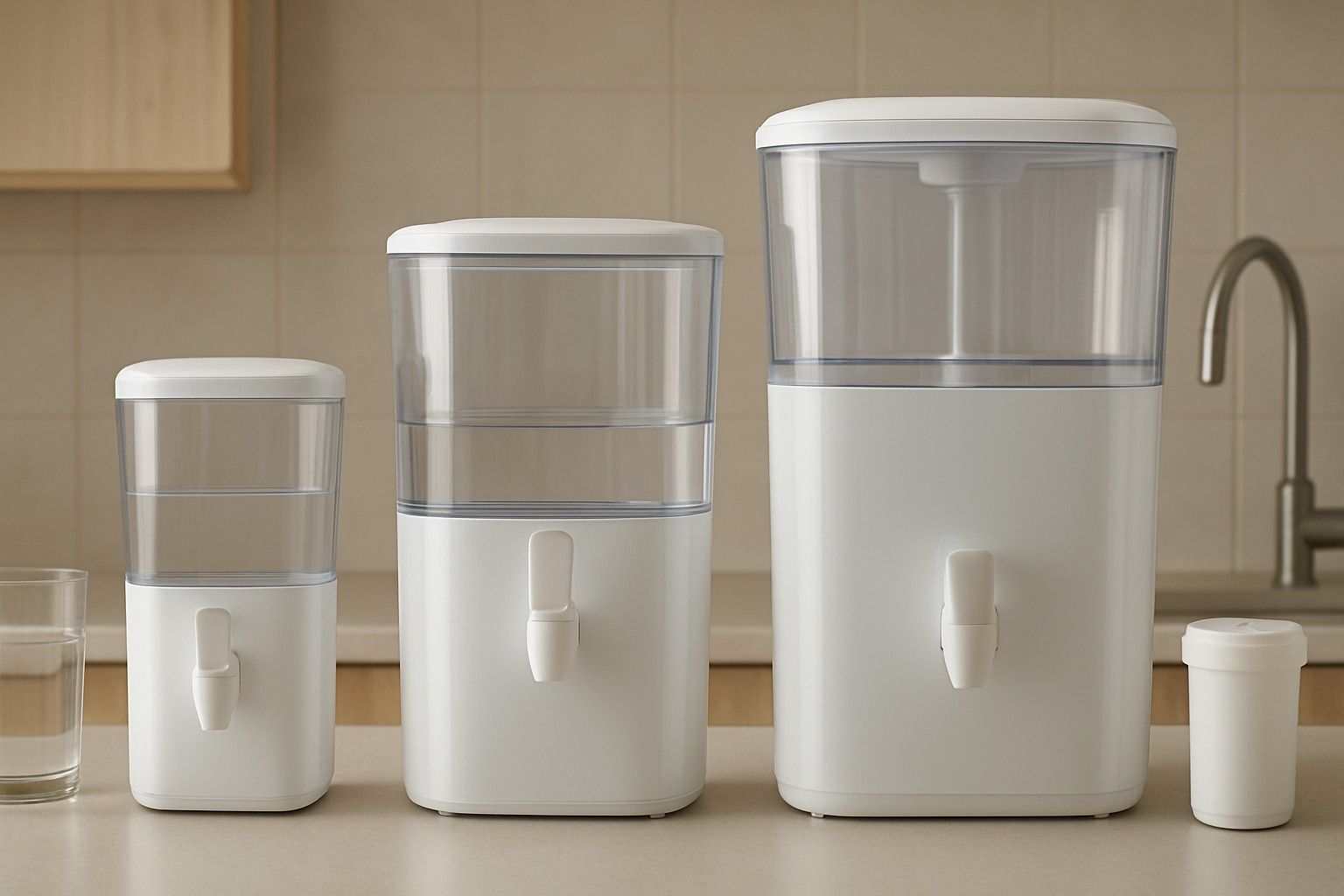
If you're trying to decide between a small under-sink unit and a bigger storage tank, the real question is simple: how much water does your household actually draw between refills, and how often does your area lose power? Storage capacity isn't a spec to maximise blindly — it's a number that should match your family size, cooking habits, and grid reliability, not just whatever a store display pushes. This article walks through how capacity is measured, how much different household types actually need, and where a bigger tank genuinely helps versus where it's just extra plastic and cost.
How Storage Capacity Is Measured and Rated
Water purifier storage capacity is almost always listed in litres, referring to the volume of the internal storage tank that holds already-purified water, ready to dispense on demand. This is separate from the purification rate (how many litres per hour the unit can filter), and separate again from the raw input water tank some RO systems use to hold untreated water before it's processed. When you see a spec sheet listing something like 7 litres, 8 litres, or 12 litres, that's the storage tank — the buffer of clean water sitting ready, not the machine's filtering speed.
Across the market, tank sizes commonly run from around 5 litres in compact countertop or under-sink units up to 15+ litres in larger family-sized systems, with pricing spanning ₹1,799 to ₹38,990 and an average around ₹9,499, various water filter brands offer different storage capacities . Smaller tanks are common in the ₹2,999 range and tend to pair with basic gravity or UV-only purification, while larger storage tanks with RO plus additional stages usually sit in the ₹9,999 and ₹21,999 bands. It's worth checking the actual usable storage figure rather than the gross tank size, since some capacity is always reserved as a buffer and isn't fully drawable — manufacturers don't always make this distinction obvious on the box.
Capacity for Nuclear vs Joint-Family Households
A nuclear household of two to four people typically drinks and cooks with somewhere between 8 and 15 litres of purified water a day, which means a 5-7 litre storage tank refilling two to three times daily is usually sufficient, especially if the purification rate is reasonable and the power supply is stable. For this household type, chasing a bigger tank mostly adds counter or wall space usage without a real daily benefit, since the unit will refill fast enough between draws anyway.
Joint families of six or more, especially those where cooking, drinking, and general kitchen use draws water constantly through the day, tell a different story. Daily consumption can easily cross 20-25 litres, and a small tank means the purifier is cycling almost continuously, which adds wear and makes you more dependent on purification speed rather than stored reserve. For these households, a 10-15 litre tank gives enough of a buffer that peak-hour draws — breakfast prep, lunch, evening tea — don't leave anyone waiting for water to filter through. The trade-off is that larger tanks need more physical space and usually cost more, which is where the ₹9,999 to ₹21,999 range comes in, since bigger tanks are rarely paired with the cheapest purification technology.
Why Storage Matters During Power Cuts
This is where tank size stops being a convenience question and becomes a reliability one. RO and UV purification both need electricity to run, so if your area sees frequent or lengthy power cuts, the storage tank is effectively your only source of purified water until the power returns — the purifier itself can't produce anything new mid-cut. A 5-litre tank in a home with regular 2-3 hour outages can run dry well before the day is done, especially if it's already partially drawn down when the cut starts.
Households in areas with unpredictable or extended outages should size up specifically for this scenario, treating the tank less as a convenience buffer and more as a standby reserve. A 10-12 litre tank comfortably covers a family through a multi-hour cut without rationing, while anything smaller means planning refills around the outage schedule, which isn't always realistic. If your locality has stable, near-uninterrupted power, this factor matters much less, and you can size the tank purely around daily consumption instead. The honest answer to how much storage you need really does split along this line: normal daily use versus daily use plus outage coverage, and it's worth being clear-eyed about which situation actually describes your home before deciding on litres.
Purification Rate vs Storage: What Actually Affects You
It's easy to fixate on tank litres and overlook purification rate, but the two work together, and one without the other can still leave you short. Purification rate — typically listed in litres per hour — determines how quickly the tank refills after use. A unit with a large 12-litre tank but a slow purification rate might take a long time to top up once drawn down, meaning the big tank gives you a large single reserve but a slow recovery afterward. Conversely, a smaller tank paired with a fast purification rate can keep up with steady daily use even though its buffer is modest, because it's replenishing itself quickly between draws.
For most single-family homes with stable power, purification rate matters more day-to-day than storage size, since you're rarely draining the tank in one sitting — you're sipping from it steadily through the day, and a fast-refilling unit keeps pace regardless of tank size. Storage becomes the dominant factor specifically in two situations already covered: joint families with high simultaneous draw, and homes facing power cuts where refill isn't possible at all. If neither applies to you, it's worth not overpaying for a large tank when a moderate one paired with decent purification speed would serve daily needs just as well, freeing up budget for better filtration stages instead.
Wall-Mounted vs Countertop Space Considerations
Bigger tanks take up more physical space, and in Indian kitchens where counter space is often already tight, this is a real constraint, not a minor detail. Wall-mounted units with larger tanks need a clear, load-bearing wall section near the plumbing and drainage point, and mounting a heavier, larger-capacity unit isn't always something every kitchen wall can support without reinforcement. Countertop units skip the mounting question but eat directly into usable counter space, which matters more in smaller kitchens or those with limited platform area near a water and drain connection.
Before deciding on a tank size, it genuinely helps to check whether your kitchen has the space and mounting for it, since a 12-15 litre unit has a noticeably larger footprint than a compact 5-litre countertop model, and finding this out after purchase is a common and avoidable frustration. Under-sink installations, where the tank sits below the counter and only the tap is visible above, sidestep both space concerns but come with their own plumbing and access requirements. The right capacity on paper doesn't help much if the unit that holds it simply can't fit or be safely mounted where you need it.
Picking the Right Size for Your Home
Bringing this together, the right storage capacity comes down to three questions answered honestly: how many people are drawing water daily, how reliable is your power supply, and how much physical space can your kitchen actually spare. A small household with stable power and a tight kitchen does perfectly well with a compact 5-7 litre tank, often available in the ₹2,999 to lower ₹9,999 range. A larger joint family, or any home facing regular power cuts, benefits from sizing up to 10-15 litres, which typically means shopping in the ₹9,999 to ₹21,999 bracket where bigger tanks are usually paired with stronger filtration stages too.
There's no universal right number — a family of three in a flat with dependable power and a family of eight in an area with daily outages have genuinely different needs, and the tank size is one of the few specs where more isn't automatically better if it doesn't match your actual usage pattern. Once you've settled on a capacity range that fits your household and power situation, it's worth stepping back to see how capacity fits the overall buying decision alongside filtration type, budget, and installation, since tank size is one input among several rather than the whole decision on its own.
You now have a straightforward way to answer the question you started with: match tank litres to your daily household draw first, then size up specifically if power cuts are a regular part of life where you live. Everything else — purification rate, kitchen space, budget tier — should adjust around that baseline rather than override it, and with prices spanning ₹1,799 to ₹38,990, there's a suitable capacity available whichever range fits your home.
Comments
Be the first to comment.