Air Fryer Capacity Guide: What Litre Size Suits Your Family
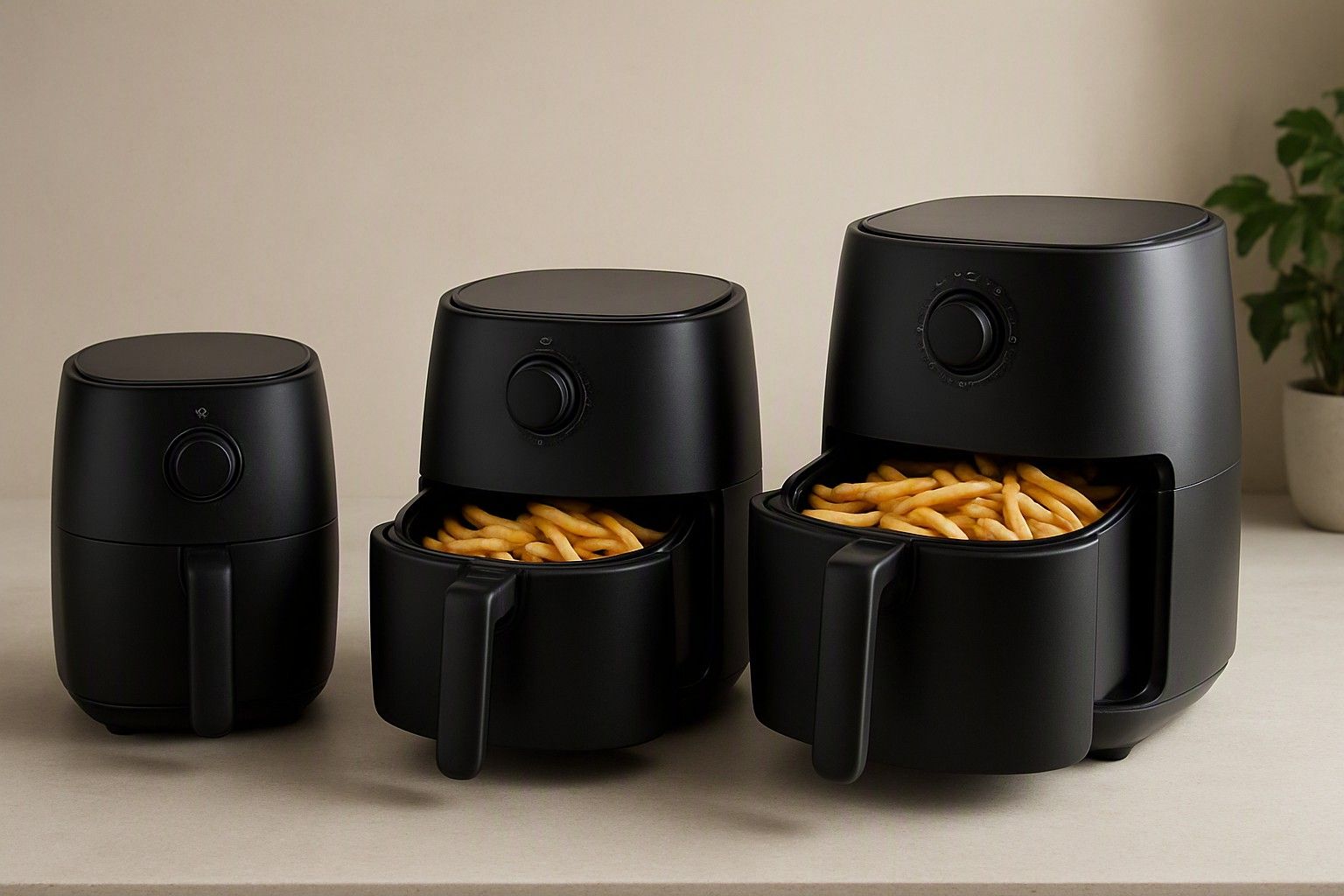
If you've been staring at "2L, 4L, 6L" listings and wondering which number actually fits your kitchen, this is the question this guide answers: how much litre capacity does your household genuinely need, and where do Indian buyers usually get it wrong? Capacity isn't a spec to skim past — it decides whether your air fryer cooks one person's dinner in batches or feeds the whole family in one go. By the end, you'll know exactly which size to shortlist before you even start comparing brands or features.
How Air Fryer Capacity Is Measured and What Litres Really Mean
Air fryer capacity is almost always listed as the volume of the cooking basket or chamber in litres, not the total footprint of the appliance. A 2-litre basket looks tiny on paper, but because hot air needs to circulate freely around the food, the usable capacity is often 20-30% less than the stated litre figure once you account for proper spacing between pieces. This is why two air fryers with the same litre rating can feel different in practice — a shallow, wide basket cooks more food evenly than a tall, narrow one of the same volume, because it exposes more surface area to the airflow.
Indian buyers researching this category will typically see models spread across the full price range, from ₹1,799 at the entry level to ₹29,999 for the largest capacities, with the market averaging around ₹6,499. That price movement tracks capacity fairly closely: smaller baskets sit toward the bottom of that range, while anything above 5-6 litres usually pushes into the mid and upper tiers. Understanding this measurement logic matters before you compare numbers across listings, because a 4L basket from one brand and a 4L basket from another can still behave differently in daily cooking depending on shape and design. Litres are a starting point for sizing your decision, not the whole answer.
Capacity for Singles, Couples and Small Families
For one or two people, a 2-3 litre air fryer usually covers real daily use — a portion of fries, a couple of cutlets, or reheating leftovers without turning on the main oven or gas stove. This size range typically falls in the ₹2,999 bracket, which makes it an easy, low-commitment entry point if you're trying the appliance for the first time or living in a compact kitchen with limited counter space. The trade-off is batch cooking: if you're making a snack for four people even occasionally, a 2-3L basket means cooking in two or three rounds, which adds time and defeats some of the convenience an air fryer is supposed to offer.
A small family of three to four people is usually better served by a 4-5 litre model, which sits more often in the ₹6,999 range. This size lets you cook a full portion of a snack or a small side dish for the whole table in one batch, which is the more realistic use case for most Indian households even if only two people cook regularly. If your household expects to grow, hosts occasional weekend guests, or simply eats larger portions, sizing up to 4-5 litres from the start avoids the frustration of outgrowing a 2-3L unit within a few months and having to repurchase.
Choosing Capacity for Joint Families and Frequent Guests
Joint families, households of five or more, or homes that regularly host guests need to think about capacity differently — the question isn't just how much food fits, but how many cooking rounds you're willing to do for a single meal. A 5-6 litre air fryer is generally the practical minimum for this group, and anything larger typically moves into the ₹14,999 price band. At this size, you can realistically prepare a snack platter, a batch of tikkas, or a full vegetable fry for six to eight people without running the appliance three or four times back to back.
The mistake many larger households make is under-buying based on the price difference alone, without accounting for how often the appliance will actually be used at full load. If snacks, tea-time fritters, or reheated meals are a near-daily habit in a joint family kitchen, the time saved by a larger basket adds up quickly and often justifies the extra spend within the ₹14,999 range. It's also worth considering that some larger-capacity models shift from the classic basket design into an oven-style layout with multiple racks, which changes both how food cooks and how much counter space the unit demands — a trade-off worth understanding fully before committing to the biggest option purely for headroom.
Countertop Space vs Capacity: The Kitchen Trade-off
Bigger capacity almost always means a bigger physical footprint, and in most Indian kitchens, counter space is the real constraint, not the price tag. A 6-litre basket-style air fryer already takes up a meaningful chunk of counter real estate, and going beyond that into 8-10 litre territory often means the appliance can't just sit out permanently — it needs a dedicated storage spot you pull it out from for each use, which quietly discourages regular use over time.
This is where the shape of the appliance matters as much as the litre number. Basket-style fryers are compact but limited in capacity, while oven-style units trade some counter depth for significantly more usable volume, letting you cook multiple layers of food at once instead of just a wider single layer. If you're weighing a large joint-family capacity against a small kitchen footprint, it's worth reading how oven-style models change the space equation before deciding, since that format can sometimes deliver more effective capacity per square foot of counter than a taller basket model of the same or even higher litre rating. Measuring your actual counter space before shortlisting a capacity saves a returned or unused appliance later.
Common Capacity Mistakes Indian Buyers Make
The single most common mistake is buying based on household size on paper rather than actual cooking frequency — a family of four that air-fries snacks once a week has very different needs from a couple that uses it daily for breakfast and dinner sides. Sizing purely by headcount, without factoring in how often and how much you'll cook per session, leads to either a cramped 2L basket being pushed well past its comfortable limit or a large 6L unit sitting mostly empty on a daily basis.
A second mistake is ignoring the basket's actual usable space versus its stated litre figure, then feeling shortchanged when a "family-sized" model can't fit as much food as expected in a single even layer. Buyers also frequently underestimate the counter and storage space a larger capacity demands, only realising the mismatch after the appliance is already sitting half-used in a cupboard. Finally, some buyers oversize out of caution, assuming bigger is always safer, and end up paying toward the ₹14,999 range for capacity they rarely use, when a well-chosen ₹6,999 model would have matched their actual routine just as well. Matching capacity to real habits, not assumptions, is what prevents all three of these regrets.
Matching Capacity to the Rest of Your Buying Decision
Capacity is the first filter, but it isn't the only variable that determines whether an air fryer fits your household well — wattage, basket material, cleaning ease and price tier all interact with the size you choose. A larger capacity model, for instance, often draws more power and takes longer to preheat, which is worth weighing against how much time you actually save by cooking in one batch instead of two. Once you've settled on a litre range that matches your family size and cooking habits, it's worth stepping back to see how capacity fits into the overall buying guide, so the size decision you've just made lines up sensibly with the rest of your choices rather than being made in isolation. Treating capacity as the starting filter, then layering the remaining decisions on top of it, is the most reliable way to end up with an air fryer that actually gets used every week instead of gathering dust after the first month.
Whichever bracket your household falls into — a compact 2-3L for one or two people, a 4-5L for a small family, or 5-6 litres and up for a joint household or frequent guests — you now have a clear way to match litre size to how you actually cook, not just how many people live in the house. Getting the capacity decision right first makes every other comparison in this category, from basket design to price tier, far easier to settle.

Comments
Be the first to comment.