Air Fryer vs OTG vs Microwave: What Should You Actually Buy?
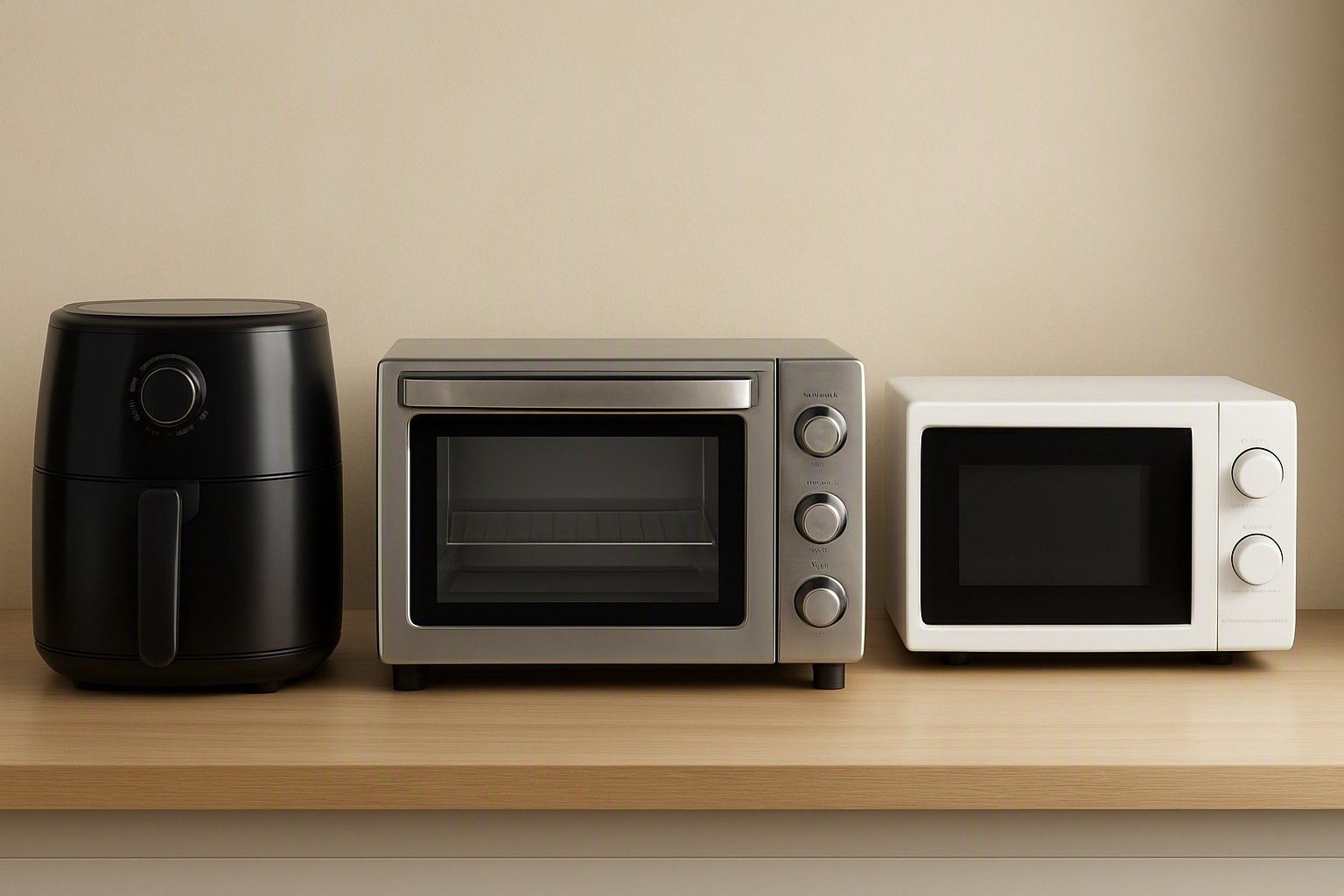
If you already have an OTG or a microwave sitting on your kitchen counter, the question isn't whether an air fryer is a good appliance in isolation — it's whether it does something the other two genuinely can't. This comparison walks through what each appliance is actually built for, where they overlap, and where an air fryer earns its space instead of becoming another box gathering dust.
How Air Fryers, OTGs and Microwaves Differ
These three appliances get lumped together because they all sit in the same countertop-cooking category, but they work on fundamentally different principles. A microwave heats food using electromagnetic waves that excite water molecules inside the food itself — it's fast, but it doesn't brown or crisp anything unless it has a separate grill or convection coil built in. An OTG (oven-toaster-griller) uses heating elements at the top and bottom of an enclosed chamber, relying on radiant heat and slow, even circulation to bake, toast or grill — closer to how a traditional oven works, just smaller. An air fryer is essentially a compact convection system: a heating element paired with a high-speed fan that forces hot air around the food at high velocity, which is what gives fried-style food its crisp exterior without oil. So the honest distinction is this — a microwave reheats and cooks quickly using moisture, an OTG bakes and browns using steady radiant heat over a larger cavity, and an air fryer crisps using fast-moving hot air in a smaller, sealed chamber. None of them are doing the same job even when their end results look similar on a plate, which is exactly why the comparison matters before you spend anywhere between ₹1,799 and ₹29,999 on one more appliance.
Cooking Results: Crispiness, Baking and Reheating Compared
This is where the real difference shows up on your plate. If your priority is crisp texture — think fries, cutlets, tikkas, or reheated fried snacks that don't turn soggy — an air fryer consistently outperforms both alternatives because its fast air circulation strips moisture from the surface quickly while cooking the inside through. A microwave with a grill function can approximate this, but unevenly, since the grill element is usually a single coil rather than a full convection loop, and plain microwaving of anything breaded will leave it limp. An OTG can achieve good crisping too, especially for larger batches like a tray of samosas or nuggets, but it takes noticeably longer to preheat and cook because the chamber is bigger and the heat transfer is slower and less concentrated. For baking — cakes, cookies, bread — an OTG remains the more dependable choice since it was designed for that exact purpose, with more even heat distribution across a wider cavity; air fryers can bake in small batches using an accessory pan, but the results are more sensitive to overcrowding and uneven rise. For reheating leftovers or warming a plate of food quickly, a microwave wins hands down on convenience and speed, even though it won't restore crispness. In short: air fryer for crisp small-batch food, OTG for baking, microwave for speed-reheating — each does its best work in a different lane.
Speed, Convenience and Everyday Practicality
For a weekday routine, speed and cleanup matter as much as final texture. A microwave is still the fastest of the three for reheating a plate or cooking something simple like rice or a quick sabzi in a microwave-safe bowl — there's no preheating involved and turnaround is a couple of minutes. An air fryer needs a short preheat in most models and then cooks in the 12-25 minute range depending on the dish, but it needs almost no active attention once the basket goes in, and there's no oil splatter to wipe down afterward, which matters more on a daily basis than people expect. An OTG takes the longest to get a meal on the table for anything beyond toast — preheating alone can take several minutes, and full bakes or grills run 30-45 minutes or more, which makes it a weekend or occasional-use appliance for most Indian households rather than a daily one. If your typical use case is small portions cooked after work — two people's worth of fries, wings, or reheated tikkas — the air fryer's basket size and quick cleanup make it the more practical daily appliance of the three, even though it's the newest addition to most kitchens.
Space and Electricity Considerations for Each
Counter space is a real constraint in most Indian kitchens, and this is one area where the appliances genuinely differ in footprint. Microwaves and OTGs both tend to be bulkier, especially OTGs above 20-25 litres capacity, and once you factor in ventilation clearance on the sides, they can occupy a significant chunk of counter or shelf space permanently. Air fryers are generally more compact for the cooking volume they offer, though larger basket or dual-basket models do take up meaningful room too — it's worth checking dimensions against your counter before buying rather than assuming small automatically means small. On electricity, all three are heating appliances and draw comparable wattage during active cooking, but total consumption comes down to how long each one runs per use — since an air fryer typically finishes a batch faster than an OTG bake, it often works out lighter on a per-meal basis despite similar power ratings. If you want the specific numbers on the running costs you should expect from an air fryer, that breakdown covers wattage, typical run times, and what it adds to a monthly electricity bill in practical terms rather than theoretical ones.
Can One Appliance Replace the Others?
The honest answer is no, not fully — each does something the others can't replicate well, so the real decision is about which gap matters most in your kitchen. An air fryer cannot bake a proper cake or a full tray of bread the way an OTG can, simply because its chamber is smaller and its airflow is tuned for crisping, not slow even rising. A microwave cannot give you the crisp, oil-free texture an air fryer produces, no matter how long you run it, because it heats through moisture rather than surface convection. An OTG, in turn, is slower and less convenient than a microwave for the simple daily task of reheating a plate of food. Where people get this wrong is assuming an air fryer is a strict upgrade over one of the other two — it isn't a replacement, it's an addition for a specific kind of cooking: quick, crisp, small-batch food without deep frying. If your cooking habits lean heavily toward baking, an OTG remains essential regardless of what else you own. If you barely cook fried or crisped food at home, an air fryer may add little beyond what your existing appliances already do — which is worth being honest with yourself about before spending on one. This is exactly the question covered in more depth in whether an air fryer suits your kind of cooking at all, which looks specifically at Indian meal patterns rather than generic use cases.
Choosing the Right Appliance for Your Kitchen
Once you've placed your own cooking habits against these three appliances, the decision usually becomes clearer than it seemed at the start. If you already own an OTG and bake regularly, adding an air fryer makes sense mainly for the crisping and quick-cooking gap it fills, not as a replacement for the oven. If you already own a microwave and mostly reheat food, an air fryer changes the actual texture of that reheated food in a way the microwave never will, which for many households is reason enough on its own. If you own neither and are deciding what to bring into the kitchen first, the answer depends entirely on whether baking or crisping matters more to your everyday meals — there's no single right answer that applies to every household. Air fryers across the market span from ₹1,799 to ₹29,999, with a lot of practical, well-specced options sitting in the ₹6,999 and ₹14,999 bands, so budget alone shouldn't be the deciding factor once you know which cooking style you actually need. To work through capacity, wattage, and feature choices once you've settled on an air fryer being the right addition, use the full buying guide to make the final decision, which goes appliance-specific rather than comparative.
Whether an air fryer belongs in your kitchen alongside an OTG or microwave comes down to one honest check: does your cooking actually need fast, crisp, oil-light results on a regular basis, or are you already covered by what you own? Once that's clear, the rest of the decision — capacity, price tier, features — is just detail.

Comments
Be the first to comment.