Air Fryer Wattage and Features That Actually Matter
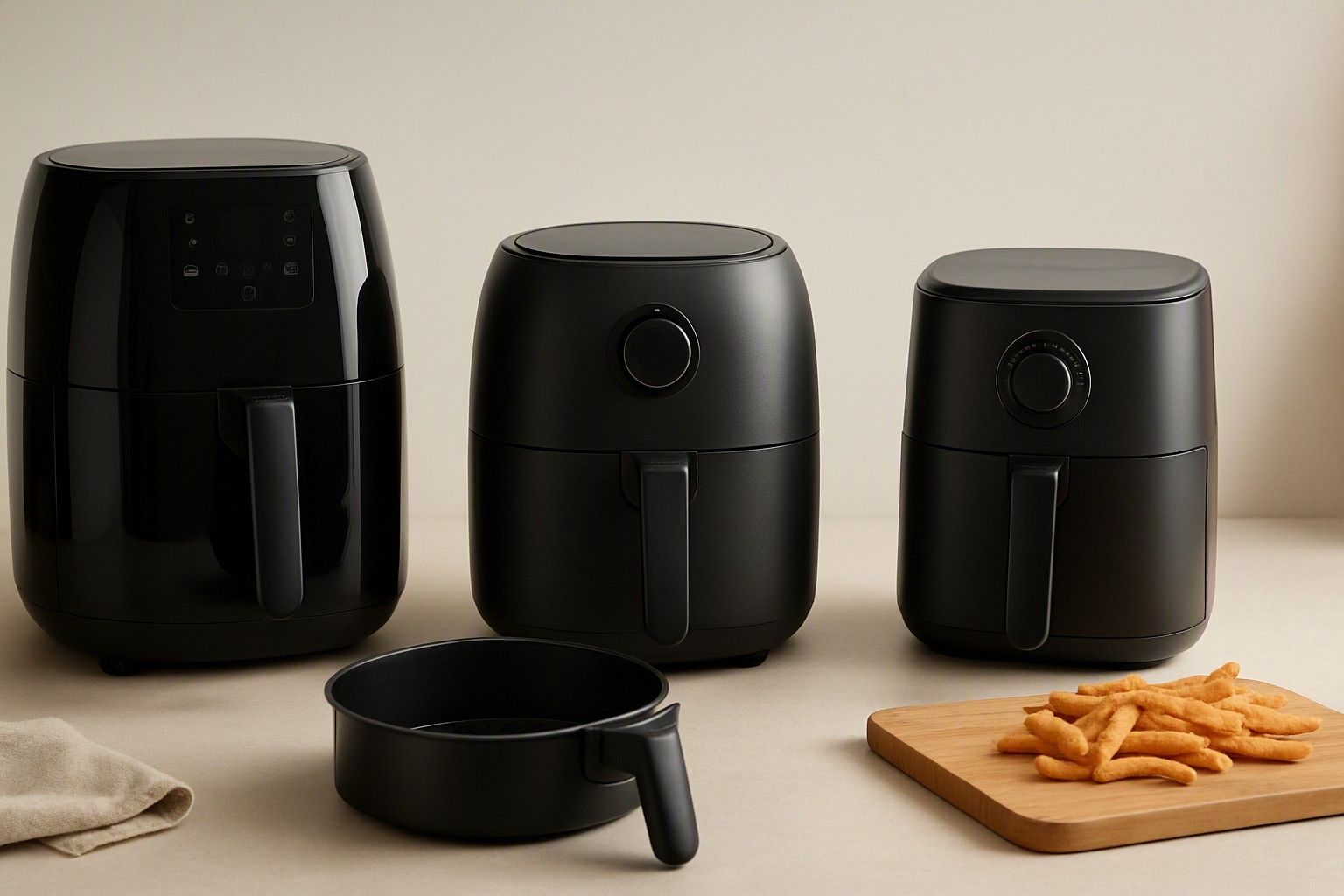
Every air fryer listing throws the same wall of specs at you: wattage, digital displays, a dozen presets, "smart" this and that. Some of it changes how the machine cooks and what it costs to run; a lot of it is just there to make one model look fancier than another on a shopping page. This article goes spec by spec so you know exactly which numbers to check and which to ignore before you start comparing models.
How Much Wattage Do You Actually Need?
Wattage decides how fast an air fryer heats up and how well it recovers temperature once you open the basket to shake the food, not how good the final result tastes. For a small 2-3 litre fryer meant for one or two people, something in the 1000-1400W range is enough to crisp fries or reheat food without long wait times. Once you move into 4-5 litre baskets meant for a small family, you want closer to 1500W so the unit can push hot air through a fuller basket without the cook time stretching out. Anything above that, in the 1700-2000W zone, is mainly found in larger capacity fryers or combo oven-style units, and the extra wattage there is doing real work moving air across more food, not just padding a spec sheet.
What trips buyers up is assuming higher wattage always means better cooking. Past a certain point matched to the basket size, extra wattage just means faster preheat and slightly quicker cooking, not crispier or more even results. A 4.5 litre fryer at 1500W and a similar-sized one at 1800W will cook very similarly once both are up to temperature; the difference shows up mainly in how many minutes you shave off preheating. Match wattage to capacity first, and treat anything wildly higher than that norm for the given basket size as a cost consideration rather than a performance upgrade.
Digital vs Manual Controls: Which Is Better in Daily Use
Manual dial-based fryers use a physical temperature knob and a timer dial, usually with a mechanical tick-tick sound as it counts down. They're simple, tend to survive rough daily handling well, and are usually cheaper for the same capacity. The trade-off is precision: dialing between two temperature marks is a guess, and you can't set an exact minute count easily, you round to the nearest notch.
Digital fryers replace this with a touch panel or button interface showing exact temperature and time, often in a display window. In daily use this matters more than it sounds, because Indian cooking often needs fine control, like reheating parathas at a slightly lower temp than frying pakoras, or running a longer, gentler cycle for something like a whole small chicken. Being able to set 165°C for 14 minutes instead of rounding to "medium-high for a bit less than most" genuinely changes consistency, especially once you start cooking a wider range of dishes rather than just fries.
Digital models are also easier to hand off to other people in the house, since a number on a screen is less ambiguous than a dial position someone half-remembers. The downside is that touch panels can be less durable long-term than a solid dial, and a fully dead display makes the unit unusable in a way a stuck dial usually doesn't. For a household that cooks a narrow range of dishes at similar settings each time, manual is perfectly fine and saves money. For anyone cooking varied meals across the week, digital control earns its extra cost.
Presets, Temperature Range and Timer Settings
Preset buttons labelled fries, chicken, fish, cake and so on are the single most oversold feature on air fryer boxes. They're just pre-programmed temperature and time combinations, the same settings you could dial in manually once you know them. They save a few seconds of thinking on repeat dishes, but they're rarely tuned to your specific quantity, thickness, or how crisp you personally like something, so most regular users end up overriding them within a few uses anyway.
What matters more, and gets far less attention, is the actual temperature range and timer granularity. A fryer that only goes up to around 200°C limits you on dishes that benefit from a hard sear or extra-crisp finish, while a range starting from a genuinely low point, around 80°C, opens up gentler jobs like dehydrating fruit or slow-warming food without drying it out. Similarly, a timer that only moves in 5-minute jumps is clumsy for something that needs 7 or 8 minutes exactly, whereas 1-minute increments give you the control that actually affects whether food turns out right.
When comparing two models, spend less time counting how many preset icons are printed on the panel and more time checking the minimum and maximum temperature and how finely the timer can be adjusted. Those two numbers affect every single dish you cook in it; the presets affect maybe the first week of ownership.
Basket Material, Coating and Dishwasher Safety
The basket is the part of the fryer you'll clean the most, so its build matters more day-to-day than most electrical specs. Nearly all air fryer baskets use a non-stick coated aluminium body, and the quality of that coating is what determines whether food release stays easy after months of use or starts sticking and flaking. A thicker, well-applied non-stick layer resists scratching from regular spatula use, while a thin coating on a budget unit can start wearing within weeks of daily cooking, especially if steel utensils touch it.
Dishwasher-safe baskets are worth checking for specifically if your household relies on one, since not every basket, even non-stick ones, is rated for it; some manufacturers only certify the outer basket tray and not the inner crisper plate, or vice versa. Hand-washing a non-stick basket is straightforward either way as long as you avoid abrasive scrubbers, which do more coating damage than the dishwasher ever would.
Also look at how the basket separates into parts. A basket with a removable inner crisper plate is easier to clean thoroughly than a single-piece design, since food debris and oil tend to collect at the base under the crisper mesh. Detachable, dishwasher-labelled parts with a solid coating are a genuinely useful spec to prioritise, unlike most of the marketing language wrapped around "premium non-stick technology" claims that don't specify anything measurable.
Features That Sound Good But Rarely Get Used
Some features photograph well on a product listing but add little to actual cooking once the fryer is on your counter. Voice control or app connectivity on an air fryer is one of the more obvious ones: setting a temperature by tapping a phone app takes longer than pressing two buttons on the unit itself, and most owners stop using the app within the first month.
Multiple preset icons beyond the basics of fries, meat and reheat rarely get touched individually, since most people settle into two or three go-to settings for the dishes they actually repeat. A rotating rotisserie attachment sounds versatile but only earns its keep if you genuinely cook whole chickens or large cuts regularly; for most Indian kitchens making fries, cutlets, tikkas and reheated food, it sits unused in a drawer.
View windows on the basket lid are nice for checking progress without opening the drawer and losing heat, but they're a convenience, not something worth paying a meaningfully higher price for. Similarly, a large multi-line display with animations or extra icons doesn't cook food any differently than a simple two-digit display showing time and temperature. When a listing leads with these as headline features, treat them as tie-breakers between two otherwise similar fryers, not reasons to pick a pricier unit on their own.
How Higher Wattage Affects Your Electricity Bill
Wattage directly drives running cost, since it's literally how much electricity the unit draws per hour of use, but the actual impact on your monthly bill is smaller than people expect. Air fryers don't run continuously at full wattage the whole cooking cycle; the heating element cycles on and off to hold temperature once the basket reaches the set point, so actual consumption during a 20-minute cook is lower than the rated wattage times the full time. Even so, choosing between a 1200W and an 1800W model for the same size of cooking does add up if you're air-frying daily rather than occasionally.
What matters more than the wattage number alone is how it interacts with cook time. A higher-wattage unit that finishes a batch several minutes faster because it recovers heat quicker can end up using similar total energy to a lower-wattage unit that takes longer to get the same result, so it's not a straightforward higher-watts-equals-higher-bill equation. For a full breakdown of how this plays out over regular weekly use, including how it compares to other running costs like cleaning, the running-cost impact of higher wattage is worth reading before wattage becomes your deciding factor between two models.
Prioritising Features Within Your Budget
With prices across the category running from ₹1,799 to ₹29,999 and averaging around ₹6,499, the honest approach is to rank features by how much they affect daily cooking and then spend up only where that ranking says it matters. Wattage matched sensibly to your basket size, a genuinely wide temperature range, fine timer control and a well-coated, easy-to-clean basket are the features worth stretching your budget for. Preset counts, app connectivity and rotisserie attachments are the ones you can happily skip to save money without losing anything you'd actually use.
In the ₹2,999 range you're mostly looking at manual controls and a narrower temperature range, which is fine for a household doing basic frying and reheating. Moving into ₹6,999 typically brings digital controls, a wider temperature band and better basket build, which is where the useful features from this article start showing up consistently. The ₹14,999 tier adds larger capacity, sometimes multiple baskets or combo functions, useful if you're cooking for a bigger household rather than for extra features on a smaller one. To see exactly how these feature jumps map against real price brackets before you commit to a tier, it helps to balance these features against the price tiers rather than picking a budget number first and working backward.
Once you separate wattage-for-capacity, real temperature and timer control, and basket build from the presets and connectivity features that mostly sit unused, comparing air fryer spec sheets stops being overwhelming. You now know which numbers on a listing page are worth paying more for and which ones are just there to make a box look fuller, which is exactly what makes the next comparison you look at easier to judge.
Comments
Be the first to comment.