Is an Air Fryer Worth Buying for Indian Cooking?
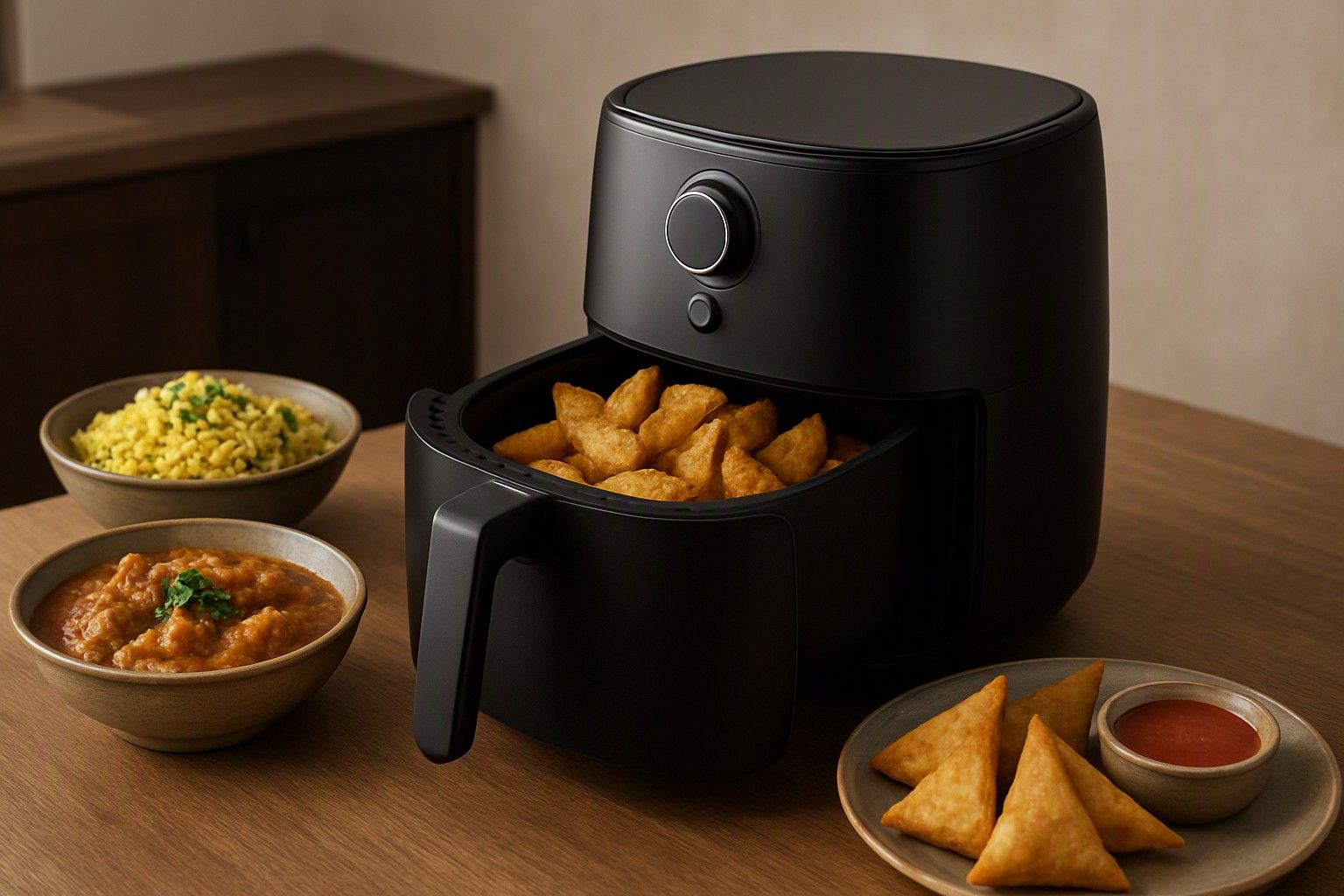
If you're wondering whether an air fryer can actually handle Indian cooking, or if it's just another appliance that ends up gathering dust after the samosas from week one, you're asking the right question before spending anything. The honest answer depends on what you cook most often, how your kitchen already works, and what you expect the machine to replace. This article walks through exactly that, without the marketing spin.
How an Air Fryer Works and Why People Buy One
An air fryer is essentially a small, high-speed convection oven. A heating element and a powerful fan circulate hot air rapidly around the food, which crisps the outside surface the way deep frying does, but using a fraction of the oil, often just a light brushing or spray. It sits on your kitchen counter, heats up in a couple of minutes, and cooks in a basket or tray that you pull out and shake partway through.
Most Indian buyers start looking at one for a very specific reason: guilt about oil, or a desire to cut it down without giving up fried snacks entirely. Others buy it because they've seen it used for reheating, or because it promises restaurant-style crisping without deep frying in a kadhai and dealing with disposal of used oil afterward. There's also a genuine convenience angle, no oil splatter on the stove, no standing over a pan, and a timer that lets you walk away.
The appeal is real, but it's narrower than the advertising suggests. An air fryer is not a replacement for your stove, your kadhai, or your pressure cooker. It's a single-purpose tool that does one thing, dry-crisping food with moving hot air, very well. Whether that's worth buying depends entirely on how much of your actual cooking falls into that category, which is exactly what the next two sections settle.
What Indian Dishes Cook Well in an Air Fryer
This is where an air fryer earns its keep in an Indian kitchen. Frozen and pre-marinated snacks, think French fries, frozen samosas, spring rolls, and nuggets, come out genuinely well, crisp on the outside without needing a deep-fry setup. Marinated tikkas and kebabs, chicken or paneer, also do well because the dry heat mimics a tandoor-style char on the surface while cooking the inside through, especially if you give the pieces a light oil coating first.
Roasted vegetables like potatoes, cauliflower, and okra turn out crisp and browned with very little oil, which makes the air fryer genuinely useful if roasted sabzi is a regular part of your meals. Papad roasting works well too, quicker and more even than doing it over a stove flame. Reheating leftover fried snacks, like cold pakoras or fries, is one of the most practical everyday uses, since it brings back crispness that a microwave simply cannot.
Where it gets more mixed is batter-based snacks made from scratch. Pakoras and bhajiyas made with besan batter don't hold their shape well in an air fryer basket the way they do in hot oil, since there's no oil to fry the batter into structure, it just sits and can turn dry or uneven. Some people adapt recipes specifically for air fryers with thicker batter and more oil brushing, but it's a workaround, not a direct swap. If your cooking is mostly marinated proteins, frozen snacks, and roasted vegetables, this appliance genuinely fits your kitchen.
Where an Air Fryer Falls Short for Indian Kitchens
The gaps matter as much as the wins. Wet-batter Indian snacks are the biggest limitation, pakoras, bhajiyas, and vadas made from besan or urad dal batter need to be submerged in hot oil to set their shape and texture. Drop that same batter into an air fryer basket and it spreads, sticks, or cooks unevenly, because there's no surrounding oil to hold it together while it fries. You can find adapted recipes online, but they rarely taste like the real thing.
Basket capacity is another real constraint. Most air fryers sold in India hold enough for two to three people at most in a single batch, which means cooking for a family of four or five often means running it two or three times, eating into the time savings the appliance is supposed to offer. If you regularly cook for a larger household, this becomes a genuine daily friction point rather than a minor inconvenience.
Roti and paratha reheating is often oversold too. An air fryer can warm rotis, but it tends to dry them out unless you wrap them or add a light water spray first, and even then it doesn't consistently beat a tawa or a damp-cloth microwave reheat for texture. Rice-based dishes, curries, dals, and anything with gravy simply don't belong in an air fryer at all, it has no wet-cooking capability. If your daily cooking leans heavily on gravies, rotis, and traditional fried snacks made from scratch, an air fryer will end up handling a smaller slice of your kitchen than you might expect.
Does It Really Use Less Oil the Way Ads Claim?
Yes, but the claim needs context. For foods that genuinely suit the appliance, marinated tikkas, frozen snacks, roasted vegetables, an air fryer does use dramatically less oil than deep frying, often just a teaspoon or two of brushed or sprayed oil versus a full kadhai of oil for deep frying. That part of the marketing is accurate and is the single biggest reason health-conscious Indian buyers consider one.
What the ads don't emphasise is that this saving only applies to the categories of food the appliance actually handles well. If you're trying to force pakora batter or puris into it, you're not saving oil, you're just getting a worse result, since those dishes need oil to cook properly in the first place. The oil saving is real and meaningful for a specific slice of your cooking, not a blanket reduction across everything you fry at home.
There's also a cost side to this that oil savings alone don't capture. An air fryer draws meaningful power for the time it runs, and unlike a gas flame, that's an electricity cost rather than a cooking-gas cost, which changes how the economics work out over regular use. Before deciding the oil savings justify the price, it's worth understanding the real electricity and running costs involved, since that's the other half of the "is it actually cheaper to run" question that oil savings alone won't answer.
Who Should Buy One and Who Should Skip It
An air fryer makes sense if your household already eats a fair amount of marinated grilled proteins, frozen snacks, or roasted vegetables, and you want to cut the oil in that specific cooking without giving it up. It also suits smaller households, one or two people, where the limited basket capacity isn't a daily hassle, and where quick reheating of leftovers is a regular need. Given that prices span ₹1,799 to ₹29,999, with most models clustering around ₹6,499, it's accessible enough to try without a major financial commitment, and buyers usually find something workable within the ₹2,999 or ₹6,999 range depending on capacity and features needed.
It makes less sense if your everyday cooking centres on besan-batter snacks, rotis, and gravy-based dishes, since those simply aren't what this appliance is built for. It also doesn't make sense if you're expecting one machine to replace your OTG, microwave, or stovetop entirely, it complements those tools rather than substituting for all of them. Large families cooking in bulk will likely find the basket size limiting enough to offset the convenience.
Before buying, it's worth being honest about whether an appliance you already own can cover the same ground. If you have an OTG or microwave with convection sitting underused in your kitchen, it's worth checking whether an OTG or microwave you already own is enough before adding another single-purpose gadget to the counter. That comparison often changes the decision entirely, especially for buyers who cook air-fryer-friendly foods only occasionally.
Making the Final Call Before You Buy
Bring this back to what you actually cook, not what the appliance promises in advertisements. If your weekly food already includes tikkas, roasted vegetables, or frozen snacks, and you're comfortable running a batch or two per meal for your household size, an air fryer earns its counter space and its price. If your kitchen leans on pakoras, rotis, and gravies as the daily staples, the honest answer is that it will sit mostly idle after the first few weeks of novelty use.
Price history shows models spanning ₹1,799 to ₹29,999, so there's no need to wait for a discount to justify the purchase, the current range across ₹2,999, ₹6,999, and ₹14,999 already reflects what these appliances have consistently cost. Once you know your usage pattern fits, it's a matter of picking the right capacity and features rather than timing the market. If you want to work through capacity, wattage, and the other practical specifics before choosing a model, you can walk through the full air fryer buying checklist next.
So, is an air fryer hype or genuinely useful for Indian cooking? Neither, entirely, it's a narrow but capable tool that does a specific job well: dry-crisping marinated proteins, frozen snacks, and roasted vegetables with far less oil, while leaving batter-based snacks, rotis, and gravies to the cooking methods you already use. Match that reality to your own weekly meals, and the decision to buy, or skip, becomes fairly clear on its own.

Comments
Be the first to comment.