Air Fryer Cleaning, Maintenance and Electricity Costs
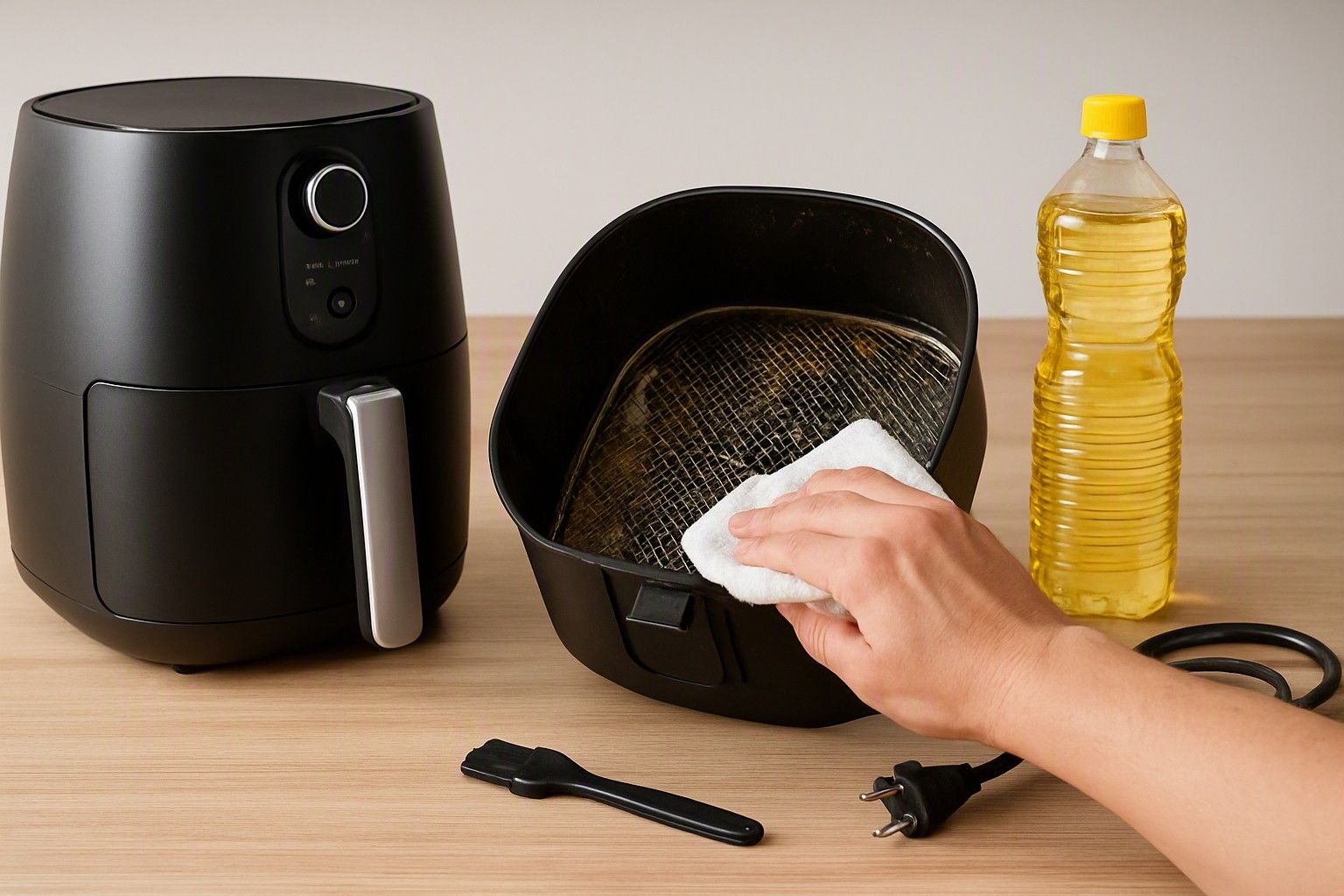
Once an air fryer is actually sitting on your kitchen counter, the questions change from "which one" to "what does living with this look like." How much scrubbing does the basket need after every use, will it quietly push up your electricity bill, and how long before something inside it gives up? Here's what actually happens after the first few months of daily use.
How Easy Is an Air Fryer to Clean Daily?
Day-to-day cleaning is genuinely one of the air fryer's strong points compared to deep-frying, which is a large part of why people switch to one. Most of what needs cleaning is the basket and the pan or tray underneath it, both of which sit on a non-stick coating that's designed to release food residue with a wipe rather than a scrub. After most meals — fries, chicken pieces, roasted vegetables — a rinse under warm water with a soft sponge and a drop of dish soap is enough, and many baskets are marketed as dishwasher-safe, though hand washing tends to protect the coating for longer regardless of what the box says.
Where it gets a bit more involved is with anything sticky or heavily marinated — batter-coated snacks, cheese-topped items, or anything with a sugary glaze. These can leave residue baked onto the mesh or the basket floor, and that needs a short soak in warm soapy water for ten to fifteen minutes before it wipes off easily. The heating coil and the inside walls of the main unit need attention far less often — usually a wipe with a dry or slightly damp cloth every couple of weeks is enough to clear accumulated oil splatter and smoke. Left unattended, that residue is what causes smoking and odd smells during the next cook, not any fault with the appliance itself. Genuinely stubborn cleaning is rare if it's wiped after each use rather than left overnight.
Non-Stick Coating Care and What Damages It
The coating on the basket is the single most vulnerable part of an air fryer, and how it's treated determines whether the basket looks the same after a year or is peeling and sticking within a few months. The two biggest culprits are metal utensils and abrasive scrubbers. Using a metal spoon or fork to pull food out, or a steel scouring pad to clean off stuck residue, scratches the coating in ways that aren't always visible immediately but that show up later as food sticking to spots that used to release cleanly. Once the coating is broken, oil and crumbs bond to that exposed patch every single time, and the problem only gets worse.
The fix is straightforward: use silicone-tipped tongs or wooden utensils to handle food inside the basket, and clean with a soft sponge or a soft-bristled brush rather than anything abrasive. Baked-on residue should be soaked loose, not scraped off. Extreme temperature shocks matter too — running a hot basket straight under cold tap water can warp thin metal trays over time, so letting it cool for a few minutes first is worth the wait. None of this is expensive to get right; it's entirely about habit rather than buying anything extra. A basket that's been treated carefully from day one will still release food cleanly long after a mistreated one in the same price bracket has started sticking, regardless of whether the unit cost ₹1,799 or sat closer to ₹29,999.
How Much Electricity an Air Fryer Actually Uses
This is usually the real question behind "is it worth it," and the honest answer is that an air fryer is cheap to run compared to an oven doing the same job, mainly because it heats a much smaller enclosed space and cooks faster. Wattage across the market generally runs from around 1000W on smaller, budget units up to 1800-2000W on larger digital models, and actual consumption depends on both the wattage and how long a cycle runs — most air fryer recipes finish in fifteen to twenty-five minutes, not the forty-five minutes to an hour a similar oven bake might take.
To put a number on it: a 1500W air fryer running for twenty minutes uses about 0.5 units of electricity. Even running it once a day, every day, for a month adds up to a modest amount on the bill compared to what the same cooking would cost in an oven or on a gas-heavy tandoor-style setup. It's also worth noting that higher wattage doesn't automatically mean higher total consumption — a more powerful unit that preheats and cooks faster can finish a batch in less time than a weaker one straining to reach temperature, netting out similar or even lower total usage. Buyers comparing units across ₹2,999, ₹6,999, and ₹14,999 price bands shouldn't treat wattage on the spec sheet as the whole electricity story — cycle time and how often the unit is actually used matter just as much.
Warranty and Servicing to Check Before Buying
Warranty terms on air fryers in India typically run one to two years, but the coverage details matter more than the headline number. Most brands split cover into a shorter period — often just the first six months to a year — for the whole unit, and a separate, sometimes longer period specifically for the motor, since that's the component most likely to fail from continuous use. It's worth checking which parts are actually excluded before buying, because baskets, trays, and non-stick coatings are almost universally excluded from warranty claims since they're treated as wear items, not manufacturing defects.
Service access is the other half of this. Air fryers are compact and simple enough that most complaints — a unit not heating, a control panel not responding, a fan making noise — are diagnosable at a basic level, but getting a technician who deals with small kitchen appliances specifically can be harder outside larger cities. Before buying, it's worth a quick check on whether the brand has an authorised service centre or partner network reachable from where you live, and whether spare baskets or trays can be bought separately if one gets damaged, since replacing just the basket is far cheaper than assuming the whole unit needs replacing. This is a cheap check that avoids a genuinely frustrating situation months down the line.
How Long Air Fryers Last and Common Failure Points
A well-maintained air fryer used a few times a week typically lasts several years before anything major goes wrong, and when problems do show up, they tend to cluster around a small number of predictable points rather than being random. The heating element is one — continuous use at high temperatures without adequate cooling time between cycles gradually shortens its life. The fan motor is another, particularly in units that are run for very long, back-to-back cooking sessions, which is more of a strain than the appliance was built around. Non-stick coating degradation, covered earlier, is the third and by far the most common, though it's cosmetic and functional rather than a safety failure.
The control panel and digital display, on models that have one, is a less common but real failure point too — moisture from cleaning near the front panel, or steam escaping during cooking, can affect touch controls over time on cheaper units where sealing isn't as tight. This is one area where how wattage and features affect long-term running costs becomes relevant beyond the electricity bill: a unit built with a lower-grade motor or thinner-quality panel to hit a lower price point may nominally cost less to run per cycle but end up needing repair or replacement sooner, which is its own kind of running cost. Basic care — not overloading the basket, allowing cool-down time between long sessions, and keeping moisture away from control panels — extends the life of all these components meaningfully.
Keeping Ownership Costs Low Over Time
The real total cost of an air fryer isn't just the number on the price tag when you buy it — it's that price plus the electricity it draws over years of use, plus whatever cleaning supplies and eventual basket replacements it needs, plus the risk of a repair bill if a cheaper unit's motor or panel doesn't hold up. None of this needs to be intimidating, but treating it as a single upfront number rather than an ongoing relationship with the appliance is how people end up disappointed a year or two in. With prices in the category ranging from ₹1,799 to ₹29,999 and averaging around ₹6,499, there's enough room to weigh a slightly higher purchase price against lower running friction — easier-to-clean baskets, better-sealed panels, more efficient heating cycles.
If you haven't finalised a model yet, it's worth taking the habits and failure points covered here back to the buying guide to factor upkeep into your choice, rather than deciding purely on capacity or wattage in isolation. A unit that's slightly harder to clean or has a shorter effective coating life can end up costing more in frustration and replacement parts than one that simply cost a little more upfront.
Cleaning an air fryer well is mostly about gentle utensils and a quick wipe rather than any special effort, and the electricity it draws is modest enough that it shouldn't be the deciding factor against buying one. What matters more for keeping ownership costs down is warranty coverage, service access, and treating the basket coating with care from day one — get those right and the appliance you bring home today should still be performing the same way years from now.
Comments
Be the first to comment.