How to Choose the Right Microwave Oven for Your Indian Kitchen
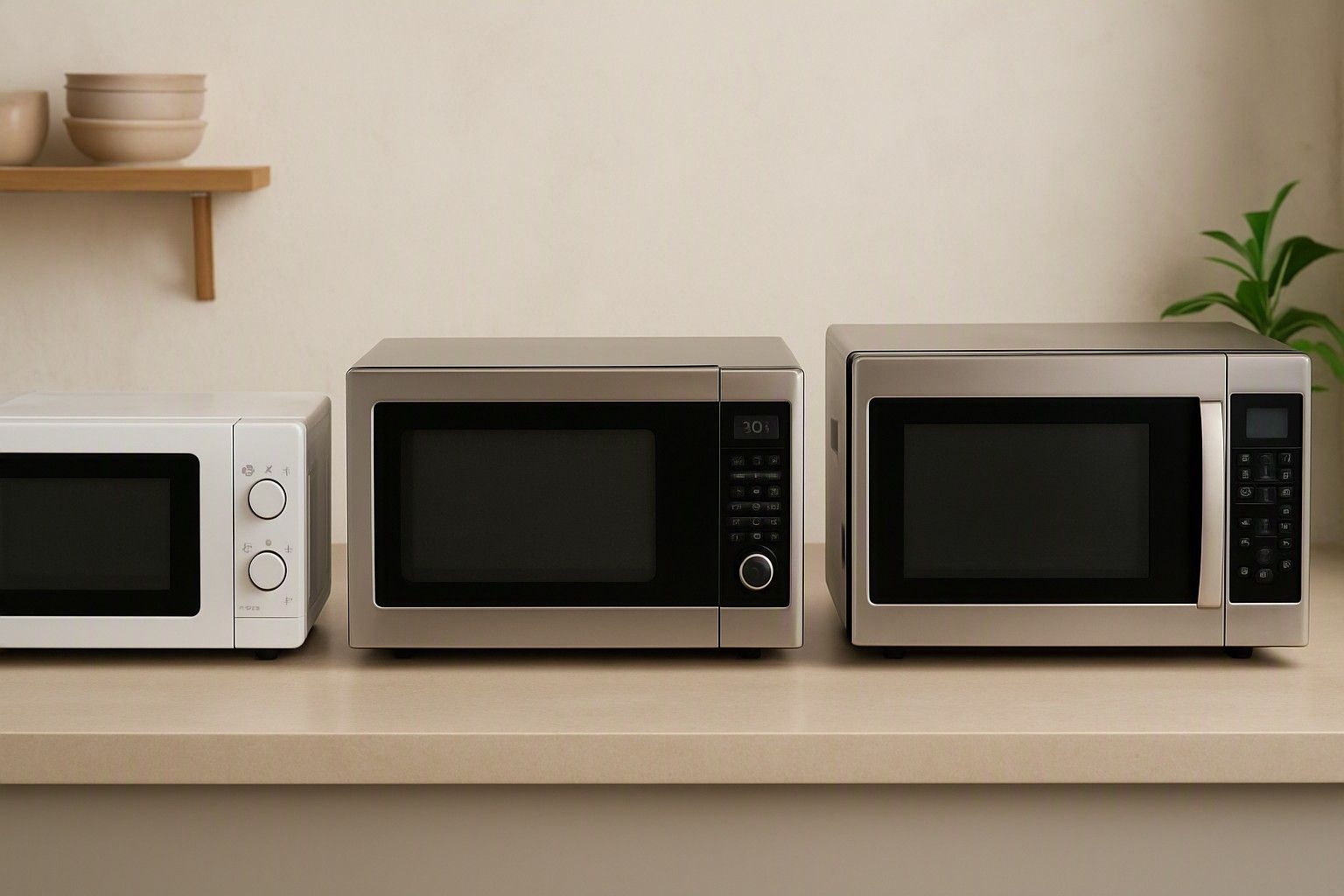
Buying a microwave oven for an Indian kitchen isn't a single choice — it's a stack of smaller ones, and getting any of them wrong leaves you either overpaying or stuck with a machine that can't do what you hoped. Type, capacity, whether it genuinely handles Indian dishes, which features earn their price, what a fair number looks like, safety, and the cost of living with it over the years all feed into the final decision. This guide lays out each of those questions in the order you'll actually face them, and points you to a detailed breakdown for every one. Think of it as the map before the detailed walk-throughs — read it top to bottom, and you'll know exactly which decisions still need your attention.
Solo, Grill or Convection: Which Microwave Type Fits Your Cooking
The single biggest split in this category is whether you only want to heat and cook, or you also expect to bake and roast — that one question sorts you into solo, grill or convection. Pick wrong and you either pay for functions you never touch or run into limits within a few months of daily use. Each type is built for a different band of kitchen work, and the price climbs as the capability does. Start here and understand how solo, grill and convection microwaves actually differ before anything else, because every later decision depends on the type you settle on.
What Capacity You Need Based on Your Household Size
Litre capacity looks like a simple number until you realise it decides both how much food fits in one go and how evenly bulky dishes actually cook. For Indian households the right figure swings widely with how many mouths you feed each day — 20 litres that suits a couple can be cramped for a joint family, while 30 litres for two is wasted space. Rather than lean on a one-size recommendation, work out the right litre capacity for your family size so the machine fits your table, not a generic average.
Can a Microwave Really Handle Indian Cooking?
Plenty of buyers hesitate here, unsure whether a microwave manages dal, sabzi and roti or just warms up last night's leftovers. The honest picture is mixed: some dishes cook well, some come out passable, and a few simply don't belong in one — and which is which depends heavily on the type you buy and how you use it. Before you assume it replaces your gas stove, see what a convection microwave can and cannot do for Indian dishes so your expectations match reality.
Key Features and Settings That Actually Matter
Spec sheets pile on inverter tech, auto-cook menu counts and child locks, and it's genuinely tough to separate what changes the cooking from what just reads well on the box. A longer feature list isn't a better machine — some of those settings justify a higher price, others you'll never miss. This breakdown goes through them one at a time so you know which features are worth paying for and which are gimmicks before a listing talks you into extras.
What You Should Pay: Price Ranges and Value
Microwaves sold in India run from ₹3,000 to ₹25,000, and where you land has far more to do with the type and size you need than with whatever's discounted at the moment. The tiers — under ₹4,500, ₹8,000 and ₹18,000 — each buy a different level of capability, so the goal is matching your spend to your kitchen. Set against that full range you can check whether today's price is a good deal against the price history and buy with confidence instead of second-guessing the number.
Safety, Radiation Myths and Certifications to Check
Worry about radiation is one of the most common reasons Indian buyers stall on this purchase, and it deserves a straight answer. A properly sealed, certified unit is safe for everyday cooking, but there are genuine checks worth doing before and after it enters your kitchen. This piece explains how the cooking actually happens, what the health evidence says, and which certifications matter — read it to clear up the common safety worries before you buy.
Running Cost, Maintenance and Warranty Over the Years
The purchase is a one-time spend; owning the thing is not. Electricity draw, cleaning routines, the occasional repair, and how far your brand's service reaches in your city all pile up over the life of the machine. To see the full picture beyond the sticker price, understand the long-term running and upkeep costs and factor them in before you commit to a model.
That's the full shape of the decision — type, size, cooking fit, features, price, safety and running cost — laid out in the order they matter. You don't have to solve all of it at once; work through the guides that match where you're still unsure, and each one hands you a clear answer for its piece. With the map in hand, the choice stops feeling like a gamble and starts feeling like a decision you can make today.

Comments
Be the first to comment.