Can You Cook Indian Food in a Microwave? What Works and What Doesn't
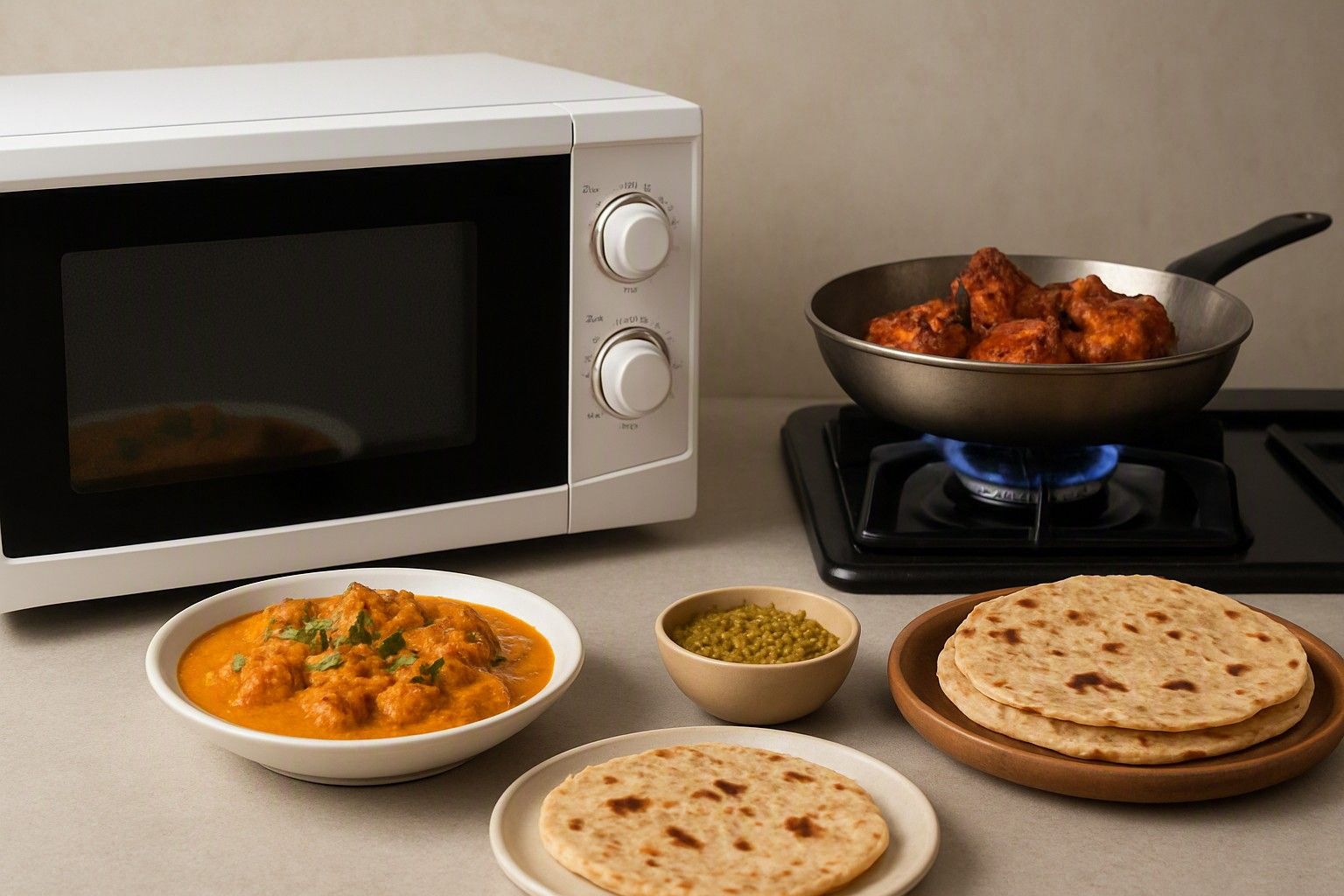
If you're eyeing a microwave and wondering whether it can actually handle dal, sabzi, or roti, and not just warm up leftovers, you're asking the right question before you spend the money. The honest answer is that a microwave can do more than reheat, but which dishes it can genuinely cook depends heavily on the type you buy and how you use it. This piece walks through exactly what works, what half-works, and what simply doesn't, so you know what to expect from your kitchen before you decide.
Reheating vs Actual Cooking in a Microwave
Every microwave, even the most basic solo model priced near ₹3,000, can reheat rice, curry, or last night's sabzi evenly if you cover the bowl and stir once midway. That much is not in question. The real confusion starts when people expect the same solo microwave to cook a dish from raw ingredients the way a stove or pressure cooker would. A solo microwave uses only microwave radiation, which excites water molecules in food and heats it from within, but it doesn't brown, char, or crisp anything the way dry heat does. This means it can genuinely cook things that are moist and don't need browning, like a simple dal, a khichdi, or steamed vegetables, but it cannot replicate a tadka, a roast, or anything that relies on direct contact with a hot surface.
The practical dividing line for Indian cooking is texture. If a dish is meant to come out soft, moist, and cooked through, a microwave handles it well. If a dish depends on a crust, char, or reduction of liquid through evaporation over direct heat, a solo microwave alone will fall short, however long you run it. Understanding this distinction upfront saves a lot of disappointment after purchase, because most complaints about microwaves being 'useless for Indian food' actually come from expecting reheating-grade appliances to do stovetop-grade cooking.
Baking, Grilling and Tandoori-Style Dishes
Tandoori chicken, seekh kebabs, grilled paneer tikka, and baked items like a simple cake or naan need dry, radiant heat from above or below, something a plain solo microwave simply does not generate. This is exactly where the difference between microwave types starts to matter for Indian cooking specifically, because a grill or convection microwave adds a heating coil that browns and chars food the way a tandoor or oven would, while a solo model cannot.
If tandoori-style dishes, roasted vegetables, or home-baked snacks are a regular part of what you want to cook, you'll need to look beyond the base solo category. Convection and grill microwaves, generally sitting in the ₹8,000 to ₹18,000 range depending on capacity and features, can genuinely replicate a decent amount of tandoor-style char and oven-style baking, though neither fully matches a dedicated tandoor or OTG in smoky flavour or crust depth. It's worth being clear-eyed about that gap rather than expecting restaurant-style results. For a fuller breakdown of how these two heating methods actually differ in practice for dishes like these, see why convection matters for these dishes, since the choice between grill and convection changes what you can realistically cook at home.
Curries, Sabzis and Everyday Indian Meals
This is where a microwave earns its place in an Indian kitchen, not as a replacement for the stove but as a genuinely useful shortcut for everyday cooking. Dal, sambar, simple gravies, and moist sabzis like lauki, bhindi, or mixed vegetables cook reasonably well in a microwave-safe covered bowl, especially if you're comfortable with a few adjustments. The trick is that microwaves cook by exciting water content, so dishes with enough liquid and a lid that traps steam come out close to how they would on a stove, just without the direct flame contact that builds deeper flavour through slow reduction.
What doesn't translate well is anything built around a proper tadka, where mustard seeds, cumin, or curry leaves need to hit hot oil and pop before the rest of the ingredients go in. Some people work around this by tempering spices briefly in a microwave-safe bowl with oil, but the result is milder and less aromatic than a stovetop tadka in a kadhai. Dishes that rely on slow reduction, like a thick curry base or a rich gravy simmered for twenty minutes, also take considerably longer in a microwave and rarely develop the same depth. For quick weeknight dal or a reheated-and-freshened sabzi, though, a microwave in the ₹4,500 to ₹8,000 range does the job well enough that many Indian kitchens use it for exactly this, alongside the stove rather than instead of it.
Roti, Rice and Steaming in a Microwave
Rice is one of the genuine wins here. A microwave can cook plain rice from raw grains reasonably well in a covered, microwave-safe container with the right water ratio, and it's a common enough use case that most microwave manuals in India include a rice-cooking guide. Steaming idli batter, dhokla, or even softening papad also works well, since these depend on moist heat rather than dry browning.
Roti is a different story. A microwave cannot replicate the direct-flame puffing and light charring that makes a roti or phulka what it is, because that texture comes from quick, intense dry heat against the dough, not moist radiant heating. What a microwave can do well is reheat rotis that have gone cold or slightly stiff, using a damp cloth or a microwave-safe cover to bring back softness without drying them out further, which is a genuinely useful everyday trick. Trying to actually cook raw roti dough from scratch in a microwave, though, produces something closer to a dense, pale flatbread than a proper roti, so it's not a realistic substitute for a tawa. Steaming and rice-cooking are where this appliance pulls real weight; roti-making from scratch is where expectations need to be reset.
Safe Utensils for Indian Cooking
Indian kitchens are full of steel tiffins, brass vessels, and cast-iron kadhais, and almost none of them belong inside a microwave. Metal reflects microwaves rather than absorbing them, which can cause sparking and, in worse cases, damage the appliance. This matters more in Indian cooking specifically because so many traditional containers, tiffin boxes, thalis, and certain glazed clay pots with metallic paint, are exactly the kind of thing people instinctively reach for without checking.
What actually works are microwave-safe glass bowls, specific BPA-free plastic containers marked for microwave use, and plain unglazed ceramic. Many Indian households already own steel dabbas for daily use, and the safer habit is to transfer food into a microwave-safe bowl before heating rather than assuming any bowl on the shelf will do. It's also worth being cautious with containers that have metallic trims, gold-rimmed plates being a common example, since even a thin metallic edge can spark. Getting this right isn't just about avoiding a ruined dish; it protects the microwave itself and, more importantly, keeps the whole process safe. If you're still deciding on a model, it helps to first know which containers are safe to use inside, since certification labels and build details vary enough between models that this is worth checking before you buy, not after.
What a Microwave Will Never Replace in an Indian Kitchen
No matter how capable the model, a microwave will not replicate a tandoor's smoky char, a kadhai's deep tadka, or the quick, even puffing of a roti on an open flame. These are outcomes of direct, intense, often uneven heat interacting with dough, oil, and spice in ways that even a good convection or grill microwave only approximates. Anyone buying a microwave expecting it to fully replace a gas stove or a tandoor for these specific dishes is likely to end up disappointed regardless of price, whether that's a unit near ₹3,000 or one closer to ₹25,000.
The realistic framing is that a microwave earns its place as a genuinely useful second appliance in an Indian kitchen, handling reheating, steaming, quick rice, moist curries, and, with a grill or convection model, a reasonable stab at baking and light grilling. It was never designed to be the sole cooking appliance for a cuisine built around tadka, tawa, and tandoor, and treating it that way sets up unrealistic expectations from day one. If you're still weighing whether a microwave fits alongside your existing stove setup or whether your cooking style leans too heavily on stovetop techniques to benefit much from one, it's worth going back to return to the buying guide to weigh this against a gas stove before finalising a purchase.
So, can you actually cook Indian food in a microwave, or is it strictly for reheating? It's neither extreme: a microwave genuinely cooks rice, dal, steamed dishes, and moist sabzis well, stretches convincingly into baking and tandoori-style char if you choose a grill or convection model, but never fully takes over tadka, tawa, or tandoor work no matter what you spend. Knowing that split before you buy means you're choosing a microwave for what it actually does in an Indian kitchen, not for what you hoped it might.

Comments
Be the first to comment.