Microwave Running Cost, Maintenance and Warranty in India
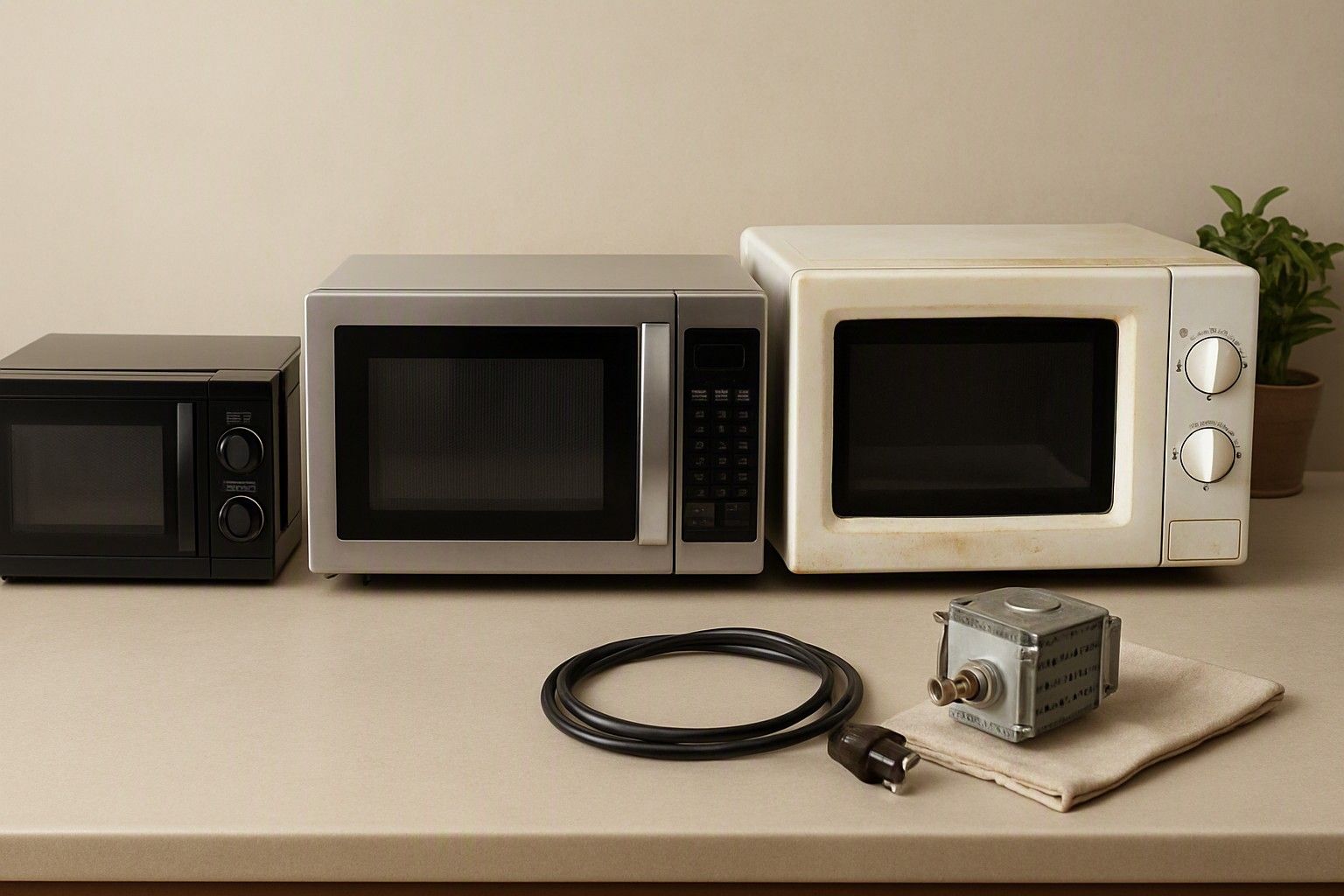
Buying the microwave is a one-time decision, but living with it is not — electricity bills, cleaning habits, the odd repair call, and how well your brand's service network covers your city all add up over the years. If you're trying to work out what a microwave actually costs beyond the sticker price of anywhere between ₹3,000 and ₹25,000, this is the breakdown.
How Much Electricity a Microwave Actually Uses
A microwave's power rating on the box (usually 1000W–1500W depending on type and size) is its draw during active cooking, not its average draw over a day. In practice, most Indian households use a microwave for short bursts — reheating a plate, defrosting, warming milk — so the actual running time per day is often 10-20 minutes, not hours. That keeps daily electricity consumption modest even though the wattage looks high next to a fan or a light bulb.
Where electricity cost climbs is with convection use. A solo microwave only heats via microwave radiation and sips power efficiently for its job. A convection microwave, when used for baking or grilling, runs a heating element for extended periods — 20-40 minutes for a cake or roast — at a similar or higher wattage, and that changes the math meaningfully if you bake often. A grill microwave sits in between, since grilling sessions tend to be shorter than full convection bakes.
As a rough household comparison: a microwave used mainly for reheating will add a small, barely noticeable amount to a monthly bill, while one used daily for baking and grilling will show up more clearly on the meter. Neither is expensive to run compared to a geyser or AC, but if your primary use case is baking rather than reheating, factor that into expectations rather than being surprised later.
Cleaning and Everyday Upkeep
Upkeep costs on a microwave are mostly about your time and a bit of discipline, not money. Food splatters, oil residue, and steam build-up inside the cavity are the biggest everyday issues, and left unattended they harden, smell, and eventually affect how evenly the unit heats. A simple habit — wiping the interior with a damp cloth after use, and doing a proper clean with warm water and a mild detergent once a week — prevents almost all of the buildup that otherwise needs scrubbing later.
A useful trick that costs nothing: microwaving a bowl of water with a little lemon or vinegar for a few minutes loosens dried grease and odours, making the wipe-down far easier. For convection and grill microwaves, the grill rack and any crumb tray need separate attention, since fat and crumbs collect there and can smoke on the next grilling session if ignored.
The door seal and the glass turntable deserve a quick check too — a turntable that doesn't spin freely usually just needs cleaning underneath, not a repair visit. None of this upkeep requires special products or professional help; it's the same basic kitchen hygiene most Indian households already apply to other appliances, just done slightly more often given how frequently a microwave gets used through the week.
Common Repairs and Magnetron Replacement Costs
Most microwave complaints in India fall into a handful of categories: the unit not heating despite the display working, unusual noises during operation, the turntable not rotating, or the door switch/latch failing. The turntable and door latch issues are usually minor and inexpensive to fix, often resolved with a part swap and a short service visit.
The more significant repair is the magnetron — the component that actually generates microwave energy. When a unit powers on, the light works, the turntable turns, but nothing gets hot, a failed magnetron is the usual suspect. This is also the costliest single repair a microwave is likely to need, and on an older or budget unit, replacing it can approach a meaningful fraction of what a new microwave in the ₹4,500 range would cost. That's the practical threshold most owners use: if the repair quote is close to the price of a comparable new unit, replacement usually makes more sense than repair, especially once the microwave is several years past its warranty.
Control panel or display faults are less common but do occur, particularly on units with more electronic touch controls versus simple dial or button interfaces. Simpler control panels tend to be cheaper and easier to get repaired locally, which matters in smaller towns where authorised service reach is thinner.
Warranty Terms and What They Cover
Warranty structures on microwaves in India typically follow a two-tier pattern: a shorter comprehensive warranty on the whole product, and a separate, longer warranty specifically on the magnetron. It's common to see a one-year comprehensive warranty paired with a longer magnetron-only cover, sometimes stretching several years further, since manufacturers treat the magnetron as the part most likely to be a genuine manufacturing defect rather than wear-and-tear.
What this split means in practice: if the door hinge, keypad, or turntable motor fails after the first year, you're paying out of pocket unless you bought an extended plan. If the magnetron itself fails within its longer cover period, the part is usually replaced free, though labour charges for the visit may or may not be included depending on the brand's terms — this is worth confirming at purchase rather than assuming.
Extended warranty or service plans, sold separately at the time of purchase or shortly after, extend comprehensive coverage beyond the first year. Whether that's worth paying for depends on the unit's price tier: on a microwave in the ₹4,500 range, an extended plan can be a reasonable hedge, but on something already in the ₹18,000 bracket, the base warranty terms and brand reputation for service usually matter more than stacking on paid extensions. Always keep the original invoice and warranty card — service centres in India routinely ask for both before honouring a claim.
Service and Spare Part Availability by Brand in India
This is where ownership cost quietly diverges from what the price tag suggests. A microwave from a brand with a dense, well-established service network in India — common across most metro and tier-2 cities — tends to get faster technician visits and easier access to genuine spare parts, including magnetrons, when something does go wrong. A brand with thinner coverage, even if the unit itself is well built, can mean longer wait times for a technician or having to ship the unit to a regional service hub, which adds cost and inconvenience beyond the repair itself.
Before buying, it's worth a quick check on whether the brand has an authorised service centre reasonably close to where you live, rather than assuming national brand recognition automatically means local service reach — the two don't always match, especially outside larger cities. Brands that have sold microwaves in India for many years generally have better spare-parts pipelines simply because more units are in the field and parts get manufactured and stocked at scale.
This matters more for convection and grill microwaves than for basic solo units, since they have more mechanical parts — heating elements, fans, grill coils — that can eventually need attention. If you live somewhere without strong service coverage, leaning toward a simpler solo microwave with fewer moving parts reduces how often you'd need a technician in the first place.
How Type and Size Affect Long-Term Costs
The type of microwave you choose shapes ownership cost more than almost any other single factor. A solo microwave has the fewest components that can fail, the lowest electricity draw, and the simplest cleaning routine, which generally makes it the cheapest to own over time, not just to buy. A grill microwave adds a heating coil and a rack, which means slightly more to clean and one more part that can eventually need repair, but the added running cost is usually modest since grilling sessions are relatively short. A convection microwave is the most capable but also the most complex — a fan, a heating element, and often more sophisticated electronics — and that complexity shows up as both higher electricity use during baking and a broader range of things that can go wrong later.
Size matters too: a larger cavity generally means a higher wattage rating, which nudges up running cost per use, though this is usually secondary to how the microwave is actually used day to day. A large convection oven used mainly for occasional reheating won't cost much more to run than a smaller one, but a compact solo unit constantly pushed to do grilling-like tasks it wasn't built for will wear out faster than its warranty terms account for.
If you're still deciding which type fits your household, it's worth taking the time to compare how each microwave type behaves on running cost before finalising a purchase, since the right choice there does more to control your long-term spend than any single feature on the price tag.
Put together, the real cost of owning a microwave in India isn't the ₹₹3,000–₹25,000 price tag alone — it's a mix of modest daily electricity use, a bit of routine cleaning, the small chance of a magnetron repair down the line, and how well your brand's warranty and service network back you up when something needs fixing. Weigh those against each other for your own usage pattern, and you'll know exactly what you're signing up for beyond the day you bring it home.
Comments
Be the first to comment.