Microwave Oven Price in India: What to Pay Across Budget Tiers
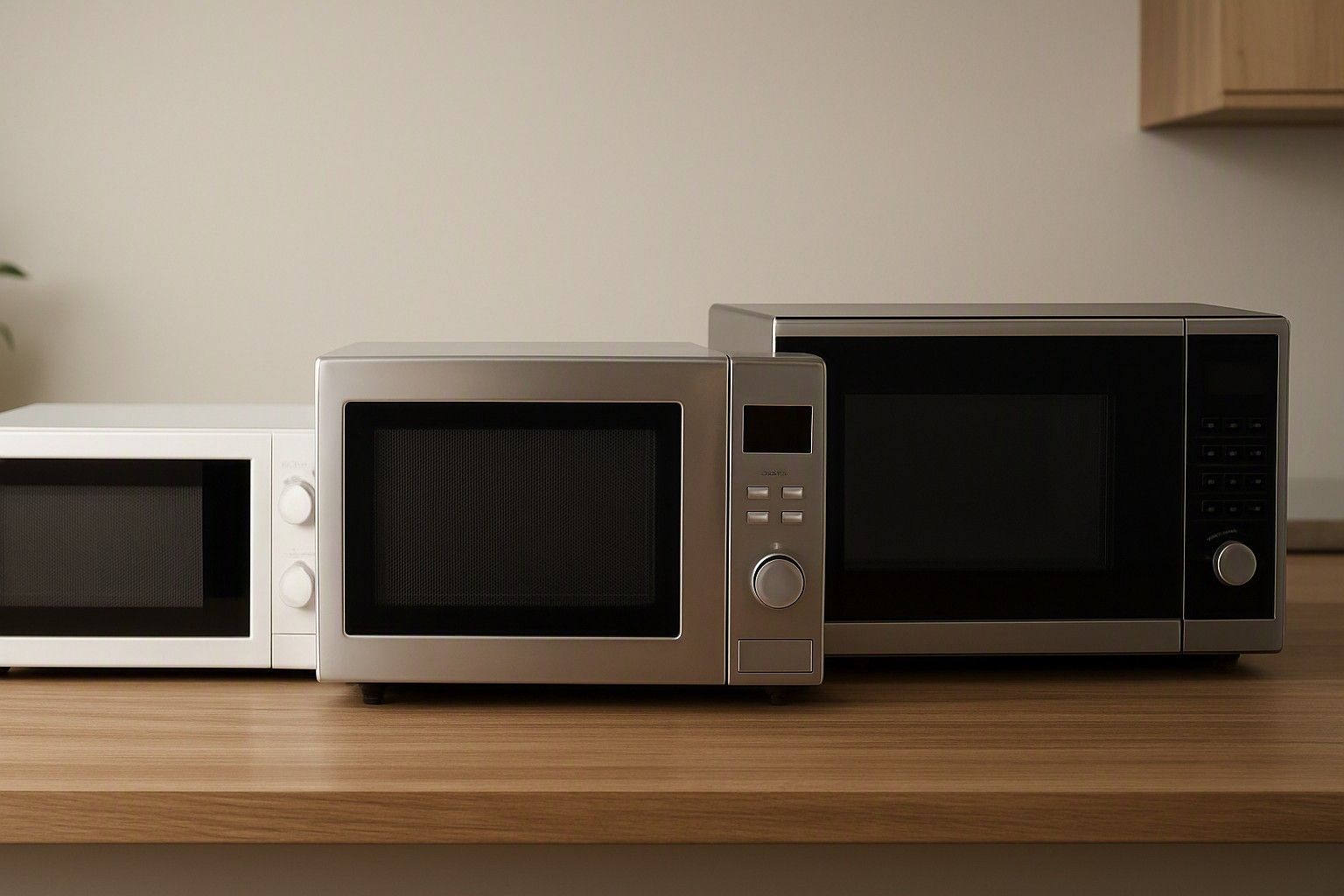
If you're staring at a microwave's price tag and wondering whether it's fair or inflated, you're asking the right question at the right time. This guide breaks down what you actually get at each budget tier in India, so you can look at any listed price and know immediately whether it lines up with what similar ovens typically cost.
What You Get in the Under ₹4,500 Range
At this entry level, you're almost always looking at a solo microwave — a unit built for reheating, defrosting, and basic cooking, with no grilling or baking capability. The capacity tends to sit on the smaller side, typically enough for a couple of plates or single-serve dishes rather than family-sized batches. Controls are usually manual dials rather than digital touch panels, which is not necessarily a downside if you want something simple that won't need a manual to operate. Build quality at this tier is functional rather than premium — you'll find fewer auto-cook menus, basic turntables, and simpler interiors that are easier to wipe down but less forgiving of spills over time.
What you're paying for here is the core function of a microwave and nothing more. If your household mainly reheats food, warms milk, or defrosts frozen items, this tier covers that job completely and there's little reason to spend beyond it. Where it falls short is anyone hoping to bake, grill, or roast — those functions simply aren't available at this price point, regardless of brand. If your use case is narrow and reheating-focused, a price in this range is already a fair one, and there's no value sitting unclaimed by spending more.
The ₹8,000 Mid-Range Sweet Spot
This is where grill microwaves enter the picture, and for many Indian households, it's the tier that matches actual usage without overpaying for capability that goes unused. In this range, you typically get a larger cavity than the entry tier, digital touch controls, and a grilling element that lets you crisp up sandwiches, toast, or do light grilling of paneer and vegetables alongside standard reheating and defrosting. Auto-cook menus become more common here too, with pre-set options for common Indian dishes that take some guesswork out of cooking times.
The value case for this tier is straightforward: you're paying a moderate premium over a solo unit in exchange for genuine added function, not just a bigger nameplate or extra buttons that don't get used. It suits households that reheat daily but also want the occasional grilled snack without buying a separate appliance for it. It's not the tier for serious baking, though — grill functions and convection baking are different things, and if cakes, pizzas, or dedicated baking programs matter to you, this range will feel limiting. For everything short of full baking, though, this is usually where the actual price paid matches the actual value received most closely.
When the ₹18,000 Range Makes Sense
Stepping into this tier usually means moving to a convection microwave, which adds true baking and roasting capability on top of everything the lower tiers offer. This is the range where you'll find larger capacities suited to family cooking, more elaborate auto-cook libraries, and often better-quality interiors and turntables designed to handle longer cook cycles at higher temperatures. If you bake regularly, host often, or want one appliance that replaces both a microwave and a compact oven, this is the tier where that ambition becomes realistic rather than aspirational.
The honest question to ask before paying this much is whether you'll actually use the convection function. It's the single biggest driver of price at this level, and if baking stays occasional rather than routine, you may be paying for capability that mostly sits idle. It's worth taking a moment to check whether convection at this price is worth it before committing, since the jump from grill to convection is the largest functional and price leap across the entire category. For households that genuinely bake or roast often, though, the spend at this tier is justified by real, regular use rather than occasional novelty.
How Prices Range from ₹3,000 to ₹25,000
Across the Indian market, microwave ovens span from ₹3,000 at the most basic solo end to ₹25,000 for the largest, most feature-loaded convection models. That's a wide spread, and it exists because the category covers three genuinely different appliance types — solo, grill, and convection — not just different sizes or brands of the same thing. The lower end of that range reflects a stripped-down reheating tool, while the upper end reflects a multi-function oven with baking, grilling, and larger capacity built in.
What this spread tells you as a buyer is that there's no single "normal" price for a microwave — the right number depends entirely on which type and capacity you actually need. Someone shopping only for reheating shouldn't measure their options against prices near ₹25,000, and someone who wants full convection baking shouldn't expect to find it near ₹3,000. The practical use of this range is to first decide your functional tier, then judge any specific price against that tier rather than against the category's extremes. Once you know which end of the spread applies to you, spotting a fair price becomes far simpler.
Is Today's Price Good Against the Historical Average of ₹7,500
The historical average across the category sits at ₹7,500, and this number is most useful as a reference point rather than a target to chase. If a microwave you're considering is priced near or below this average and it matches the features you actually need, that's a solid indicator you're not overpaying relative to how the category has priced historically. If it's well above the average, that gap should be explained by genuine added capability — larger capacity, convection function, or a notably bigger cavity — not just a listing that happens to be priced higher.
This is also where it helps to resist the instinct to wait for a lower number to show up. A price sitting close to or under ₹7,500 for the features you want is already a reasonable deal in the context of how this category has historically priced, and there's no strong pattern in this market that rewards delaying a purchase you're ready to make. The average exists to tell you whether today's number is in line with history, not to suggest a better one is guaranteed to appear later. Use it to confirm your decision, not to postpone it.
Matching Your Budget to the Right Type and Size
The clearest way to know if you're paying the right price is to work backward from how you'll actually use the microwave, not forward from whatever budget feels comfortable. A single person or couple who mainly reheats and defrosts has no real reason to look past the entry tier, while a family that grills snacks occasionally sits naturally in the mid-range, and a household that bakes or cooks in volume belongs in the upper tier where convection and larger capacities live. Matching type to need first, then checking the price against that type's typical range, is a more reliable process than picking a number and hoping the features follow.
Size matters here too — a larger cavity costs more regardless of type, so a big-capacity solo microwave can sometimes cost close to what a smaller grill model does, and it's easy to misjudge value if you're comparing on price alone without accounting for capacity. If you haven't yet settled on which type and size actually fits your kitchen and cooking habits, it's worth taking the time to revisit the full buying guide to balance budget with your needs before locking in a price-based decision. Getting the type and size right first is what makes any price — high or low — actually meaningful.
At this point, you should be able to look at any microwave's listed price and place it against a tier, a type, and a historical average, which is really all "is this a good deal" ever comes down to. The spread from ₹3,000 to ₹25,000 isn't random — it maps directly to function and capacity — and a price near ₹7,500 for the features you actually need is a fair one to act on today, not a number to keep watching.

Comments
Be the first to comment.