Microwave Oven Capacity Guide: How Many Litres for Your Family
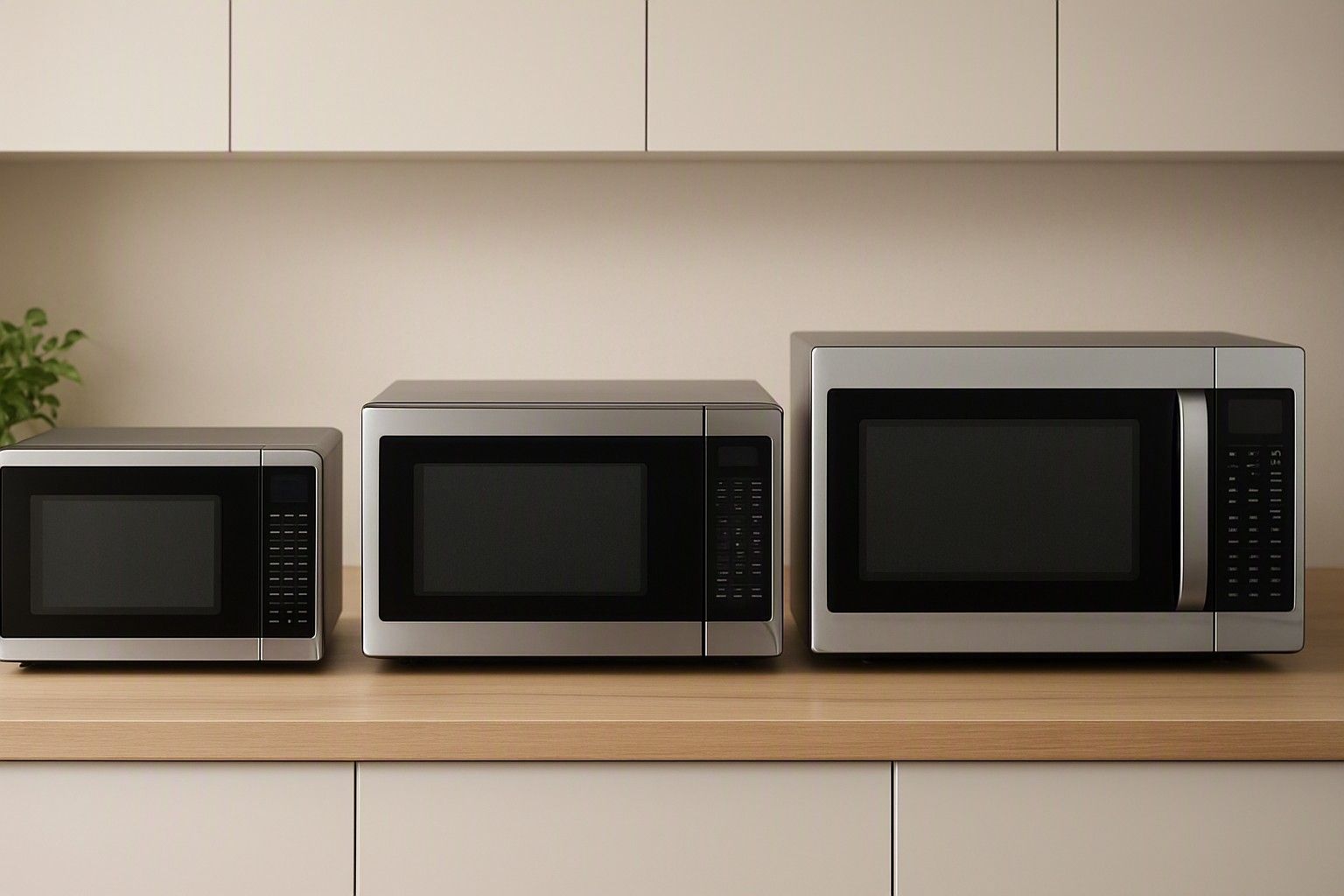
If you've stood in a store or scrolled through listings wondering whether 20 litres is too small or 30 litres is overkill, this is the question this guide answers. Microwave capacity decides both how much food fits at once and how well large or bulky dishes cook, and for Indian households, that answer changes sharply depending on how many people you're feeding daily. Read on to match litres to your actual family size, not a generic recommendation.
How Microwave Capacity Is Measured in Litres
Microwave capacity refers to the internal cavity volume where you place food, measured in litres. It has nothing to do with the machine's outer dimensions or how much counter space it eats up — a 25-litre model from one brand can be physically bigger or smaller than a 25-litre model from another, depending on wall thickness and design. What the litre number actually tells you is how much cooking room you have inside: whether a dinner plate, a large mixing bowl, or a two-container meal will fit and rotate freely on the turntable without touching the sides or the roof.
Indian microwaves are commonly sold in bands rather than exact litres — roughly 17-20 litres, 23-25 litres, 27-30 litres, and 32 litres and above. Each jump in this range isn't just about fitting more food; it also affects how evenly things heat, since a cavity that's too tight for the dish inside can cause uneven warming at the edges. Before you compare features or brands, it helps to know which of these bands your daily cooking actually falls into, because everything else — from grill accessories to convection trays — is sized to match the cavity, not sold separately for you to adjust later.
Capacity for Singles, Couples and Small Nuclear Homes
For one or two people, a 17-20 litre microwave covers nearly everything you'll realistically use it for: reheating meals, warming milk or beverages, defrosting small portions of meat or vegetables, and basic grilling if the model supports it. This size is also the easiest to fit on a small kitchen counter or a wall shelf, which matters in studio apartments and compact urban kitchens where every inch counts. Most single professionals and young couples who cook light meals or rely partly on takeaway find this range more than sufficient, and they rarely feel short-changed by the smaller cavity.
A small nuclear family of three or four — say, two adults and one or two children — usually does better stepping up to 23-25 litres. This gives enough room to reheat a full thali-style plate with rice, curry, and a side without stacking dishes, and it's the size where baking small batches of cookies or a single cake layer becomes practical if the model has a convection function. It's also the range where you start seeing genuine flexibility: enough space for occasional entertaining without paying for capacity you'll use only rarely. If your household cooks fresh meals daily but doesn't often host guests, this band is usually the sensible middle ground rather than going straight to a larger, costlier unit.
What Joint Families and Large Households Should Pick
Joint families, households with five or more members, or homes that regularly cook for guests need to think beyond just reheating — capacity here is about batch cooking and multitasking. A 27-30 litre or larger microwave lets you heat multiple plates together, cook a larger casserole dish, or bake a full-sized cake without needing two rounds, which matters when meals are being served to everyone around the same time rather than staggered. This is also the range where convection microwaves with grilling racks make the most sense, since the larger cavity accommodates skewers, a whole chicken portion, or a bigger baking tray without crowding.
The trade-off is straightforward: larger capacity models sit at the higher end of the price range, closer to the ₹18,000 band, compared to compact models that stay within ₹4,500. For a large household, this isn't wasted spending — it's paying for the ability to actually use the microwave as a second cooking appliance rather than just a reheating box. Where it does matter is checking that your kitchen has the counter depth and cabinet clearance to house something this size, since 32-litre-plus models are noticeably deeper and taller than the compact ones, and a mismatch here causes more daily frustration than a mismatch in price ever does.
Internal Size vs Kitchen Counter Space
It's worth separating two things that get confused constantly: internal cavity capacity in litres, and the external footprint the microwave takes on your counter or shelf. A larger-litre model doesn't always mean a proportionally larger box — some manufacturers manage to fit more usable cavity into a relatively compact external shell through thinner cavity walls and tighter design, while others build bulkier housings for the same internal volume. This means you can't judge the space a microwave will need purely from its litre rating; you need the actual width, depth, and height figures for the specific model you're considering.
In Indian kitchens, where modular counters, chimneys, and wall cabinets often leave a fixed, non-negotiable slot, this is the practical constraint that decides your final pick more often than pure appetite for a bigger cavity. Measure your available space — width, depth, and importantly the clearance above the unit for ventilation — before you settle on a capacity band, especially if you're wall-mounting on a bracket or fitting it into a cutout between cabinets. A family that needs 30 litres of cooking room but only has space for a 25-litre-sized footprint will have to either rework the kitchen layout or accept a smaller capacity, and it's better to know that before you buy than after the box is already home.
Does Bigger Capacity Cost More to Run
A larger cavity does typically draw more power, since it needs a stronger magnetron and often a bigger grill or convection heating element to warm the extra space efficiently. In practice, this shows up as a modest difference in electricity use per session rather than a dramatic one — a 30-litre convection microwave used for baking will run its heating element longer for a similar dish than a smaller unit, but for quick reheating tasks, the difference between capacity bands is minor since cook times for small portions don't scale much with cavity size. The bigger cost factor is usually cooking mode — grill and convection use more power than plain solo reheating — rather than litres alone.
Across the market, prices for microwaves span from ₹3,000 to ₹25,000, with the average sitting around ₹7,500, and capacity is one of the clearer drivers of where a given model lands in that range. If you want the fuller picture on how size, cooking mode, and daily usage patterns combine to affect your electricity bill and long-term upkeep, it's worth reading how to check how size affects running cost and electricity use before finalising a capacity purely on food-fit alone.
Matching Capacity to Microwave Type
Capacity and type aren't independent choices — they interact in ways that affect what you can actually cook. A solo microwave in a small 17-20 litre cavity is fine for reheating and defrosting, but stepping up to 27-30 litres only pays off if you're also choosing a grill or convection type, since that's what lets you use the extra room for baking, roasting, or grilling rather than just heating a bigger plate. Buying a large-capacity solo-only model is a common mismatch — you get the bigger box without gaining any new cooking ability, since solo microwaves can't bake or brown regardless of size.
Conversely, a convection microwave in a small cavity limits how much you can actually bake at once, which defeats part of the reason to choose convection in the first place. If your household reason for buying is largely reheating and occasional light cooking, a smaller solo or grill model keeps costs sensible; if you're planning to bake regularly or cook for a large family, the capacity and the type need to be decided together rather than one after the other. It's worth taking the time to decide the type alongside capacity for a balanced choice, since picking the right litres with the wrong type — or vice versa — leaves you compromising on the thing that actually matters day to day.
Between the cavity band your household actually needs, the counter space you have to work with, and the cooking type you'll pair it with, you now have enough to answer the litres question with confidence rather than guesswork — pick the size that matches how your family cooks today, not the biggest number on the shelf.

Comments
Be the first to comment.