Solo vs Grill vs Convection Microwave: Which One Should You Buy
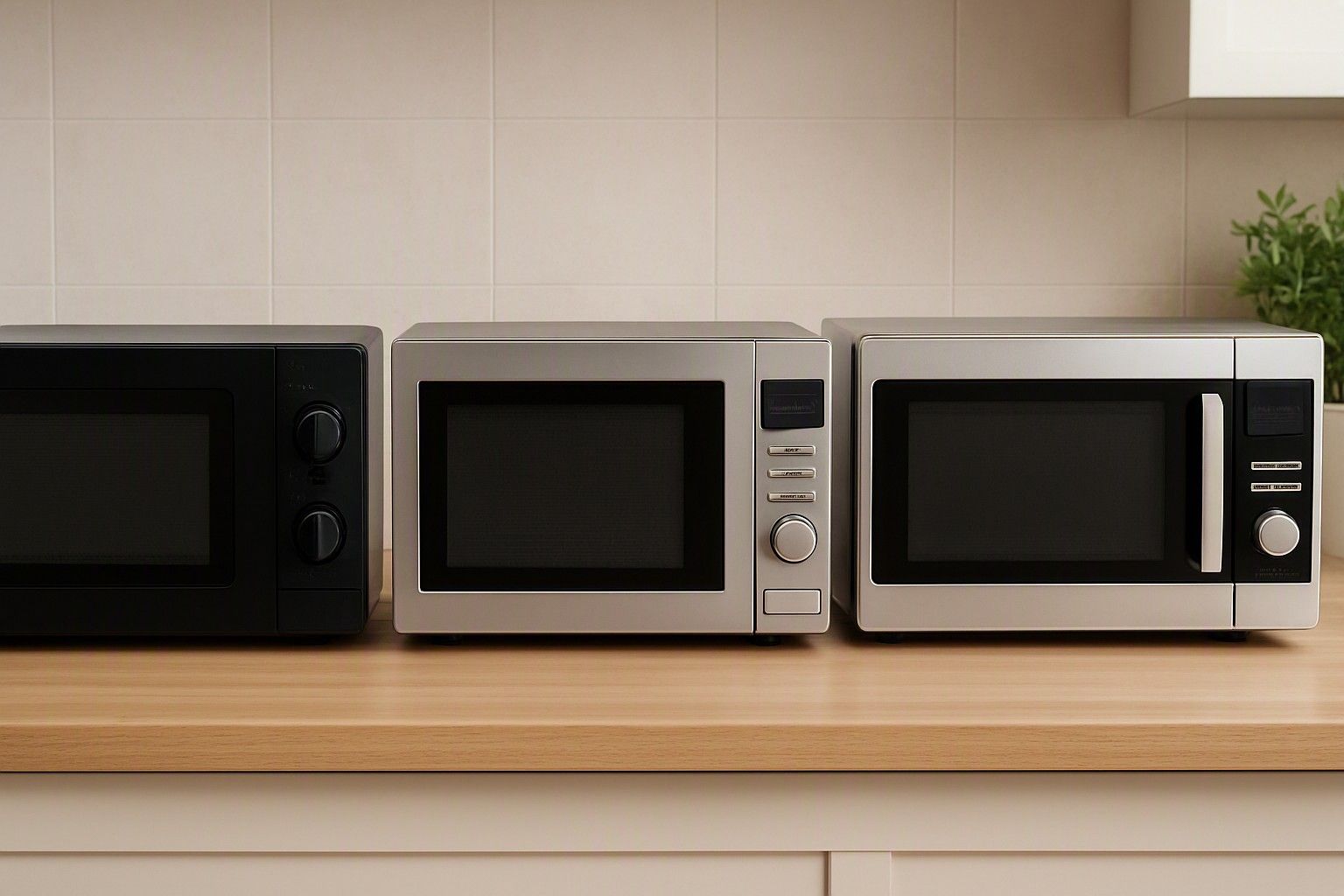
If you're stuck deciding between a solo, grill or convection microwave, the answer really comes down to one question: do you only need to heat and cook, or do you also want to bake and roast? Each type is built for a different slice of kitchen use, and picking the wrong one means either overpaying for features you won't touch or underbuying and hitting a wall in six months, or ignoring the running cost that shows up on your electricity bill long after the purchase — something our Microwave Oven Electricity Cost Calculator can help you check by factoring in your microwave's type and your household's daily usage. This article walks through exactly what each type does, what it costs, and which one matches your actual cooking habits.
What a Solo Microwave Can and Cannot Do
A solo microwave is the simplest of the three, built purely around microwave radiation to heat, cook and defrost. It has no heating coil and no fan for hot-air circulation, which means it handles jobs like reheating leftovers, warming milk, cooking rice or dal, steaming vegetables, and defrosting frozen food without any fuss. For a household whose microwave duty is mostly reheating meals and quick one-pot cooking, this is genuinely all the machine most people use, even in homes that own a more expensive model.
What it cannot do is brown, crisp or bake anything properly. There's no way to get a golden top on a gratin, a crisp skin on tandoori chicken, or an evenly baked cake, because microwave energy cooks food by agitating water molecules rather than applying dry heat from the outside. Try to bake in a solo unit and you'll get something cooked through but pale and often rubbery in texture. This is the core trade-off: a solo microwave is the least expensive and easiest to operate of the three types, typically sitting toward the ₹4,500 end of the market, but it draws a hard line at anything that needs browning or crisping. If your kitchen already has a separate oven, toaster or tandoor for those tasks, a solo microwave covers everything else without you paying for capability you won't use.
Where Grill Microwaves Fit In
A grill microwave adds one or two heating coils, usually mounted at the top of the cavity, on top of the standard microwave function. This lets it do what a solo unit cannot: brown cheese on toast, char the top of a casserole, grill kebabs or paneer tikka, and give roasted vegetables a bit of surface colour. It's a genuine step up in versatility for a household that wants some grilling and browning without moving all the way to full baking. The coil works alongside or independently of the microwave function, so you can grill-finish a dish after microwave-cooking it, which suits a lot of Indian snacking and starter-style cooking.
What it doesn't replicate is the even, all-around dry heat of an actual oven. Grilling happens mostly from the top, so results can be uneven if you don't turn the food partway through, and baking a cake or bread in a grill microwave is still hit-or-miss because there's no hot-air circulation to cook it evenly through the middle. Grill microwaves typically price a step above solo units, often bridging the ₹4,500 and ₹8,000 ranges. They make sense for someone who occasionally wants grilled starters or browned tops but isn't planning to bake regularly, and who wants that extra function without jumping to convection-level pricing.
Why Convection Microwaves Cost More
A convection microwave adds a heating element plus a fan that circulates hot air through the cavity, which is what actually lets it function like a real oven. This is the type capable of baking cakes, cookies and bread with even texture, roasting a whole chicken, and reheating food so it stays crisp rather than going soggy the way it does in a solo or grill unit. The fan-driven hot air reaches all sides of the food, not just the top, so browning and cooking are far more consistent than a grill coil alone can manage. For anyone who bakes even occasionally, or wants one appliance that can microwave, grill and bake, convection is the only one of the three that genuinely delivers all three.
That extra capability is exactly why convection models sit at the top of the price range, often stretching into the ₹18,000 band and beyond, against an overall market that runs from ₹3,000 to ₹25,000 with an average around ₹7,500. You're paying for the fan motor, the additional heating element, and usually a more capable control panel with baking presets. It's worth being clear-eyed about whether you'll actually use the baking function regularly, because that's the feature driving the price gap, not build quality or brand alone. If you want to weigh that spend properly, it helps to see whether the extra spend on convection is justified by the price ranges before deciding.
Which Type Suits Baking, Grilling and Reheating
Splitting the decision by task makes it concrete. For pure reheating and basic cooking, whether that's warming rotis, cooking khichdi, or defrosting meat, a solo microwave does the job completely and there's no functional benefit to paying more. For grilling, a grill microwave covers occasional needs like browning a sandwich, finishing off tikka, or getting a bit of char on vegetables, but if grilling is a weekly habit rather than an occasional one, the top-only heat source will start to feel limited compared to a proper grill or tandoor-style setup.
For baking, the distinction is sharpest: only a convection microwave, with its fan and even hot-air circulation, produces cakes, cookies and breads with the texture you'd expect from an actual oven. Solo and grill microwaves can technically run a baking cycle, but the results are usually dense, undercooked in the centre, or unevenly browned because neither has the airflow to cook consistently. Reheating is where the differences show up in daily use more than any other task: convection microwaves tend to keep reheated snacks and fried food crisp rather than soft, because the hot air keeps moisture from pooling, while solo and grill units reheat by steaming, which is fine for curries and rice but leaves anything fried noticeably softer than when it went in.
Matching the Type to Your Cooking Habits
The most reliable way to choose is to be honest about what you already cook, not what you imagine you might start cooking. If your kitchen routine is built around reheating meals, warming milk for tea, and cooking simple one-pot dishes, a solo microwave matches that pattern exactly and there's no case for paying more. If you regularly make grilled snacks, want a browned top on baked dishes finished off after cooking, or entertain with starters like grilled paneer or kebabs, a grill microwave earns its place. If baking is a real part of your routine, whether that's weekend cakes, banana bread, or roasted chicken, convection is the only type that will consistently deliver, and buying solo or grill with the intention of "figuring out baking later" usually ends in disappointment.
Indian cooking habits also shape this differently than they would in a kitchen built around Western baking. A lot of everyday Indian food, dal, sabzi, rice, curries, reheats and cooks perfectly well in a solo microwave, while dishes like tandoori items or baked mithai variations lean toward grill or convection. If you want a clearer picture of how each type handles specific Indian dishes rather than general categories, it's worth reading further to find out which type handles Indian dishes best, since that's often the deciding factor once the basic type question is settled.
Quick Decision Table by Household Type
A single person or couple who mainly reheats food and cooks simple meals will get full value from a solo microwave, usually in the ₹4,500 range, without missing anything a pricier model offers. A small family that occasionally wants grilled snacks or a browned casserole top, but doesn't bake regularly, sits well with a grill microwave, generally landing in the ₹4,500 to ₹8,000 stretch. A larger family or household that bakes on weekends, roasts meat, or wants one appliance to replace both a microwave and a basic oven should go straight to convection, typically in the ₹8,000 to ₹18,000 range, since that's the only type built to handle all three tasks reliably.
Households that entertain often or cook for larger groups tend to lean convection regardless of budget comfort, simply because the versatility pays off across more use cases. Renters or those buying a second, secondary unit for a hostel room or work desk almost always do better with solo, since the savings and simplicity outweigh features they won't use daily. If none of these profiles quite match your situation, it's worth stepping back to start from the full microwave buying guide if you're unsure, which covers the other factors, capacity, wattage, and control type, that sit alongside this type decision.
The solo, grill and convection question isn't about which microwave is better in the abstract, it's about which one matches what you actually cook. Reheating and simple meals point to solo, occasional grilling and browning point to grill, and regular baking or roasting points to convection. Match that to your kitchen routine rather than the feature list, and the type decision stops being a guessing game and becomes a straightforward call.

Comments
Be the first to comment.