Printer Cost Per Page: Calculating the Real Cost of Ownership
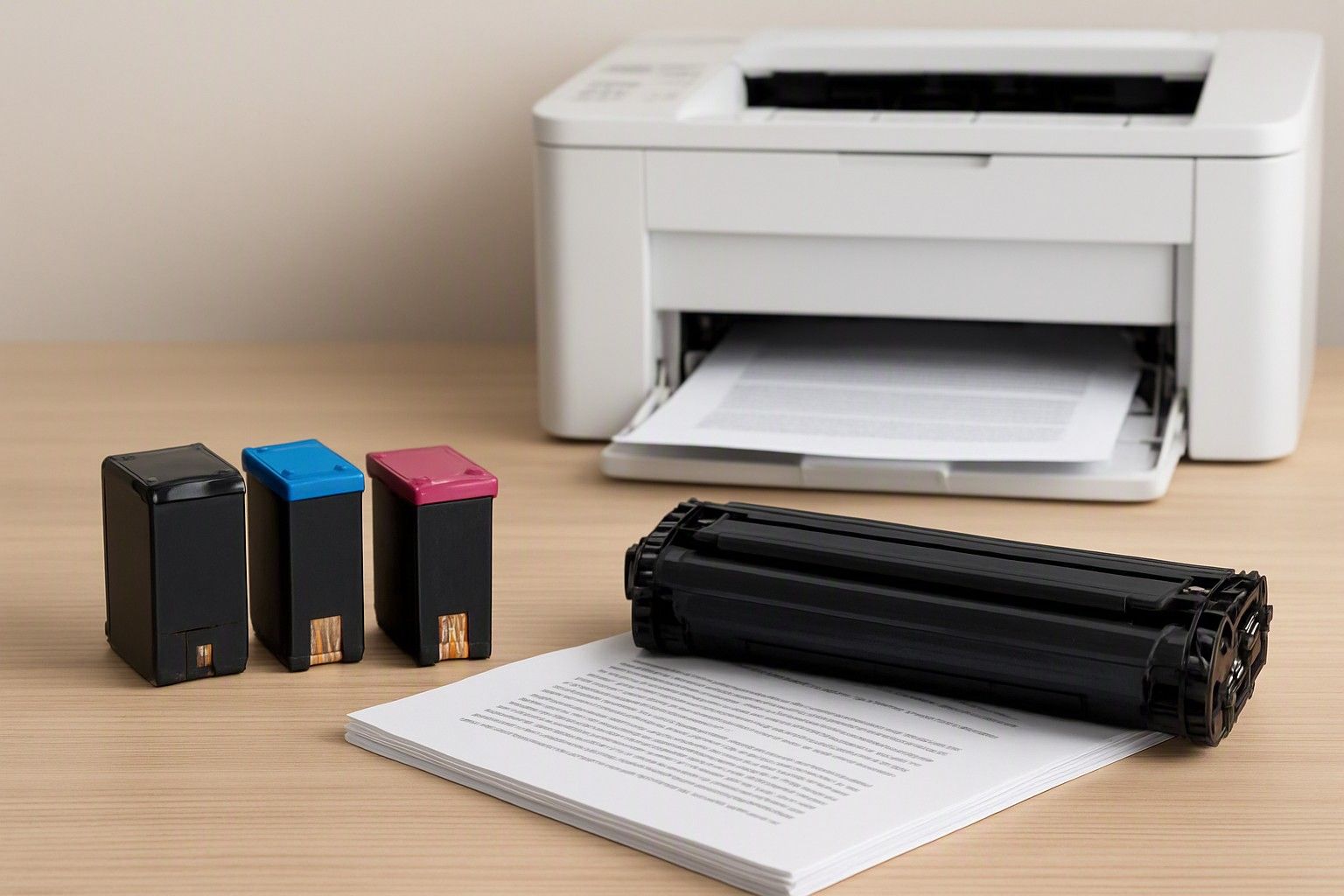
The price tag on a printer box is only half the story — what you pay per page over the next few years is often the bigger number. If you've ever bought a printer that seemed cheap and then watched cartridge costs eat your savings, this is the maths you skipped the first time. Here's how to work out cost per page properly, before you buy, not after.
What Cost Per Page Really Means
Cost per page, often shortened to CPP, is simply the total cost of ink or toner used to print one page, divided into a figure you can compare across printers. It has nothing to do with the printer's purchase price directly — a printer costing ₹2,900 can easily end up more expensive to run than one costing ₹35,000, once you factor in how much ink or toner it burns per page and how much that consumable costs to replace.
Most Indian buyers only look at the box price, because that's the number in front of them at the store or on the listing. But a printer is a multi-year purchase, and the consumables you buy over that time usually add up to several times the original price. A household or small office that prints a few hundred pages a month will spend far more on ink or toner across two to three years than they spent on the printer itself.
CPP is usually calculated separately for black-and-white and colour pages, since colour printing uses multiple cartridges or toner colours and costs noticeably more per page. When you see a printer advertised with a low black-and-white CPP but no colour figure mentioned, treat that as a gap to ask about, not an oversight to ignore. Knowing this number before you buy is what turns a guess into an informed decision.
Ink, Toner and Page-Yield Numbers Explained
Page yield is the number the whole cost-per-page calculation depends on, and it's the one most buyers never check. It refers to how many pages a single cartridge or toner unit can print before it runs dry, usually measured under a standard set of assumptions about how much of the page is covered with text or image. A cartridge with a low page yield might last a few hundred pages, while a high-yield toner cartridge for a laser printer can last several thousand.
The formula itself is straightforward: take the price of the cartridge or toner unit, divide it by its rated page yield, and you get the cost per page for that consumable. Do this for every cartridge the printer uses — often black, cyan, magenta and yellow separately for inkjet printers — and add them up for a realistic colour page cost.
Where this gets tricky in practice is that manufacturers test page yield under fairly light printing conditions, usually around 5% page coverage, which is closer to a short letter than a photo or a dense spreadsheet. Real-world printing, especially for anyone printing images, forms, or colour-heavy documents, will use more ink per page than the quoted yield assumes. Treat published page-yield numbers as a best-case reference point, not a guarantee, and lean toward printers with clearly stated yield figures from the retailer rather than vague claims.
Cost Per Page for Ink Tank vs Cartridge vs Laser
This is where the printer type you choose matters more than almost any other factor in your running cost. Cartridge-based inkjet printers tend to have the lowest upfront price, often near ₹5,000, but their small ink cartridges mean a high cost per page, especially for colour. If you print occasionally, this may not matter much, but for anyone printing a few hundred pages a month, cartridge refills can quietly become the most expensive part of owning the printer.
Ink tank printers, usually priced in the ₹12,000 range, flip this equation. The upfront cost is higher because you're paying for larger ink tanks and a refill system built into the printer, but each refill bottle covers thousands of pages at a fraction of the per-page cost of cartridges. For a household or small office printing regularly, an ink tank printer typically pays back its higher purchase price within the first year purely through lower running costs.
Laser printers, often sitting in the ₹12,000 to ₹25,000 range depending on whether they're monochrome or colour, offer the lowest cost per page for text-heavy black-and-white printing, since toner cartridges last far longer per rupee spent than ink. Colour laser printers exist too, but they cost more upfront and their toner sets can be expensive to replace, so they only make sense if you print colour in real volume. If you're still weighing these three formats against each other, it's worth taking the time to revisit the ink tank versus cartridge trade-off in more depth, since that decision alone shapes most of your long-term running cost.
The Truth About Third-Party and Refilled Ink
Third-party ink cartridges and local refill services are common in India, largely because they promise to cut cost per page dramatically compared to original cartridges. The savings are real in terms of upfront price, sometimes half or less of what an original cartridge costs, but the trade-offs deserve an honest look before you switch.
Refilled or compatible cartridges can have inconsistent ink quality, which affects print sharpness and colour accuracy over time, and inconsistent flow can lead to clogged print heads, particularly on printers not designed with easy-to-clean nozzle systems. There's also a warranty angle worth knowing: using non-original ink can void the printer manufacturer's warranty on the print head or the whole unit, depending on the brand's policy, which matters if something goes wrong in the first year or two.
For ink tank printers specifically, refilling with unbranded ink bottles is more common and generally lower-risk, since the tank system doesn't rely on the same delicate cartridge electronics. For cartridge-based printers, the calculation is less clear-cut: a cheaper refill lowers your per-page cost on paper, but a print-head failure down the line can wipe out those savings in one repair bill. If low running cost is your main goal, it's usually more reliable to choose a printer whose original consumables already have a reasonable cost per page, rather than depending on a third-party workaround to fix a printer that was expensive to run in the first place.
Estimating Your Monthly Printing Spend
Once you know a printer's cost per page for both black-and-white and colour, estimating monthly spend is simple arithmetic. Multiply your expected black-and-white pages per month by the black-and-white CPP, do the same for colour pages, and add the two together. A household printing mostly text documents, homework, or boarding passes will lean almost entirely on the black-and-white figure, while anyone printing photos, presentations, or marketing material needs to weight the colour figure more heavily.
It helps to actually track your printing for a month before buying, rather than guessing. Count roughly how many pages you printed last month, split by colour and black-and-white, and use that as your baseline instead of an optimistic estimate. Most people underestimate this number, since printing happens in small, forgettable bursts rather than one visible batch.
This estimate is also what should guide which printer type fits your household or business. Low monthly volume, say under fifty pages, rarely justifies the higher upfront cost of an ink tank or laser printer, since you won't print enough to recover that investment through lower CPP. Higher monthly volume, especially anything above two or three hundred pages, almost always favours ink tank or laser printers, because the running cost savings compound month after month in a way that a cartridge printer's low purchase price can't offset.
Balancing Purchase Price Against Running Cost
The instinct to buy the cheapest printer on the shelf is understandable, but it treats only one part of a two-part cost. Across the market, prices for home and small-office printers range from ₹2,900 to ₹35,000, averaging around ₹11,000, and that spread exists largely because of the technology and ink system inside, not just brand or build quality. A printer priced near ₹2,900 that turns out to have a high cost per page can end up costing more over two years than a printer priced near ₹35,000 with a genuinely low CPP.
The right way to compare two printers isn't purchase price alone, and it isn't cost per page alone either — it's the total of both, projected across the volume you actually expect to print. A ₹2,000 difference in upfront price is often recovered within a few months if the cheaper printer's running cost is meaningfully higher, and ignoring that math is how many buyers end up disappointed six months in, not because the printer broke, but because ink kept running out faster and costing more than expected.
Once you've worked out your expected monthly pages and matched them to a realistic cost-per-page figure for the printer types you're considering, you're in a position to make the call with real numbers instead of a hunch. From here, it's worth stepping back to put running cost alongside the rest of the buying decision, since price, print quality, connectivity and running cost all need to point the same direction before you commit.
Cost per page isn't a side detail — it's the number that decides whether a printer stays cheap to own or quietly becomes the most expensive appliance in the house. Work out your monthly pages, check the real per-page cost for black-and-white and colour, and weigh that against the purchase price rather than treating them as separate decisions. Do that once, honestly, and you won't need to revisit this question every time a cartridge runs dry.

Comments
Be the first to comment.