Inkjet vs Laser Printers: Which One Should You Buy?
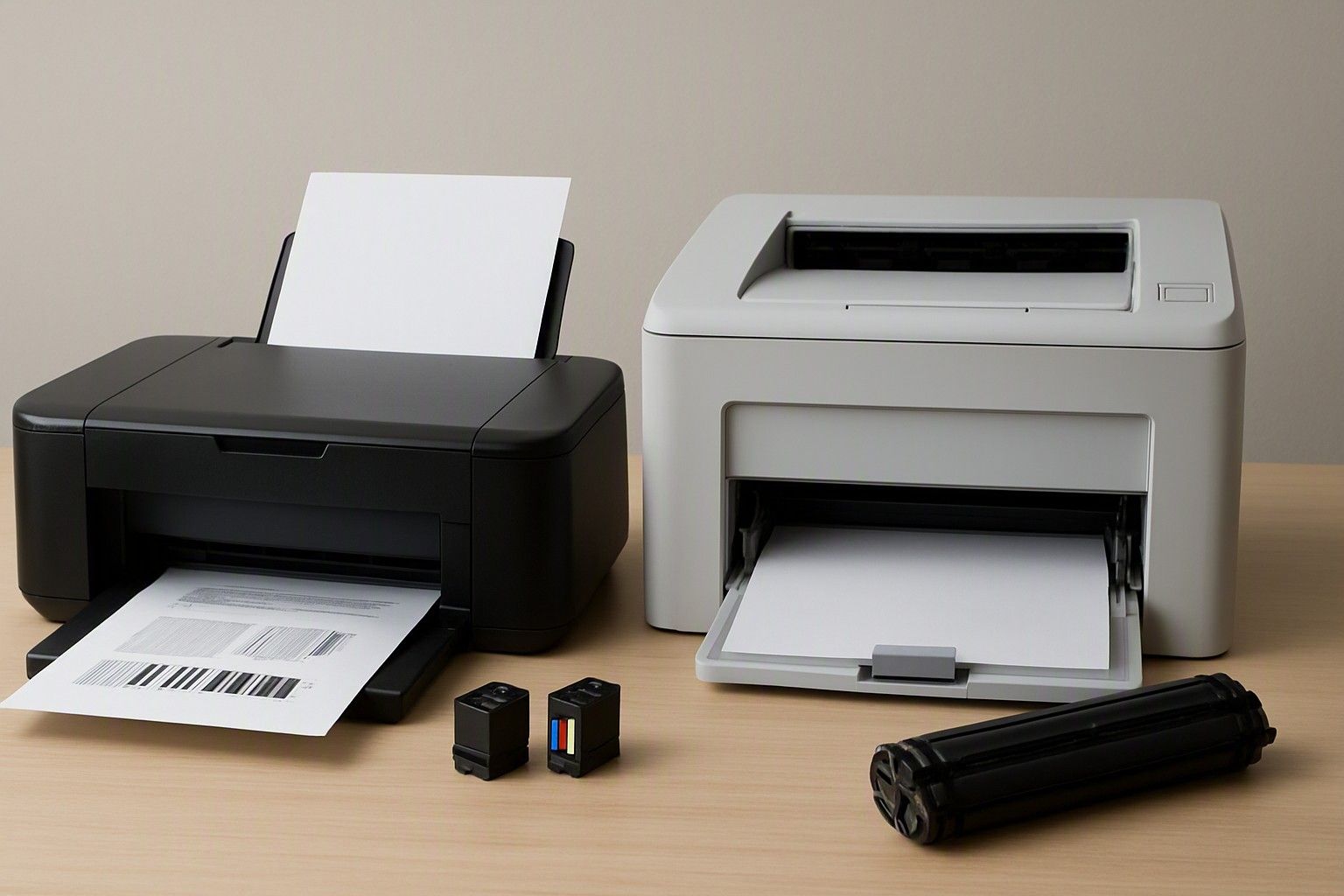
If you're standing at the printer aisle or scrolling through listings wondering whether to buy inkjet or laser, the honest answer depends less on price and more on what you actually print, how often, and in what colour. This article breaks that decision down piece by piece, so by the end you'll know which technology fits your usage rather than just which one is cheaper today. Both technologies span the full price range from ₹2,900 to ₹35,000, so budget alone won't make this call for you.
How Inkjet and Laser Printing Actually Work
The two technologies solve the same problem in completely different ways, and that difference explains almost every trade-off you'll read about later in this guide. An inkjet printer sprays microscopic droplets of liquid ink through tiny nozzles directly onto the paper, building up an image or text dot by dot. The print head physically moves back and forth across the page during printing, which is one reason inkjets tend to be slower and why the nozzles can dry out or clog if the printer sits unused for weeks, a real concern in Indian households where a printer might only come out for school projects or tax season.
A laser printer works more like a photocopier. A laser beam charges a rotating drum in the pattern of the page, fine powdered toner clings to the charged areas, and the whole image is fused onto the paper using heat in a single pass. Nothing is sprayed or dried on the page itself, which is why laser prints resist smudging and water damage far better than inkjet output. There's no print head to clog either, so a laser printer that hasn't been used in a month will still print perfectly on the first try. This mechanical difference is the root cause of nearly every practical difference between the two, from running costs to how the printer behaves after periods of disuse.
Colour vs Black-and-White: What Each Technology Does Best
This is where the two technologies genuinely specialise, and it's usually the fastest way to narrow your decision. Inkjet printers remain the clear choice for anything involving photographs, gradients, or rich colour work. Because liquid ink blends smoothly on the page, inkjets produce photo prints, glossy brochures, and colour-heavy documents with a depth and smoothness that laser printers, even colour laser models, struggle to match at a comparable price point. If you print photos, greeting cards, or design work at home, inkjet is built for that job.
Laser printers, on the other hand, are built around crisp, consistent black-and-white text. Toner produces sharp, dense black that doesn't feather or bleed even on ordinary paper, which is exactly what you want for invoices, reports, contracts, or study material printed in bulk. Colour laser printers do exist and handle basic colour charts or presentations reasonably well, but they're priced well above monochrome laser models and still don't match inkjet for photographic quality. So the real question to ask yourself is simple: is most of what you print in colour, or is it mostly black text with the occasional colour page? That single answer usually points you toward one technology over the other before price even enters the conversation.
Print Speed and Volume Differences
If you print in any real volume, speed stops being a nice-to-have and becomes the deciding factor. Laser printers are built for throughput. The toner-and-drum mechanism lays down an entire page in one pass, so laser printers routinely handle dozens of pages a minute and keep that pace consistently, page after page, without slowing down or needing to pause. This makes them the natural fit for small offices, coaching centres, or anyone printing large batches of documents regularly.
Inkjet printers are inherently slower because the print head has to physically traverse the page multiple times to lay down ink, especially for colour or photo-quality output. A single photo or detailed colour page can take noticeably longer than a laser printer's equivalent text page. For occasional printing, a handful of pages here and there, this speed gap barely matters. But if you're regularly printing multi-page reports, worksheets, or bulk documents, an inkjet's slower pace and the way print quality can dip once it's been running continuously for a while will start to feel like a real limitation. Volume, not just speed on paper, is what separates these two technologies in daily use.
Long-Term Running Cost Comparison
The sticker price on a printer is only the opening cost, and this is where many buyers get caught out. Inkjet printers are usually cheaper to buy upfront, which is why you'll find several inkjet models clustered in the ₹5,000 range. But replacement ink cartridges are expensive relative to how many pages they actually print, especially with colour cartridges that need replacing even if only one colour runs low. Print regularly and that ongoing ink spend can quietly outpace what you saved at purchase.
Laser printers tend to cost more initially, often landing in the ₹12,000 or ₹25,000 range depending on features and whether they print in colour. But toner cartridges are rated for a much higher page yield than ink cartridges, so the cost per page drops significantly once you're printing in real volume. For anyone printing more than a few hundred pages a month, this difference compounds fast. It's worth taking the time to actually compare how running costs stack up per page, because the printer with the lower price tag today isn't always the cheaper one to own a year from now. Across the full ₹2,900 to ₹35,000 range, the purchase price tells you very little about total cost of ownership on its own.
Which Technology Suits Which Buyer
Match the technology to how you actually use a printer, not to which one sounds more advanced. If you print occasionally, need photo-quality output for family pictures or design work, and don't mind ink cartridges sitting unused between print jobs, an inkjet printer in the ₹5,000 range covers most home needs without overspending. Students working mostly with assignments, project reports, and the odd colour chart also tend to do fine with a mid-range inkjet, provided the printer gets used at least occasionally to keep the nozzles clear.
If your printing is dominated by text, whether that's a home office generating invoices and contracts or a small business printing in daily volume, a laser printer justifies its higher upfront cost through speed, reliability, and lower cost per page over time. Shared household or small-office setups where multiple people print throughout the day also lean laser, since the mechanism handles sustained use without the slowdowns or quality dips inkjets can show under heavy load. It genuinely helps to see which type matches your home or office usage in more detail, since the right call often comes down to print volume and colour needs rather than budget alone.
Making the Final Call
By now the decision should feel less like guesswork. If colour quality, photo printing, or occasional light use describes your household, inkjet remains the more sensible pick, and prices starting from ₹2,900 make it an accessible entry point. If your printing is dominated by text, happens often, or needs to keep pace in an office setting, a laser printer's higher upfront cost, often in the ₹12,000 to ₹25,000 band, pays for itself through speed and lower running costs. Neither technology is a compromise choice; each is simply built for a different pattern of use. If you'd like to weigh this decision against other factors like paper size, connectivity, or brand reliability, it's worth taking a moment to return to the full printer buying guide to weigh other factors before you finalise your purchase.
The inkjet-versus-laser question comes down to what you print and how often, not which technology sounds more modern or which price tag looks smaller today. Match the printer to your actual usage pattern, whether that's occasional colour photos or daily text-heavy volume, and you'll land on a choice that holds up well beyond the day you bring it home.

Comments
Be the first to comment.