Best Printer for Students, Home Use and Small Business
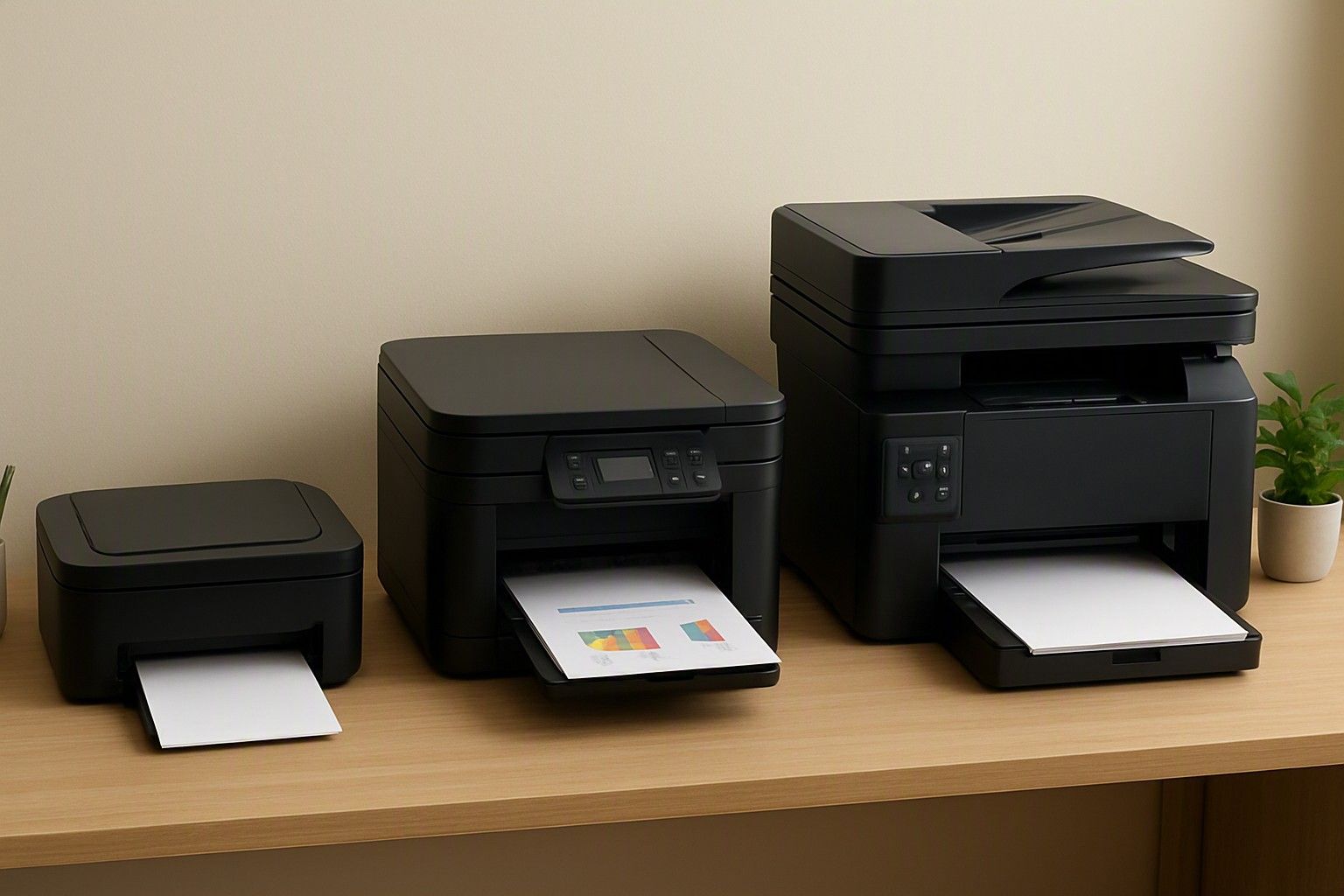
A printer that's right for a college student running off assignments once a week is the wrong printer for a shop owner printing invoices all day, and the wrong printer again for a family that prints twice a month. If you've been comparing specs without knowing which ones actually matter for your situation, this guide sorts printers by who's using them and how often, so you can match your habits to the right machine instead of guessing.
Printers for Students and School Projects
Student printing is usually bursty: nothing for two weeks, then a rush of assignments, project reports or exam-time notes printed back to back. This pattern matters more than any single spec on the box. A basic inkjet in the ₹5,000 range handles this fine if it's used at least every week or two, since inkjets don't like sitting idle for long stretches. If your printing is genuinely occasional — once a month or less, with gaps stretching into exam breaks and holidays — a compact laser printer is worth the slightly higher upfront cost, because toner doesn't dry out or clog the way ink does when a printer isn't touched for weeks.
Most students don't need colour printing beyond the occasional chart or cover page, so a monochrome laser or a basic colour inkjet both cover the core need of black-and-white text pages cheaply. What actually matters more is paper handling — a tray that takes A4 without jamming — and whether the printer connects easily over Wi-Fi from a phone or laptop, since many hostel and PG setups don't have a permanent desk connection. Skip anything marketed heavily on photo-printing quality; that's a cost you're paying for a feature students rarely use. At this stage, reliability for plain text documents and low running cost per page matter far more than print quality for images.
Printers for Everyday Home Use
Home use in India typically means a mix of things: school projects for kids, the occasional government form, tax documents, maybe a boarding pass or two, and sometimes photos for a family occasion. This mixed, moderate-frequency pattern is exactly where the ₹12,000 range earns its keep, since it's wide enough to include ink tank printers that keep running costs low over years of use without a big jump in upfront price.
The honest trade-off for a household is upfront cost versus cost per page. An ink tank printer costs more to buy but a fraction as much to run per page compared to a cartridge-based inkjet, which matters once you're printing regularly across a full year rather than just occasionally. Families that print often — homework nearly every week, plus documents and forms - come out ahead with ink tank models within a few hundred pages, because refill ink is cheap compared to replacement cartridges. Families that print rarely may not recoup that upfront difference, and a simple cartridge inkjet in the lower part of the price range is the more sensible buy.
A flatbed scanner built into the printer is worth paying a bit more for in a home setting, since households end up scanning documents, forms and IDs far more often than they expect to when buying the printer. Wi-Fi and mobile printing support also matter more at home than in a student dorm, since multiple family members on different devices will want to print to the same machine.
Printers for Small Shops and Home Businesses
Small shops, home-run businesses and single-person offices print differently again: higher daily volume, often repetitive documents like bills, labels or forms, and less tolerance for downtime or high running costs. This is where the calculation shifts firmly toward laser printers or high-capacity ink tank models, both of which live in the ₹12,000 to ₹25,000 range depending on speed and duty cycle. The upfront price is higher than a basic home inkjet, but at daily-use volumes it's the running cost that decides whether the printer is a sensible business expense or a slow drain on margins.
This is exactly where it pays to slow down and match your print volume to the right cost per page rather than buying on brand recognition or the lowest sticker price. A shop printing a few hundred pages a month behaves completely differently, cost-wise, than one printing a few thousand, and the printer that makes sense for one can be the wrong choice for the other. Laser printers tend to win on speed and page yield for text-heavy printing like bills and forms, while ink tank printers can still make sense if colour printing — brochures, menus, promotional material — is a regular part of the business. Duty cycle rating, meaning how many pages a printer is built to handle per month without strain, is worth checking directly rather than assuming any printer in this price band can handle sustained daily use.
Do You Need Scanning, Copying or Just Printing?
Before comparing models further, it's worth being honest about whether you actually need an all-in-one, because paying for scan and copy functions you won't use is a common way buyers overspend. Students working mostly on digital assignments and occasional printouts rarely need scanning built in; a phone camera and a scanning app cover the rare document that needs digitising. A basic single-function printer keeps costs down and is one less thing that can go wrong.
Home use tips the other way. Between scanning IDs, filling and returning forms, and occasionally photocopying a document for school or bank work, a household benefits more from an all-in-one than a student does, and the extra cost is usually modest compared to buying a standalone scanner later. Small shops and home businesses should treat copying and scanning as close to essential rather than optional, since photocopying receipts, contracts or ID proofs is routine in most small business operations, and running to a nearby shop for a copy every time defeats the point of owning a printer at all. If copying volume is genuinely high, it's worth checking that the printer's copy speed and paper feeder can keep up, rather than assuming any all-in-one handles it the same way.
Handling Low Usage and Long Idle Gaps
One of the most overlooked factors in Indian households and small offices is how long a printer sits unused between jobs, and it deserves more weight than most buyers give it. Cartridge-based inkjets are the most vulnerable to this: ink left sitting in fine nozzles for weeks can dry out or clog, leading to streaky prints, wasted cleaning cycles, or a cartridge that needs replacing well before it's actually empty. If your printing happens in bursts with long gaps in between — common for students during breaks, or households that only print a handful of times a month — this is a real cost, not a minor inconvenience.
This is exactly why it helps to understand why occasional users lean toward ink tank or laser printers rather than basic cartridge inkjets. Laser printers use toner powder rather than liquid ink, so they tolerate idle periods without any risk of clogging, making them a dependable choice for anyone whose usage is naturally irregular. Ink tank printers sit somewhere in between: they use liquid ink like a cartridge printer, but the larger ink reservoirs and printhead designs in most ink tank models are noticeably more tolerant of gaps than small cartridges are. If your printing pattern is genuinely unpredictable — sometimes daily, sometimes not for a month — that tolerance for idle time should weigh as heavily in your decision as price or print speed.
Picking the Right Fit for Your Situation
The right printer really does depend on who's using it and how often, more than on any single spec sheet. A student with occasional, bursty printing needs is usually best served by a simple, inexpensive printer in the ₹5,000 range, prioritising reliability over features. A household with mixed, moderate use benefits from weighing ink tank against cartridge running costs honestly, usually landing in the ₹12,000 range with scanning built in. A small shop or home business printing daily needs to treat cost per page and duty cycle as seriously as upfront price, often justifying a move into the ₹25,000 range for a machine built to handle sustained volume.
Across the full market, prices span ₹2,900 to ₹35,000, averaging around ₹11,000, and that range exists precisely because these use cases are so different from one another — there's no single 'right' price, only the right price for your actual printing pattern. If you're still weighing the fundamentals across categories rather than just within your use case, it's worth stepping back to go back to the main printer buying guide before settling on a shortlist.
Matching a printer to how you'll actually use it — bursty and occasional, steady and mixed, or daily and high-volume — answers the question of which one fits better than any spec comparison alone. Buy for your real printing pattern, not the pattern you imagine you might have someday, and the right printer for a student, a household or a small shop becomes a fairly clear call.

Comments
Be the first to comment.