Baby Monitor Features That Actually Matter
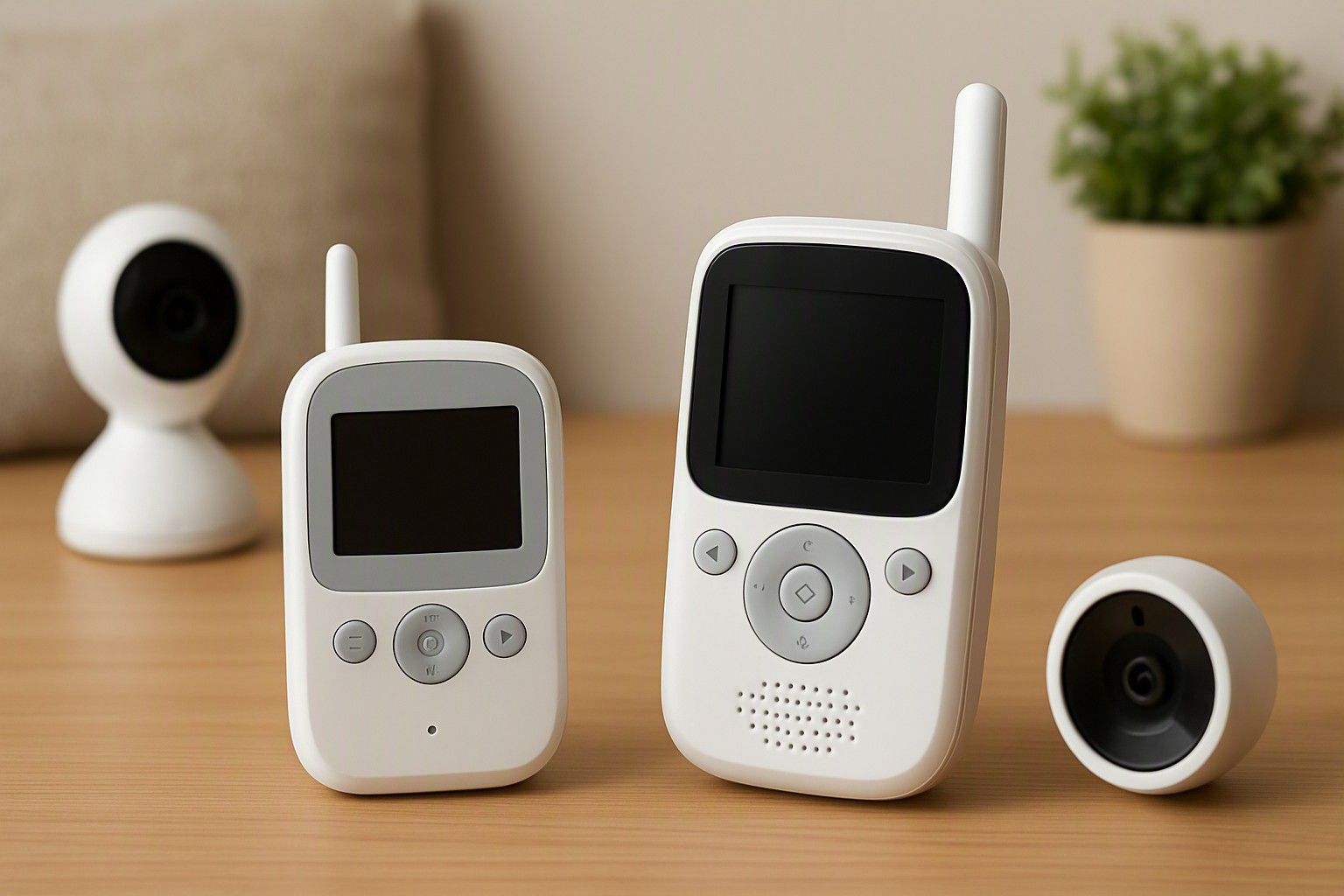
Every baby monitor listing reads like it does everything — night vision, cry detection, lullabies, temperature sensors, two-way talk. Some of these features genuinely change how well you sleep at night, and some are there to justify a higher price tag on the box. This guide goes feature by feature so you know exactly what to prioritise and what to ignore, based on how these things actually work in an Indian home.
Night Vision and Low-Light Clarity
Night vision is not optional on a baby monitor — it is the one feature you cannot compromise on, because most of what you need to check happens in a dark room. The question is not whether a monitor has night vision, but how usable that night vision actually is. Cheaper cameras often use a handful of weak infrared LEDs that produce a grainy, low-contrast picture where you can tell a shape is moving but not whether your baby has rolled onto their stomach or just shifted position. Better units use more LEDs or a higher-sensitivity sensor, giving a clearer, more detailed image even in a pitch-dark room with curtains drawn and no streetlight leaking in.
What matters in practice is range and clarity together. A monitor mounted 5-6 feet from the cot needs to render a clear, readable image at that distance, not just a bright blur. Some monitors also auto-adjust brightness as the room transitions from evening light to full dark, which avoids the sudden washed-out glare you get from fixed-intensity infrared. If you're testing a monitor before buying, ask to see actual night-mode footage rather than trusting a spec sheet that just says "night vision: yes." A monitor that gets this one feature right earns its price; one that gets it wrong makes every other feature irrelevant, because you still can't see your baby clearly at 2 a.m.
Two-Way Talk, Lullabies and Soothing Features
Two-way talk is genuinely useful and worth having on almost any monitor you buy. Being able to speak in a calm, familiar voice from the next room can settle a baby without you having to walk in, switch on a light, and fully wake them up — and by extension, wake yourself up too. This is one of the few "extra" features that actually changes your night-to-night experience rather than just looking good on a features list.
Lullabies and built-in soothing sounds are a more mixed bag. They can help establish a wind-down routine, and some parents find them genuinely useful for naptime. But they are also one of the easiest features to replicate with a phone, a white-noise app, or a separate sound machine you may already own. If a monitor with lullabies costs meaningfully more than an equivalent one without, weigh whether you're paying for a feature you'll use nightly or one you'll try twice and forget. Two-way talk is close to essential; lullabies are a genuine nice-to-have, not a reason to upgrade tiers on their own. When comparing two similarly priced monitors, prioritise clear, low-latency two-way audio over a longer list of preloaded tunes — audio quality on the talk-back feature matters far more than how many lullaby tracks are bundled in.
Temperature and Humidity Sensors in Indian Climate
This is a feature that matters more in India than the spec sheet implies, because room temperature swings are a real, daily concern here in a way they aren't in more climate-controlled markets. A nursery that's comfortable at 10 p.m. can get noticeably warmer by 2 a.m. if the AC cycles off, or colder if a window is left cracked open during winter in the north. A monitor with a built-in temperature sensor gives you a live number on the parent unit instead of you guessing by touch or walking in to check.
Humidity sensors are less critical but genuinely helpful in coastal cities and during monsoon months, when a stuffy, humid room can affect sleep quality and skin comfort even if the temperature itself is fine. If you live somewhere with strong seasonal humidity swings — Mumbai, Chennai, Kolkata — this is a feature worth having rather than skipping. In drier inland cities, temperature alone usually tells you what you need to know, and humidity readouts become a secondary convenience rather than a necessity.
What you should be sceptical of are monitors that treat these sensors as a premium add-on justifying a big price jump. Temperature sensing is now common enough across price levels that it shouldn't single-handedly push you into a higher budget tier — treat it as a baseline expectation, not a luxury feature.
Battery Life and Standby on the Parent Unit
Battery life is one of the most underrated specs on a baby monitor, and it's also one of the most inconsistently reported. Manufacturers often quote battery life under ideal conditions — screen brightness low, Wi-Fi or video streaming off, minimal alerts — which rarely matches how the monitor is actually used at night with the screen on and video streaming continuously. A more realistic way to judge this is standby time with the screen actively displaying video, since that's the mode most parents leave it in overnight.
A parent unit that needs charging every night is a genuine inconvenience — it means one more thing to remember before bed, and a dead unit at 3 a.m. defeats the entire purpose of the device. Look for monitors that comfortably last a full night on a single charge with the screen on, plus some buffer for daytime naps without a recharge. If you also want to carry the parent unit around the house while doing chores, range and battery drain both matter together — a monitor that loses signal or drains fast the moment you leave the room isn't built for that kind of mobile use, even if its on-paper battery number looks decent.
Cry Detection, Motion Alerts and Other Extras
Cry detection sounds like a must-have but is worth judging on execution, not just presence. In theory, it alerts you the moment your baby cries even if you've stepped away from the monitor screen. In practice, cheaper implementations either trigger false alerts from background noise — a fan, a door, a sibling talking — or lag behind actual crying by several seconds, which somewhat defeats the purpose. A monitor with reliable, low-false-positive cry detection is genuinely worth paying a bit more for; one that constantly cries wolf will get its alerts muted within a week, making the feature useless.
Motion alerts, often marketed for SIDS-conscious parents, use a sensor pad under the mattress or camera-based movement tracking to flag if the baby stops moving for an unusually long period. These can offer real peace of mind, but they also come with a meaningful false-alarm rate, especially camera-based versions that struggle with blankets or awkward sleeping positions. Treat this as a supplementary reassurance tool, not a substitute for checking in on your baby yourself.
Other extras — split-screen for multiple cameras, app integration, out-of-range alerts, night light control — range from genuinely handy to rarely touched after the first month. Prioritise the ones tied directly to safety and sleep monitoring, and treat convenience extras as tie-breakers between two similarly priced options, not as primary decision factors.
Features to Skip to Save Money
Some features are marketed heavily because they're easy to put on a box, not because they meaningfully improve your experience. Preloaded lullaby libraries beyond three or four tracks, decorative parent-unit skins, voice-activated wake modes that mostly just react to any loud sound, and multi-camera bundles you don't currently need are all places where you're often paying for marketing breadth rather than functional depth. If a monitor's price jumps significantly over a comparable model mainly because of a longer feature list on the box, check whether those extra features are ones from this guide you'd actually use nightly, or ones that sound good in a store display.
App-based monitors that route video through the cloud instead of a local direct connection also deserve a second look — they often add subscription costs or recurring fees down the line for features like extended video history, which isn't always disclosed clearly upfront. Given prices in this category span from ₹1,800 to ₹16,000, with the average sitting around ₹7,500, it's worth being clear-eyed about which features justify moving from the ₹3,000 range into ₹8,000 or ₹18,000. For a fuller breakdown of what you typically get at each spending level, see how these features map to different price levels before deciding how much of the feature list you actually need to pay for.
Once you separate what changes your actual night-to-night experience — clear night vision, reliable two-way talk, honest battery life, low-false-positive cry detection — from what's mostly there to fill out a spec sheet, the "which features are worth it" question answers itself. Buy for the features you'll use every night, not the longest list on the box.

Comments
Be the first to comment.